Newari Food: A Beginner's Guide to the Newar Feast
Newari food explained for travellers — samay baji, choila, chatamari, yomari and juju dhau, plus the festivals and feasts that the dishes belong to.
Newari food is not a single dish but a calendar — every festival has its plate, and every plate tells you the season.
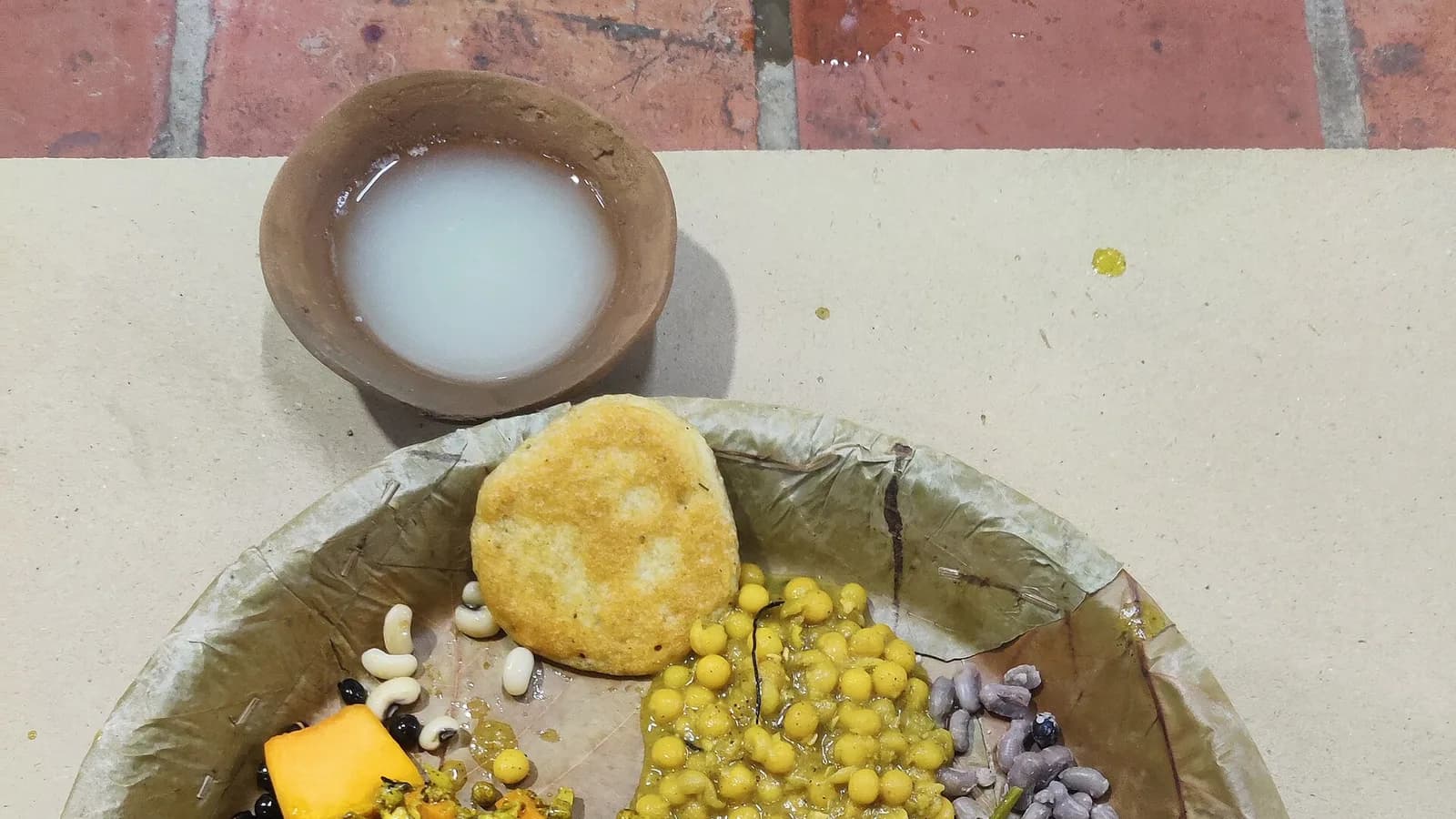
If the only Nepali food you have tried is dal bhat and a plate of momos, you have barely opened the menu. Newari food is the cuisine of the Newars, the indigenous people of the Kathmandu Valley, and it is older, stranger and more elaborate than almost anything on a Thamel tourist board. This is a beginner's overview of what the dishes are and — just as importantly — the festivals and feasts they belong to.
For a hands-on, restaurant-by-restaurant guide to eating it in the capital, see our companion piece, the Newari food in Kathmandu guide. This post takes the wider view: the building blocks of the cuisine, the signature dishes, and the seasonal calendar that gives Newari food its meaning.
Key takeaways
- Newari cuisine is one of the oldest food cultures in South Asia, developed over centuries among the Newars of the Kathmandu Valley.
- It is built on older ingredients — beaten rice, buffalo, lentils, soybeans, mustard oil and fermented vegetables — because it matured before chillies, potatoes and tomatoes reached Nepal from the Americas.
- Samay baji is the iconic platter, eaten at festivals and gatherings as a symbol of good fortune and togetherness.
- Many dishes are tied to specific festivals: yomari to the December harvest moon, kwati bean soup to late summer, and elaborate feasts (bhoye) to weddings and rituals.
- The full repertoire is huge — popular guides describe well over 200 dishes — and ranges from gentle street snacks to adventurous offal preparations.
- There is something for everyone: spicy and mild, meat and vegetarian, with optional traditional drinks (aila and thwon).
What makes Newari food different
The Newars are the original inhabitants of the Kathmandu Valley, with their own language (Nepal Bhasa) and a civilisation of art, architecture and food. To understand the people behind the plate, see our overview of the Newar people. Their cuisine, often spelled Newa cuisine, is considered one of the oldest in the region.
Two things set it apart from the generic Nepali-Indian menu most travellers meet:
- Old ingredients. Because the cuisine developed before chillies, potatoes and tomatoes arrived from the Americas, its backbone is beaten rice (baji/chiura), buffalo meat, several kinds of lentil, soybeans, ginger, garlic, turmeric, mustard oil and fermented or pickled vegetables. The flavours read as deeper and earthier than mainstream Nepali food.
- A feast logic. Newari food is organised around the platter and the feast rather than a single main dish. The classic format is many small, intense items eaten alongside a base of beaten rice — texture and contrast doing the work that one big curry does elsewhere.
A quick note on meat: buffalo (buff) is the default red meat in Newari kitchens, prized for its rich, dark flavour. Travellers who avoid beef for religious reasons can usually eat buffalo, and vegetarians will find plenty of lentil, bean, egg and dairy dishes. For the bigger picture of Nepali eating, our guide to what to eat in Nepal puts Newari food in context.
Samay baji: the dish that explains the cuisine
If you try one Newari thing, make it samay baji (also spelled samaya baji). It is a platter rather than a single dish, and it represents good luck, prosperity and people coming together — which is why it turns up at nearly every Newari festival and family event.
A typical plate centres on baji, the flattened beaten rice, surrounded by small portions of:
| Item | What it is | |---|---| | Choila | Spiced grilled or smoked buffalo, tossed with mustard oil and garlic | | Bhatmas (musya) | Roasted black soybeans dressed with mustard oil | | Bara / wo | Fried black-lentil patties, sometimes topped with egg | | Aloo achaar | Tangy, spiced potato salad | | Boiled egg | A standard component of the set | | Palu | Pickled fresh ginger, eaten in small bites | | Achaar | A medley pickle, often including the sour lapsi (hog plum) |
You eat with your right hand, mixing a little of each item with the rice. There is a practical origin story behind it: Newar farmers, short on cooking fuel and time, would eat their main meal in the morning and carry items that needed no reheating — beaten rice, smoked meat, soybeans, ginger and greens — out to the fields. The festive platter grew from that everyday packed lunch.
The signature dishes to know
Beyond samay baji, a handful of dishes form the core of the cuisine. The companion Kathmandu guide covers where to eat them; here is what they actually are.
Choila (chhwela)
Spiced barbecued or boiled buffalo, sliced and marinated in mustard oil, garlic, ginger, chilli and aromatic spices. A smoky version, haku choila, uses charred meat for an intense flavour. It is a side, a snack and a centrepiece all at once.
Chatamari
A thin rice-flour crepe, sometimes called the "Newari pizza," topped with minced buffalo, egg and herbs and cooked until the toppings set into the base. It is one of the most approachable dishes for newcomers and is eaten as a light lunch or snack.
Bara (wo)
Savoury fried patties of ground black lentil, crisp at the edges and soft inside, often served plain or with an egg cooked on top. The hole-in-the-middle style is bara; the plain disc is wo. Easy, cheap and satisfying.
Kachila and the adventurous end
For the curious, Newari feasts go well beyond the familiar. Kachila is marinated raw minced buffalo — a delicacy, but one to approach with caution as a traveller. Others include sanya khuna (a spicy jellied fish soup), takha (jellied buffalo curry eaten cold in winter), swanpuka (stuffed, boiled and fried goat lung) and sapu mhicha, a pocket of leaf tripe filled with spiced bone marrow and deep-fried. These are special-occasion foods that reward an open mind.
Kwati
A hearty soup of nine kinds of sprouted bean, eaten especially at the festival of Gunhu Punhi in late summer (the same day many Nepalis tie a protective thread, janai, on the wrist). It is nourishing, vegetarian-friendly and tied firmly to its season.
A cuisine built around festivals
The best way to understand Newari food is as a calendar. Particular dishes belong to particular days, and eating them is part of how the festival is observed. Several of these festivals have their own guides on this site.
| Festival | Rough timing | Signature food | |---|---|---| | Gunhu Punhi | Late summer (Aug) | Kwati, the nine-bean soup | | Indra Jatra (Yenya) | September | Samay baji and feasting in the old city | | Mha Puja / Newar New Year | Tihar period (Oct–Nov) | Samay baji and ceremonial sweets | | Yomari Punhi | December full moon | Yomari dumplings |
If your trip overlaps one of these, the food is at its most authentic. See our guides to Indra Jatra, the wider Tihar festival of lights and Gai Jatra, Bhaktapur's lively Bisket Jatra, for the surrounding context.
Yomari and the harvest moon
Yomari deserves its own paragraph. It is a steamed dumpling of fresh rice flour — from the new harvest — shaped a little like a fish and filled with chaku (concentrated cane sugar) and sesame. Its name comes from Nepal Bhasa, often glossed as "the delicacy one loves."
Yomari is the heart of Yomari Punhi, the harvest festival held on the full moon of the lunar month of Thinla, in November or December. On that day people of the valley honour Annapurna, the goddess of grains, for the rice harvest, and in some neighbourhoods children go door to door asking households for yomari in the evening. You can find the sweet year-round in specialist shops, but December is when it truly belongs.
Juju dhau: the king of yoghurt
No Newari feast is complete without juju dhau — literally "king of yoghurt" in Nepal Bhasa — the speciality of Bhaktapur. It is a thick, sweetened curd set in unglazed clay pots, traditionally from rich buffalo milk, which gives it a custard-like body. The clay pot is part of the magic, drawing out moisture so the yoghurt sets firm.
Juju dhau carries ritual weight: it stands for purity and prosperity and is more or less compulsory at weddings, religious occasions and family feasts. It is also simply one of the best things you can eat in the Kathmandu Valley, and a natural stop on a Bhaktapur day trip.
The bhoye: the full ceremonial feast
At the grand end of the cuisine sits the bhoye (also bhwe), the traditional Newari feast served at weddings, festivals and major rituals. Guests sit in a row, often on the floor, and are served on a leaf plate. A full repertoire can run to a remarkable number of items — popular accounts describe Newari cooking as having well over 200 dishes — and a feast layers many of them in sequence.
A bhoye typically opens with two handfuls of baji, followed by lentil and vegetable curries such as mixed-bean gainda gudi, green saag and aloo tama (potato with bamboo shoots), then the meat dishes, pickles and fried items. Towards the end, beaten rice is served again with yoghurt — very likely Bhaktapur's juju dhau — and sweets. One delicacy, sapu mhicha, is traditionally prepared to honour a son-in-law when he visits his wife's family for a festival, a nice example of how these dishes carry social meaning, not just flavour.
Drinks: aila and thwon
Two traditional drinks accompany feasts and rituals. Aila is a clear, potent home-distilled spirit, poured into small cups and offered as part of Newari hospitality. Thwon is a cloudy, mildly sour rice beer, lower in strength, that comes in brown and red styles. Both are woven into the culture of the meal — but neither is compulsory. Many family-run eateries and temple-area shops serve Newari food entirely without alcohol, so it is easy to skip if you prefer.
A few practical tips for travellers
- Start gentle. Chatamari, bara, a samay baji set and yomari are the friendliest first dishes. Save raw kachila and the offal specialities for when you have found your feet.
- Eat where it is busy. High turnover means fresher food. The old cores of Patan and Bhaktapur and the Asan market area in Kathmandu are reliable.
- Right hand for food. Traditional eating is by hand from a leaf or brass plate; use the right hand.
- Ask for milder if needed. "Less spicy, please" goes a long way; some choila and pickles are seriously hot.
- Carry cash. Many of the most authentic spots are small and cash-only.
- Learn a word or two. A friendly namaste and a little food vocabulary make ordering easier and warmer. Our phrasebook covers polite Nepali greetings too.
Newari food is one of the most rewarding — and most overlooked — culinary experiences in Nepal. Treat it as a calendar as much as a menu, eat slowly, and you will taste a layer of the Kathmandu Valley that the tourist restaurants never show.
Sources
- Newar cuisine — Wikipedia
- Samay baji — Wikipedia
- Yomari Punhi — Wikipedia
- Yomari Punhi — Nepal Tourism Board
- Dhau (juju dhau) — Wikipedia
- Juju Dhau: King's Curd — Bhaktapur.com
- Newari Cuisine: Traditional Dishes of Nepal's Newar Community — Remitly
- The Newari Feast: A Guide to Nepal's Most Elaborate Food Tradition — Backpack to Nepal
- Sapu Mhicha: A Newari Delicacy — Taste & Bites
Frequently asked questions
- What is Newari food?
- Newari food is the cuisine of the Newars, the indigenous people of the Kathmandu Valley. It is one of South Asia's oldest food cultures and is built around beaten rice, buffalo, lentils, mustard oil, soybeans and fermented vegetables rather than the dal bhat and momos of the standard tourist menu.
- What is samay baji?
- Samay baji is the iconic Newari platter, a set of beaten rice served with spiced grilled buffalo, roasted soybeans, a boiled egg, lentil fritters, pickled potato and other small items. It appears at almost every Newari festival and family gathering and symbolises good fortune and togetherness.
- Is Newari food spicy or only buffalo meat?
- Many Newari dishes are genuinely spicy, and buffalo is the default red meat, but there is plenty for others. You can ask for milder portions, and vegetarians can enjoy bara, chatamari, bhuteko bhatmas, kwati bean soup, yomari and juju dhau yoghurt without much trouble.
- What is yomari and when is it eaten?
- Yomari is a steamed dumpling of fresh rice flour shaped a little like a fish and filled with chaku (cane sugar) and sesame. It is the centrepiece of Yomari Punhi, the Newar harvest festival held on the December full moon, when families thank the grain goddess for the new rice.
- What is juju dhau?
- Juju dhau means king of yoghurt in Nepal Bhasa and is the speciality of Bhaktapur. It is a thick, sweetened curd set in unglazed clay pots, traditionally from rich buffalo milk, and is served at festivals, weddings and other auspicious occasions.
- What are aila and thwon?
- Aila is a clear, strong home-distilled spirit and thwon is a cloudy rice beer. Both are traditional Newari drinks poured at feasts and rituals. They are optional, and many family-run and temple-area eateries serve food without any alcohol at all.
- Where can I try Newari food as a tourist?
- The old cores of Patan and Bhaktapur and Kathmandu's Asan and Durbar Square area are the easiest places to find it. Our Newari food in Kathmandu guide lists specific restaurants and what to order first if you are new to the cuisine.
- Is Newari food safe for travellers to eat?
- Cooked, freshly fried and steamed items like chatamari, bara, kwati and yomari are generally a safe bet. Be more cautious with raw preparations such as kachila (raw minced buffalo), and choose busy, popular places where turnover is high.
Related posts
Gai Jatra: Nepal's Cow Festival of Grief and Humor
Gai Jatra is Nepal's festival of cows — a Newar procession for the year's dead that turns grief into satire, costume, and laughter. A traveler's guide.
Read postNewari Khaja Set: A Guide to the Brass-Platter Feast
What is a Newari khaja set? A traveller's guide to Samay Baji — the beaten-rice platter, what each item is, and how to eat it in Kathmandu.
Read postStreet Food Kathmandu: A Tourist's Guide to What to Eat
A traveler's guide to street food in Kathmandu — momo, chatamari, sekuwa, sel roti and where to eat them safely in Asan, Indra Chowk and Thamel.
Read post