Bisket Jatra: Bhaktapur's New Year Chariot Festival
Bisket Jatra is Bhaktapur's wild new year festival — a chariot tug-of-war, a giant pole, and the Nepali solar new year, explained for travelers.
Most Nepali festivals follow the moon. Bisket Jatra follows the sun — and it pulls a god through the streets to greet the new year.
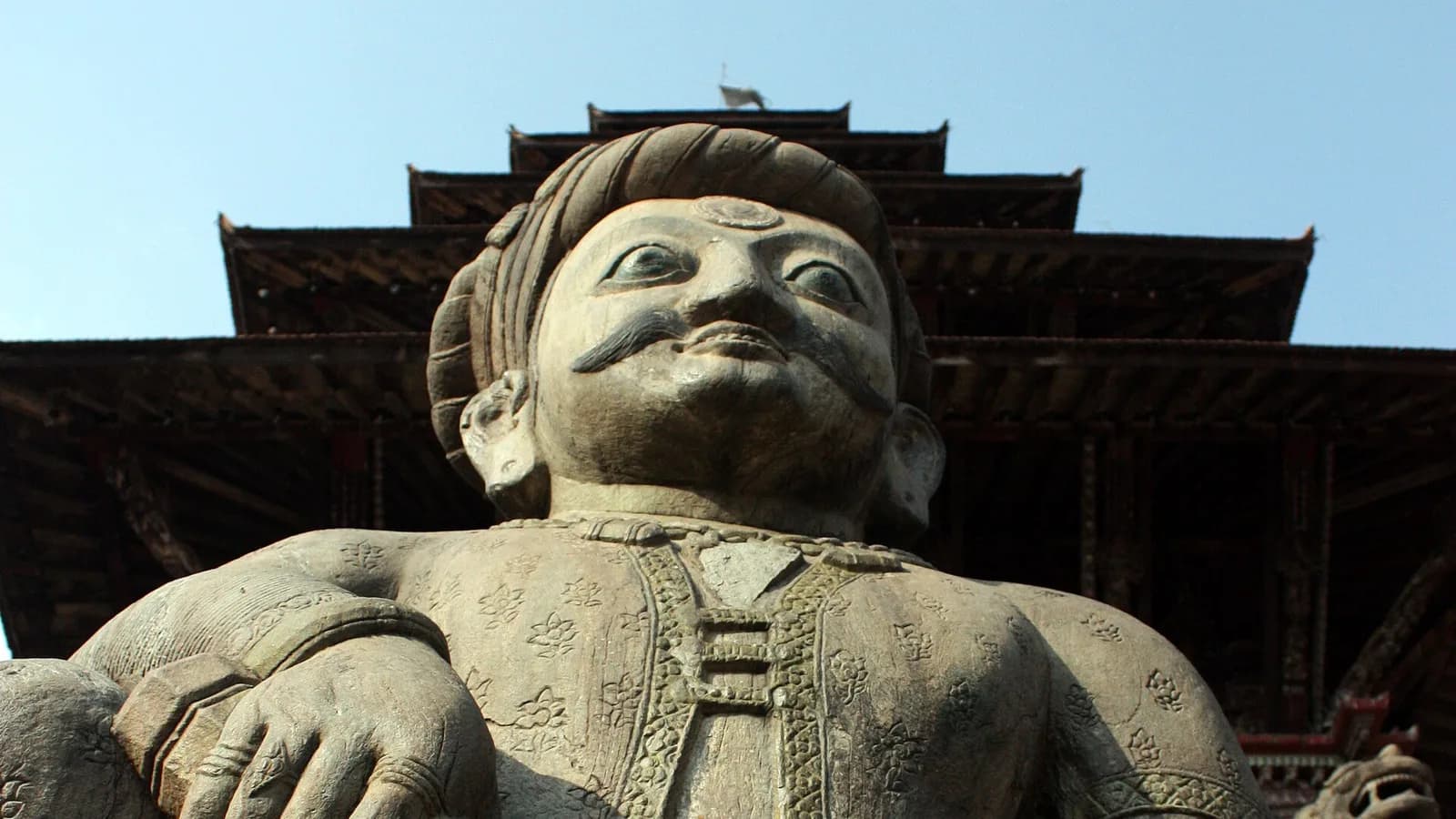
Most of Nepal's big celebrations follow the moon, which is why their dates slide around the calendar every year. Bisket Jatra is the rebel. It tracks the sun, lands in mid-April, and turns the medieval city of Bhaktapur into a roaring stage for the Nepali new year. If you have ever wanted to see a god pulled through narrow brick streets on a chariot the size of a house — while two halves of a town wage a friendly war over which direction it goes — this is the festival to time your trip around.
Bisket Jatra (also written Biska Jatra) is loud, ancient, and gloriously unpolished. It is not staged for tourists, there is no grandstand, and nobody hands you a schedule at the gate. This guide explains what actually happens, when to go, where to stand, and how to read the chaos so it feels thrilling rather than bewildering.
Key takeaways
- Bisket Jatra is Bhaktapur's new year festival, celebrated for roughly nine days around the Nepali solar new year (Baisakh 1) in mid-April.
- It follows the solar calendar, not the lunar one, so its dates barely move from year to year — but always confirm the exact dates for your travel year before booking.
- The signature events are a chariot tug-of-war carrying the fierce god Bhairava, and the raising and dramatic felling of a tall ceremonial pole called the lingo.
- Nearby towns hold their own linked celebrations: Thimi's orange-powder Sindoor Jatra and Bode's tongue-piercing ritual on new year's day.
- It is free to watch, but Bhaktapur's foreigner entry fee still applies, and the crowds around the chariot and pole are genuinely intense.
What "Bisket" means and the legend behind it
The name is a Nepali rendering of the Newar term biskāḥ jātrā, and most retellings tie it to a snake legend. The popular story goes like this: a princess was cursed, and every man who married her died on the wedding night. A brave prince with tantric knowledge stayed awake, and as the princess slept, two serpents slid out of her nostrils to kill him. He cut them down. To celebrate the broken curse, a festival was born, and the slain serpents were displayed on a long pole — which many people connect to the towering lingo raised today.
It is worth being honest here: historians don't all agree. Some point out that the two long banners on the pole are auspicious "world banner" symbols rather than literal serpents, and that the snake tale grew up around the ritual later. Either way, the festival's emotional core is clear — it is a fierce, protective rite welcoming a fresh year, presided over by deities who are anything but gentle.
The two gods at the center: Bhairava and Bhadrakali
Two deities anchor Bisket Jatra. Bhairava is the wrathful, fanged guardian of Bhaktapur, often shown with many arms and a garland of skulls — a fearsome protector rather than a comforting one. His female counterpart and energy, Bhadrakali, is equally fierce and equally essential. During the festival their images leave their temples and travel by chariot, which in the Newar tradition is how a god comes out to be among the people.
When locals say the festival "begins," what they often mean is the moment Bhairava is brought out of his temple in Taumadhi Square and placed in his chariot. From that instant, the whole city seems to orbit around that wooden vehicle.
When Bisket Jatra happens
Here is the part that makes Bisket Jatra unusual and convenient for travelers.
| Feature | Bisket Jatra | Most Nepali festivals | | --- | --- | --- | | Calendar | Hindu solar | Lunar | | Timing | Mid-April, around Baisakh 1 | Shifts widely each year | | Date stability | Very stable (mid-April) | Can move by weeks | | Length | About 9 days | Varies |
Because it is solar, the festival reliably clusters around the Nepali new year, Baisakh 1, which falls in mid-April. Celebrations typically begin a few days before the new year and continue for about nine days. That stability makes it far easier to plan around than Dashain or Indra Jatra, whose dates lurch around the calendar.
That said — never book a non-refundable flight to a festival on the strength of an article's projected date. The new year date is set by the official Nepali calendar each year, and the festival's day-by-day program is decided locally. Confirm the year's dates with the Nepal Tourism Board or a Bhaktapur-based source close to your trip. For broader timing context, see our guides to the best time to visit Nepal and Nepal's weather by month — mid-April is warm, dry, and pleasant in the valley.
The chariot tug-of-war
This is the image that defines Bisket Jatra. A massive, multi-tiered wooden chariot is assembled in Taumadhi Square and loaded — after tantric rituals — with the images of Bhairava and his companion. It rides on heavy log wheels and is dragged by thick ropes.
Here is the twist that makes it a contest. Bhaktapur is split into an upper town (Thane) and a lower town (Kone). Crowds from each half grab the ropes at opposite ends and pull in opposite directions. It becomes an enormous tug-of-war, with the god in the middle. The side that drags the chariot into its territory is considered the year's winner, and the bragging rights are taken seriously.
To an outsider it can look like barely controlled mayhem — hundreds of people heaving, the chariot lurching, the crowd surging back and forth. That is exactly what it is, and that is the point. It is muscular, communal, and electric.
The lingo: raising and felling the pole
The festival's other great spectacle is the lingo (also called the yosin or lyosin dyo), a towering wooden pole raised at an open ground known as Bhelukhel. Reports describe it as roughly 25 meters tall, prepared with tantric rites and hung with two long banners.
The pole is hauled upright by crowds using ropes — a feat in itself — and stands through the new year. Then, on the evening tied to new year's eve, it is ceremonially pulled down. The felling of the lingo is a massive draw: thousands gather to watch the great mast come crashing to earth, an act that symbolically closes the old year and ushers in the new.
Both the raising and the felling are crowd events of the most physical kind. Keep this firmly in mind when choosing where to stand.
Beyond Bhaktapur: Thimi, Bode, and the wider valley
Bisket Jatra is not confined to one city. Several towns in the eastern Kathmandu Valley hold linked celebrations, and two stand out for travelers.
Sindoor Jatra in Thimi
In the nearby town of Thimi, new year's day brings the Sindoor Jatra — the vermilion powder festival. From early morning, processions of men carry dozens of wooden palanquins (khats), each bearing a deity, out from the Balkumari Temple. As the palanquins weave through the streets, crowds hurl handfuls of bright orange sindoor powder into the air. The whole town, and everyone in it, turns orange. It is one of the most photogenic mornings in the Nepali festival calendar — though you will want a cheap change of clothes and a sealed bag for your camera and phone.
The tongue-piercing ritual in Bode
In the village of Bode, a single volunteer performs one of the most striking acts of devotional endurance anywhere in Nepal: he has his tongue pierced with a long metal spike and then walks through the town carrying a rack of flaming torches. Local belief holds that this act wards off drought, disease, and disaster for the community in the year ahead. It is intense and not for the squeamish, but it is a profound expression of faith — observe it respectfully and from a distance.
How to watch it: a practical plan
Bisket Jatra rewards a little strategy. A loose plan beats wandering into a heaving crowd with no idea where the chariot is.
- Base yourself in or near Bhaktapur. Staying inside the old city, or doing an early day trip from Kathmandu, puts you within walking distance of everything. See our Bhaktapur day trip guide for the entry-fee details and logistics.
- Arrive early on the big days. The lanes around Taumadhi fill fast. Once the chariot is moving or the pole crowd has formed, repositioning is nearly impossible.
- Find high ground. Temple plinths, balconies, and the upper steps of buildings around the squares give you a safer, better view than ground level in the scrum.
- Stay clear of the ropes. The tug-of-war and pole-felling are genuinely forceful. The chariot can lurch suddenly; the pole comes down hard. Do not stand in the path of either.
- Guard your valuables. Dense festival crowds attract pickpockets. Keep your phone zipped away and carry minimal cash in a front pocket.
What to bring and how to behave
A few small preparations make the day better.
| Bring | Why | | --- | --- | | Passport and cash | Bhaktapur's foreigner entry fee applies during the festival | | Old clothes (for Thimi) | Sindoor powder stains everything orange | | Sealed bag for electronics | Powder and crowds are hard on phones and cameras | | Water and sun protection | Mid-April valley days are warm and dry | | Closed, sturdy shoes | You will stand and shuffle on uneven brick for hours |
On etiquette: this is a living religious event, not a show. Don't climb on chariots or touch ritual objects, ask before photographing people up close, and step back when a procession needs to pass. Our guide to temple and festival etiquette in Nepal covers the basics. If you are invited into a local home during the new year, expect generous food — Bhaktapur sits at the heart of Newar cuisine, and our Newari food guide explains what you might be served.
A few useful phrases
Even a handful of words goes a long way during a festival.
- "Naya barsa ko subhakamana" — Happy New Year
- "Subha Bisket Jatra" — Happy Bisket Jatra
- "Ratha kata cha?" — Where is the chariot?
- "Photo khichna hunchha?" — May I take a photo?
Is it worth planning a trip around?
If your travel window touches mid-April, yes — emphatically. Bisket Jatra is one of the few major Nepali festivals with a predictable date, it concentrates several extraordinary spectacles into one valley over a handful of days, and it happens in the most beautiful medieval city in the country. It is raw, physical, and deeply local in a way that staged cultural shows never manage.
Come for the chariot, stay for the pole, and set aside a morning to turn orange in Thimi. Just confirm the exact dates for your year, mind the crowds, and let the oldest new year you will ever celebrate sweep you along.
Sources
- Bisket Jatra — Wikipedia
- Biska Jatra (Bisket Jatra): Festival of Bhaktapur — Bhaktapur.com
- Biska Jatra 2082: Origin and Importance — New Spotlight Magazine
- Thimi celebrates Sindoor Jatra with arrival of Nepali New Year — The Tribune
- Bisket Jatra Commences in Bhaktapur with Traditional Lingo Erection — Ratopati
- Bisket Jatra in Nepal — Rituals & New Year Celebration — Himalayan Trekkers
Frequently asked questions
- When is Bisket Jatra celebrated?
- Bisket Jatra falls in mid-April around the Nepali solar new year on Baisakh 1, usually starting a few days before and running about nine days, so confirm the exact dates for your travel year.
- Where does Bisket Jatra take place?
- The main festival is in Bhaktapur, centered on Taumadhi Square, with linked celebrations in nearby Thimi, Bode, and other towns of the eastern Kathmandu Valley.
- Why does Bisket Jatra follow a different calendar?
- Unlike most Nepali festivals, which track the lunar calendar, Bisket Jatra is tied to the Hindu solar calendar, so its dates stay close to mid-April every year.
- What is the chariot tug-of-war about?
- Devotees from the upper and lower halves of Bhaktapur pull a heavy wooden chariot carrying Bhairava in opposite directions, and the side that wins is seen as favored for the year.
- What is the giant pole at Bisket Jatra?
- A tall wooden pole called the lingo is raised at Bhelukhel and ceremonially pulled down on new year's eve, a moment huge crowds gather to witness.
- Is Bisket Jatra safe for tourists to watch?
- Yes, but the chariot pulling and pole crowds are intense and chaotic, so keep your distance from the ropes, guard valuables, and watch from raised ground.
- What is Sindoor Jatra in Thimi?
- Sindoor Jatra is the linked new year festival in Thimi where crowds carry dozens of palanquins and throw clouds of orange vermilion powder through the streets.
- Do I need a ticket for Bisket Jatra?
- There is no festival ticket, but Bhaktapur charges foreigners a Durbar Square entry fee that still applies during the festival, so carry your passport and cash.
Spotted an error in this post? Tell us or suggest a correction.
Related posts
ABC Trek: A Plain-English Guide to Annapurna Base Camp
The ABC trek (Annapurna Base Camp) explained — the route, how many days it takes, difficulty, the best seasons, and what daily trail life is really like.
Read postAma Dablam Climb: 2026 Expedition Guide (6,812m)
An Ama Dablam climb and expedition guide for 2026 — height, the Southwest Ridge route, camps, fixed ropes, difficulty, permits, cost and the best seasons.
Read postAnnapurna vs Manaslu: Which Trek Should You Choose?
An Annapurna vs Manaslu decision guide for trekkers — compare permits, crowds, difficulty, infrastructure and cost to pick the right Himalayan route.
Read postAsan Bazaar Kathmandu: Old Town Market Guide
A visitor guide to Asan bazaar, Kathmandu's oldest market — its six-road square, Annapurna Temple, what to buy, when to go, and how to get there.
Read postAyurveda Nepal: A Traveller's Guide to Healing
Ayurveda Nepal explained for tourists — the history, the doshas, treatments like Panchakarma and Shirodhara, where to go and how to choose a centre safely.
Read postBest Restaurants Pokhara Lakeside: Where to Eat
The best restaurants in Pokhara Lakeside — lakeside trout, wood-fired pizza, Tibetan momos and healthy cafes, with what to order and rough 2026 prices.
Read post