Load Shedding Nepal: A Traveler's 2026 Power Guide
Is load shedding back in Nepal? What tourists and trekkers need to know about power cuts, charging, and electricity supply in 2026.
Nepal went from 18-hour blackouts to exporting electricity — but a few power cuts still linger.
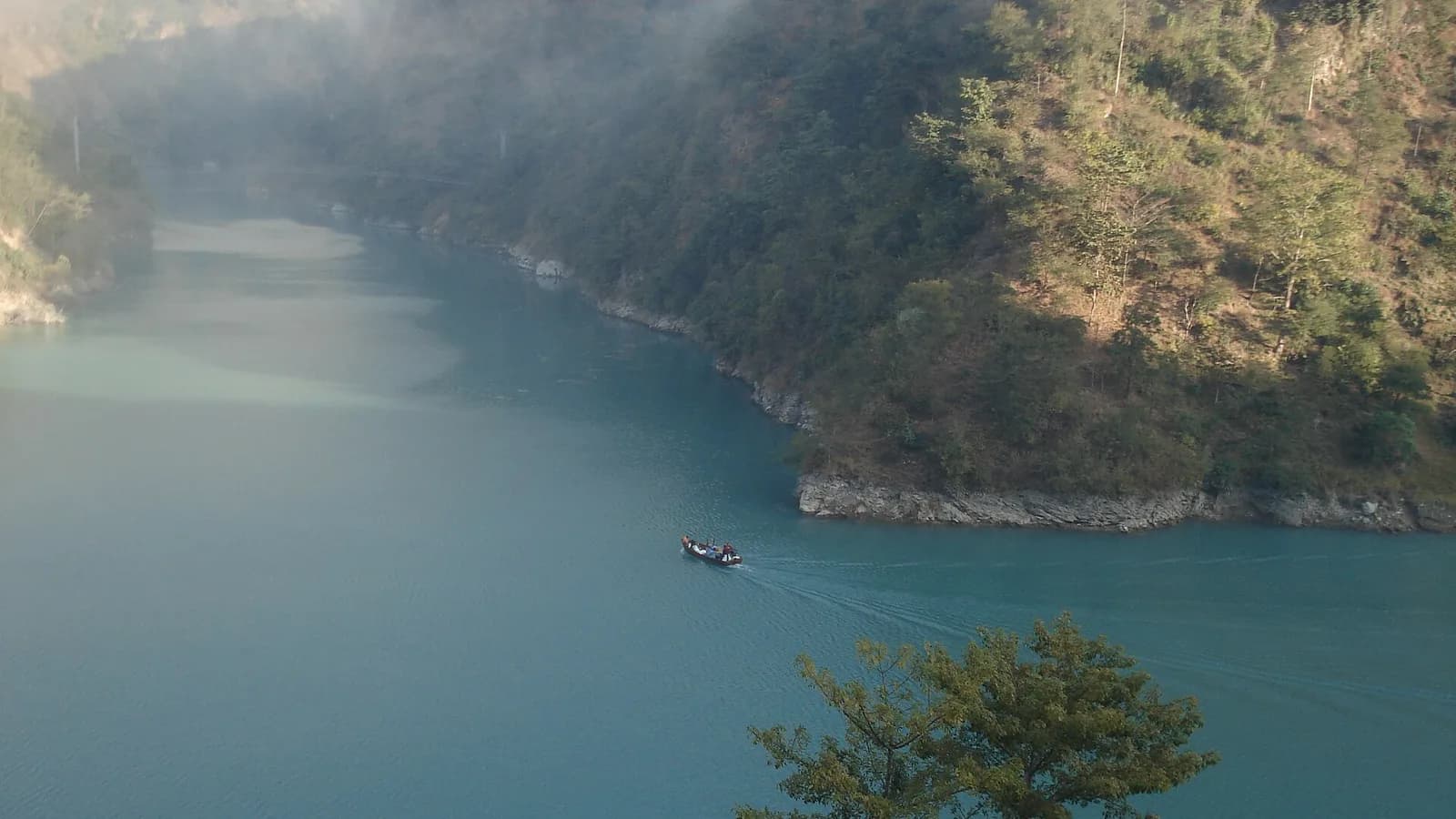
If you read older travel guides, you may still picture Nepal as a country plagued by daily blackouts. For more than a decade, load shedding in Nepal meant scheduled power cuts that stretched to as long as 18 hours a day in the dry winter season. That era is over. Since 2018 the country has not only kept the lights on but become a net exporter of electricity to India and Bangladesh during the wet months. Still, the story is not perfectly tidy: short, localized power cuts return in the dry season, and a few headlines in 2025 and 2026 have kept the word "load shedding" in the news. Here is what that actually means for you as a tourist or trekker.
Key takeaways
- Nepal ended its long load-shedding era in 2018; there is no nationwide scheduled load shedding in 2026.
- Power cuts that do happen now are mostly short, local, and tied to the dry winter season or to maintenance work.
- Most of Nepal's power comes from run-of-river hydropower, so output is high in the monsoon and lower in winter, when Nepal imports from India.
- Nepal is now a net electricity exporter, earning billions of rupees from sales to India and Bangladesh.
- For travelers, the practical risk is minor: bring a power bank, a universal adapter, and don't count on charging at high-altitude teahouses being free or fast.
From 18-hour blackouts to keeping the lights on
For Nepalis who lived through the 2000s and early 2010s, load shedding was a defining daily frustration. Households kept printed schedules on the fridge showing exactly which hours their neighborhood would lose power, and during the worst dry-season stretches those cuts could total up to 18 hours a day.
The turning point came under Kul Man Ghising, who was appointed managing director of the Nepal Electricity Authority (NEA) in September 2016. Rather than wait for huge new plants, he focused on better management and more equitable distribution — notably ending the practice of feeding a few big industries around the clock while ordinary homes sat in the dark. The Kathmandu Valley saw load shedding end first, around Tihar in 2016, and the NEA declared the entire country free of load shedding for both homes and industry by May 2018.
That transformation is genuinely dramatic: a country that once endured marathon blackouts began exporting surplus power across its southern border. If you want the broader backdrop on the rivers and mountains behind that change, our piece on the Himalayas and on Nepal and climate change gives useful context.
Why power cuts haven't completely vanished
Here is the nuance that explains the recurring headlines. The large majority of Nepal's electricity comes from run-of-river (ROR) hydropower plants. These don't store much water in big reservoirs; they generate based on how much water is flowing past at any given moment.
That design has a seasonal consequence:
- Monsoon (roughly June to September): rivers swell, generation peaks, and Nepal produces a surplus it can sell abroad.
- Dry winter (roughly December to April): river flows drop, generation falls, and demand for heating climbs. Nepal then imports electricity from India to fill the gap.
So even with no formal load shedding, the dry season is when supply is tightest. When demand outpaces what domestic plants plus imports can deliver — especially in peak evening hours — the system can come under strain, occasionally affecting industrial users first.
The 2025-2026 flashpoints
A few specific episodes kept the debate alive:
- In July 2025, the NEA published a schedule of power cuts for the Chitwan area. NEA officials framed it as a technical and transmission issue rather than a return of true load shedding, but consumers experienced real outages.
- The NEA also restricted supply to dozens of industries at times, citing dry weather, weaker domestic generation, and limits on imports from India.
- In early January 2026, Pokhara Metropolitan City scheduled morning outages (roughly 6 AM to 11 AM) over several days for maintenance of a 132 kV busbar panel, and various Kathmandu Valley neighborhoods reported winter outages linked partly to heavy heater use.
NEA leadership has repeatedly insisted the country is not returning to scheduled load shedding, attributing disruptions to maintenance, technical faults, and infrastructure limits. The honest summary for a traveler: occasional, short, local cuts — not the all-day blackouts of the past.
How the numbers stack up
The supply-and-demand gap is easiest to see in round figures. The data below is drawn from NEA statements reported in Nepali media; treat exact megawatt figures as approximate snapshots that shift day to day and season to season.
| Indicator | Reported figure | Note | | --- | --- | --- | | Typical generation (a 2025-26 snapshot) | About 1,175 MW | Hydropower plus solar, on a given day | | Peak demand | About 2,077 MW | Met partly by imports from India | | Import limit (Dhalkebar-Muzaffarpur line) | Up to 654 MW/day | Main cross-border 400 kV link | | Import limit (Tanakpur-Mahendranagar line) | Up to 54 MW/day | Secondary 132 kV link |
The gap between domestic generation and peak demand is why winter imports matter so much. New projects coming online — for example added output from the 456 MW Upper Tamakoshi plant — are expected to ease pressure on industrial supply over time.
Nepal as a power exporter
The flip side of winter imports is a genuinely strong export season. As river flows rise in the monsoon, surplus electricity flows south and east:
- Nepal's export capacity reached roughly 1,051 MW in 2025, including exports to Bangladesh routed through India.
- India approved purchasing an additional 200 MW from Nepal for a window from 11 August to 31 October 2025, lifting Nepal's export capacity to India to around 1,010.9 MW.
- Exports to Bangladesh began in June 2025 at 40 MW; in late November 2025 the two sides agreed to raise this to 60 MW.
- Nepal earned about US$9.436 million (as of late 2025) from electricity sold to Bangladesh over roughly five months, at a reported rate of US$6.40 per unit.
- In fiscal year 2024-25, NEA recorded 699 GWh of net exports worth about Rs4.5 billion, and earnings from exports in the first stretch of FY 2025-26 ran into the tens of billions of rupees.
For a country once synonymous with blackouts, becoming a cross-border electricity seller is a remarkable reversal — and a reason load shedding is far less likely to return at the old scale.
What this means for tourists
Practically speaking, load shedding should not derail your trip. Tourism infrastructure has adapted to power realities, and the cuts that remain are short and scattered. A few points to keep in mind:
In Kathmandu and Pokhara
Most mid-range and upper hotels run backup inverters or generators, so a brief grid cut often passes unnoticed in the lobby and rooms. Budget guesthouses may have a short gap before backup kicks in. Air quality and infrastructure are a bigger day-to-day concern in the capital than power — see Kathmandu air quality if you are sensitive to pollution. For neighborhood-level planning, our guide to where to stay in Kathmandu is a good starting point.
On the trek
Teahouses on popular routes like the Everest Base Camp trek and the Annapurna Base Camp trail typically rely on a mix of small hydropower, solar panels, and occasional generators. Two realities to plan for:
- Charging often costs a fee, usually charged per device and rising the higher you go.
- Power can be unreliable at altitude, so don't assume a full overnight charge.
That is why a power bank earns its place in your kit. Our Nepal trekking packing list covers this alongside other essentials.
Power, plugs, and staying charged
Nepal runs on 230V at 50Hz, using plug types C, D and M. Most travelers will want a universal adapter, and you should confirm your chargers accept 230V (most modern phone and laptop chargers do).
A simple kit handles almost any outage you'll meet:
| Item | Why it helps | | --- | --- | | Universal travel adapter | Covers Nepal's mixed plug types | | 10,000-20,000 mAh power bank | Bridges short cuts and teahouse charging fees | | Multi-port USB charger | Charges several devices in one limited window | | Headlamp | Hands-free light for any evening outage |
For the wider toolkit — SIM cards, offline maps, and connectivity — see our guides on the best SIM card in Nepal and WiFi in Nepal. If you are picking a season for your trip, the dry winter has the clearest mountain views but slightly tighter power supply, while the best time to visit Nepal weighs all the trade-offs.
Sources
- NEA releases official load-shedding schedule: Chitwan to face daily 6-hour power cuts — Fiscal Nepal
- NEA's Claim: It's Not Load Shedding in Chitwan, But a Technical Issue — New Spotlight Magazine
- Load-shedding allegations continue to haunt government — The Kathmandu Post
- NEA denies load shedding return, calls recent reports misleading — Khabarhub
- 'Entire country is now free of loadshedding' — The Kathmandu Post (2018)
- Kul Man Ghising — Wikipedia
- Nepal to Export Additional 200 MW of Electricity to India — SASEC
- Dhaka to import 20MW more from Nepal, taking total to 60MW — The Kathmandu Post
- Nepal earns US$9.436 million from electricity exports to Bangladesh in 2025 — myRepublica
- Power Cuts, Charging and Electricity in Nepal for Tourists — Awesome Holidays Nepal
- Nepal to face power crisis as India slashes electricity supply — Fiscal Nepal
Frequently asked questions
- Is there load shedding in Nepal in 2026?
- There is no nationwide scheduled load shedding in 2026, but short, localized power cuts still happen, mostly during the dry winter months and during maintenance.
- When did Nepal stop having load shedding?
- The Nepal Electricity Authority declared the residential and industrial load-shedding era over by May 2018, after years of daily blackouts that once reached up to 18 hours.
- Why does Nepal still have power cuts if it exports electricity?
- Most plants are run-of-river, so they produce surplus power in the wet monsoon season but generate far less in the dry winter, when Nepal imports electricity from India to cover demand.
- Will power cuts affect my trek or hotel stay?
- Most tourist hotels in Kathmandu and Pokhara have backup inverters or generators, and teahouses on popular treks usually run solar and small generators, so outages are rarely a serious problem.
- Should I bring a power bank to Nepal?
- Yes, a good power bank is strongly recommended, especially for trekking, where charging may cost a fee per device and grid power can be patchy at higher altitudes.
- What kind of power plug does Nepal use?
- Nepal uses 230V at 50Hz with plug types C, D and M, so most travelers need a universal adapter and should check their devices support 230V.
- Are power cuts worse in winter or monsoon in Nepal?
- Power cuts are more likely in the dry winter months from roughly December to April, while the monsoon brings surplus generation and the steadiest supply.
Spotted an error in this post? Tell us or suggest a correction.
Related posts
ABC Trek: A Plain-English Guide to Annapurna Base Camp
The ABC trek (Annapurna Base Camp) explained — the route, how many days it takes, difficulty, the best seasons, and what daily trail life is really like.
Read postAma Dablam Climb: 2026 Expedition Guide (6,812m)
An Ama Dablam climb and expedition guide for 2026 — height, the Southwest Ridge route, camps, fixed ropes, difficulty, permits, cost and the best seasons.
Read postAnnapurna vs Manaslu: Which Trek Should You Choose?
An Annapurna vs Manaslu decision guide for trekkers — compare permits, crowds, difficulty, infrastructure and cost to pick the right Himalayan route.
Read postAsan Bazaar Kathmandu: Old Town Market Guide
A visitor guide to Asan bazaar, Kathmandu's oldest market — its six-road square, Annapurna Temple, what to buy, when to go, and how to get there.
Read postAyurveda Nepal: A Traveller's Guide to Healing
Ayurveda Nepal explained for tourists — the history, the doshas, treatments like Panchakarma and Shirodhara, where to go and how to choose a centre safely.
Read postBest Restaurants Pokhara Lakeside: Where to Eat
The best restaurants in Pokhara Lakeside — lakeside trout, wood-fired pizza, Tibetan momos and healthy cafes, with what to order and rough 2026 prices.
Read post