The 2001 Nepal Royal Massacre: A Factual Account
A respectful, well-documented account of the 2001 Nepal royal massacre at Narayanhiti Palace — what happened, the official inquiry, and the aftermath.
On the night of 1 June 2001, nine members of Nepal's royal family died at the Narayanhiti Palace. The event reshaped the country's history.
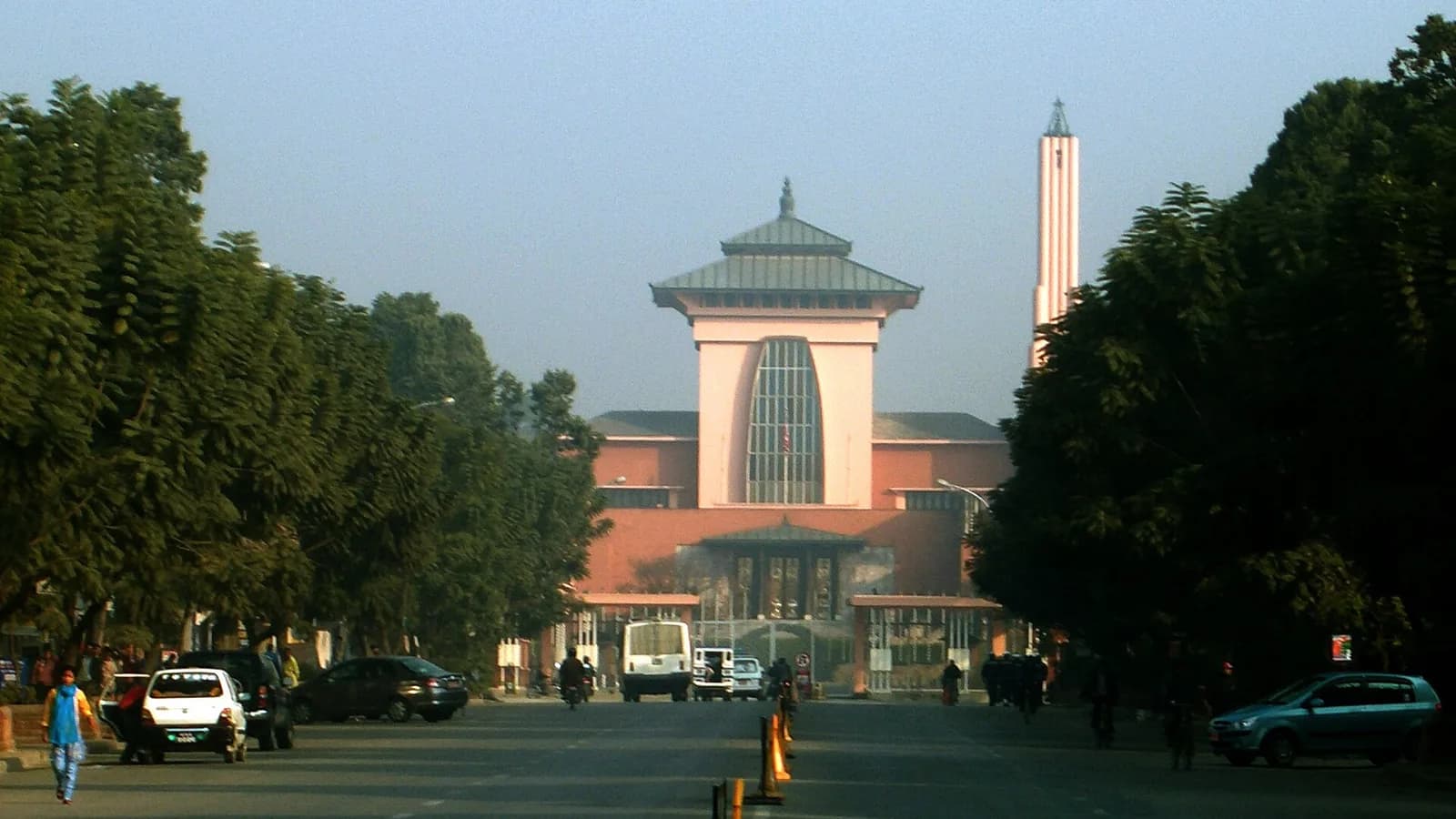
The 2001 Nepal royal massacre is one of the most tragic and consequential events in the country's modern history. On the night of 1 June 2001, nine members of the Nepali royal family — including the reigning King Birendra and Queen Aishwarya — were shot and killed at the Narayanhiti Palace in Kathmandu. A government inquiry concluded that the gunman was Crown Prince Dipendra, the heir to the throne, who also died of a self-inflicted wound days later. This article is a respectful, encyclopedic account drawn from the official inquiry and reputable reporting: what is documented, what remains contested, and how the event reshaped Nepal.
We treat this with the seriousness it deserves. The aim is a clear factual record, not sensationalism, and we are careful throughout to distinguish the findings of the official investigation from the speculation and conspiracy theories that have surrounded the case ever since.
Key takeaways
- On 1 June 2001, a mass shooting at the Narayanhiti Palace in Kathmandu killed nine members of Nepal's royal family, including King Birendra and Queen Aishwarya.
- A government commission led by the Chief Justice and the Speaker of parliament concluded, after interviewing more than 100 witnesses, that Crown Prince Dipendra was the perpetrator.
- The inquiry recorded that Dipendra had been drinking and had smoked a hashish-laced cigarette that evening; it identified frustration over his marriage prospects as the likely motive.
- Dipendra was proclaimed king while in a coma and died on 4 June 2001 without regaining consciousness; his uncle Gyanendra then became king.
- The event, known in Nepali as the Durbar Hatyakanda (palace massacre), deeply shook public trust in the monarchy.
- Various conspiracy theories persist, but they are not supported by the official findings and are presented here only as unverified claims.
The setting: the Shah monarchy in 2001
In 2001, Nepal was a constitutional monarchy. King Birendra Bir Bikram Shah Dev, who had ruled since 1972, was a widely respected figure who had overseen the country's transition to multi-party democracy in 1990. The royal family lived at the Narayanhiti Palace, a sprawling complex in central Kathmandu that served as both residence and seat of the monarchy.
The royal household held regular family gatherings, and one such dinner was scheduled for the evening of 1 June 2001 at the Tribhuvan Sadan, a building within the palace grounds. The crown prince, Dipendra, was the host. He was the eldest son of Birendra and Aishwarya, British-educated, and the heir apparent. By all accounts the evening began as an ordinary family occasion.
What happened on 1 June 2001
The following account reflects the findings of the government inquiry and the testimony of survivors and staff gathered in its immediate aftermath. We summarise it plainly and without embellishment.
According to the inquiry, over the course of the evening Dipendra consumed a large amount of whisky and, witnesses reported, had smoked a cigarette laced with hashish. He appeared unwell and was helped from the room at one point. Later, he is reported to have returned to the gathering dressed in army-style fatigues and carrying firearms taken from his personal collection, including an automatic weapon.
In the room where the family had gathered, Dipendra opened fire. King Birendra was among the first struck and was fatally wounded. Dipendra then shot a number of other relatives. Queen Aishwarya and his younger brother Prince Nirajan were killed in the palace garden, where, according to testimony, Nirajan had tried to shield his mother. His uncle Prince Dhirendra, who reportedly attempted to persuade Dipendra to give up the weapon, was also shot. In total, nine members of the royal family were killed. Dipendra then turned a weapon on himself.
Those who died
The nine royal family members killed, as recorded by the inquiry and contemporary reporting, were:
| Name | Relationship to Dipendra | | --- | --- | | King Birendra | Father; reigning monarch | | Queen Aishwarya | Mother | | Prince Nirajan | Younger brother | | Princess Shruti | Younger sister | | Prince Dhirendra | Uncle (the king's brother) | | Princess Shanti | Aunt | | Princess Sharada | Aunt | | Princess Jayanti | Cousin | | Kumar Khadga Bikram Shah | Uncle by marriage (Sharada's husband) |
Several other relatives present were wounded but survived. Out of respect for the families, we record these names as a matter of historical fact rather than dwelling on the details of individual injuries.
The succession crisis
The shooting created an immediate and extraordinary constitutional situation. With King Birendra dead, the crown passed automatically to his heir — Dipendra — even though Dipendra himself lay critically wounded and comatose from the self-inflicted gunshot. He was therefore proclaimed King of Nepal while unconscious in hospital, never able to exercise the office.
Dipendra was placed on life support and died on 4 June 2001, three days after the massacre, without ever regaining consciousness. The throne then passed to Gyanendra, King Birendra's surviving brother, who had not been present at the dinner. Gyanendra was crowned king in the immediate aftermath. He would go on to be Nepal's last monarch: his reign ended when the monarchy was abolished in 2008, a transition covered in our explainer on Nepal's monarchy restoration movement.
The official inquiry
In the days after the killings, the government appointed a two-member commission to investigate. It comprised Keshav Prasad Upadhyaya, the Chief Justice of Nepal, and Taranath Ranabhat, the Speaker of the House of Representatives. (A third proposed member, a leader of the main opposition, declined to participate.)
The commission worked quickly. Over the course of roughly a week it interviewed more than a hundred people — eyewitnesses, palace staff, guards and officials. Its conclusion was unambiguous: Crown Prince Dipendra had carried out the shootings. The inquiry's report recorded the sequence of events described above, identified the weapons involved, and noted that Dipendra had been drinking and had smoked a hashish-laced cigarette earlier in the evening.
The reported motive
On motive, the inquiry pointed to Dipendra's personal frustration over his marriage. He had, for several years, wished to marry Devyani Rana, a woman from the prominent Rana family — the lineage that had historically dominated Nepal as hereditary prime ministers and was regarded as a rival house to the Shah monarchy. According to the inquiry and contemporary reporting, the royal family, and Queen Aishwarya in particular, opposed the match on grounds connected to her family background and political ties. The inquiry presented this thwarted relationship as the likely trigger for Dipendra's actions. It is important to frame this as the inquiry's finding on a difficult and ultimately unprovable question of state of mind.
Conspiracy theories and why they persist
No honest account of the massacre can ignore that many Nepalis did not accept the official explanation, and scepticism has endured for more than two decades. We address this directly — and carefully — because it is part of the event's legacy, while being clear that these are unproven theories, not established facts.
Sceptics point to a number of features they consider unexplained, including:
- The apparent lack of security at a gathering of the entire royal line.
- The absence of Gyanendra from the dinner, given that he succeeded to the throne.
- A claim that Dipendra, said to be right-handed, suffered a self-inflicted wound to the left side of the head.
- The speed of the inquiry — about two weeks — and the limited forensic analysis involved.
These points have fuelled alternative narratives in Nepali street literature, rumour and political discourse ever since. It is essential to state clearly what the evidence does and does not support: the official, on-the-record conclusion remains that Dipendra was the perpetrator, and no alternative account has been substantiated by a comparable body of evidence. Detailed examinations by historians and journalists have generally found that the conspiracy theories do not hold up against the documented testimony. We report the existence of the theories as a social and historical fact; we do not present any of them as true.
How Nepal reacted
The massacre sent the country into shock and grief. King Birendra had been a genuinely popular monarch, and the sudden loss of nearly the entire senior royal family was a national trauma. The period that followed saw public mourning, rumour, and unrest in Kathmandu, with some disturbances as a stunned population struggled to absorb what had happened and to trust the explanations on offer.
The event also marked a turning point for the institution of the monarchy itself. The new king, Gyanendra, never commanded the same affection as his brother, and the throne's authority had been badly shaken. Over the following years — through a Maoist insurgency, a controversial spell of direct royal rule, and the 2006 pro-democracy movement — public support for the monarchy declined, culminating in its abolition in 2008. While historians caution against drawing too straight a line, the 2001 massacre is widely seen as one of the events that weakened the monarchy on the path to Nepal becoming a republic.
The Narayanhiti Palace today
For visitors, the most tangible connection to this history is the palace itself. After the monarchy was abolished, the Narayanhiti Palace in central Kathmandu was converted into the Narayanhiti Palace Museum and opened to the public. Visitors can walk through the state rooms and grounds of what was, until 2008, the residence of Nepal's kings.
The museum is a place to engage with this chapter of history thoughtfully and respectfully. It sits within easy reach of Kathmandu's other landmarks — the temples of Kathmandu Durbar Square, the stupa-topped hill of Swayambhunath, and the sacred Pashupatinath temple — and pairs naturally with a broader exploration of the capital. If you are mapping out a trip, our Kathmandu Valley and Nepal itinerary suggests how these sites fit together.
The bottom line
The 2001 Nepal royal massacre was a singular tragedy: in a matter of minutes, the reigning king, queen and seven other royals were killed, and the heir to the throne died days later from his own hand. The official inquiry — conducted by the country's Chief Justice and the Speaker of parliament, and based on the testimony of more than a hundred witnesses — concluded that Crown Prince Dipendra was responsible, citing a thwarted marriage as the likely motive. That conclusion has been challenged by persistent conspiracy theories, but none has been substantiated, and the documented record stands. The massacre's deeper significance lies in what followed: a shaken monarchy, a turbulent decade, and ultimately the end of the Shah throne. It remains an essential, sober chapter in understanding modern Nepal.
Sources
- Nepalese royal massacre — Wikipedia
- Dipendra of Nepal — Wikipedia
- Gyanendra — Last King of Nepal, 2001–2008 — Britannica
- Death, Love and Conspiracy: The Nepalese Royal Massacre of 2001 — Association for Diplomatic Studies & Training
- Blood at the Palace: Everything You Should Know About Nepal's Royal Massacre — Nepalnews
- Nepal's Royal Palace Massacre: What Happened — and Why the Conspiracy Theories Don't Hold Up — Democracy For Nepal
- Nepal — Royal Murders — Oxford Analytica / CIAO
Frequently asked questions
- What was the 2001 Nepal royal massacre?
- It was a mass shooting on 1 June 2001 at the Narayanhiti Palace in Kathmandu that killed nine members of Nepal's royal family, including King Birendra and Queen Aishwarya. A government inquiry named Crown Prince Dipendra as the perpetrator.
- Who died in the royal massacre?
- King Birendra, Queen Aishwarya, Prince Nirajan, Princess Shruti, Prince Dhirendra, Princess Shanti, Princess Sharada, Princess Jayanti and Kumar Khadga Bikram Shah died. Crown Prince Dipendra also died of a self-inflicted wound three days later.
- Who was blamed for the massacre?
- A two-member government commission, after interviewing more than a hundred witnesses, concluded that Crown Prince Dipendra carried out the shootings before turning a weapon on himself. He died on 4 June 2001 without regaining consciousness.
- What was the reported motive?
- The official inquiry pointed to Dipendra's frustration over his marriage prospects, reportedly involving the family's objection to his wish to marry Devyani Rana. The inquiry recorded that he had been drinking and had smoked a hashish-laced cigarette that evening.
- Who became king after the massacre?
- Dipendra was proclaimed king while comatose and died three days later. His uncle, Gyanendra, then became king. Gyanendra would be Nepal's last monarch before the country became a republic in 2008.
- Can you visit the Narayanhiti Palace today?
- Yes. After the monarchy was abolished in 2008, the Narayanhiti Palace in central Kathmandu was converted into a public museum, the Narayanhiti Palace Museum, which is open to visitors.
Related posts
Nepal Monarchy Restoration: The Movement Explained
A neutral, factual account of Nepal's monarchy restoration movement — the demands, the 2023–2025 protests, and what it means for the republic today.
Read postThe 2015 Nepal Earthquake: Impact, Recovery, Travel
A factual account of the April 2015 Nepal earthquake — the Gorkha quake's impact, the decade of recovery, and what it means for travellers today.
Read postBalen Shah: A Traveler's Guide to Nepal's Mayor-PM
Who is Balen Shah? A neutral, fact-checked profile of the rapper-turned-engineer who led Kathmandu and became Nepal's prime minister, for curious visitors.
Read post