How Much Does the Everest Base Camp Trek Cost?
How much does the Everest Base Camp trek cost in 2026? A tier-by-tier guide — budget, standard, premium and luxury — to match spend to your style.
The mountain is free. Everything between you and it has a price tag.
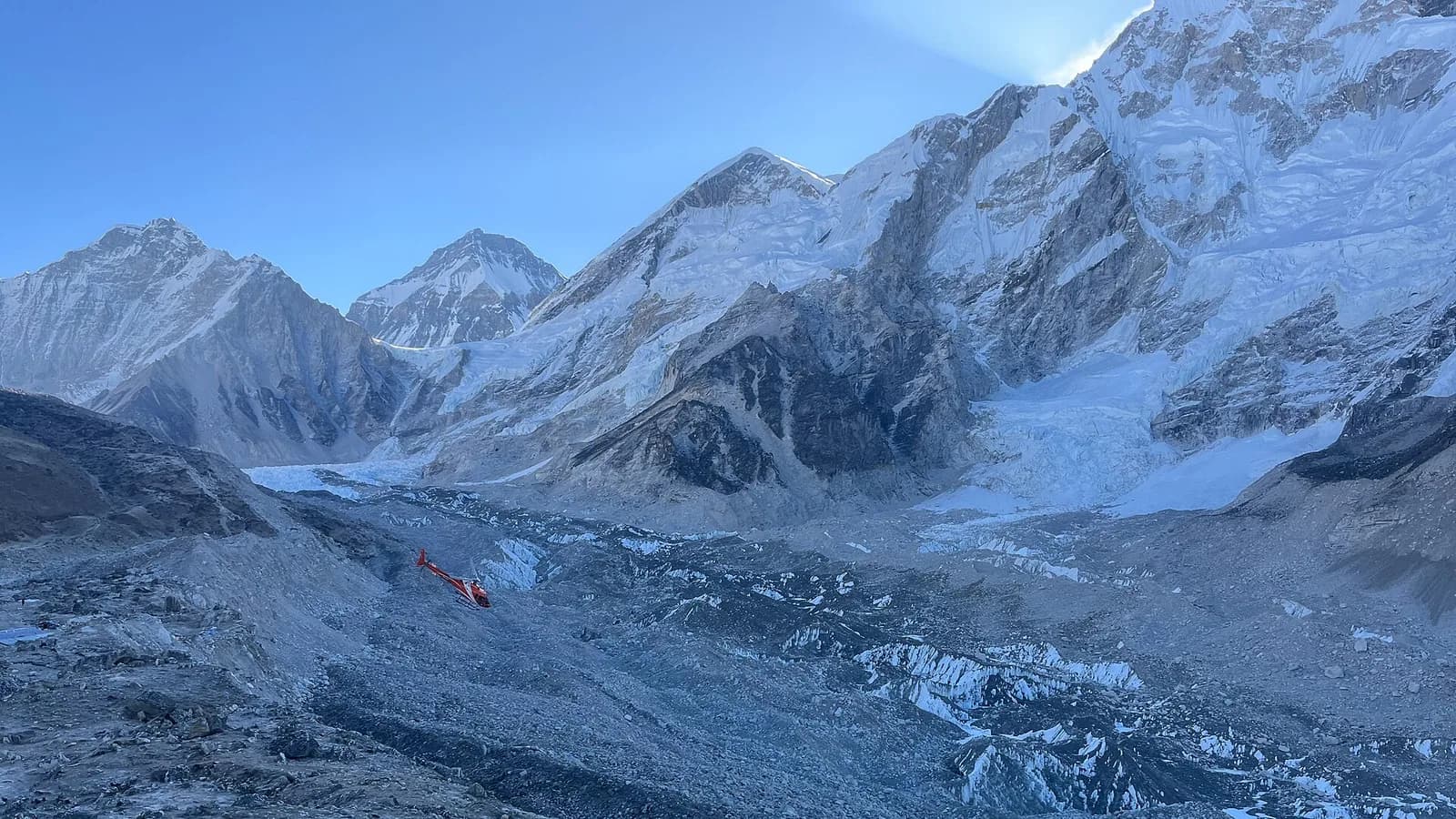
If you have started pricing a Himalayan adventure, you have probably noticed the answer to "how much does the Everest Base Camp trek cost" swings wildly from one website to the next. That is not because anyone is lying — it is because the trek can be done four very different ways. A backpacker counting rupees and a traveller who wants a private guide and a helicopter flight home are doing the same walk for completely different money.
This guide takes a different angle from our full Everest Base Camp trek cost 2026 breakdown, which itemises every hidden fee line by line. Here we sort the trek into four budget tiers so you can find the version that matches how you like to travel, then see what each one actually costs.
Key takeaways
- A 12 to 14 day Everest Base Camp trek typically costs between USD 1,000 and USD 3,000 in 2026, with luxury heli options climbing higher (multiple Nepal operators, 2026).
- The single biggest cost lever is style: independent budget travel versus a full guided package can differ by USD 1,500 or more for the exact same route.
- Fixed costs are small and predictable — permits are about USD 37 and a Lukla flight is roughly USD 215 to 240 one way (as of June 2026).
- The variable costs — guide, porter, daily food, comfort extras — are where your total is really decided.
- Travel insurance with helicopter evacuation is non-negotiable; a single rescue can cost more than the entire trek.
The four cost tiers at a glance
| Tier | Style | Typical total (12 to 14 days) | Best for | |---|---|---|---| | Budget independent | Porter-guide, dal bhat, no extras | USD 1,000 to 1,400 | Experienced, cost-focused trekkers | | Standard guided | Guide + porter, full package | USD 1,400 to 2,500 | Most first-timers | | Premium guided | Small group, senior guide, better lodges | USD 2,500 to 4,000 | Comfort-minded trekkers | | Luxury / heli | Private service, helicopter return | USD 3,500 to 5,500+ | Time-poor or bucket-list travellers |
Ranges compiled from several Nepal-based trekking operators publishing 2026 and 2027 pricing (see Sources). Treat them as planning brackets, not fixed quotes.
The costs that barely change
Before we get into tiers, it helps to lock down the parts that stay roughly the same no matter how you travel. These are the foundation every budget is built on.
Permits
For Everest Base Camp you need exactly two permits in 2026, and the long-retired TIMS card is not one of them:
- Sagarmatha National Park entry permit — NPR 3,000 for foreigners, confirmed on the Nepal Tourism Board park-fee listing (as of June 2026). SAARC nationals pay NPR 1,500.
- Khumbu Pasang Lhamu Rural Municipality permit — NPR 2,000 per person for the first four weeks (as of June 2026).
That is about USD 37 combined. Both are paid in cash at checkpoints on the trail — the park permit at Monjo, the municipal permit at Lukla or Monjo. Our Everest Base Camp permits 2026 guide covers exactly where and how to pay.
The Lukla flight
The famous flight into Lukla is a fixed-ish cost that lands in nearly every budget. Expect roughly USD 215 to 240 one way per person in 2026, so around USD 430 to 480 return. In the busy spring and autumn seasons, flights frequently shift to Manthali (Ramechhap) airport instead of Kathmandu; the ticket itself is cheaper there (often quoted near USD 175 plus about USD 20 road transport), but you trade the saving for a roughly four-hour drive each way.
The Lukla flight is also the most weather-dependent part of the trip. Cancellations are common, so build a spare night or two in Kathmandu into your plan regardless of tier.
Tier 1: budget independent (USD 1,000 to 1,400)
This is the leanest realistic version of the trek. You carry most of your own gear, eat the cheapest filling meal on every menu, and keep the team small.
Where the money goes
- Porter-guide instead of separate hires. A combined porter-guide carries a light load and shows the way for one daily rate rather than two. Independent walking with no support at all is no longer the norm — Nepal began phasing out fully solo trekking in 2023, and our guide rules for EBC explains how that plays out on the ground.
- Dal bhat, twice a day. The classic lentils-and-rice plate usually comes with free refills, so it is the best value on any teahouse menu. See our EBC teahouse food and accommodation guide for what daily eating really looks like.
- Skip the extras. No hot showers above the lower villages, no wifi vouchers, minimal bottled water (treat tap or stream water instead).
Daily on-trail spending in this style often sits around USD 25 to 35. Add the fixed flight and permits and a tight two-week trek can finish close to USD 1,000 to 1,400. It takes discipline and some trekking experience, but it is genuinely doable.
Tier 2: standard guided package (USD 1,400 to 2,500)
This is what most first-time EBC trekkers actually buy, and for good reason. You hand the logistics to an agency and walk.
What a package usually includes
A regular Everest Base Camp package typically bundles:
- Kathmandu to Lukla flights, both ways
- Both permits
- A licensed guide and a porter
- Teahouse accommodation along the route
- Most meals on the trail
- Airport transfers and often a night or two in Kathmandu
The labour costs inside it
Even if you book a package, it helps to know what you are paying for:
| Role | Typical 2026 day rate | Notes | |---|---|---| | Licensed guide | USD 25 to 35 | Plus their food and lodging, paid by the trekker | | Porter | USD 15 to 25 | Loads usually capped around 15 to 20 kg | | Guide tip | USD 5 to 10 per day | Pooled, given at the end | | Porter tip | USD 3 to 5 per day | Pooled, given at the end |
Our tipping guide for trekking crews breaks down the etiquette so you are not guessing on the last day. Tipping is genuinely expected and should be budgeted, not improvised.
A solid mid-range package on the standard 12 to 14 day itinerary generally lands in the USD 1,400 to 2,500 window. If you want to see the day-by-day route those numbers buy, our EBC itinerary maps it out with elevations and acclimatisation days.
Tier 3: premium guided (USD 2,500 to 4,000)
Premium does not change the trail — it changes the experience around it. You are paying for smaller groups, more senior and experienced guides, the better rooms in each village (often the ones with attached bathrooms lower down), and a more generous meal allowance.
This tier suits trekkers who want a buffer of comfort and a higher guide-to-client ratio without going all the way to private helicopters. The walking is identical to Tier 2; the support, food quality, and margin for things going wrong are noticeably better.
Tier 4: luxury and helicopter options (USD 3,500 to 5,500+)
At the top end, money mostly buys time and altitude shortcuts.
- Helicopter return from Gorak Shep or Kala Patthar lets you skip the multi-day walk back down, turning the descent into a scenic flight. This single upgrade is a large part of why luxury totals climb.
- Upgraded lodges, private guides, and curated extras round out the rest.
If your interest is really the flight rather than the full trek, that is a separate trip worth pricing on its own — see our Everest helicopter tour guide. Note that a planned heli return and an emergency evacuation are completely different things, and only one of them is optional.
The cost everyone forgets: insurance
No matter which tier you pick, treat travel insurance with high-altitude helicopter evacuation as a required line item, not an upsell. The reason is simple math: a helicopter rescue from the high Khumbu can run into several thousand US dollars per flight, while a proper high-altitude policy covering evacuation to 6,000m typically costs around USD 150 to 250 for a two to three week trip (as of June 2026).
Two things to check on any policy before you buy:
- It must explicitly cover trekking to at least 6,000m — Everest Base Camp sits at about 5,364m, and standard travel policies often cap altitude far lower.
- It must include emergency helicopter evacuation and repatriation, not just hospital bills.
Our trekking insurance and helicopter evacuation guide goes deeper on what the fine print needs to say. Skipping this to save a couple of hundred dollars is the single worst budget decision you can make on this trek.
How to estimate your own number
Want a quick personal estimate? Stack the pieces:
- Start with your tier total from the table above.
- Confirm the fixed costs are inside it — permits (about USD 37) and the Lukla flight (about USD 215 to 240 each way).
- Add a Kathmandu buffer of one to two nights for likely flight delays.
- Add tips at roughly USD 5 to 10 per day for a guide and USD 3 to 5 for a porter.
- Add insurance at around USD 150 to 250 for the trip.
- Pad 10 to 15% for the small extras — showers, charging, the odd treat — that always sneak in.
If you are still weighing Everest against a cheaper Himalayan option, compare it with our Annapurna Base Camp trek cost guide; ABC generally comes in lower, largely because it skips the pricey Lukla flight.
However you tally it, the headline holds: the trek itself is the same for everyone, but the price you pay is mostly a choice about how you want to travel, not a fixed fee. Decide your tier first, and the budget gets a lot easier to pin down.
Sources
- Nepal Tourism Board — Sagarmatha National Park
- Nepal Tourism Board — Park entry fees
- Adventure Master Trek — EBC cost breakdown 2026/2027: budget vs luxury
- All Nepal Hiking — Everest Base Camp Trek Cost 2026: budget to luxury
- Green Valley Nepal Treks — Everest Base Camp Trek Cost 2026, 2027
- Aboundholidays — Everest Base Camp Trek Permit: rules and cost 2025-2026
- Himalayan Dream — Kathmandu to Lukla flight ticket cost 2025, 2026
- Himalayan Hero — Nepal trekking travel insurance: high altitude guide 2026
Frequently asked questions
- How much does the Everest Base Camp trek cost in 2026?
- Most trekkers spend between roughly USD 1,000 and USD 3,000 for a 12 to 14 day trip in 2026, depending on whether you go independent or buy a guided package and how much comfort you want along the way.
- Can you do the Everest Base Camp trek on a tight budget?
- Yes — a lean independent trek can land near USD 1,000 to 1,400 if you fly economy times, eat dal bhat, skip extras like hot showers and wifi, and hire only a porter-guide rather than a separate guide and porter.
- What is included in a standard EBC guided package?
- A typical package bundles the Kathmandu to Lukla flights, both permits, a licensed guide, a porter, teahouse rooms and most meals on the trail, usually in the USD 1,400 to 2,500 range as of 2026.
- How much are the Everest Base Camp permits?
- Foreign trekkers pay NPR 3,000 for the Sagarmatha National Park entry permit and NPR 2,000 for the Khumbu Pasang Lhamu permit, about USD 37 combined as of June 2026; the old TIMS card is no longer required for this route.
- How much does the Lukla flight cost?
- A one-way Kathmandu to Lukla flight runs roughly USD 215 to 240 per person as of 2026; in peak season flights often depart from Manthali (Ramechhap), which is cheaper to fly but adds a long road transfer.
- Do I need to budget for a guide?
- Plan for one — Nepal phased out fully independent trekking in 2023, and a licensed guide costs about USD 25 to 35 per day plus their food and lodging, which the trekker covers.
- How much should I tip the guide and porter?
- A common guideline is around USD 5 to 10 per day for a guide and USD 3 to 5 per day for a porter, pooled and handed over at the end of the trek.
- Is travel insurance with helicopter evacuation worth the cost?
- Yes — a single helicopter rescue from the high Khumbu can run thousands of US dollars, while a high-altitude policy covering evacuation to 6,000m typically costs USD 150 to 250 for a two to three week trip.
Related posts
EBC Trek Cost 2026: The Costs Quotes Hide
A complement to our full EBC trek cost 2026 guide — the overlooked fees, a teahouse cash plan, and how to read an agency quote before you pay.
Read postEBC Trek Cost 2026: The Honest Breakdown
What the EBC trek cost really comes to in 2026 — Lukla flights, permits, guide and porter rates, lodge prices by altitude, and the fees quotes leave out.
Read postEverest Base Camp Trek Cost: What Moves the Price
Why the Everest Base Camp trek cost swings from under $1,000 to over $4,000 — the four decisions that move your total, with verified 2026 figures.
Read post