Everest Base Camp Trek Cost: What Moves the Price
Why the Everest Base Camp trek cost swings from under $1,000 to over $4,000 — the four decisions that move your total, with verified 2026 figures.
Two people walk the same trail in the same week and pay triple. The trail isn't the variable — the choices are.
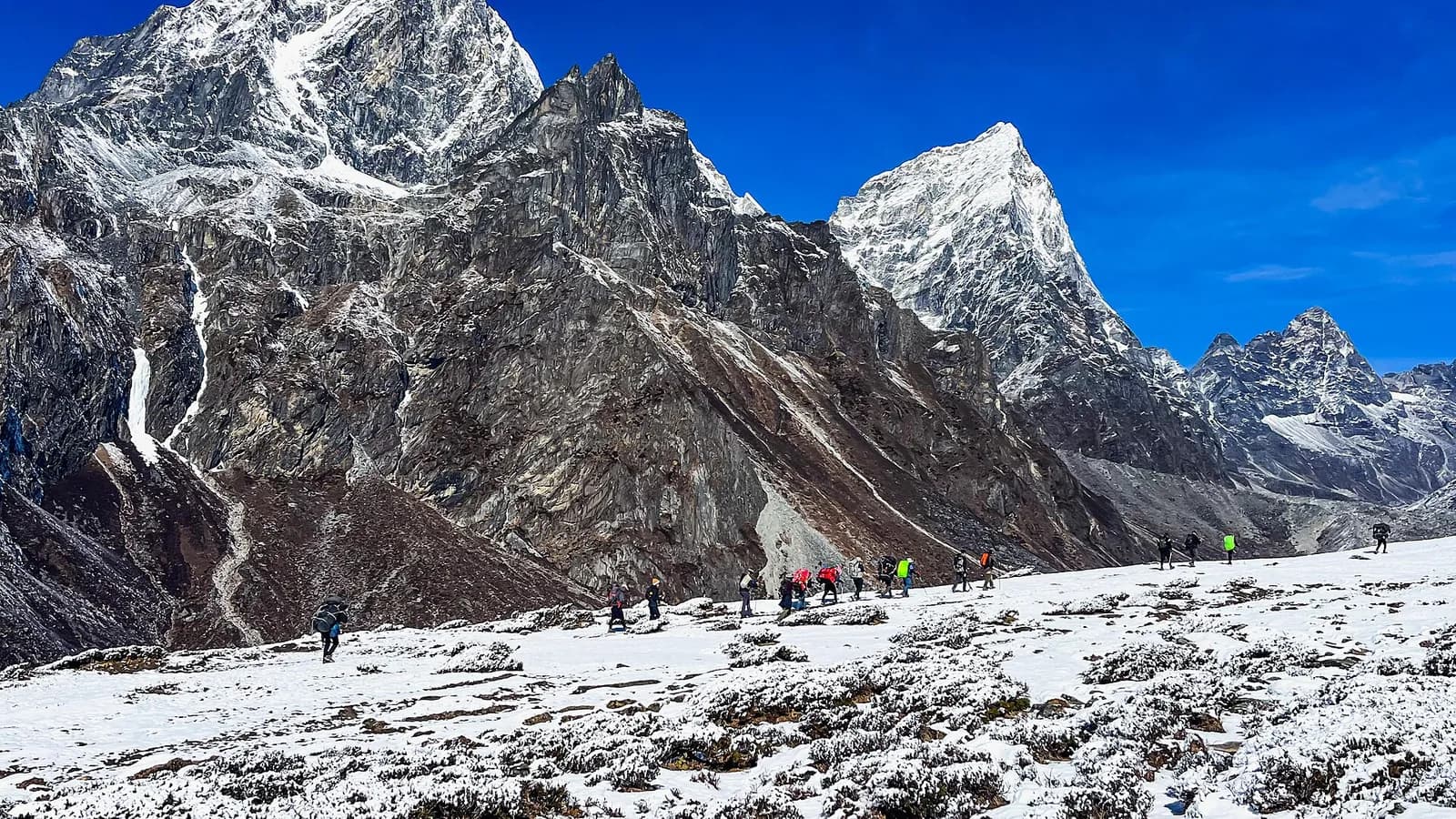
If you compare ten Everest Base Camp trek cost quotes, you will see numbers that range from under USD 1,000 to over USD 4,000 for what looks like the same two weeks of walking. That spread is not random and it is not all markup. It comes down to four decisions you make before you ever reach Lukla. This post is the decision map: for the line-by-line breakdown — permits, daily food prices by altitude, guide and porter rates — read the companion post, Everest Base Camp Trek Cost 2026. Here we focus on the levers that actually move your total.
Key takeaways
- The Everest Base Camp trek cost reported by operators and trekkers spans roughly USD 950 to USD 5,000 per person (as of June 2026); your tier choice decides where you land.
- Permits are a small, fixed slice — about NPR 5,000 (roughly USD 37 as of June 2026) — so they are rarely the reason two quotes differ.
- Four variables do most of the work: season, how you reach Lukla, your support model, and your accommodation tier.
- Since Nepal's April 2023 rule, foreign trekkers in national parks must hire a licensed guide or porter-guide, so the cheapest "guideless solo" option is gone.
- A helicopter return is the single biggest upgrade that pushes a package into the luxury band.
The four levers that move your total
Think of your final cost as a base trek plus four dials. Turn them up and you can triple the price; turn them down and you approach the budget end. None of them changes the route — Lukla to Gorak Shep and back — but each changes what you pay to walk it.
| Lever | Budget setting | Premium setting | Why it moves the number | |---|---|---|---| | Season | Shoulder / off-peak | Peak spring or autumn | Peak diverts flights to Ramechhap and lifts fares 10–20% | | Route to Lukla | Drive-in / Ramechhap package | Direct Kathmandu–Lukla flight | Direct flights cost more per leg but save days | | Support model | Porter-guide, self-booked | Full agency, private guide + porter | Staff count and booking channel drive day rates | | Accommodation | Basic teahouse, dal bhat | Luxury lodge + helicopter return | Comfort and a heli leg are the biggest single add-ons |
Lever 1: Season
Season is the lever most people underestimate. The headline trekking windows are spring (roughly March to May) and autumn (roughly late September to November), and they are the most expensive times to go for two linked reasons.
First, the flight. During peak months the Kathmandu to Lukla flight is usually rerouted out of Ramechhap (Manthali Airport), about four to five hours' drive from Kathmandu. That swaps a short, pricey flight for a cheaper flight plus a long road transfer and, often, an extra night's lodging on one end. Operators also note fares can climb 10 to 20 percent in season.
Second, the lodges. When teahouses are full, the unwritten "stay free if you eat here" arrangement tilts firmly toward the lodge — rooms are scarce, so you eat where you sleep and pay menu prices for every meal. In a quiet shoulder week you have more leverage and more empty beds. For the wider picture of when to go, see the best time to visit Nepal.
Lever 2: How you reach Lukla
Getting to the trailhead is the most volatile cost on the whole trip, and you have real choices.
Direct flight vs Ramechhap
A direct Kathmandu to Lukla flight is reported around USD 215 to USD 240 each way for foreign tourists in the 2026 season (as of June 2026), with some quotes higher. The Ramechhap option pairs a cheaper Lukla flight (commonly quoted near USD 175 to USD 210 each way) with a shared road transfer of roughly USD 20 to USD 30. The direct flight costs more per leg but saves a day each way; Ramechhap saves cash but spends time.
The cancellation tax
Whichever you pick, Lukla weather is the wildcard. Flights cancel regularly, and a grounded flight can mean extra nights in Kathmandu or Ramechhap that no quote includes. This is the hidden cost the line-item post calls out, and it is why an honest budget keeps a buffer. Some trekkers sidestep it entirely by driving in via Salleri and walking the lower valley — slower, but far less cancellation risk.
Lever 3: Your support model
Since 1 April 2023, Nepal requires foreign trekkers in national parks, conservation areas and restricted areas to hire a licensed guide or porter-guide through a government-registered agency; Nepali citizens are exempt. That rule reshaped the budget end of the market — the old "no guide, no agency" solo trek is no longer the legal floor. If you are still weighing this, do you need a guide for Everest Base Camp walks through what the rule means in practice.
What you choose within the rule still moves the price:
- A porter-guide (one person who guides and carries a light load) is the leanest compliant option.
- A separate guide plus porter is more comfortable and more expensive — you are now paying two day rates plus their food and lodging.
- A full agency package rolls staff, permits, flights and most meals into one price and removes the planning load.
Day rates reported for 2026 land guides around USD 25 to USD 35 and porters around USD 15 to USD 30, with the trekker typically covering staff food and accommodation on top. Tips are customary on top of that. For the etiquette and rough amounts, see tipping trekking guides and porters in Nepal. And whatever model you choose, trekking insurance with helicopter evacuation is the one line you should never trim.
Lever 4: Accommodation tier (and the helicopter question)
This is the dial with the widest swing. At the budget end you sleep in basic teahouses and eat dal bhat, whose free refills make it the most economical meal on the mountain. At the top end you book the comfortable lodges and frequently add a helicopter segment — and that heli leg, more than anything else, is what carries a package into the luxury band.
| Tier | What you get | Reported range (USD, as of June 2026) | |---|---|---| | Budget / independent | Self-booked, porter-guide, basic teahouses | ~950–1,500 | | Standard guided package | Guide, porter, permits, Lukla flights, most meals | ~1,400–2,500 | | Luxury package | Premium lodges, full support, often a helicopter return | ~3,500–4,500 |
Treat these as bands, not promises — actual quotes vary by operator, group size, length and exactly what is bundled. The honest move is to read every inclusion list closely. Showers, wifi, charging, bottled water and tea refills are the small items most likely to be excluded, and at altitude they add up fast. For a sense of those on-trail prices, see the EBC teahouse food and accommodation guide.
Where permits fit (spoiler: not much)
It is worth saying plainly because so many quotes obscure it: permits are a small, fixed cost, not the reason two prices differ. EBC needs two — the Sagarmatha National Park entry permit (about NPR 3,000, roughly USD 22 for foreigners as of 2025) and the Khumbu Pasang Lhamu Rural Municipality permit (about NPR 2,000, roughly USD 15) — for a total near NPR 5,000, around USD 37 (as of June 2026). The old TIMS card requirement for this region was dropped in 2023. If a quote inflates "permits," that is markup, not government fees. For the full permit picture, see Everest Base Camp permits 2026.
Putting the levers together
Picture two trekkers in the same October week. One drives to Ramechhap, flies in, hires a single porter-guide, sleeps in standard teahouses, eats dal bhat and walks out the same way. The other takes direct flights both ways, travels with a private guide and porter through a full agency, stays in premium lodges and flies out by helicopter. Same trail, same dates, same summit-of-the-trek photo at Kala Patthar — and a price difference of several thousand dollars, every dollar of it explained by the four dials above.
That is the useful way to read any Everest Base Camp trek cost quote: not "is this number right?" but "which settings is it priced for, and are they the settings I want?" Decide your four levers first, then the quotes start making sense.
Sources
- Nepal Tourism Board — Park entry fees
- Nepal Tourism Board — Everest Base Camp
- Himalayan Recreation — How to Obtain EBC Trek Permits and Fees in 2026
- Kathmandu Post — No more solo treks: guides mandatory from April 1
- Much Better Adventures — Changes to the rules of trekking in Nepal
- Nepal Hiking Team — How much does the Everest Base Camp Trek cost?
- Nepal Guide Trekking — Lukla flight guide 2026/27
Frequently asked questions
- How much does the Everest Base Camp trek cost in 2026?
- Reputable operators and trekkers report a wide spread, roughly USD 950 to USD 5,000 per person (as of June 2026), depending on season, route to Lukla, support model and accommodation tier.
- What is the single biggest cost on an EBC trek?
- For most people it is the package or the Lukla flight plus on-trail food and drink, not the permits — the two EBC permits together come to about NPR 5,000 (roughly USD 37 as of June 2026).
- Can I still trek Everest Base Camp solo to save money?
- Nepal's April 2023 rule requires foreign trekkers in national parks to hire a licensed guide or porter-guide through a registered agency, so a true guideless solo trek is no longer the budget route.
- Why do peak-season EBC treks cost more?
- In spring and autumn the Lukla flight usually shifts to Ramechhap (Manthali), adding a long drive and cost, lodges fill so refusing meals is harder, and flight fares tend to rise 10 to 20 percent.
- Does a helicopter return raise the price a lot?
- Yes — a scenic or one-way helicopter segment is the main thing that pushes luxury packages toward the USD 3,500 to USD 4,500 band reported by operators (as of June 2026).
- Are the EBC permit fees the same for everyone?
- No — Sagarmatha National Park entry is about NPR 3,000 for foreigners, NPR 1,500 for SAARC nationals and around NPR 100 for Nepalis (as of 2025), plus the local municipality fee.
Related posts
EBC Trek Cost 2026: The Costs Quotes Hide
A complement to our full EBC trek cost 2026 guide — the overlooked fees, a teahouse cash plan, and how to read an agency quote before you pay.
Read postEBC Trek Cost 2026: The Honest Breakdown
What the EBC trek cost really comes to in 2026 — Lukla flights, permits, guide and porter rates, lodge prices by altitude, and the fees quotes leave out.
Read postHow Much Does the Everest Base Camp Trek Cost?
How much does the Everest Base Camp trek cost in 2026? A tier-by-tier guide — budget, standard, premium and luxury — to match spend to your style.
Read post