Gosaikunda Lake Trek: Sacred Glacial Lakes High in Langtang
Practical Gosaikunda Lake trek guide for 2026: the route from Dhunche, altitude, acclimatisation, permits, best season and the Janai Purnima pilgrimage.
Above the rhododendron line, a chain of holy lakes lies frozen-bright against bare rock — where pilgrims walk barefoot to bathe and gods are said to have struck water from the mountain.
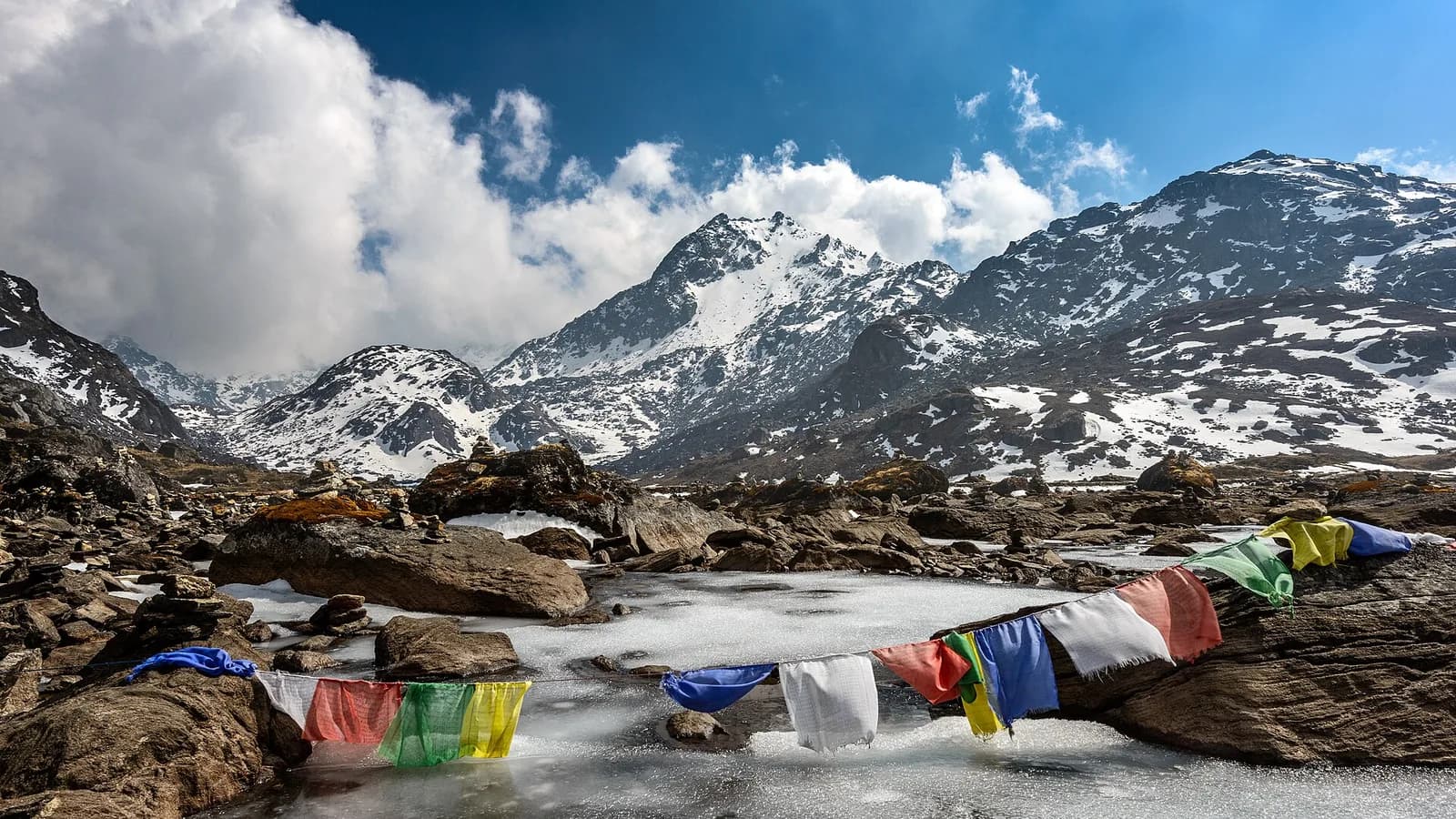
The Gosaikunda Lake trek leads to one of Nepal's most spiritually charged landscapes: a cluster of high glacial lakes scattered across a stark alpine basin at around 4,380 metres, deep inside Langtang National Park. The largest of them, Gosaikunda itself, is a major Hindu and Buddhist pilgrimage site, believed to be the work of Lord Shiva. For most of the year it is a quiet, wild place of bare rock, ice and wind; then, on the August full moon of Janai Purnima, thousands of pilgrims, shamans and seekers climb the same trail to bathe in its waters. This guide covers the route, the altitude, the difficulty, the best season, the permits, the pilgrimage significance and how to get there — stamped to mid-2026 so you can plan with confidence.
If you are still choosing a route, our wider trekking overview puts Gosaikunda in context alongside Nepal's other classic walks, and the neighbouring Langtang Valley trek pairs naturally with it.
Key takeaways
- Gosaikunda Lake sits at roughly 4,380 metres, in a basin of around a dozen sacred lakes inside Langtang National Park, north of Kathmandu in Rasuwa district.
- The trek is usually started from Dhunche and takes about 4 to 6 days out-and-back, or 7 to 10 days if combined with the Lauribina La pass (~4,610m) and the Helambu valley.
- It is moderate-to-challenging, with altitude — not technical terrain — being the main difficulty. Sensible acclimatisation is essential.
- The prime seasons are spring and autumn; the Janai Purnima pilgrimage in August brings huge crowds but falls in the monsoon.
- You need a Langtang National Park entry permit plus the current trekker card (TIMS); confirm the latest fees before you go.
- Getting there means a 6 to 7 hour drive from Kathmandu to Dhunche by bus or jeep, then walking from the road head.
The route and a sample itinerary
The classic Gosaikunda trek climbs hard and fast out of Dhunche, the district headquarters of Rasuwa at roughly 1,950 to 2,090 metres. From there the trail rises steeply through rhododendron and oak forest — gorgeous in spring bloom — gaining well over a kilometre of height before you reach the high lakes.
A typical out-and-back shape looks like this:
| Day | Stage | Approx. altitude | Notes | |---|---|---|---| | 1 | Drive Kathmandu to Dhunche | ~2,000m | 6–7 hour road day | | 2 | Dhunche to Chandanbari (Sing Gompa) | ~3,330m | Steep forest climb; cheese factory and monastery | | 3 | Chandanbari to Gosaikunda | ~4,380m | Past Cholangpati and Lauribina ridge to the lakes | | 4 | Gosaikunda — rest / explore | ~4,380m | Acclimatise; visit the surrounding sacred lakes | | 5 | Descend to Dhunche | ~2,000m | Long downhill; or cross Lauribina La onward | | 6 | Drive Dhunche to Kathmandu | — | Return road day |
The midway village of Chandanbari, also called Sing Gompa, is a natural overnight stop with a small monastery and a well-known local cheese factory. Above it the trail passes Cholangpati and the Lauribina ridge, where the forest gives way to open alpine country and the first views of the Langtang and Ganesh Himal ranges open up.
Combining with Helambu over the Lauribina La
Many trekkers do not simply return the way they came. Instead they cross the Lauribina La pass at around 4,610 metres — the highest point of the whole journey — and descend the far side into the culturally rich Helambu region, finishing at villages such as Melamchi Gaun or Tarkeghyang before driving back to Kathmandu. This loop adds several days and turns a lake pilgrimage into a varied trek through Tamang and Sherpa country, with old monasteries, prayer flags and stone-built villages. Gosaikunda can also be tacked onto the end of the Langtang Valley trek for a fuller two-week adventure.
Difficulty and fitness
On paper the daily distances are modest, and the trail is a well-trodden path rather than anything technical. What makes Gosaikunda demanding is how quickly you gain height. You climb from around 2,000 metres at Dhunche to 4,380 metres at the lake in roughly two walking days, and you sleep high. That rate of ascent is exactly the kind that brings on altitude sickness if you rush it.
Realistically you want solid hill-walking fitness: long uphill days carrying a daypack, comfortable on rough ground, and happy to be on your feet for five to seven hours. If you are crossing the Lauribina La, add a high, cold, sometimes snow-dusted pass to the equation. None of this requires ropes or crampons in normal conditions, but it does reward training beforehand. For a sense of how this compares to other moderate routes, see our notes on teahouse trekking in Nepal.
Altitude and acclimatisation
This is the part to take seriously. Sleeping above 4,000 metres after a fast climb means acclimatisation is not optional. The standard advice — climb high, sleep low, and add rest days as you go higher — applies fully here. Building in an extra night at Chandanbari or a full day at the lake before going higher gives your body time to adjust and dramatically lowers your risk. Watch for headaches, nausea, dizziness and poor sleep, and never push higher while symptoms are getting worse. Our dedicated altitude sickness guide for Nepal trekking explains the warning signs and the golden rules in detail; read it before you book.
Best season to go
The Gosaikunda trek has the same two prime windows as most of Nepal's high routes:
- Spring (roughly March to May): warming days, clearing skies, and rhododendron forests in full bloom on the lower trail.
- Autumn (roughly September to November): crisp, settled weather after the monsoon and excellent long-range visibility — many trekkers' first choice for mountain views.
Winter (December to February) is possible for well-prepared trekkers but the high sections and the Lauribina La can be snowbound and bitterly cold, sometimes closing the pass entirely. The monsoon (June to August) brings rain, slippery trails and leeches lower down, plus cloud that often hides the peaks — with one major exception, the Janai Purnima pilgrimage. For a fuller country-wide picture, see our guide to the best season to trek in Nepal.
Permits and rules
Gosaikunda lies entirely within Langtang National Park, so the permit setup is the same as the rest of the region. You need two documents:
- Langtang National Park entry permit — required for everyone trekking inside the park boundary, which covers the whole Gosaikunda route. You can arrange it in Kathmandu through the national park authority, or pay at the checkpoint near Dhunche.
- The current trekker registration card (TIMS) — Nepal's Trekkers' Information Management System card, which logs your trek for safety monitoring in remote terrain.
Permit fees are set by the authorities and are adjusted from time to time, and different operators quote slightly different amounts online. Rather than trust an old number, confirm the latest fees with the Nepal Tourism Board or your trekking agency when you book. A national-park entry permit and a trekker card are both required — budget for both. Our permits overview walks through how the system works and what to carry.
One rule worth flagging: since 2023, Nepal has required foreign trekkers in regions like Langtang to walk with a licensed guide arranged through a registered agency, rather than fully solo. If you are weighing your options, our guide on whether you need a guide to trek in Nepal covers the current rules and the practical case for hiring one — which, at this altitude, is strong.
Highlights: the lakes and the pilgrimage
The reward at the top is a high, wild basin holding dozens of glacial lakes, of which Gosaikunda is the largest and holiest. Ringed by bare ridges and, in season, ice along the shore, it is a genuinely otherworldly place to stand. On a clear day the surrounding ridgelines open onto views of the Langtang Lirung massif and the Ganesh Himal.
The cultural significance runs deep. In Hindu tradition, the lake is tied to Lord Shiva: the story tells that after gods and demons churned the cosmic ocean, a deadly poison rose up, and Shiva swallowed it to save creation. Burning with thirst, he struck the mountainside with his trident, and water sprang forth to form Gosaikunda. Devotees believe bathing in the lake washes away sin. The site is revered by both Hindus and Buddhists, and some pilgrims even point to a rock formation said to lie beneath the surface.
That devotion peaks at Janai Purnima, the full-moon festival in the Hindu month of Shrawan, usually falling in August. Thousands of pilgrims — including sadhus, shamans (jhankris) and Bompos — converge on the lake from across Nepal and India. Many walk for days, some barefoot, to bathe in the sacred water and, for those who wear it, to change the janai (the sacred thread). If you trek during the festival you will share the trail with this extraordinary tide of humanity; outside it, you will likely have the lakeshore nearly to yourself. To greet people warmly along the way, a few Nepali trekking phrases go a long way in the teahouses and on the trail.
How to get there from Kathmandu
Every Gosaikunda trek begins with the road journey north to Dhunche, the gateway town in Rasuwa district. The drive covers roughly 100 to 120 kilometres along the Pasang Lhamu (Trishuli) Highway and takes about 6 to 7 hours, depending on road conditions and your vehicle.
Your main options:
- Local bus: the budget choice. Buses depart early in the morning from the New Bus Park (Gongabu) in Kathmandu bound for Dhunche and Syabrubesi. Expect a long, bumpy but scenic ride.
- Private jeep: faster and more comfortable, and easy to share among a small group. A jeep can shave time off the journey and lets you stop for photos and food.
From Dhunche the trail starts on foot, climbing into the forest toward Chandanbari. Plan to leave Kathmandu early so you arrive with daylight to spare and can settle in before the first big climbing day. If you are weighing Gosaikunda against other routes, the Annapurna Base Camp trek and the longer Manaslu Circuit are popular alternatives, while quieter options such as the Pikey Peak trek and the remote Tsum Valley trek trade big-name peaks for solitude.
Is Gosaikunda right for you?
Choose Gosaikunda if you want a relatively short, deeply atmospheric high-altitude trek with a powerful spiritual dimension, you are comfortable climbing steeply and sleeping above 4,000 metres, and you are willing to acclimatise patiently. It is an outstanding choice for a first taste of serious altitude that does not demand the time or expense of an Everest or Annapurna expedition — provided you treat the mountain, and the thin air, with respect.
Sources
Frequently asked questions
- How high is Gosaikunda Lake?
- The main Gosaikunda Lake sits at roughly 4,380 metres (about 14,370 feet). If your route crosses the Lauribina La pass on the way to Helambu, the high point rises to around 4,610 metres, which is where altitude becomes the trek's real challenge.
- How many days does the Gosaikunda trek take?
- A focused out-and-back from Dhunche usually runs about 4 to 6 days, reaching the lake in 3 to 4 walking days plus the return. Combining Gosaikunda with the Lauribina La pass and the Helambu valley extends it to roughly 7 to 10 days, and joining it to the Langtang Valley makes a longer two-week trip.
- Is the Gosaikunda trek difficult?
- It is graded moderate-to-challenging. The walking distances are manageable, but you gain a lot of height quickly from Dhunche and sleep above 4,000 metres, so altitude is the main difficulty rather than technical terrain. Reasonable hill fitness and careful acclimatisation matter more than mountaineering skill.
- What permits do I need for the Gosaikunda trek?
- Two: a Langtang National Park entry permit and the current trekker registration card (TIMS). Both can be arranged in Kathmandu or, for the park permit, at the checkpoint near Dhunche. Fees change periodically, so confirm the latest amounts before you travel rather than relying on older figures online.
- When is the best time to trek to Gosaikunda?
- Spring (roughly March to May) and autumn (roughly September to November) are the prime windows, with stable weather and clear mountain views. The Janai Purnima full moon in August draws huge pilgrim crowds but falls in the monsoon, so expect rain, mud and leeches on the lower trail.
- How do I get to the Gosaikunda trailhead from Kathmandu?
- Most trekkers drive from Kathmandu to Dhunche, the gateway town in Rasuwa, in about 6 to 7 hours by local bus or a faster private jeep. Buses leave early in the morning from the New Bus Park (Gongabu) in Kathmandu. The trek begins on foot from Dhunche.
Spotted an error in this post? Tell us or suggest a correction.
Related posts
Langtang Trek: Route, Permits, Cost & Best Season Guide
A complete Langtang trek guide for 2026 — the Langtang Valley route, Kyanjin Gompa, permits, costs, the mandatory-guide rule, difficulty and best season.
Read postShort Treks Nepal: Best Routes Under a Week
A guide to the best short treks Nepal offers — Poon Hill, Mardi Himal, Langtang and Everest View — with days, difficulty, permits and best season.
Read postBeginner Treks Nepal: 6 Easy Himalayan Trails
The best beginner treks in Nepal — short, low-altitude trails like Poon Hill, Mardi Himal and Langtang, with permits, costs and seasons explained.
Read post