Everest Base Camp Packing List (2026 Trekker Guide)
A practical Everest Base Camp packing list — layers, sleeping bag rating, footwear, sun protection, and what to rent in Kathmandu instead of buy.
Pack for the coldest night, the brightest day, and a porter who carries less than you think.
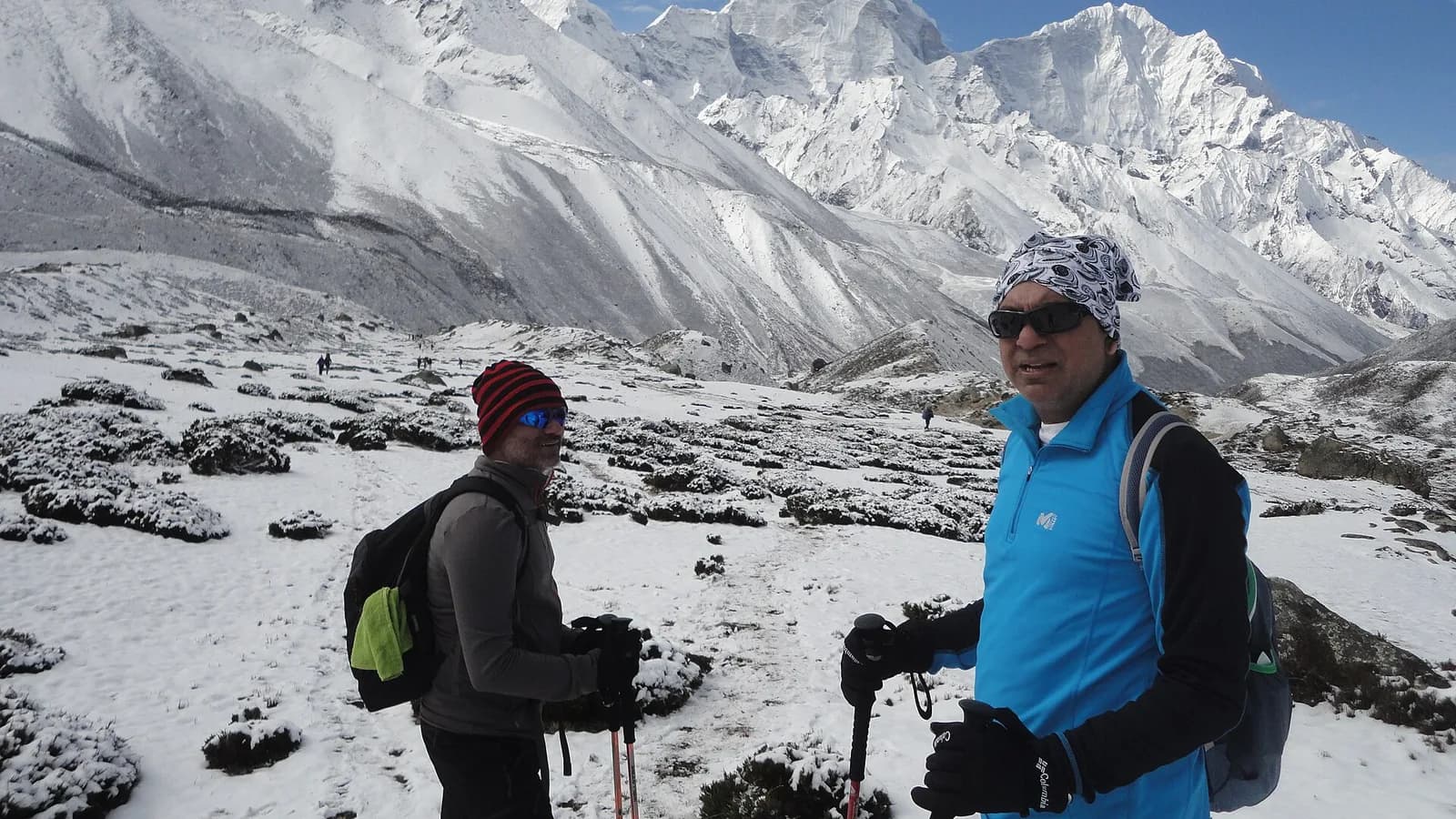
The Everest Base Camp packing list is where most first-time trekkers either overpack out of fear or underpack out of optimism. The truth sits in between: you are walking, not climbing, but you are walking into thin, cold, intensely sunny air that punishes the wrong gear. This guide is built around what the Khumbu actually demands — a layering system that works from a warm Lukla afternoon to a frozen Gorak Shep dawn, footwear that won't wreck your feet, sun protection that prevents real injury, and a clear sense of what to rent in Kathmandu rather than buy at home.
If you want the bigger picture first, start with our Everest Base Camp trek guide and the EBC trek itinerary, then come back here to load the duffel.
Key takeaways
- Layer, don't bulk up. A base layer, mid-layer, insulated down jacket, and waterproof shell handle nearly every condition between Lukla and Base Camp.
- Sleeping bag is non-negotiable. Plan for a comfort rating near -10C in spring/autumn and warmer for November or winter nights; a liner adds cheap warmth.
- Boots before everything. Broken-in, waterproof boots with ankle support prevent the blisters and rolled ankles that end treks early.
- High-altitude sun is dangerous, not just bright. Reflected UV can cause snow blindness, so quality sunglasses, SPF 50 sunscreen, and SPF lip balm are safety gear.
- Rent the bulky stuff in Kathmandu. Down jackets and sleeping bags rent for roughly USD 1 to 3 per day per item (as of June 2026) in Thamel.
- Pack lean for your porter. Duffel weight is usually capped around 15 kg and often shared between two trekkers.
Understand the conditions you're packing for
Everest Base Camp sits at about 5,364 m (17,598 ft), and most trekkers also climb to the Kala Patthar viewpoint at roughly 5,545 m for the classic Everest panorama. The trek starts with a flight from Kathmandu (about 1,400 m) to Lukla (about 2,860 m) and climbs through Namche Bazaar (3,440 m), Tengboche (3,860 m), Dingboche (4,410 m), Lobuche (4,910 m), and Gorak Shep (5,164 m) — the last village with lodges before Base Camp.
That altitude profile is the whole reason your packing list looks the way it does. You will sweat on sunny climbs out of Phakding and then sit shivering at dinner in Dingboche. In peak autumn (October–November), night-time temperatures at the higher villages commonly fall to roughly -6C to -12C, and the latter half of November runs colder still. Spring (March–May) is the other prime window. Your gear has to bridge a wide daily temperature swing, every single day.
Because acclimatisation matters as much as gear, pair this list with our altitude sickness guide before you go — the right kit cannot replace a sensible ascent rate.
The layering system (the heart of the list)
Forget single heavy garments. Layers let you fine-tune warmth and dump heat before you sweat through your base layer, which is what actually leaves you cold later.
Base layers
Worn against the skin, base layers wick moisture so you stay dry and warm. Choose merino wool or synthetic blends — never cotton, which holds sweat and chills you.
- 2 base-layer tops (wear one, wash/dry one)
- 2 base-layer bottoms / thermal leggings
- A few pairs of merino or synthetic trekking socks
Mid-layers
A fleece or light insulated jacket traps warm air while still breathing on the move. A softshell or fleece mid-layer is ideal for active climbing on cold mornings.
- 1 fleece or light insulated mid-layer
- 1 pair softshell or quick-dry trekking trousers
Insulation and shell
The down jacket is your camp-and-summit-morning workhorse, and the shell is your defence against wind, rain, and snow that can arrive without warning at altitude.
- 1 insulated down jacket (packable, warm — do not downgrade this)
- 1 waterproof, breathable shell jacket
- 1 pair waterproof shell trousers (snow is possible on the high sections)
A quick layering table
| Situation | What you wear | | --- | --- | | Sunny midday climb | Base layer + softshell trousers, shell in pack | | Cold, windy ridge | Base + fleece + shell jacket | | Frozen dawn (Kala Patthar) | Base + fleece + down jacket + shell, plus hat and heavy gloves | | Lodge evenings | Base + down jacket + warm hat |
Footwear: the make-or-break category
More treks are ruined by feet than by altitude. Bring waterproof trekking boots with solid ankle support and a deep-grip sole, and — this is the part people skip — break them in for weeks at home before you fly. New boots on day one is how blisters start.
- 1 pair broken-in, waterproof trekking boots
- 1 pair lightweight camp shoes or sandals for the lodge in the evening
- Merino trekking socks (several pairs) plus thin liner socks if you're blister-prone
- Blister plasters and tape in your day pack, not the duffel
Trekking poles also belong here for many people: they take load off the knees on the long descents and add stability on loose ground.
Sleeping warm: bag, liner, and reality
Lodges (teahouses) provide a bed and often blankets, but nights at altitude are genuinely cold and you should not rely on borrowed bedding alone. Plan for a down or synthetic sleeping bag with a comfort rating around -10C for spring and autumn; for late-autumn or winter trekking, lean warmer (toward -15C). A liner adds a few degrees of warmth and keeps a rented bag clean.
If you're new to the lodges themselves, our guide to EBC teahouse food and accommodation explains what to expect at night so you can judge how warm a bag you truly need.
Sun and eye protection is safety gear, not vanity
At 3,000 m and above, UV intensity climbs sharply, and snow and ice can reflect a large share of that UV straight back at your eyes and skin. The result can be sunburn in strange places and photokeratitis — snow blindness — which is painful even if usually temporary. Treat this category as seriously as your warm layers.
- Sunglasses with strong UV protection: Category 3 for general high-altitude sun, and Category 4 (very dark, low light transmission) if you expect bright snow or glacier glare
- Broad-spectrum sunscreen, SPF 50, applied generously — including under the nose and chin where reflected light hits
- SPF lip balm (your lips burn and crack fast up high)
- A wide-brim sun hat for the lower, hotter sections
- A warm beanie and a buff/neck gaiter for cold wind and trail dust
Hands, head, and the small warm extras
Cold hands at dawn can take the joy out of a summit-morning push to Kala Patthar. Layer your gloves the same way you layer your body.
- Liner gloves plus warm insulated gloves or mittens (mittens are warmer for the coldest mornings)
- Warm hat / beanie
- Hand and toe warmers (optional, light, and very welcome on cold mornings)
Health, hygiene, and documents
Above Namche Bazaar, services thin out and most lodges are cash-only, so carry what you need rather than assuming you can buy it later.
Health and hydration
- Personal first-aid kit: ibuprofen, anti-nausea tablets, plasters, blister care, oral rehydration salts
- Any altitude medication you plan to use, discussed with a doctor beforehand
- Two 1-litre bottles (or a bottle plus an insulated one) — bottles are easier than bladders when hoses can freeze up high
- Water purification: tablets, drops, or a filter, so you can treat lodge or tap water instead of buying plastic bottles
- A small quick-dry towel, toothbrush, travel toiletries, hand sanitiser, and wet wipes
Documents and money
- Passport plus several photocopies and passport photos for permits
- The two main permits for the route: the Sagarmatha National Park entry permit and the Khumbu Pasang Lhamu Rural Municipality permit
- Enough Nepali rupees in cash for permits, meals, charging, hot showers, and tips, because ATMs are unreliable above Namche
For the full permit breakdown and current fees, see our Everest Base Camp permits guide, and budget for tips with our tipping guides and porters guide. Don't fly without trek-specific cover — our Nepal trekking insurance guide explains why a standard policy's altitude limit can leave you exposed.
Electronics and the bags themselves
- Headlamp plus spare batteries (essential for the pre-dawn Kala Patthar start and dark lodges)
- Power bank (cold drains batteries fast, and charging at lodges usually costs extra)
- Phone with offline maps downloaded; a universal adapter
- A 50–70 L duffel for the porter and a 25–35 L day pack you carry yourself
- A waterproof pack cover and a few dry bags or zip-lock bags to keep gear and documents dry
Keep your day pack genuinely light — water, snacks, layers for the day, sun protection, documents, and your power bank. Everything else goes in the duffel, which most operators cap around 15 kg and frequently split between two trekkers and one porter. Packing lean is partly about courtesy and partly about your own knees on the descent.
Buy at home or rent in Kathmandu?
You do not need to fly in fully kitted. Thamel in Kathmandu is full of gear shops that rent the bulky, expensive cold-weather items for roughly USD 1 to 3 per day per item (as of June 2026) — sleeping bags and down jackets being the classic rentals. A reasonable split:
| Bring from home | Rent or buy in Kathmandu | | --- | --- | | Broken-in boots | Sleeping bag | | Base and mid-layers | Down jacket | | Personal medications | Trekking poles | | Sunglasses that fit you | Duffel bag | | Quality socks | Crampons/gaiters if needed |
Boots and base layers are personal and fit-critical, so own those. Sleeping bags and down jackets are bulky, occasional-use, and cheap to rent — ideal candidates for picking up on arrival. For broader gear strategy and what trekkers most often regret carrying, see our companion Nepal trekking packing list.
A simple final-check list
Before you zip the duffel, confirm you have these non-negotiables:
- Down jacket and waterproof shell
- Sleeping bag rated for the season, plus a liner
- Broken-in waterproof boots and good socks
- Strong UV sunglasses, SPF 50 sunscreen, SPF lip balm
- Headlamp, power bank, water bottles, and purification
- Permits, passport copies, and enough rupees in cash
Get those right and the rest is comfort and personal taste. Pack for the coldest night and the brightest day, keep the porter load honest, and the Khumbu will reward you.
Sources
- Mosaic Adventure — Everest Base Camp packing list for October and November
- Ian Taylor Trekking — Packing for the Everest Base Camp trek
- Mosaic Adventure — Ultimate packing list for Everest Base Camp trek
- Nepal Hiking Team — How high is Everest Base Camp?
- Himalayan Masters — Everest Base Camp elevation
- Mount Mania — Rent trekking gear in Kathmandu and Pokhara
- Magical Nepal — Everest Base Camp trek permit 2025 guide
- Bikat Adventures — How to pick high-altitude UV protection sunglasses
- Better Health Channel — Sun protection at the snow
Frequently asked questions
- What sleeping bag rating do I need for the Everest Base Camp trek?
- Aim for a bag with a comfort rating around -10C for spring and autumn, and warmer (closer to -15C) for late-November or winter nights, ideally with a liner for extra warmth.
- Can I rent trekking gear in Kathmandu instead of buying it?
- Yes. Thamel shops rent sleeping bags and down jackets for roughly USD 1 to 3 per day per item (as of June 2026), so renting bulky cold-weather gear is common and cheap.
- How heavy can my porter bag be on the EBC trek?
- Most operators cap the porter duffel at about 15 kg, and one porter often shares the load between two trekkers, so pack lean and keep the heavy stuff in the duffel.
- Do I really need a down jacket for Everest Base Camp?
- Yes. Mornings, evenings, and the upper villages are cold even in peak season, so a packable down jacket is one item you should not skip or downgrade.
- What sunglasses should I bring for high altitude?
- Bring sunglasses with strong UV protection — Category 3 for most of the trek and Category 4 if you expect bright snow or glare, since reflected UV at altitude can cause snow blindness.
- What permits do I need for the Everest Base Camp trek?
- You need the Sagarmatha National Park entry permit and the Khumbu Pasang Lhamu Rural Municipality permit; carry passport copies and cash for fees and checkpoints.
- How much cash should I carry on the trek?
- Carry enough Nepali rupees for permits, food, charging, hot showers, and tips, since ATMs are unreliable above Namche and most lodges are cash-only at altitude.
Spotted an error in this post? Tell us or suggest a correction.
Related posts
ABC Trek: A Plain-English Guide to Annapurna Base Camp
The ABC trek (Annapurna Base Camp) explained — the route, how many days it takes, difficulty, the best seasons, and what daily trail life is really like.
Read postAma Dablam Climb: 2026 Expedition Guide (6,812m)
An Ama Dablam climb and expedition guide for 2026 — height, the Southwest Ridge route, camps, fixed ropes, difficulty, permits, cost and the best seasons.
Read postAnnapurna vs Manaslu: Which Trek Should You Choose?
An Annapurna vs Manaslu decision guide for trekkers — compare permits, crowds, difficulty, infrastructure and cost to pick the right Himalayan route.
Read postAsan Bazaar Kathmandu: Old Town Market Guide
A visitor guide to Asan bazaar, Kathmandu's oldest market — its six-road square, Annapurna Temple, what to buy, when to go, and how to get there.
Read postAyurveda Nepal: A Traveller's Guide to Healing
Ayurveda Nepal explained for tourists — the history, the doshas, treatments like Panchakarma and Shirodhara, where to go and how to choose a centre safely.
Read postBest Restaurants Pokhara Lakeside: Where to Eat
The best restaurants in Pokhara Lakeside — lakeside trout, wood-fired pizza, Tibetan momos and healthy cafes, with what to order and rough 2026 prices.
Read post