Annapurna Cable Car Pokhara: A Visitor's Guide
The Annapurna Cable Car links Pokhara's Lakeside to Sarangkot in about 10 minutes. Fares, hours, what you see and how it compares.
Ten minutes of glass and air between Phewa Lake and a Himalayan skyline.
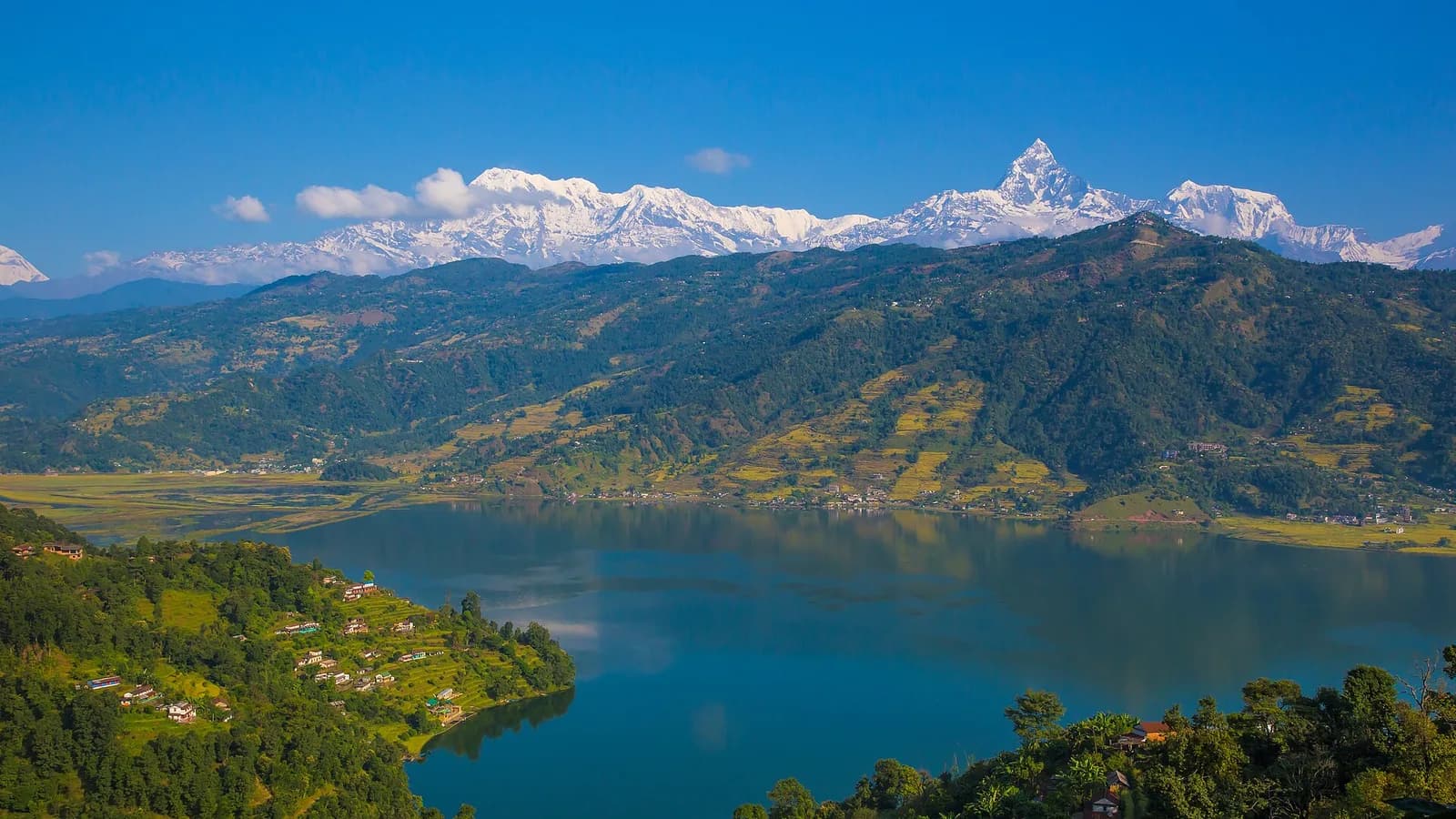
If you have spent any time researching things to do around Phewa Lake, you have probably stumbled on the Annapurna Cable Car and assumed it climbs toward the famous mountain. It does not. This is a short, modern gondola that lifts visitors from Pokhara's Lakeside area up to the Sarangkot ridge, the city's classic sunrise viewpoint. The name nods to the panorama you hope to see from the top, not to the trek itself. This guide explains what the ride actually is, what it costs, when to go, and how it stacks up against the older ways of reaching Sarangkot.
Key takeaways
- The Annapurna Cable Car is a Pokhara gondola from the Sedi base station, near the north end of Phewa Lake, up to Sarangkot — not a route to Annapurna Base Camp.
- The one-way ride takes roughly 9 to 10 minutes, replacing a long, winding road or hill walk.
- Travel guides in 2025 reported foreign fares around US$8 one way / US$12 return (as of June 2026), but prices change often — verify at the counter.
- The whole appeal is the view: Phewa Lake, Pokhara city, and on a clear morning, the Annapurna range — so weather makes or breaks the trip.
- It opened in early 2022 and is privately built; expansion and other new lines around Pokhara have been discussed in the press.
- If you only want mountains and not the ride, free or cheaper alternatives to Sarangkot still exist.
What the Annapurna Cable Car actually is
The Annapurna Cable Car is a monocable detachable gondola system on the western edge of Pokhara. The lower terminal sits at Sedi (sometimes written Sedibagar or Seti Bagar), close to the northern shore of Phewa Lake, and the upper terminal is on the Sarangkot ridge, the long-popular sunrise spot above the city. Reported figures put the lower station around 824 metres and the upper around 1,465 metres above sea level, so the cabins gain several hundred metres of height in a single short hop.
Sources differ slightly on the exact line length — figures of roughly 2.2 to 2.4 kilometres appear across operator pages and travel guides — which is common for a young attraction where different write-ups round differently. What is consistent is the experience: enclosed cabins, each seating a small group, gliding up the hillside in about 9 to 10 minutes instead of the much longer road journey.
Why the "Annapurna" name is misleading
Plenty of first-time visitors expect this gondola to carry them toward the high mountains. It does not. The Annapurna massif and its trekking trails are well to the north and far higher; reaching them means walking the Annapurna Base Camp trek or the Annapurna Circuit, or taking an Annapurna helicopter tour. The cable car simply borrows the range's name because, on a clear day, those peaks form the backdrop from Sarangkot.
Fares and opening hours
Pricing on a privately run attraction like this can shift, so treat any number as a guide rather than a guarantee. Travel write-ups during 2025 reported a tiered structure that charged foreigners more than regional and Nepali visitors, which is standard practice at Nepali attractions.
| Visitor type | One way (reported 2025) | Return (reported 2025) | | --- | --- | --- | | Foreign national | about US$8 | about US$12 | | SAARC national | about NPR 700 | about NPR 1,000 | | Nepali citizen | about NPR 400 | about NPR 700 |
These figures are drawn from independent travel guides and operator-linked pages (as of June 2026) and are explicitly described as subject to change without notice. Always confirm the current rate, and any child or student discounts, at the ticket window before you commit.
Reported operating hours run from roughly 5 AM to 6 PM, with several sources noting a short midday pause around lunchtime when the cabins stop. The early opening exists for one reason: sunrise. Sarangkot is famous for dawn light on the Himalaya, and the first departures are timed so visitors can be at the top as the sky changes.
Buying tickets and timing your visit
There is no need to book far ahead for a normal visit; tickets are sold at the base station. The bigger planning question is when to ride. For mountains, aim for the earliest departures on a clear morning. For a more relaxed outing with lake and city views, late afternoon works and avoids the dawn alarm — just remember the operation winds down in the early evening.
What you actually see from the top
The reward at Sarangkot is a wide sweep that, in good conditions, takes in Phewa Lake, the spread of Pokhara city below, and a line of Himalayan peaks to the north. Sarangkot is long celebrated for views of the Annapurna and Dhaulagiri ranges and the distinctive fishtail summit of Machhapuchhre, along with a broad panorama on clear days.
The honest caveat: this is entirely weather-dependent. Pokhara sits at modest elevation and the air can be hazy, cloudy, or simply overcast, especially outside the clearest months. The cable car guarantees you the ride and the lake-and-city outlook; it cannot guarantee the mountains. If crisp peaks are your priority, plan around the best season to trek in Nepal, when skies are typically clearest, and check the Pokhara forecast before you go.
Beyond the viewpoint
Sarangkot is not only a place to stand and stare. It is also a well-known launch site for paragliding in Pokhara, and the ridge has cafes and viewpoints to linger at. Some visitors combine an early cable car ride with breakfast at the top, then descend for the rest of the day around Pokhara's Lakeside.
How it compares to other ways up Sarangkot
The cable car is the newest option, not the only one. Before it opened, visitors reached Sarangkot mainly by road or on foot, and both still exist.
| Way up | Roughly how long | Best for | | --- | --- | --- | | Cable car | about 9–10 min each way | Comfort, speed, families, limited mobility | | Taxi / jeep by road | longer, winding climb | Door-to-door without the walk | | Hiking the ridge trail | a few hours on foot | Budget travellers and walkers who want the climb |
If the goal is the smoothest, fastest trip with a memorable glass-cabin view, the gondola is hard to beat. If you are travelling on a tight Nepal travel budget, walking or sharing a jeep can be cheaper, and the sunrise itself is free once you are up there.
How it fits Nepal's wider cable car scene
Nepal has embraced cable cars as a way to open up hilltop temples and viewpoints. The Annapurna Cable Car joins better-known systems such as the Manakamana cable car, a long-running pilgrimage gondola, and the Chandragiri Hills cable car above Kathmandu. Each serves a different ridge and audience, so do not confuse them — the Annapurna line is specifically Pokhara's route to Sarangkot.
The project itself was built by the private sector. Reporting in the Nepali press places its public opening in early 2022, following construction that began years earlier and was slowed by the COVID-19 pandemic, with a reported investment in the region of two billion rupees. Local media have also discussed further cable car proposals around the Pokhara and wider Annapurna area, including a separate planned line in the Sikles area, which is a useful reminder that this corner of Nepal is still actively developing such infrastructure.
Is the ride worth it?
For most visitors with a morning to spare, yes. The Annapurna Cable Car turns what used to be a pre-dawn drive on a twisting road into a quick, comfortable lift with a genuinely scenic payoff. Families with young children, older travellers, and anyone who would rather not hike will appreciate it most. Pair it with a clear-weather forecast and an early start, and it becomes one of the easier highlights to slot into a Pokhara itinerary.
Just go in with the right expectation: it is a short, fun viewpoint gondola, the mountains are a bonus the weather either grants or hides, and the name has nothing to do with reaching the Annapurna trekking region itself.
Sources
- Kathmandu Post — Annapurna Cable Car awaits tourists as recovery slow in coming
- Investopaper — Annapurna Cable Car completed with Rs 2 billion investment
- Annapurna Cable Car Limited — official site
- Annapurna Cable Car Limited — tickets
- Hayden Rue — Annapurna cable car in Pokhara: Lakeside to Sarangkot ticket price
- Nepal Cableways — Annapurna Cable Car monocable detachable gondola
- Nepal Kameleon Holidays — Pokhara Sarangkot Annapurna Cable Car guide
- OnlineKhabar — Sikles Annapurna region cable car plans
Frequently asked questions
- Does the Annapurna Cable Car go to Annapurna Base Camp?
- No. Despite the name, it is a short gondola from Pokhara's Lakeside area up to the Sarangkot viewpoint, not a route to any base camp or to the Annapurna massif itself.
- How long does the cable car ride take?
- The one-way trip between the Sedi base station and Sarangkot takes roughly 9 to 10 minutes according to operator and travel-guide reports.
- How much does a ticket cost for foreigners?
- Travel guides in 2025 listed foreign-national fares of about US$8 one way and US$12 return, but prices change without notice, so confirm at the counter (as of June 2026).
- What are the opening hours?
- Reported hours are roughly 5 AM to 6 PM, with a midday pause around lunchtime; the early start is designed so visitors can catch sunrise from Sarangkot.
- Can I see the mountains from the cable car?
- On a clear morning, yes, you can see parts of the Annapurna range, Phewa Lake and Pokhara city, but views depend entirely on the weather and haze.
- Is it the same as the Manakamana or Chandragiri cable car?
- No, those are separate systems elsewhere in Nepal; the Annapurna Cable Car is a Pokhara-specific gondola serving the Sarangkot ridge.
- When did the Annapurna Cable Car open?
- Reporting places its public opening in early 2022, after construction that began years earlier and was slowed by the pandemic.
- Do I still need to wake up early for sunrise?
- Yes, if sunrise is your goal, plan to ride on one of the first departures because the best light and clearest mountain views usually come soon after dawn.
Related posts
Sarangkot Sunrise: Pokhara's Best Mountain View (2026)
How to catch the Annapurna sunrise from Sarangkot above Pokhara — getting there by taxi, cable car or hike, the entry fee, timings and best season.
Read postAccessible Travel Nepal: Wheelchair & Disability Guide
Accessible travel in Nepal for wheelchair users and travellers with disabilities: what works, what's hard, specialist operators and how to plan a trip.
Read postAnnapurna Helicopter Tour: Cost & 2026 Guide
Annapurna helicopter tour from Pokhara to Annapurna Base Camp — cost, flight time, the landing, weight limits, best season and how it compares to trekking.
Read post