Upper Mustang Permit Cost (2026): New USD 50/Day Rate
The Upper Mustang permit cost changed in late 2025. Here is the new USD 50 per-day fee, plus ACAP, guide rules, and a sample budget.
The most famous price tag in Nepal trekking just changed — and for short trips, it dropped.
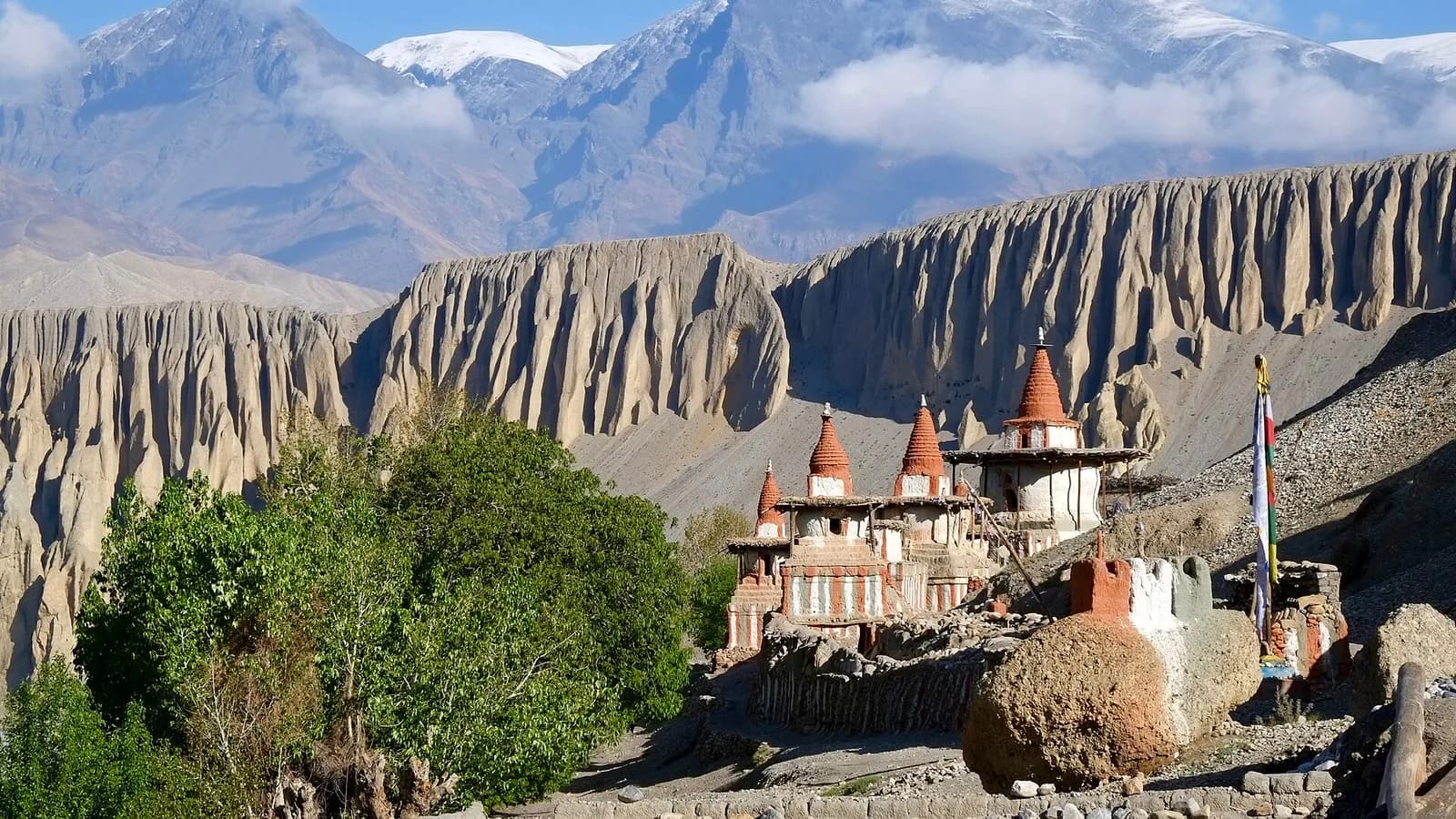
If you have ever priced an Upper Mustang trek, you remember the number: USD 500. For decades, that flat restricted-area fee was the single biggest line item on the budget and the main reason many trekkers picked a different valley. In late 2025 that changed. The Upper Mustang permit cost is now charged at USD 50 per person per day with no minimum, which reshapes the math for both short jeep trips and longer treks. Here is exactly what you pay in 2026, what else stacks on top, and how to budget the whole thing.
Key takeaways
- The Upper Mustang Restricted Area Permit (RAP) is now USD 50 per person, per day (as of June 2026), replacing the old flat USD 500-for-10-days rule.
- Nepal's Cabinet announced the change in November 2025, removing the long-standing 10-day minimum and implementing it by amending the Immigration Regulations.
- Short trips got cheaper; a roughly 10-day itinerary still lands near USD 500, but a 3-4 day jeep visit now costs a fraction of the old fee.
- The daily rate applies to trekkers, jeep tours, motorbikes and helicopter visitors alike, for each day inside the zone.
- You still need the ACAP permit (NPR 3,000 for foreigners), and a licensed guide plus a registered agency are mandatory — solo trekking is not allowed.
- The permit fee is only part of the trip; flights, guide, jeep and lodging push a realistic total well above the permit figure.
What changed in late 2025
For years, Upper Mustang used a flat fee: USD 500 per person for the first 10 days, then USD 50 per day for any extension. That structure meant a 3-day jeep trip and a 9-day trek cost the same — and short-trip visitors effectively subsidised the long ones.
In November 2025, Nepal's Cabinet scrapped the flat fee. According to reporting in the Kathmandu Post, the Minister for Communications and Information Technology announced that the USD 500 charge would be replaced with USD 50 per person per day, with the change made by amending Nepal's Immigration Regulations. Trade outlets reported the new schedule taking effect in the weeks that followed, in late December 2025.
The reform changed the price, not the status. Upper Mustang is still a restricted area. The guide requirement, the agency-only application process and the cap on independent access all remain in place. (Our older deep-dive, the Upper Mustang restricted-area permit explained, still covers the cultural background and route — just read it alongside the new fee here, because it predates this change.)
Upper Mustang permit cost in 2026
The headline number is simple.
| Item | Fee (as of June 2026) | Notes | | --- | --- | --- | | Upper Mustang RAP | USD 50 per person, per day | No 10-day minimum; counts days inside the restricted zone | | ACAP permit (foreigners) | NPR 3,000 per person | Annapurna Conservation Area entry; valid 60 days | | ACAP permit (SAARC) | NPR 1,000 per person | South Asian regional nationals |
Because the rate is now per day, your total depends entirely on how long you stay inside the restricted area (which starts above Kagbeni). Here is how that plays out:
| Days in restricted area | RAP cost per person | | --- | --- | | 3 days | USD 150 | | 5 days | USD 250 | | 7 days | USD 350 | | 10 days | USD 500 | | 14 days | USD 700 |
So a classic ~10-day Lo Manthang trek still costs roughly the same USD 500 it always did. The real winners are short jeep and motorbike trips: a 3-5 day drive up to Lo Manthang and back, which used to incur the full USD 500, now costs USD 150-250.
Does it apply to jeeps, bikes and helicopters?
Yes. Multiple agencies confirm the daily rate is charged by mode of arrival as well as on foot — jeep-tour passengers, motorbike riders and even helicopter visitors pay USD 50 for each day spent inside Upper Mustang. The road up the Kali Gandaki has made jeep tours increasingly popular, and this is the group that benefits most from the reform.
SAARC nationals and children
Reporting indicates the USD 50 per-day rate now also applies to SAARC nationals (India, Pakistan, Bangladesh, Sri Lanka, Bhutan, Maldives, Afghanistan), where the old structure sometimes differed. Child policies are inconsistent across sources and tend to change, so do not assume a discount — confirm the current rule for minors directly with your agency before you commit.
The other permits and fees
The restricted-area permit is not the only document. Upper Mustang sits inside the Annapurna Conservation Area, so you also pay ACAP.
ACAP permit
The Annapurna Conservation Area Project (ACAP) permit is NPR 3,000 for foreigners and NPR 1,000 for SAARC nationals (as of June 2026). It is issued by the National Trust for Nature Conservation, funds conservation and trail upkeep, and is typically valid for 60 days. Your agency usually arranges it together with the RAP.
TIMS card
The Trekkers' Information Management System (TIMS) card is the general trekking registration used across much of Nepal. The Nepal Tourism Board lists it at NPR 2,000 for individual foreign trekkers and NPR 1,000 for those trekking with a registered agency (SAARC and Nepali rates are lower). For Upper Mustang specifically, the RAP and ACAP are the core permits; whether a separate TIMS card is requested can depend on your operator and the lower-Annapurna portion of the route, so ask your agency and treat it as a small add-on rather than a fixed line item.
The guide and agency rule
This is non-negotiable and unaffected by the price change: Upper Mustang requires a licensed Nepali guide, and you must book through a registered trekking agency. Independent, solo trekking is not permitted in the restricted area, and the rules generally call for a minimum of two trekkers plus the guide.
Practically, that means:
- You cannot buy the RAP yourself as a walk-in at the immigration counter; the agency applies on your behalf at the Department of Immigration in Kathmandu or Pokhara.
- You will need to hand over passport details and passport-size photos in advance — often a week or so before departure.
- The guide cost is separate from the permit and is one of the larger fixed expenses on the trip.
If you are comparing operators, our notes on choosing a trekking agency in Nepal cover what to check before you pay a deposit.
A realistic Upper Mustang budget
The permit is the famous number, but it is not the biggest one. A jeep-supported Lo Manthang trip or a walking trek both involve flights, transport, the guide, and lodging on top of fees. Here is an illustrative breakdown for a foreign trekker on a roughly 10-day restricted-area itinerary; treat these as planning ranges, not quotes, since operator pricing and exchange rates vary.
| Cost component | Rough range (per person) | Notes | | --- | --- | --- | | RAP (10 days) | USD 500 | At USD 50/day | | ACAP permit | ~NPR 3,000 | Around USD 25 equivalent | | Pokhara-Jomsom flights | Varies | Short mountain flights; weather-dependent | | Licensed guide | Significant fixed cost | Often shared across a small group | | Jeep / transport | Varies | Kali Gandaki road sections | | Lodging and food | Daily teahouse rates | Higher than lower-altitude Annapurna |
Because fixed costs (guide, jeep, flights) are shared across a group, trekking with two or three people usually lowers the per-person total versus going as a pair only. The permit reform trims the budget most for short trips; for a full 10-day trek, your savings versus the old rule are modest, but you gain the flexibility to pay only for the days you actually use.
How the route shapes the bill
Most itineraries fly Pokhara to Jomsom, then travel up the Kali Gandaki past Kagbeni — where the restricted area (and the USD 50/day clock) begins — toward Lo Manthang. Reaching Jomsom usually means a short flight from Pokhara; if you are routing from the capital first, see Kathmandu to Pokhara flights and the wider picture in domestic flights in Nepal. Many travellers pair the trip with a stop at the pilgrimage site of Muktinath Temple, which sits in lower Mustang and does not require the restricted-area permit.
When to go (and why it matters for cost)
Upper Mustang sits in the Himalayan rain shadow, so it stays relatively dry when the monsoon soaks the rest of Nepal. That makes June to September a genuinely good window here, when other trekking regions are wet — useful if your travel dates are fixed and you want value from the days you pay for. April to May is the other prime season, especially around the Tiji festival. December to February brings cold and frequent Jomsom flight cancellations, which can quietly inflate costs through missed flights and extra hotel nights.
If your trip overlaps the spring festival, the cultural payoff is high; see the Tiji festival in Upper Mustang for timing.
Is the new price worth it?
For short visitors, the answer flipped overnight. A 3-5 day jeep tour to Lo Manthang that once cost a flat USD 500 in permits now costs USD 150-250 — a meaningful difference that opens the valley to travellers who previously skipped it on cost alone.
For trekkers doing the full 10-day walk, the permit math is roughly unchanged, but the flexibility is new: there is no longer a penalty for a shorter stay, and extensions are simply charged at the same daily rate. Either way, Upper Mustang remains a higher-budget trip than mainstream routes like the Annapurna Circuit, mostly because of the mandatory guide, flights and transport rather than the permit itself. What you get for it — the walled town of Lo Manthang, the cave-pocked cliffs and a high desert that looks more like the Tibetan Plateau than Nepal — is the kind of trip that rewards the planning.
Sources
- Nepal scraps $500 Upper Mustang trekking fee for foreigners, sets $50 daily — Kathmandu Post
- Upper Mustang Permit 2025: $50 Per Day Fee — The Longest Way Home
- Trekking Route and Permit Fee — Department of Immigration, Nepal
- TIMS Card — Nepal Tourism Board
- Upper Mustang Restricted Area Permit 2026 — Nepal Vision Treks
- Nepal slashes pricey permit to boost tourism — South China Morning Post
Frequently asked questions
- How much is the Upper Mustang permit in 2026?
- The Restricted Area Permit is USD 50 per person per day (as of June 2026). A 10-day trek works out to about USD 500, while a short 3-4 day jeep trip costs far less than under the old flat fee.
- Did the old USD 500 Upper Mustang permit really get scrapped?
- Yes. In November 2025 Nepal's Cabinet replaced the flat USD 500-for-10-days rule with a USD 50 per-person-per-day charge, removing the old 10-day minimum. The change was made by amending the Immigration Regulations.
- What other fees do I need besides the restricted area permit?
- You also need the Annapurna Conservation Area Project (ACAP) permit, which is NPR 3,000 for foreigners and NPR 1,000 for SAARC nationals (as of June 2026). A TIMS card may also apply on the lower Annapurna sections of the route.
- Can I trek Upper Mustang without a guide or alone?
- No. Upper Mustang is a restricted area, so a licensed Nepali guide is mandatory and you must apply through a registered trekking agency. The rules generally require at least two trekkers plus the guide.
- Does the USD 50 per-day rate apply to jeep and motorbike tours too?
- Yes. The daily restricted-area rate applies to anyone entering Upper Mustang, including trekkers, jeep-tour passengers, motorbike riders and helicopter visitors, for each day spent inside the zone.
- Do SAARC nationals and children pay less for the Upper Mustang permit?
- Reporting indicates the USD 50 per-day restricted-area rate now applies to SAARC nationals too. Child policies vary by source and change often, so confirm the current rule with your agency before you book.
- Where do I actually get the Upper Mustang permit?
- Your registered agency arranges it through the Department of Immigration in Kathmandu or Pokhara. You cannot buy the restricted-area permit yourself as an independent walk-in, so plan to give the agency your passport details and photos in advance.
Related posts
Upper Mustang Trek 2026 — The $500 Restricted Area Permit, Explained
Why Upper Mustang costs more, what the permit covers, what you actually see, and why it's worth the price for the right trekker.
Read postDolpo Trek: Nepal's Wild Trans-Himalayan Frontier
A guide to the Dolpo trek in far-west Nepal: Upper vs Lower Dolpo, Phoksundo Lake, restricted-area permits, the 2026 rules, best season and access.
Read postEverest Permit Price 2026: Trek Fees vs Climbing Royalty
The Everest permit price in 2026 — trekking fees of about NPR 5,000 versus the new USD 15,000 climbing royalty, broken down by season and route.
Read post