Tamang People: Culture of Langtang and the Central Hills
A respectful guide to the Tamang people of Nepal — their Langtang homeland, language, Buddhism, Sonam Lhosar, Damphu music and the Tamang Heritage Trail.
In the hills ringing Kathmandu and the high country below Langtang, the Tamang have kept a Himalayan Buddhist culture all their own — in monastery, music and mountain village.
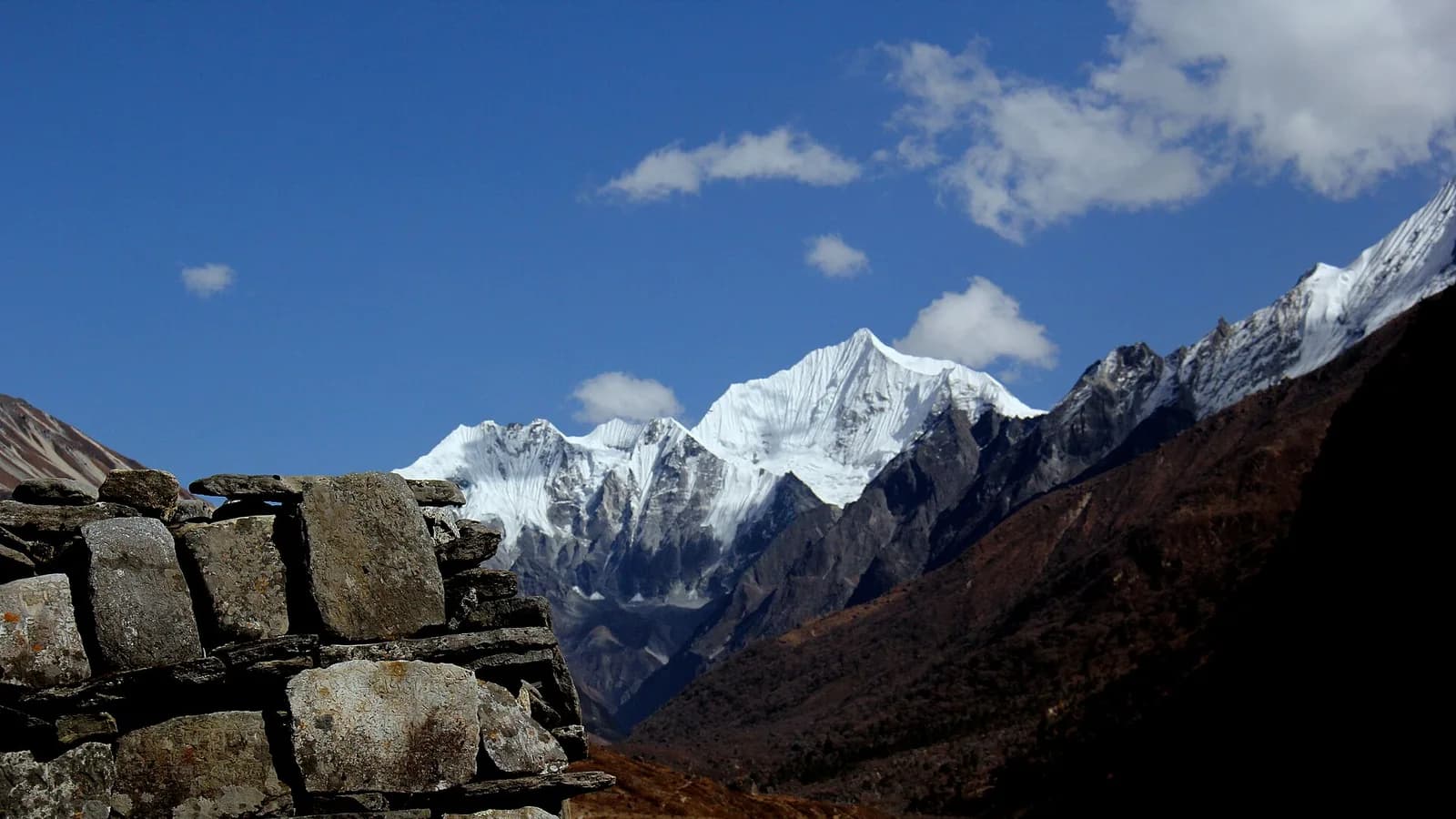
The Tamang people are one of Nepal's major Himalayan communities — a Tibeto-Burman group whose homeland forms a ring of hills and high valleys around the Kathmandu Valley, reaching up into the spectacular Langtang region. Deeply rooted in Tibetan Buddhism, the Tamang have a culture of monasteries and prayer flags, distinctive music and dance, and mountain villages that have welcomed trekkers along the Tamang Heritage Trail. This guide is a respectful introduction to who the Tamang are, where they live, and how to experience their world with care.
If you have walked the Langtang Valley after the earthquake, you have travelled through the heart of Tamang country. This page looks more closely at the people whose homeland it is.
Key takeaways
- The Tamang are a Tibeto-Burman people of central Nepal, concentrated in the hills around Kathmandu and the Langtang region.
- Nepal's 2021 census recorded 1,639,866 Tamang (about 5.62 percent) of the population — among the largest groups in the country.
- Their heartland surrounds the valley, with Rasuwa district more than two-thirds Tamang.
- The great majority follow Tibetan Vajrayana Buddhism, blended with Bon and shamanism.
- Sonam Lhosar is the Tamang new year, and Tamang Selo music with the Damphu drum is central to their culture.
- The Tamang Heritage Trail in Langtang is the classic way for visitors to experience Tamang villages and hospitality.
Who the Tamang are
The Tamang are a Tibeto-Burman ethnic group indigenous to the hilly and mountainous country of central Nepal. Their name has long been associated with the high trails and trading routes between the Kathmandu Valley and the Tibetan border, and historically many Tamang worked as porters, farmers and herders in this rugged terrain.
According to Nepal's 2021 census, there are 1,639,866 Tamang, about 5.62 percent of the national population, placing them among the largest ethnic groups in the country. Their homeland — sometimes called Tamsaling — wraps around the Kathmandu Valley, so that the Tamang are both one of the most numerous communities near the capital and the dominant people of the mountains immediately to its north.
Society and traditional life
Tamang society is traditionally organised around clans, with a kinship system in which cross-cousin marriage has customarily been favoured. Village life has long combined terrace farming on the steep hillsides with herding and, crucially, trade and portering along the old routes between the Kathmandu Valley and the Tibetan frontier. Living on the doorstep of the capital yet in difficult mountain terrain, the Tamang historically carried much of the load — quite literally — on these trails, and portering remains an important livelihood in the high country to this day.
This position close to Kathmandu has cut both ways. It has given the Tamang a central place in the life of the valley, but it has also meant that many have long travelled to the city for work. Today, alongside farming and trekking tourism, labour migration is a major part of the Tamang economy, and remittances help sustain villages across the homeland. For all these changes, the rhythm of the agricultural year, the monastery and the festival calendar still anchors traditional Tamang life.
The Tamang homeland
The Tamang heartland is the belt of districts encircling the Kathmandu Valley. Census figures show how strongly Tamang several of these are:
| District | Approx. Tamang share | Note | |---|---|---| | Rasuwa | ~70% | Gateway to the Langtang region | | Makwanpur | ~48% | South of the valley | | Nuwakot | ~43% | Northwest of Kathmandu | | Kavrepalanchok | ~35% | East of the valley | | Sindhupalchok | ~34% | Northeast, toward Tibet | | Dhading | ~22% | West of the valley |
Rasuwa, which contains the Langtang region, is the most Tamang district of all. The people of the Langtang valley itself, sometimes called Langtangpa, are counted as Tamang in the census, and the region's villages, monasteries and architecture all reflect Tamang and broader Himalayan Buddhist culture.
Language and script
The Tamang language belongs to the Sino-Tibetan family and is one of the most widely spoken indigenous languages in Nepal — by some measures the fifth most-spoken language in the country. It encompasses several dialects, including eastern, western and other regional varieties.
For writing, Tamang has historically been associated with the Tamyig (Sambhota) script, related to Tibetan, and is today also written in Devanagari. As with other Himalayan languages, sustaining the tongue among younger, increasingly urban generations is an ongoing effort. Our guide to the languages of Nepal sets the Tamang language in its national context.
Religion: Himalayan Buddhism
The Tamang are among the most strongly Buddhist communities in Nepal. The great majority follow Tibetan Vajrayana Buddhism, and Tamang life is shaped by gompas (monasteries), chortens, mani walls and prayer flags that mark villages and high passes throughout the homeland. As with neighbouring Himalayan peoples, this Buddhism is interwoven with the older Bon tradition and with shamanism.
Tamang religious life is served by several kinds of ritual specialist: the lama, who conducts Buddhist rites; the bombo (shaman), who deals with spirits and healing; and the lambu, who handles certain ancestral and propitiatory rituals. Together they reflect the layered spiritual world of the community. For more on the wider tradition, see our overview of Buddhism in Nepal and the meaning of prayer flags.
Sonam Lhosar, music and dance
The most important Tamang festival is Sonam Lhosar, the Tamang new year, celebrated according to the lunar calendar, usually in late January or February. Like other Himalayan new-year festivals, it follows a twelve-year animal cycle, and families mark the day by visiting monasteries and stupas, gathering together, feasting and performing traditional dances. The Tamang hold their lamas and shamans in deep respect, and Lhosar is as much a religious occasion as a social one.
Music is at the centre of Tamang identity. The community is famous for Tamang Selo, a lively song-and-dance style defined by its brisk rhythm, traditionally driven by the Damphu — a round, handheld frame drum covered with goatskin. The sound of the Damphu and the swirl of a Selo are among the most recognisable expressions of Tamang culture, performed at festivals, weddings and gatherings across the hills.
The Tamang Heritage Trail
For visitors, the best-known window into Tamang life is the Tamang Heritage Trail, a cultural trek developed for community tourism in the Langtang region of Rasuwa district. Opened to give the area's villages a stake in trekking, it threads together settlements such as Gatlang, Tatopani, Thuman, Timure and Briddim, where travellers stay in homestays and lodges and share in Tamang hospitality.
Highlights along the way include:
- Gatlang, a hillside village above terraced fields with a Tamang monastery and the sacred Parvati Kund lake.
- Tatopani, whose name means "hot water", with natural hot springs long believed to have healing properties.
- Briddim, one of the country's more culturally preserved villages, known for its strong Tamang traditions.
The trail runs through parts of Langtang National Park, home to wildlife such as red pandas and langur monkeys, and offers views of the Langtang and Ganesh Himal ranges. It is often combined with the main Langtang Valley trek. For planning, our guides to the best time to visit Nepal and teahouse trekking cover seasons and logistics.
Earthquake, recovery and respectful travel
The Tamang homeland, and the Langtang valley in particular, was among the areas worst affected by the 2015 earthquake, which caused devastating losses in the region. In the years since, villages, trails and lodges have been rebuilt, and trekking through Langtang and the Tamang Heritage Trail now plays a real part in the recovery and livelihoods of local communities. Choosing to walk here, stay in local homestays and buy from village businesses is a direct way to support that effort — our homestay in Nepal guide explains how.
Travelling respectfully means treating monasteries and shrines with care — walk clockwise around chortens and mani walls, ask before photographing people or rituals, and dress modestly at religious sites, as set out in our temple etiquette guide. A little Nepali, patience with the slower pace of mountain villages, and gratitude for hospitality go a long way in Tamang country.
Sources
Frequently asked questions
- Who are the Tamang people?
- The Tamang are a Tibeto-Burman ethnic group of central Nepal, concentrated in the hills around the Kathmandu Valley and the Langtang region. They follow Himalayan Buddhism and have their own language, music and mountain culture.
- How many Tamang are there in Nepal?
- Nepal's 2021 census recorded 1,639,866 Tamang, about 5.62 percent of the national population. They are among the largest ethnic groups in the country and the dominant community in several districts near Kathmandu.
- Where do the Tamang live?
- The Tamang heartland surrounds the Kathmandu Valley, especially the districts of Rasuwa, Makwanpur, Nuwakot, Kavrepalanchok, Sindhupalchok and Dhading. Rasuwa, home to the Langtang region, is more than two-thirds Tamang.
- What religion do the Tamang follow?
- The great majority of Tamang follow Tibetan Vajrayana Buddhism, blended with the older Bon tradition and shamanism. Religious life centres on monasteries and on ritual specialists known as lama, bombo and lambu.
- What is Sonam Lhosar?
- Sonam Lhosar is the Tamang new year, celebrated according to the lunar calendar, usually in late January or February. It follows a twelve-year animal cycle and is marked by family gatherings, monastery visits, feasting and traditional dance.
- What is the Damphu?
- The Damphu is a round handheld drum, traditionally covered with goatskin, that gives Tamang music its signature beat. It accompanies Tamang Selo, the community's lively song-and-dance style.
- What is the Tamang Heritage Trail?
- The Tamang Heritage Trail is a cultural trek in the Langtang region, in Rasuwa district, passing villages such as Gatlang, Tatopani, Thuman and Briddim. It was developed for community tourism and showcases Tamang villages, monasteries and hospitality.
- How were the Tamang affected by the 2015 earthquake?
- The Tamang homeland, including Langtang and Rasuwa, was among the areas worst hit by the 2015 earthquake. Villages and trails have since been rebuilt, and trekking through the Langtang region supports the recovery of local communities.
Related posts
Beginner Treks Nepal: 6 Easy Himalayan Trails
The best beginner treks in Nepal — short, low-altitude trails like Poon Hill, Mardi Himal and Langtang, with permits, costs and seasons explained.
Read postBest Time to Visit Langtang: A Season-by-Season Guide
The best time to visit Langtang is autumn and spring. Here is how each season looks for weather, views, crowds and the landslide-prone road to Syabrubesi.
Read postBoudhanath Stupa: Architecture & Symbolism Guide
How to read the Boudhanath stupa — its mandala shape, the Buddha eyes, the 13 golden steps, and the meaning behind the clockwise kora walk.
Read post