Patan Durbar Square: A Visitor's Guide to Lalitpur
Patan Durbar Square is Lalitpur's UNESCO-listed palace plaza of Newari temples, courtyards and bronze art. History, monuments, fees and tips.
One small square holds more carved stone and cast bronze per step than almost anywhere in the Himalayas.
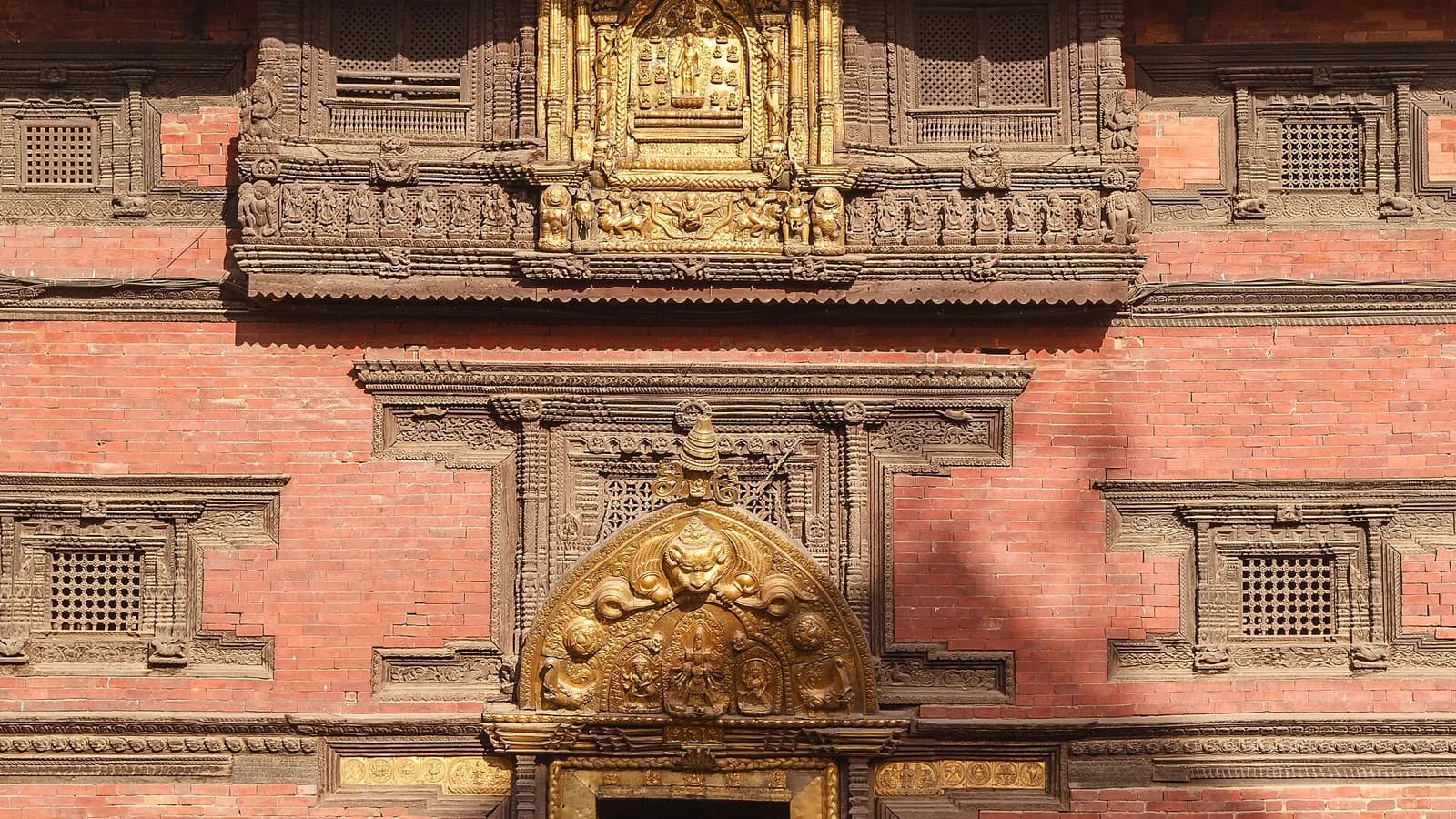
Patan Durbar Square is the old royal palace plaza of Lalitpur, the city that faces Kathmandu across the Bagmati River, and it is one of the densest concentrations of Newari art and architecture anywhere in Nepal. A compact brick-paved space lined with stone shikhara temples, tiered pagodas, sunken water spouts and a former Malla palace that now holds a celebrated museum, Patan Durbar Square rewards slow walking and a good eye. This guide covers the history, the monuments worth finding, the practical details on fees and hours, and how the square recovered from the 2015 earthquake.
If you want the wider city — where to eat, the artisan lanes and the surrounding Buddhist monasteries — pair this with our Patan (Lalitpur) city guide. Here we stay inside the square itself.
Key takeaways
- Patan Durbar Square sits at the centre of Lalitpur (Patan) and is part of the Kathmandu Valley UNESCO World Heritage Site inscribed in 1979.
- It is one of three royal Durbar Squares in the valley, alongside Kathmandu Durbar Square and the one in Bhaktapur.
- The standout monument is the stone Krishna Mandir, built in 1667 under King Siddhi Narsingh Malla, with carved scenes from the Mahabharata and Ramayana.
- The former palace holds the Patan Museum, widely rated among the finest museums in Nepal for cast bronze and gilt-copper repoussé.
- Foreign entry is NPR 1,000 (about USD 7.50, as of June 2026) and includes the museum.
- The square was heavily damaged in the April 2015 earthquake; most monuments have since been restored by the Kathmandu Valley Preservation Trust and the Department of Archaeology.
A short history
Patan is one of the oldest cities in the Kathmandu Valley, and its name in Nepali, Lalitpur, means roughly "city of beauty." The square took its present form mainly in the 1600s, the high point of the Malla period, when rival kingdoms in Kathmandu, Patan and Bhaktapur competed partly by out-building one another in temples and palace courtyards.
Several Malla kings shaped what you see today. King Siddhi Narsingh Malla and his son Srinivasa (Shree Nivas) Malla were responsible for many of the most important structures, including the Krishna Mandir and parts of the palace. Other rulers, such as Yoganarendra Malla, added their own monuments and statues. The result is not a single planned design but layers of royal ambition stacked over roughly a century.
When the Shah dynasty unified Nepal in the late 18th century, the valley's separate kingdoms ended, but the squares survived as the ceremonial and religious hearts of their cities. Patan Durbar Square is still a living place: people cut across it on their way to work, vendors sell offerings, and temples that look like exhibits to a visitor are working shrines to locals.
Why it is a UNESCO site
In 1979 UNESCO inscribed the Kathmandu Valley as a World Heritage Site, a single listing made up of seven monument zones. Patan Durbar Square is one of those zones, recognised for its concentration of historic Newari architecture. The valley's three Durbar Squares, plus the great stupas at Boudhanath and Swayambhunath, the temple complex at Pashupatinath and the square at Changu Narayan, together make up the inscription. For the bigger picture, see our overview of UNESCO sites in Nepal.
The monuments to find
The square is small enough that you can see everything on foot, but it helps to know what you are looking at. Here are the structures most worth seeking out.
| Monument | Type | Notable for | | --- | --- | --- | | Krishna Mandir | Stone shikhara temple | Carved 1667; epic reliefs and golden pinnacles | | Vishwanath Temple | Pagoda temple | Dedicated to Shiva; flanked by stone elephants | | Bhimsen Temple | Pagoda temple | Trader's deity; gilded window facade | | Taleju Bhawani | Royal pagoda temple | Tiered Malla royal temple | | Royal Palace courtyards | Palace complex | Mul Chowk, Sundari Chowk, Keshav Narayan Chowk | | Patan Museum | Museum (in palace) | Bronze and gilt-copper religious art |
Krishna Mandir
The Krishna Mandir is the signature building of the square and unusual for the valley because it is built almost entirely of carved stone rather than the more common brick-and-timber pagoda. It was constructed in 1667 by King Siddhi Narsingh Malla in a north-Indian-influenced shikhara style sometimes called Granthakuta, and it is topped by a cluster of small pinnacles. Look closely at the carved friezes running around the temple: one level depicts episodes from the Mahabharata and another from the Ramayana, with short captions in old script. During the Krishna Janmashtami festival the temple draws long queues of devotees.
Vishwanath and Bhimsen temples
The Vishwanath Temple, a pagoda dedicated to Shiva, stands just beside the Krishna Mandir and is easy to spot thanks to the two stone elephants guarding its entrance. A short way along the plaza is the Bhimsen Temple, devoted to a deity especially popular with the Newar trading community; its upper storey carries an ornate gilded-and-carved window facade that catches afternoon light well.
The royal palace courtyards
The long eastern side of the square is the former royal palace, a sequence of linked courtyards rather than a single building. Three are especially worth seeing:
- Mul Chowk — the largest of the palace courtyards, historically the ceremonial core, associated with the Taleju temples.
- Sundari Chowk — a smaller, exquisitely detailed courtyard built around Tusha Hiti, a sunken royal bathing tank ringed with carved stone deities.
- Keshav Narayan Chowk — named for a Vishnu shrine at its centre and now the setting for the Patan Museum.
The Patan Museum
If you visit only one thing inside the palace, make it the Patan Museum. Housed in the restored Keshav Narayan Chowk and established in 1997, it is frequently described as one of the best museums in the country. The collection focuses on the sacred art of the Kathmandu Valley: cast bronze figures of Hindu and Buddhist deities, gilt-copper repoussé work, and ritual objects, displayed with unusually clear labelling that explains the iconography rather than just naming the pieces. Patan has been a centre of metal craft for centuries, so seeing the museum and then walking out into lanes where the same work is still hammered by hand is part of the appeal.
Plan one to two hours inside. The museum keeps daytime hours — generally about 10:30 AM to 5:30 PM, open daily — so it is best to arrive earlier in the afternoon if you want time to linger. There is a quiet café in the museum grounds that makes a good pause.
Fees, hours and practicalities
The square is an open public plaza, so technically you can cross it at any time, but to enter properly as a tourist you buy a ticket at one of the gates, and that ticket also covers the Patan Museum.
| Visitor category | Approximate entry fee (NPR) | Notes | | --- | --- | --- | | Foreign nationals | 1,000 | Includes Patan Museum | | SAARC nationals | ~250–500 | Reduced rate; confirm at gate | | Nepali citizens | ~30 | Museum fee; students less |
Treat these figures as a guide and confirm the current price at the counter, as Nepal periodically revises heritage-site fees. Stamp the cost in your budget at NPR 1,000 for foreign visitors (about USD 7.50, as of June 2026). The ticket is valid for one day. For how this compares with other valley sites, see our note on Nepal temples and the broader things to do in Kathmandu.
Getting there
Patan Durbar Square is roughly 8 km from Thamel, on the south side of the Bagmati River. A taxi or an app ride (Pathao or InDrive) takes around 15 to 25 minutes depending on traffic; agree the fare or use the app price rather than guessing. Local buses are far cheaper but slower and less convenient with luggage. For the wider picture on moving around the capital, see getting around Kathmandu.
When to go
Mornings give the cleanest light and the smallest crowds; late afternoon, around an hour before sunset, bathes the temple cluster in warm light that photographers prize. Midday in spring and autumn can be bright and hot on the open brick, so carry water and sun protection. Patan tends to feel calmer than Kathmandu Durbar Square, which makes a relaxed half-day very doable.
How it recovered from the 2015 earthquake
The magnitude-7.8 earthquake that struck Nepal on 25 April 2015 hit the Kathmandu Valley's heritage hard. At Patan Durbar Square several temples collapsed and parts of the royal palace suffered serious structural damage. In the immediate aftermath, local volunteers gathered the fallen struts, carved columns and pillars and kept them safe so they could be reused.
The long rebuild that followed became one of Nepal's more closely watched conservation efforts. The Kathmandu Valley Preservation Trust, working with the government's Department of Archaeology, led the restoration of more than twenty monuments, rebuilding the palace complex piece by piece with traditional materials and salvaged original elements. By 2022, reporting on the project indicated that more than 90 percent of Patan Durbar's built heritage had been restored to a high conservation standard, and the great majority of the square's key monuments are open again. A few elements may still show signs of ongoing work when you visit, which is a normal part of a project on this scale.
Combining your visit
Patan Durbar Square sits within easy reach of several other Newari highlights, so it slots neatly into a day:
- The Golden Temple (Hiranya Varna Mahavihar) — a richly decorated Buddhist monastery a few minutes' walk from the square.
- The artisan and Newari food lanes — best explored with our Patan (Lalitpur) city guide and the Newari food guide.
- Other valley squares — ambitious visitors pair Patan with Kathmandu Durbar Square in one day, or save Bhaktapur for a separate trip.
Before you go, a quick read of temple etiquette in Nepal helps you move respectfully through what are, first and foremost, places of worship: dress modestly, remove shoes where asked, and follow the lead of local devotees.
A few useful Nepali words
Knowing a handful of words makes the visit warmer. You can build on these with our Nepali phrasebook and Nepali lessons.
- Namaste — the standard polite greeting.
- Mandir — temple.
- Kati paisa? — "How much?" (for tickets, snacks or crafts).
- Dhanyabad — thank you.
Sources
Frequently asked questions
- What is the entry fee for Patan Durbar Square?
- For foreign visitors the ticket is NPR 1,000 (about USD 7.50, as of June 2026) and it includes the Patan Museum; SAARC nationals pay a reduced rate and Nepali citizens pay a small museum fee. Always confirm the current price at the gate.
- Is the Patan Museum included in the ticket?
- Yes. The single Durbar Square ticket also covers entry to the Patan Museum, which sits inside Keshav Narayan Chowk within the old palace, so there is no separate charge for foreign visitors.
- When is Patan Durbar Square open?
- The square itself is an open public plaza you can walk through at any hour, but the ticket counters and the Patan Museum keep daytime hours; the museum is generally open 10:30 AM to 5:30 PM daily, so visit in the day to see everything.
- How long should I spend at Patan Durbar Square?
- Plan on roughly two to four hours: about an hour wandering the temples and courtyards and one to two hours in the Patan Museum, with extra time if you add the nearby Golden Temple or a Newari lunch.
- Was Patan Durbar Square damaged in the 2015 earthquake?
- Yes. The April 2015 earthquake collapsed several temples and damaged parts of the royal palace, but a long restoration led by the Kathmandu Valley Preservation Trust and the Department of Archaeology has rebuilt the great majority of the monuments.
- What is the difference between Patan, Lalitpur and Patan Durbar Square?
- Patan and Lalitpur are two names for the same city across the river from old Kathmandu; Patan Durbar Square is the historic royal palace plaza at the heart of that city and one of the Kathmandu Valley's three Durbar Squares.
- How do I get to Patan Durbar Square from Thamel?
- It is roughly 8 km from Thamel and takes about 15 to 25 minutes by taxi or a Pathao or InDrive ride; local buses are cheaper but slower, and the fare you pay will vary with traffic and bargaining.
Related posts
Bhaktapur Durbar Square: A Visitor's Guide
A monument-by-monument guide to Bhaktapur Durbar Square — the 55-Window Palace, Golden Gate, Vatsala Temple, fees, hours and history.
Read postBoudhanath Stupa: Architecture & Symbolism Guide
How to read the Boudhanath stupa — its mandala shape, the Buddha eyes, the 13 golden steps, and the meaning behind the clockwise kora walk.
Read postKathmandu Sightseeing: A Sights-First Guide (2026)
A sights-first guide to Kathmandu sightseeing — the UNESCO temples, old city, viewpoints and museums worth your time, with entry fees and timing.
Read post