Nepal Motorcycle Tour: Royal Enfield Routes & Costs
Plan a Nepal motorcycle tour on a Royal Enfield — the best routes, what it costs, licence and permit rules, riding seasons and Himalayan safety.
South of Tukche the wind funnels up the Kali Gandaki and Dhaulagiri fills the windscreen — this is the road riders come to Nepal for.
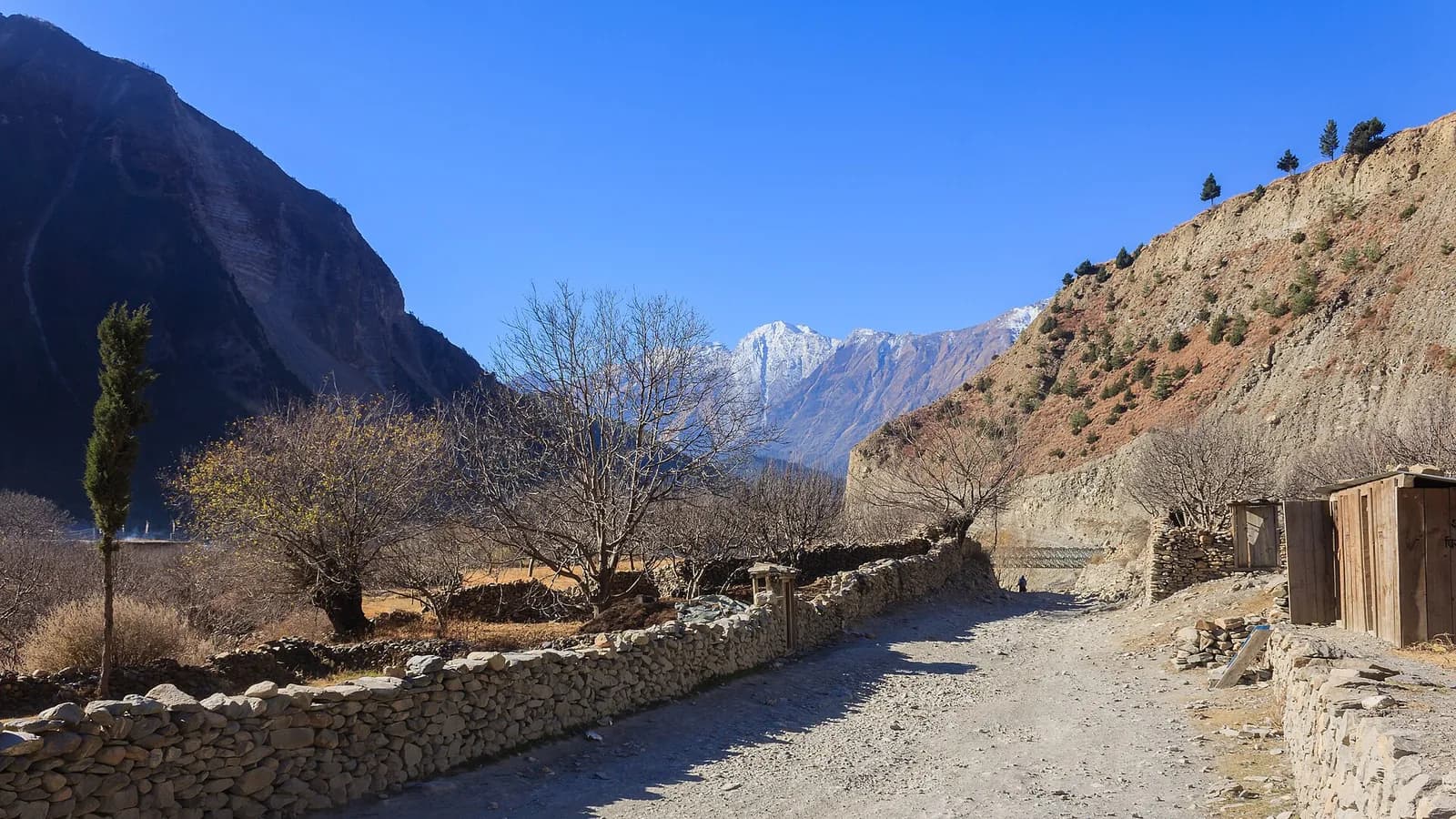
A Nepal motorcycle tour is one of the great rides in Asia: thin ribbons of road that climb out of green foothills into the world's deepest gorge and on toward the high desert of Mustang, with 8,000-metre peaks filling the view. On a Royal Enfield — the bike most associated with Himalayan touring — it is the kind of trip riders plan for years. But Nepal's mountains are unforgiving, the roads are rough, and there are real rules around licences and restricted-area permits that catch visitors out. This is an adventure that rewards preparation.
This guide covers what you actually need to know to plan one: the best routes, what it costs to rent or join a tour, the licence and permit rules, the riding seasons, and the safety realities of the high Himalaya. Prices and regulations shift, so treat figures here as a current guide and confirm them when you book.
Key takeaways
- The Royal Enfield Himalayan is the default touring bike — built for Nepal's mixed tarmac and rough mountain roads.
- You need an International Driving Permit with a motorcycle category, carried with your original endorsed home licence; checkpoints do ask.
- Renting a Himalayan in Kathmandu is commonly advertised around USD 45–60 a day for the 411cc (as of 2026); guided tours bundle everything into a per-person price.
- Upper Mustang is a restricted area: as of 2025 it costs USD 50 per person per day, plus ACAP fees and a guide requirement.
- Ride in the dry seasons — spring (March–May) and autumn (September–November); avoid the monsoon and deep winter on the passes.
- This is a trip for confident, experienced riders; the terrain, traffic and altitude are not a place to learn.
Why ride Nepal
Nepal compresses an extraordinary amount of riding into a small country. In a single tour you can leave the busy Kathmandu Valley, sweep along river valleys to Pokhara, then climb the Kali Gandaki gorge — often called the deepest in the world — between the giants of Annapurna and Dhaulagiri, finishing in the medieval, Tibetan-influenced kingdom of Upper Mustang. The surfaces run from smooth highway to rock, river crossing and dust, and the altitude climbs from subtropical lowland to wind-scoured high desert.
That variety is the appeal, and the Royal Enfield is woven into the romance of it. These are not fast bikes, but they suit the pace of the mountains, and the Himalayan model in particular is made for exactly this terrain. For many riders the destination is almost beside the point: it is the road itself — see our wider take on getting off the beaten path in Nepal — that draws them.
The routes
Nepal's tours tend to follow a few well-worn arteries, scaled up or down by how far into the high country you want to push.
The Kathmandu–Pokhara–Mustang corridor
The signature ride heads west from Kathmandu to Pokhara, then turns north up the Kali Gandaki toward Mustang. From Pokhara the road climbs past the Annapurna and Dhaulagiri massifs, through a deep gorge from the Beni area up toward Kalopani and Tukche, on to Kagbeni — the gateway to the restricted zone — and finally to the walled capital of Lo Manthang, with side trips to landmarks like the cliff-cut Chhoser caves near the Tibetan border. This is the classic ten-to-twelve-day Himalayan motorcycle journey, and the reason most riders come.
Foothill loops and lighter options
You do not have to go high to enjoy riding here. Shorter loops out of Kathmandu and around the Pokhara and Annapurna foothills pack in lakes, villages and mountain views over roughly a week, on gentler roads. The corridor between the two cities is the backbone of the country's tourist travel — our guides to the Kathmandu to Pokhara transport options and the tourist bus route describe the same highway you will ride. Side trips to car-free hilltop towns like Bandipur make natural stops along the way.
| Route | Rough duration | Character | | --- | --- | --- | | Kathmandu & valley rim loops | 1–3 days | Easy intro, cultural sites, traffic | | Pokhara & Annapurna foothills | ~1 week | Lakes, villages, moderate roads | | Kali Gandaki to Upper Mustang | ~10–12 days | High desert, restricted area, rough roads |
What it costs
Cost splits cleanly into two models: rent and ride yourself, or join a guided tour.
Renting a bike
If you have the experience to go independent, renting a Royal Enfield Himalayan in Kathmandu is commonly advertised somewhere in the region of USD 45 to 60 a day for the popular 411cc (as of 2026), with newer or larger machines such as the Himalayan 450 quoted higher again. Classic Bullets and Classic 500s sit around the lower end. Rates move with season, demand and rental length, and longer hires usually bring the daily rate down, so compare a few operators and confirm what the price includes — helmet, paperwork, any support — before you commit.
Guided tours
A guided multi-day tour rolls the lot into one per-person price: the bike, fuel, a lead rider and a support vehicle, permits, accommodation and meals, and guiding. These are quoted on request and vary with the route, the length and the group size. As one published reference point for the scale of Himalayan riding holidays, Royal Enfield's own organised Ladakh tour in India was advertised at USD 2,300 for a single rider (as of 2025), bike included — Nepal tours are priced separately by local operators, but it gives a sense of the order of magnitude for a fully supported trip. Whatever you are quoted, ask precisely what is and is not included, and budget the extras with our Nepal travel budget guide.
The paperwork: licence and permits
This is where independent riders most often come unstuck, so get it right before you leave home.
Your licence and the IDP
To ride legally in Nepal you should carry an International Driving Permit (IDP) endorsed for motorcycles, together with your original home driving licence, which must itself include a motorcycle entitlement. The IDP is only a translation of your existing licence — it cannot grant a category you do not already hold — and the two documents are meant to be carried together. This matters in practice: police checkpoints are common on the main highways, the Prithvi Highway between Kathmandu and Pokhara among them, and officers do ask foreign riders for their papers. Sorting the IDP at home is far easier than arguing at a checkpoint.
Restricted-area permits: Upper Mustang
If your route enters Upper Mustang, you are heading into a restricted area with its own fees. As of 2025, the long-standing flat USD 500 charge was replaced with a USD 50 per person, per day system, so you now pay only for the days you actually spend inside the zone — five days in Mustang costs around USD 250, for example. On top of that, the Annapurna Conservation Area (ACAP) fee and the region's guide requirement still apply. Restricted-area rules change periodically and are fiddly to arrange independently, which is a major reason many riders do Mustang as part of an organised tour. Our Upper Mustang trek permit guide explains the restricted-area system in more depth, and it is wise to confirm the current fees before you ride.
Seasons: when to ride
Weather governs everything in the Nepali mountains, and the riding calendar mirrors the trekking one.
- Spring (roughly March–May): warm, green and stable — one of the two prime windows, with good conditions and longer days.
- Autumn (roughly September–November): the post-monsoon favourite, with crisp, clear air and the most reliable mountain views, on dry trails.
- Winter (December–February): rideable at lower elevations but bitterly cold and often snowbound on the high passes — serious territory.
- Monsoon (roughly June–August): the worst time to ride the mountains, with mud, landslides and roads that wash out — best avoided for high routes.
For most riders, spring and autumn are the clear choices, and they coincide with the best weather generally — see our wider guides to the best time to visit Nepal and Nepal weather by month.
Safety in the Himalaya
A Nepal motorcycle tour is genuinely rewarding, but it is not to be underestimated. Mountain roads are frequently narrow, rough, exposed and shared with trucks and buses, traffic drives on the left, surfaces change without warning, and altitude adds its own strain on both rider and machine. Plenty of experienced riders do this safely every season — the key is to ride well within your limits and prepare properly.
A safety checklist
- Be honest about your level. This terrain suits confident, experienced riders, ideally with some off-road or adventure background. It is not a place to learn.
- Wear full protective gear — proper helmet, armoured jacket, gloves and boots — every time.
- Never ride at night on mountain roads; unlit hazards, animals and oncoming vehicles make it especially dangerous.
- Acclimatise on high routes, and recognise the signs of altitude sickness, which affect riders too.
- Carry the right insurance — confirm your policy covers motorcycling and helicopter evacuation, as many exclude both; see our guide to trekking and evacuation insurance.
- Consider a guided tour with a support vehicle for the harder, higher routes — it transforms your safety margin.
Because the same caution applies to choosing operators and avoiding corner-cutting deals, the habits in our Nepal tourist scams guide are worth carrying onto the bike, and a sober read of whether Nepal is safe sets sensible expectations.
Practical preparation
A few non-obvious things make the trip smoother:
- Sort connectivity. A local SIM keeps maps and contacts live in the valleys — see our best SIM card in Nepal guide. Coverage thins out high in the mountains, so download offline maps.
- Carry cash. Card acceptance is patchy outside the cities; our ATM withdrawal guide explains how to keep topped up.
- Plan fuel. Petrol stations are sparse in the high country, so fill up at every opportunity and know where the gaps are.
- Pack for range. Temperatures swing from hot lowland valleys to freezing passes in a single day, so layer accordingly.
- Build in buffer days. Mountain riding is slow and weather-dependent; do not plan back-to-back long stages with no slack.
Is it for you?
Be clear-eyed about fit. A Nepal motorcycle tour is best suited to riders who are already comfortable on a bike, preferably with some experience of rough roads, who want a physically demanding, deeply rewarding adventure rather than a relaxed holiday. If that is you, few rides anywhere match the Kali Gandaki at dawn with Dhaulagiri overhead.
If you are a newer rider, you have good options short of giving up the idea: stick to gentler, lower-altitude foothill routes, ride pillion on a guided tour, or build your skills at home first and come back for Mustang another year. Either way, an organised tour with a lead rider and support vehicle is the safest way to take on the harder routes, and a natural fit alongside a broader trip planned around our two-week Nepal itinerary. Ride within yourself, respect the mountains, and Nepal will give you one of the best roads of your life.
Sources
- Himalayan Adventure Mustang 2025 — Royal Enfield
- Moto Himalaya Ladakh 2025 — Royal Enfield
- International Driving Permit for Nepal Motorbike (2026) — The Everest Holiday
- Motorcycling Permits in Nepal — Nepal Moto Tours
- Upper Mustang Permit 2025: $50 Per Day — The Longest Way Home
- Royal Enfield Himalayan rent in Nepal — City Motorbike
- Legendary Nepal Motorcycle Tour — Himalayan Rides
Frequently asked questions
- Do I need a special licence to ride a motorcycle in Nepal?
- Yes. To ride legally you should carry an International Driving Permit (IDP) with a motorcycle category, together with your original home licence that also has a motorcycle endorsement. An IDP only translates your existing licence, so it cannot grant a permission you do not already hold at home. Police checkpoints on the main highways routinely ask foreign riders for documents, so sort the IDP before you travel rather than relying on getting away without it.
- How much does a Nepal motorcycle tour cost?
- It depends heavily on whether you rent and ride independently or join a fully guided tour. Renting a Royal Enfield Himalayan in Kathmandu is commonly advertised somewhere in the region of USD 45 to 60 a day for the popular 411cc, with newer or larger bikes higher, but rates vary by season and operator. Guided multi-day tours bundle the bike, fuel, a lead rider and support vehicle, permits, accommodation and meals into a per-person price that is quoted on request. Always confirm the current rate and exactly what is included.
- What is the best motorcycle in Nepal — the Royal Enfield Himalayan?
- The Royal Enfield Himalayan is the default touring choice and the most popular rental for good reason: it is built for exactly this kind of mixed tarmac and rough mountain road, with the ground clearance and torque the terrain demands. Classic Royal Enfields like the Bullet and Classic 500 are also widely rented and have huge character, but the Himalayan handles broken surfaces and high passes more comfortably. For most visitors touring Nepal's mountains, it is the sensible pick.
- When is the best season for a motorcycle tour in Nepal?
- Spring, roughly March to May, and autumn, roughly September to November, are the prime riding windows, when skies are clearest and trails are dry. Autumn brings crisp post-monsoon air and reliable mountain views, while spring is warm and green. The summer monsoon makes mountain roads muddy, prone to landslides and often impassable, and high-altitude winter riding is bitterly cold with snow on the passes. Plan around the two dry shoulder seasons for the best and safest conditions.
- Do I need permits to ride in places like Upper Mustang?
- Yes. Upper Mustang is a restricted area, and as of 2025 the old flat USD 500 fee was replaced with a USD 50 per person per day system, so you pay only for the days you spend inside the restricted zone. Annapurna Conservation Area (ACAP) fees and the area's guide requirement also still apply on top. Restricted-area rules change, and they are awkward to arrange solo, which is one reason many riders tackle Mustang as part of an organised tour. Confirm the current fees before you go.
- Is a Nepal motorcycle tour dangerous?
- It carries real risk and demands respect. Nepal's mountain roads can be narrow, rough, exposed and busy with trucks and buses, traffic drives on the left, and conditions change fast with weather and altitude. That said, well-prepared riders with off-road experience do it safely every season. Ride within your limits, wear full protective gear, never ride at night on mountain roads, carry good insurance that covers motorcycling and evacuation, and consider a guided tour for the harder routes. It is best suited to confident, experienced riders.
- Can beginners do a motorcycle tour in Nepal?
- Nepal's mountain roads are not the place to learn. The terrain, traffic, altitude and exposure mean tours are best suited to riders who are already confident, ideally with some off-road or adventure-riding experience. A complete beginner is better served by gentler, lower-altitude routes, by riding pillion on a guided tour, or by building skills at home first. If you are a newer rider set on Nepal, an organised tour with a support vehicle and a lead rider greatly improves your margin of safety.
- How many days do you need for a Nepal motorcycle tour?
- It depends on the route. Shorter loops out of Kathmandu and around the Pokhara and Annapurna foothills can be done in roughly a week, while reaching the dramatic high country of Upper Mustang along the Kali Gandaki typically needs around ten to twelve days to allow for the distances, the rough roads and acclimatisation. Build in buffer days for weather and the slow pace of mountain riding rather than planning back-to-back long stages.
Spotted an error in this post? Tell us or suggest a correction.
Related posts
ABC Trek: A Plain-English Guide to Annapurna Base Camp
The ABC trek (Annapurna Base Camp) explained — the route, how many days it takes, difficulty, the best seasons, and what daily trail life is really like.
Read postAma Dablam Climb: 2026 Expedition Guide (6,812m)
An Ama Dablam climb and expedition guide for 2026 — height, the Southwest Ridge route, camps, fixed ropes, difficulty, permits, cost and the best seasons.
Read postAnnapurna vs Manaslu: Which Trek Should You Choose?
An Annapurna vs Manaslu decision guide for trekkers — compare permits, crowds, difficulty, infrastructure and cost to pick the right Himalayan route.
Read postAsan Bazaar Kathmandu: Old Town Market Guide
A visitor guide to Asan bazaar, Kathmandu's oldest market — its six-road square, Annapurna Temple, what to buy, when to go, and how to get there.
Read postAyurveda Nepal: A Traveller's Guide to Healing
Ayurveda Nepal explained for tourists — the history, the doshas, treatments like Panchakarma and Shirodhara, where to go and how to choose a centre safely.
Read postBest Restaurants Pokhara Lakeside: Where to Eat
The best restaurants in Pokhara Lakeside — lakeside trout, wood-fired pizza, Tibetan momos and healthy cafes, with what to order and rough 2026 prices.
Read post