Nepal Handicrafts: A Traveller's Guide to Crafts
A guide to Nepal handicrafts — pashmina, thangka, metalwork, pottery, Dhaka and felt — where they are made, how to spot the real thing, and where to buy.
In Nepal, the workshop and the shop are often the same room — buy where you can hear the hammer.
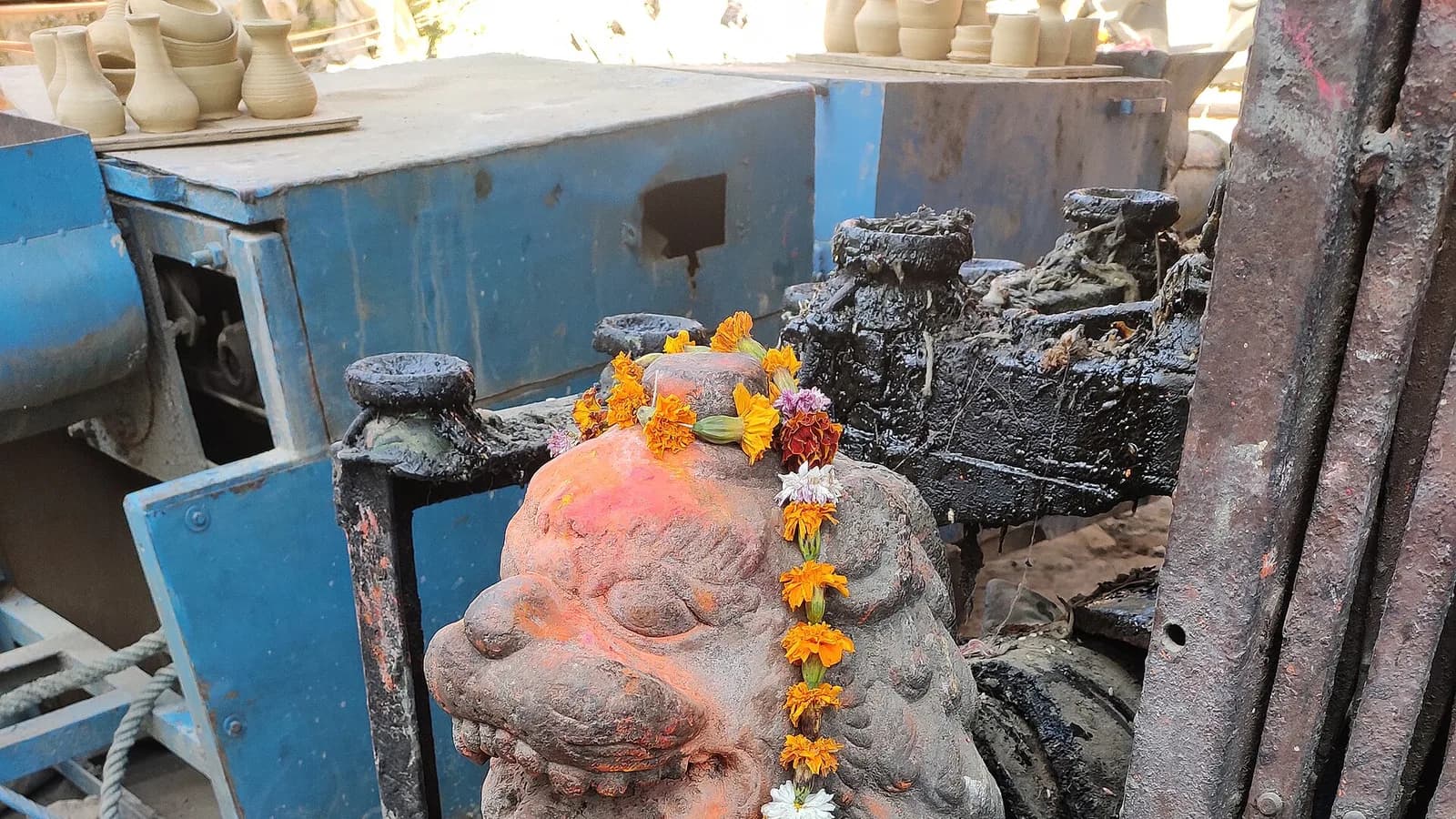
Few countries pack as much handmade culture into so small a space as Nepal. Walk a single lane in Patan or Bhaktapur and you will pass a thangka painter mixing mineral colours, a coppersmith tapping a butter lamp into shape, and a potter centring wet clay on a spinning wheel. Nepal handicrafts are not a tourist add-on here; they are a living economy and an art tradition that stretches back centuries. This guide walks through the main crafts — what they are, where they are made, how to tell quality from tourist-grade copies, and where to buy responsibly.
A note on numbers: where we mention prices, they are rough ranges from Nepal-based sellers and shift with the exchange rate and the season. Use them to calibrate, not as fixed quotes. Sources are listed at the end.
Key takeaways
- The headline crafts are pashmina, thangka, metal statues, pottery, Dhaka fabric, lokta paper, felt, singing bowls and the khukuri — most still made by hand near where you buy them.
- Each craft has a home region: metalwork and thangka in Patan, pottery in Bhaktapur, Dhaka weaving from Palpa, felt and paper around the Kathmandu Valley.
- The sector is a major source of livelihoods, employing well over a million people, with felt items the largest export category in recent figures.
- Learn a few authenticity checks — the Chyangra pashmina tag, hand-loom irregularities, real brushwork on thangka — and you will rarely overpay for a copy.
- Two export rules matter: genuine antiques over about 100 years old need a permit, and a khukuri must fly in checked baggage.
A craft economy, not just souvenirs
Handicrafts are one of Nepal's signature export sectors. According to the Federation of Handicraft Associations of Nepal (FHAN), the industry supports business and employment for more than 1.1 million people across the country, many of them women working from home or through community cooperatives. Nepali handmade goods now reach more than 80 countries, with the United States, the United Kingdom, Germany, Australia and Japan among the larger buyers.
The mix of what sells abroad is broad: felt goods, handmade paper, pashmina and wool, carpets, metalwork, pottery, Dhaka and silk textiles, leather, bamboo, incense and more. In recent trade data, felt handicrafts were the single largest export category by value (as of mid-2024 reporting), while handmade paper products held a steady share. Year-to-year totals move with global demand, and FHAN has flagged periods of decline as well as growth, so treat any single figure as a snapshot rather than a trend.
For travellers, the takeaway is simple: buying a genuine handmade piece is not just a keepsake. It plugs directly into one of the country's most important cottage industries.
Textiles: pashmina and Dhaka
Pashmina
Pashmina is Nepal's most famous craft export, sometimes called "soft gold." The finest grade is spun from the downy undercoat of high-altitude Himalayan goats — known locally as chyangra — producing a fibre far thinner than human hair, which is why a good shawl feels weightless yet warm.
Because the name carries a premium, imitation is rife. To buy with confidence:
- Look for the Chyangra Pashmina trademark. Nepal introduced this hallmark specifically to certify shawls made from genuine high-altitude goat wool; a certified piece should come with the label.
- Feel the finish. Real pashmina has a soft, matte hand. A glossy, slippery sheen usually signals a synthetic or heavily blended fabric.
- Hold it to the light. A genuine hand-loom weave is dense but shows slight irregularities — a sign it was woven by hand rather than machine.
- Mind the price. Labels reading 100% cashmere or a 70% cashmere / 30% silk blend are common and legitimate, but a "pashmina" priced far below the market average is almost certainly not the real thing.
For a deeper look at grades, blends and shopping spots, see our dedicated guide to pashmina in Nepal.
Dhaka fabric
Dhaka is a colourful hand-loom textile woven in vivid geometric patterns, historically associated with Palpa district in the western hills — the original home of the famous Palpali Dhaka. The cloth is turned into the traditional dhaka topi cap, as well as shawls, scarves, ties, kurtas and table mats. Each weaving region carries its own palette and motifs, so two Dhaka scarves can look quite different depending on where the loom stands. A Dhaka topi is a light, flat-packing and unmistakably Nepali gift; the cap is woven into national dress and shows up across festivals and ceremonies described in our Nepali culture overview.
Sacred art: thangka and metalwork
Thangka paintings
The thangka is Nepal's best-known fine-art tradition — an intricate Buddhist or Hindu scroll painting on cotton or silk, depicting deities, mandalas and spiritual scenes. The finest are painted with mineral pigments and real gold and can take weeks or months to finish. Patan and the Kathmandu Valley are the heart of the tradition.
When buying, look for genuine brushwork texture and natural canvas. Printed posters and rushed "hand-painted" pieces sold cheaply are common, so be wary of anything finished in a day or two. Our thangka painting article goes into schools, symbolism and what drives the price.
Metal statues and ritual objects
Patan, also called Lalitpur, is the city of metal artisans. Using the centuries-old lost-wax casting method, craftspeople produce statues of deities, ritual bells, butter lamps and finely detailed ornaments in bronze and copper. The same Newar metalworking lineage also makes the hand-hammered singing bowls sold across Kathmandu — bowls that ring with a long, layered tone and are used in meditation and sound work. For those, our guide to singing bowls in Nepal explains hand-hammered versus machine-made and how to test the sound.
A good way to appreciate the craft before you buy is simply to wander Patan, which our Patan and Lalitpur guide covers in detail.
Clay and fibre: pottery, paper, felt
Bhaktapur pottery
In Bhaktapur's Pottery Square, generations of potters still shape clay into pots, bowls, planters and figurines on traditional wheels, then fire them in open kilns and finish them with natural glazes. It is one of the few places where you can watch the whole process in the open air, then buy directly from the maker. Pieces are inexpensive, though the fragile ones need careful packing for the flight home. Pottery Square pairs naturally with a heritage walk through the city — see our Bhaktapur Durbar Square guide.
Lokta paper
Lokta is a durable handmade paper produced from the bark of a high-altitude Himalayan shrub that regrows after harvesting, which makes it a relatively sustainable craft. It is sold as journals, cards, lampshades, gift wrap and prints. Lightweight and cheap, lokta notebooks are among the easiest authentic gifts to carry; our lokta paper article explains how it is made and why it lasts.
Wool felt
Felt — wet-felted from sheep's wool into balls, mats, slippers, toys and the popular finger puppets — has quietly become one of Nepal's largest handicraft exports by value. It is light, unbreakable and child-friendly, which is part of why it travels so well. Felt items are widely sold in fair-trade shops and markets across the valley.
The khukuri
The khukuri, the forward-curved blade carried by Nepal's Gurkha soldiers, is hand-forged in the eastern hill towns. A genuine working knife has a full tang, visible hammer marks and a leather sheath, while the cheap display versions are cast rather than forged. If you buy one, it must travel in checked baggage only — never in your cabin bag — and you should check your home country's knife-import rules first. Our khukuri guide covers types and what to look for.
Where to buy — and where to watch
Markets versus fair-trade shops
| Where | Best for | Prices | | --- | --- | --- | | Thamel, Kathmandu | Widest variety, convenience | Bargain; opening prices inflated | | Asan & Indra Chowk | Local atmosphere, textiles, daily goods | Bargain; better value than Thamel | | Patan (Lalitpur) | Fine metalwork, thangka, jewellery | Mixed; bargain in shops | | Bhaktapur Pottery Square | Clay, direct from the wheel | Low, often near-fixed | | Fair-trade cooperatives | Guaranteed quality, ethics | Fixed — no haggling |
In open markets, bargaining is expected and part of the culture; counter politely and meet in the middle. At fair-trade shops such as Mahaguthi, Sana Hastakala and Dhukuti, prices are fixed precisely so that more of the money reaches the artisan, so haggling there is out of place.
Seeing the craft made
Half the pleasure is watching the work. Bhaktapur's Pottery Square shows potters at the wheel in the open; some metal and thangka workshops in Patan welcome respectful visitors; and a growing number of community homestays and studios run short pottery, weaving and felting sessions for travellers who want to try it themselves.
Buying responsibly and getting it home
A few practical rules keep the experience clean:
- Antiques are protected. Anything genuinely more than about 100 years old is cultural heritage and cannot be exported without a clearance certificate from the Department of Archaeology in Kathmandu. Modern reproductions are fine to take home.
- Keep your receipt. Because new items are sometimes sold as antiques, hold on to proof of purchase and, for anything valuable, ask the seller to confirm in writing that the piece is not an antique.
- Favour the maker. Buying from fair-trade cooperatives or directly from the workshop means more of your money supports the craftsperson and the tradition.
- Pack for the journey. Textiles and paper pack flat; pottery and metal need padding; and the khukuri goes in checked luggage.
Handicrafts are one of the most rewarding ways to engage with Nepal — portable culture made by hand, often within sight of where you stand. Choose well, buy fairly, and you carry home not just an object but a small piece of a living tradition.
Sources
- FHAN data reveals slump in handicraft exports — Fibre2Fashion
- Nepal exports handicrafts worth Rs 3.26 billion in past 10 months — Khabarhub
- Nepal Exported Handicraft Products worth Rs 12 Billion in a Year: FHAN — New Business Age
- Federation of Handicraft Associations of Nepal (FHAN)
- Handicraft — Trade and Export Promotion Centre, Government of Nepal
- Handicrafts: Nepal's Cultural Export with Global Appeal — Sourcing Nepal
- Nepali Handicrafts: What to Buy and Where — Explore All About Nepal
- Pottery Square Guide: Bhaktapur — The Longest Way Home
- How To Identify Pure Pashmina Shawls — Handicrafts in Nepal
Frequently asked questions
- What are the most famous handicrafts of Nepal?
- The classics are pashmina shawls, thangka scroll paintings, lost-wax metal statues, Bhaktapur pottery, Dhaka hand-loom fabric, lokta handmade paper, wool felt goods, singing bowls and the khukuri knife. Most are still made by hand in family workshops around the Kathmandu Valley and the hills.
- Where is the best place to buy handicrafts in Nepal?
- Thamel in Kathmandu has the widest range; Patan (Lalitpur) is the centre for fine metalwork and thangka; Bhaktapur's Pottery Square is the place for clay; and fair-trade shops such as Mahaguthi, Sana Hastakala and Dhukuti are best when you want guaranteed quality and ethical sourcing at fixed prices.
- How can I tell a real pashmina from a fake?
- Look for the Chyangra Pashmina trademark tag, feel for a soft matte finish rather than a shiny one, and hold it to the light to check for a fine, slightly irregular hand-loom weave. A genuine shawl feels weightless and warm; a price far below the market average is the clearest warning sign of a synthetic blend.
- Are handicrafts a good souvenir to carry home?
- Yes. Lokta-paper journals, felt goods, Dhaka scarves and pashmina are light, durable and pack flat, which makes them ideal. Heavier metal statues and pottery need careful wrapping, and anything genuinely antique has export limits, so most travellers stick to modern handmade pieces.
- Can I take an old statue or thangka out of Nepal?
- Anything genuinely more than about 100 years old is treated as cultural heritage and needs a clearance certificate from the Department of Archaeology in Kathmandu before it can leave the country. Modern reproductions are fine to export, so keep your receipt and, for valuable pieces, ask the seller to confirm in writing that the item is not an antique.
- Is bargaining expected when buying handicrafts?
- In open markets like Thamel, Asan and Indra Chowk, yes — opening prices are often inflated, so counter politely and settle in the middle. At fair-trade cooperatives, boutiques and the airport, prices are fixed and haggling is not appropriate because the margins support the artisans directly.
- Can I watch artisans at work or learn a craft?
- Often, yes. Bhaktapur's Pottery Square has potters working at the wheel in the open, Patan's metal and thangka workshops sometimes welcome respectful visitors, and a number of community homestays and studios run short pottery, weaving and felting sessions for travellers who want hands-on experience.
Related posts
Best Things to Buy in Nepal: A Smart Shopper's Guide
The best things to buy in Nepal and how to buy them well — fair-trade artisans, value-for-luggage picks, a shopping-day plan, and tips that respect makers.
Read postDhaka Fabric: Nepal's Handwoven Heritage Cloth
A traveller's guide to Dhaka fabric, Nepal's colourful handwoven cotton textile - its origins, the dhaka topi, patterns, and how to buy the real thing.
Read postDhaka Topi: Nepal's National Cap Explained
What the Dhaka topi is, what it means, how the cloth is woven in Palpa and Terhathum, and where travellers can buy a real one in Nepal.
Read post