Dhaka Fabric: Nepal's Handwoven Heritage Cloth
A traveller's guide to Dhaka fabric, Nepal's colourful handwoven cotton textile - its origins, the dhaka topi, patterns, and how to buy the real thing.
One loom, one weaver, a few metres a day - and a pattern that says 'Nepal' without a word.
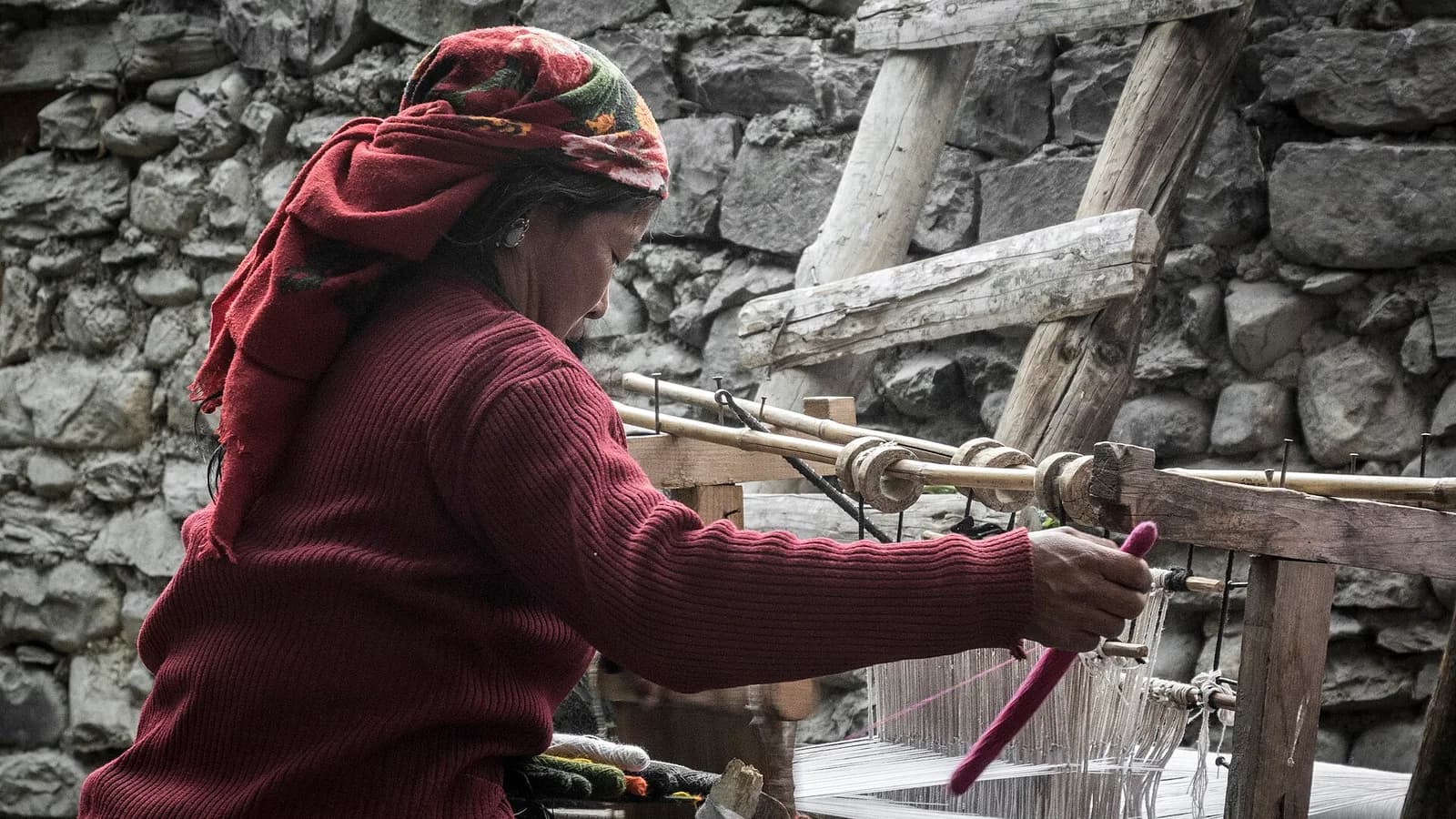
If you spend more than a day in Nepal you will see Dhaka fabric long before you know its name. It is the crisp, geometric, multi-coloured cloth of the dhaka topi - the hat worn by Nepali men at weddings, festivals and on official occasions - and it turns up again in women's blouses, shawls, scarves, bags and a growing range of modern clothing. For a traveller, Dhaka fabric is one of the most distinctly Nepali things you can take home: hand-woven, regionally rooted, and instantly recognisable.
This guide explains what Dhaka cloth actually is, where it comes from, how it is made, what the patterns mean, and how to buy a genuine handwoven piece rather than a printed copy.
Key takeaways
- Dhaka is a hand-woven cotton textile, made with an inlay technique that creates colourful geometric panels on a wooden loom.
- It is most famous as the cloth of the dhaka topi, but the same fabric is used for blouses, shawls, scarves and modern accessories.
- The two heartlands are Tehrathum in the eastern hills (linked to Limbu weavers) and Palpa in the west, whose town Tansen is often called the capital of Dhaka.
- Genuine Dhaka is woven by hand and slow to make - a weaver may produce only a metre or two a day - so authentic pieces cost more than mass-printed imitations.
- Buying real handwoven Dhaka, ideally direct from cooperatives or artisan shops, helps keep the craft and its communities economically alive.
What is Dhaka fabric?
Dhaka is a hand-spun, hand-woven cotton cloth patterned with an inlay weaving technique. Instead of being printed or embroidered after the cloth is made, the coloured motifs are built into the weave itself as the fabric is created, which is why the design reads clearly on both sides. The result is a panel of bright, sharp-edged geometric figures - diamonds, zigzags, stepped shapes and stylised flowers - against a contrasting ground.
It is widely described as the most visible and remarkable cotton textile in Nepal, and over the last century it has become shorthand for Nepali identity itself, especially in the hill (pahadi) regions. The cloth's name is "Dhaka," but in modern Nepal the fabric, the craft and the hat made from it are bound together in the popular imagination.
Dhaka cloth vs the dhaka topi
It helps to separate two things travellers often blur:
- Dhaka fabric is the woven cloth.
- The dhaka topi is the most famous product made from that cloth.
The same fabric is also tailored into the chaubandi cholo (a traditional women's blouse), shawls and wraps, and - increasingly - scarves, ties, jackets, cushion covers and bags aimed at both Nepali buyers and visitors.
Origins and history
Dhaka has more than one origin story, and reputable sources tell them slightly differently, so it is worth holding both in mind rather than fixing on a single neat date.
In the east, Dhaka is described as a traditional handmade fabric of the indigenous Limbu people, with roots in Tehrathum district. For Limbu households the weaving was a domestic art passed between generations rather than simply a trade, and some Rai women weave it too. This eastern tradition is generally regarded as the older one.
In the west, the modern Palpali Dhaka of Palpa district is usually traced to the mid-20th century, when a local weaver - named in sources as Ganesh Lal (or Ganesh Man) Maharjan - learned loom techniques outside Nepal and began producing the cloth in Palpa. Within roughly a decade the product had caught on under the name "Palpali Dhaka." (Sources differ on the exact year, citing dates in the late 1950s and the surname's given name, so treat the precise figures with some caution.)
The hat itself rose to national prominence in the mid-20th century. Accounts link the dhaka topi's spread to the reign of King Mahendra (who ruled from the mid-1950s into the early 1970s), a period in which the cap became closely tied to formal Nepali dress and official documentation.
The two heartlands: Tehrathum and Palpa
Most authentic Dhaka still comes from two regions, each with its own character. Some weaving also takes place in Kathmandu.
| Feature | Tehrathum (East) | Palpa (West) | | --- | --- | --- | | Associated community | Limbu (and some Rai) weavers | Newar and other Palpa weavers | | Reputation | Fine threadwork, vivid colour, symbolic motifs | Widely called the "capital" of Dhaka | | Loom style often cited | Backstrap loom | Frame / one-handed loom for greater output | | Output character | Intricate, domestic-scale | More uniform, higher production capacity |
If you are buying as a souvenir, you do not need to memorise this - but a seller who can tell you which region and loom a piece comes from is usually a good sign of authenticity.
How Dhaka is woven
The craft is genuinely slow. Depending on the complexity of the design, a single weaver may produce only around one to two metres of cloth in a day on a wooden handloom. The patterning is done by hand, thread by thread, which is why detailed pieces command higher prices and why no two are exactly alike.
Cotton, dye and colour
Traditionally the cloth is made from cotton, historically coloured with natural dyes drawn from bark, leaves and berries. The classic palette leans on black, white, red and orange, though weavers use far more colour than that today.
In Limbu and Rai tradition, colour carried meaning rather than being purely decorative. Sources describe red as standing for energy, vitality and prosperity (favoured for weddings and festivals), yellow for fertility and light, blue for sky and protection, and black for the strength and resilience of the community.
A practical note for buyers: the supply of quality cotton thread and natural dye has come under pressure from market forces and a changing climate, and many weavers have moved to synthetic threads and dyes. That shift can affect texture and authenticity, so if natural materials matter to you, ask.
Patterns and what they mean
Part of what makes Dhaka so collectible is its near-endless invention. Weavers are said to know on the order of a hundred basic motifs and to keep creating new ones. A simple element like a zigzag appears in countless variations.
Only some motifs have fixed names - for example a temple form (mandir) or an elephant-trunk shape (hatti sunr). Many others are read individually by the weaver as diamonds, butterflies, flowers or simply butta (a generic term for a small decorative figure). The geometry is often linked to ideas of harmony, balance and prosperity, and in the eastern tradition to local flora, fauna and religious symbolism.
Because so much is improvised, no two topis or shawls are truly identical - which is a large part of the appeal if you want something one-of-a-kind.
The dhaka topi: Nepal's national hat
The dhaka topi is the cloth's most recognisable product and a component of Nepali national dress. Men wear it at celebrations, weddings and festivals, and it has long been associated with formal and official settings. It is most often paired with the daura-suruwal, the traditional shirt-and-trouser outfit, frequently with a patuka (waist sash).
For visitors, a dhaka topi is a compact, lightweight, characterful souvenir - easy to pack, easy to wear, and unmistakably Nepali. If you would like to understand the wider wardrobe it belongs to, see our guide to Nepal's dress code, and for the etiquette around wearing and gifting cultural items, our notes on Nepali etiquette.
Buying genuine Dhaka: a traveller's guide
Dhaka's popularity has a downside: shops are now full of mass-produced, printed copies of the design. These are cheaper, but they are not the handwoven craft and the money rarely reaches weavers.
How to spot the real thing
- Look at both sides. Woven Dhaka shows its pattern on the reverse as well as the front; a print mostly sits on one surface.
- Feel the cloth. Handwoven cotton has a slightly textured, substantial hand compared with a smooth printed fabric.
- Ask about origin. A seller who can name the region (Palpa or Tehrathum) and say the piece is hand-loomed is more likely to be selling the genuine article.
- Mind the price. If a "Dhaka" piece is suspiciously cheap, it is probably printed. Authentic weaving is labour-intensive and priced accordingly.
I am deliberately not quoting fixed prices here, because they vary a great deal with size, design and authenticity. Compare a few sellers in person and you will quickly get a feel for the going rate.
Where to look
You will find Dhaka products in the tourist-facing shops of Thamel in Kathmandu and around Lakeside in Pokhara, as well as in dedicated handicraft stores and artisan cooperatives. Several Nepali retailers and artisan-focused brands also ship internationally, often quoting delivery in a few weeks; to support weavers, favour those who say they work directly with artisans.
For the bigger picture on shopping, our guides to the best things to buy in Nepal and Nepali souvenirs put Dhaka in context alongside other crafts. If textiles are your thing, you may also like our piece on Pashmina in Nepal; for another handmade craft, see lokta paper.
Why it matters
Behind every metre of genuine Dhaka is a skilled weaver and, often, a household tradition. The craft faces real pressures: competition from printed imitations, the rising cost and falling availability of natural materials, and - as commentators note - a lack of formal protection for its designs, which are frequently copied without credit or benefit to the originating communities.
Choosing an authentic, handwoven piece is therefore more than a souvenir decision. It is a small vote for keeping a living craft economically viable in places like Palpa and Tehrathum. For more on travelling in a way that supports local communities, see our guide to sustainable tourism in Nepal.
Sources
- Dhaka fabric - Wikipedia
- Dhaka topi - Wikipedia
- Traditional Dhaka Weaving of Tehrathum and Palpa - Wonder Nepal
- Traditional Dyeing Techniques for Dhaka Fabrics - Wonder Nepal
- Traditional Dhaka-Cloth Weaving - Asia InCH Encyclopedia of Intangible Cultural Heritage
- The Fascinating Story of Palpali Dhaka Cloth - Inside Himalayas
- The revival of Nepali Dhaka - The Kathmandu Post
- Palpa acts to revive hand-woven dhaka - The Kathmandu Post
- Legacy of Palpali Dhaka - The Tribune
- Dhaka Weaving in Nepal - iFlyNepal
Frequently asked questions
- What is Dhaka fabric?
- Dhaka is a hand-woven cotton textile from Nepal made with an inlay technique that produces colourful geometric panels on a wooden handloom. It is best known as the cloth used for the dhaka topi, the patterned hat that is part of Nepali national dress.
- Where in Nepal is Dhaka cloth made?
- The two main centres are Tehrathum district in the eastern hills, long associated with Limbu women weavers, and Palpa district in the west, whose headquarters Tansen is widely called the capital of Dhaka weaving. Some weaving also happens in Kathmandu.
- Is the dhaka topi the same as Dhaka fabric?
- Not exactly. Dhaka fabric is the woven cloth itself, while the dhaka topi is one of the items made from it. The same cloth is also used for womens chaubandi cholo blouses, shawls, scarves and increasingly modern accessories and clothing.
- How can I tell real handwoven Dhaka from a printed copy?
- Genuine Dhaka is woven, so the pattern shows on both faces of the cloth rather than sitting only on the surface like a print. Printed imitations are common and cheaper, so buy from shops or artisan cooperatives that say the piece is hand-loomed and ideally name the weaving region.
- How much does a dhaka topi or piece of Dhaka cloth cost?
- Prices vary widely with size, design complexity and whether the cloth is genuinely handwoven, so it is best to compare a few sellers in Kathmandu or Pokhara rather than rely on a single figure. Handwoven pieces cost more than printed copies because each metre takes a weaver hours of work.
- Can I buy Dhaka products online and have them shipped abroad?
- Yes. Several Nepali retailers and artisan-focused shops ship dhaka topi and Dhaka garments internationally, with delivery often quoted at a few weeks. To support weavers, look for sellers who state that they work directly with artisans.
- Why are the colours and patterns in Dhaka different from piece to piece?
- Weavers work from a large repertoire of motifs and improvise new ones, so no two topis or shawls are truly identical. Traditional palettes lean on red, black, white and orange, and in Limbu and Rai tradition colours such as red and yellow carried symbolic meaning.
- Is buying Dhaka a good way to support local communities?
- Buying authentic handwoven Dhaka directly from cooperatives or artisan shops helps keep a skilled craft alive in regions like Palpa and Tehrathum. The trade faces pressure from cheap printed imitations and a lack of formal protection for its designs, so choosing genuine pieces matters.
Related posts
Best Things to Buy in Nepal: A Smart Shopper's Guide
The best things to buy in Nepal and how to buy them well — fair-trade artisans, value-for-luggage picks, a shopping-day plan, and tips that respect makers.
Read postLokta Paper: Nepal's 1,000-Year-Old Handmade Paper
What lokta paper is, how this Himalayan handmade paper from Nepal is made, why it lasts for centuries, and how to buy the real thing as a souvenir.
Read postNepal Handicrafts: A Traveller's Guide to Crafts
A guide to Nepal handicrafts — pashmina, thangka, metalwork, pottery, Dhaka and felt — where they are made, how to spot the real thing, and where to buy.
Read post