Sustainable Tourism in Nepal: A 2026 Traveller's Guide
How sustainable tourism in Nepal works in 2026 — permit fees, plastic bans, community homestays and simple choices that protect the Himalaya.
The mountains do not need more visitors — they need better ones.
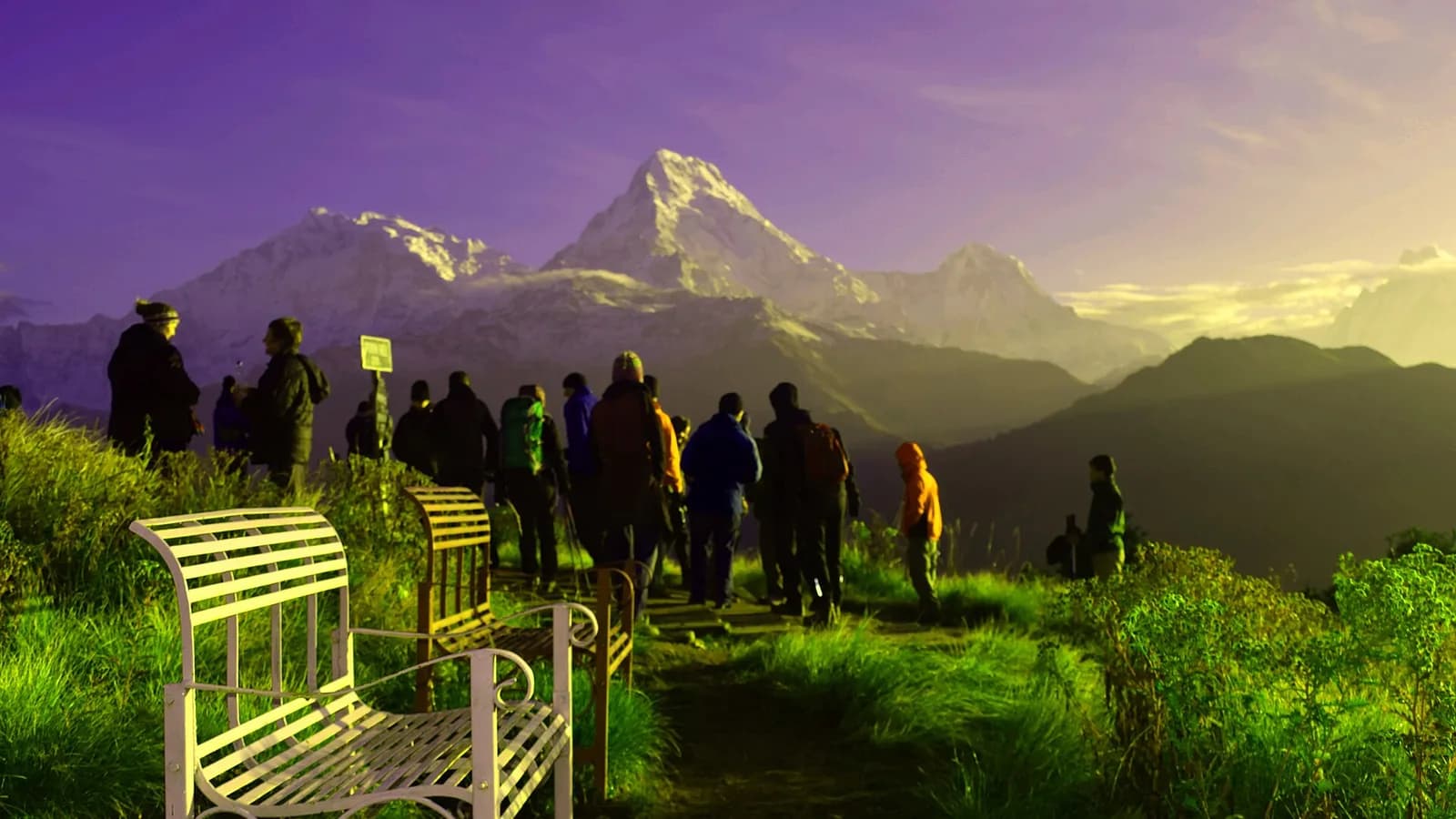
Nepal sits at an awkward crossroads. The same mountains, rivers and old temple towns that draw more than a million visitors a year are also fragile, lightly governed and easily damaged. Sustainable tourism in Nepal is the attempt to keep those two facts from colliding — to let people see the Himalaya without slowly grinding it down. For a traveller, it is less about grand gestures and more about a series of small, mostly cheap decisions: where you sleep, what you drink, who carries your bag and what you do with your rubbish.
This guide explains how sustainable tourism actually works in Nepal in 2026 — the real policies, the real problems, and the practical choices that make a visit part of the solution rather than the load.
Key takeaways
- Nepal welcomed over 1.1 million foreign tourists in 2024, roughly 13% up on the year before — recovery brings revenue and pressure in equal measure.
- Plastic bans are real in parts of the country, especially the Everest region; refilling and treating water is the easy way to comply.
- Permit and conservation fees fund local conservation — the Annapurna Conservation Area reinvests its trekker fees through the National Trust for Nature Conservation.
- The Upper Mustang fee changed in November 2025 to USD 50 per person per day (as of Nov 2025), replacing the old flat USD 500 charge.
- Waste on Everest remains a flagship problem: about 85 tonnes were cleared in spring 2024, and a five-year cleanup plan (2025–2029) is now in place.
- The most sustainable choices — locally owned lodges, homestays, fair guide pay, packing out rubbish — are also among the cheapest.
Why sustainability matters more as Nepal recovers
Tourism is one of Nepal's economic pillars, and after the pandemic slump it has rebounded fast. The Nepal Tourism Board reported 1,147,567 foreign tourist arrivals in 2024, an increase of about 13% over 2023 and close to pre-pandemic levels, with India, the United States and China the top source markets (Nepal Tourism Board figures via Khabarhub).
More visitors mean more income for guides, lodges, porters and shops. They also mean more bottles, more sewage, more flights into thin-air airstrips and more boots on eroding trails. The country's waste infrastructure has not kept pace: in many trekking areas there is simply nowhere for rubbish to go, so it ends up burned, buried or washed into streams (The Longest Way Home). Sustainability, in this context, is not an add-on. It is the only way the thing that makes Nepal worth visiting survives the visiting.
What Nepal's tourism policy now says
In 2025, Nepal's Ministry of Culture, Tourism and Civil Aviation unveiled a new Tourism Policy 2025 — its first comprehensive overhaul of the tourism framework in roughly 17 years. The policy explicitly names over-tourism and unsustainable practices as problems and pushes environment-friendly measures: renewable energy, eco-friendly accommodation, waste management systems and stronger roles for local communities in planning (Travel And Tour World).
Behind the policy sit concrete projects. In 2024 the Nepal Tourism Board and the United Nations Development Programme signed an agreement to launch a Sustainable Tourism Project, a multi-million-dollar effort aimed at improving tourism infrastructure, training the workforce and spreading livelihood opportunities to local communities (UNDP Nepal, via search summary). For a traveller, the takeaway is simple: the official direction of travel is toward fewer impacts and more local benefit, and your choices can pull in the same direction.
The plastic problem — and the bans that target it
The most visible environmental issue on Nepal's trails is the discarded plastic water bottle. Trekkers drink heavily at altitude, the bottles are bulky and worthless once empty, and there is no recycling system to absorb them.
Nepal has gone beyond gentle advice in several places:
- The Everest (Khumbu) region has restricted single-use plastics — thin bags and small drink bottles — since around 2020 to cut litter on the approach to the mountain (Global Citizen).
- Hotel Association Nepal announced that throwaway plastics — water bottles, straws, cutlery, plates, stirrers, polystyrene food containers and more — would be phased out at its member establishments (Kathmandu Post).
These rules are unevenly enforced, but the fix on your end is the same regardless of enforcement: carry a sturdy refillable bottle and a way to treat water — a filter, a UV pen or chemical tablets. Lodges across the popular regions sell boiled or treated water by the litre, which is cheaper than bottled and produces no waste. If you want the safety reasoning behind always treating water, see our guide on whether the water is safe to drink in Nepal. For trail-specific habits, our eco trekking in Nepal guide goes deeper on the day-to-day.
How fees fund conservation
It is easy to resent permit fees, but in Nepal's best-run areas they are the engine of conservation. The Annapurna Conservation Area Project (ACAP) is managed by the National Trust for Nature Conservation (NTNC), which receives no regular government funding for it. Instead, NTNC is granted the right to collect entry fees from trekkers and reinvests the revenue into conservation and development inside the area — supporting things like local infrastructure, education and habitat protection (NTNC).
A snapshot of typical trekking fees
Fees change, so always confirm current rates before you travel. As a rough orientation:
| Item | Approx. cost | Notes | | --- | --- | --- | | ACAP entry permit | NPR 3,000 per person (as of late 2025) | Reinvested into the conservation area | | TIMS card | USD 20 per person (as of late 2025) | Trekkers' Information Management System | | Upper Mustang restricted permit | USD 50 per person per day (as of Nov 2025) | Replaced old flat USD 500 fee |
These figures are drawn from recent trekking-operator and news reporting (Kathmandu Post on the Upper Mustang change; Nepal Guide Trekking). For the broader permit picture, see our overview of Nepal trekking permits.
The Upper Mustang shift
The Upper Mustang change is a good example of policy adjusting to reality. The old system charged a flat USD 500 for the first 10 days, which made the remote, culturally rich region one of Nepal's most expensive treks and slowed its post-pandemic recovery. In November 2025 the government replaced it with USD 50 per person per day (as of Nov 2025) and dropped the 10-day minimum, so visitors pay only for the days they are actually there (Kathmandu Post). A licensed guide is still required, and independent trekking is still not permitted in the restricted area.
The Everest waste story
No single place captures Nepal's tourism dilemma like Everest. The Khumbu region has been called "the world's highest garbage dump," and the numbers are sobering: crews cleared roughly 85 tonnes of waste from the Everest area in spring 2024, including nearly 28 tonnes of human waste, with the Nepali Army removing several tonnes more (Kathmandu Post).
The response has been a mix of rules and ambition:
- Since the 2024 season, climbers above base camp have been required to carry government-distributed poop bags and bring their waste back down — though compliance in the first year was modest (ExplorersWeb).
- Each climber must return at least 8 kilograms of solid waste or forfeit a substantial deposit (reported at USD 4,000), which the new plan proposes turning into a non-refundable mountain welfare fund (Kathmandu Post).
- In December 2025 the government unveiled a five-year Everest cleaning plan (2025–2029), including ideas like a garbage collection point higher on the mountain and dedicated monitoring teams (Kathmandu Post).
Most readers will never climb above base camp, but the lesson scales down to every trekker: high places have almost no capacity to absorb waste, so whatever you carry in, you carry out.
Beyond the mountains: water, cities and overtourism
Sustainability is not only a trail issue. Pokhara, the gateway to the Annapurna region, has long struggled with sewage management around Phewa Lake, with reporting describing large numbers of lakeside hotels discharging into the water and slow progress on enforcement (The Longest Way Home). Kathmandu Valley's day-hike trails are marred by discarded bottles and wrappers. None of this is the individual traveller's fault, but where you spend matters: choosing accommodation and operators that take waste and water seriously sends a market signal that cleaner practice is worth the cost.
For context on the wider environmental backdrop — glaciers, air and climate — our pieces on Nepal's air pollution and Himalayan glacier melt are useful companions.
Where your money goes: community-based tourism
The social half of sustainability is about keeping tourism income in Nepali hands. Community homestays let travellers stay in family homes in villages, share meals and daily routines, and pay hosts directly — a model credited with generating local income while helping preserve traditional culture (CollegeNP).
The same logic applies on the trails. In areas like ACAP, more than a thousand lodges and teahouses have grown up to serve trekkers, and choosing locally owned ones keeps profit in the village economy that maintains the paths rather than routing it to outside firms (NTNC). If you want to give time as well as money, do it carefully — our guide to volunteering in Nepal responsibly explains why some "good causes," especially orphanage tourism, can do harm.
A simple checklist for a lower-impact trip
| Choice | Lower-impact option | | --- | --- | | Water | Refill and treat; skip bottled water | | Sleep | Locally owned teahouses and homestays | | Food | Local dishes like dal bhat, cooked fresh | | Guides and porters | Operators with clear welfare standards and fair pay | | Rubbish | Pack out everything, including wrappers and batteries | | Permits | Pay them properly — they fund conservation |
The bottom line
Sustainable tourism in Nepal is not a premium product you buy; it is a posture you bring. The policy framework is slowly tightening — a new national tourism policy, real plastic restrictions, a five-year Everest cleanup, reinvested conservation fees and fairer permit pricing in places like Upper Mustang. Your part is smaller but genuinely matters: refill your bottle, pack out your waste, sleep and eat local, pay people fairly, and treat the rules as the floor rather than the ceiling. Do that, and you leave the Himalaya roughly as you found it — which, in a country this fragile and this generous, is the most useful souvenir of all.
Sources
- Nepal Tourism Board arrivals 2024 (via Khabarhub)
- Nepal's Tourism Policy 2025 (Travel And Tour World)
- Sustainable Tourism Project (UNDP Nepal)
- Hotels to ban single-use plastics (Kathmandu Post)
- Nepal bans single-use plastics in Everest region (Global Citizen)
- Annapurna Conservation Area Project (NTNC)
- Nepal scraps USD 500 Upper Mustang fee, sets USD 50 daily (Kathmandu Post)
- Upper Mustang permit update 2025 (Nepal Guide Trekking)
- Nepal's five-year Everest cleanup plan (Kathmandu Post)
- The poo issue on Everest (ExplorersWeb)
- Overtourism in Nepal (The Longest Way Home)
- Impact of tourism on local communities in Nepal (CollegeNP)
Frequently asked questions
- What is sustainable tourism in Nepal?
- It means travelling in a way that limits environmental damage, respects local culture and keeps tourism money in Nepali communities, through choices like refilling water bottles, staying in locally owned lodges, hiring fairly paid guides and following the waste rules in protected areas.
- Does Nepal have a plastic ban for tourists?
- Yes, in places — the Everest (Khumbu) region has restricted single-use plastics since 2020, and Hotel Association Nepal said its member hotels would phase out throwaway plastics, so carrying a refillable bottle and treating your own water is the simplest way to stay compliant.
- How do permit fees support conservation in Nepal?
- Entry fees for areas like the Annapurna Conservation Area are managed by the National Trust for Nature Conservation, which has the right to collect them and reinvests the revenue into local conservation and development rather than relying on regular government funding.
- What changed with the Upper Mustang permit in 2025?
- In November 2025 Nepal replaced the old flat 500 US dollar restricted-area fee with 50 US dollars per person per day (as of November 2025), removing the 10-day minimum so trekkers pay only for the days they actually spend in the region.
- Is the Everest cleanup actually working?
- Progress is real but partial — crews cleared roughly 85 tonnes of waste from the Everest area in spring 2024 including about 28 tonnes of human waste, and a five-year cleaning plan for 2025 to 2029 has been announced, though enforcement and compliance remain ongoing challenges.
- How can I make my Nepal trip more sustainable on a budget?
- Most sustainable choices are cheap or free — refill and treat water instead of buying bottles, eat local dal bhat, choose locally owned teahouses and homestays, pack out your rubbish and hire a fairly treated guide, none of which require an expensive 'eco' package.
- What is community homestay tourism in Nepal?
- It is a model where travellers stay in family homes in villages, sharing meals and daily life, so income flows directly to host families and helps preserve traditional culture rather than going to outside companies.
- Which regions are best for responsible travel in Nepal?
- Protected areas such as the Annapurna Conservation Area and Sagarmatha (Everest) National Park have the clearest environmental rules and strongest community structures, making them good places to put responsible habits into practice.
Related posts
Eco Lodge Nepal: A 2026 Guide to Green Stays
How to choose an eco lodge in Nepal in 2026 — solar power, community jobs, jungle and mountain options, plus what the green labels really mean.
Read postEco Trekking Nepal: Sustainable Himalaya Travel (2026)
A practical guide to eco trekking in Nepal — cutting plastic, fair porter treatment, community lodges and leave-no-trace habits for the trails.
Read postAltitude Sickness Nepal: Plan a Trek That Acclimatizes
How to plan a trek that prevents altitude sickness in Nepal — the ascent-rate numbers, rest-day math, and self-checks that keep you on the trail.
Read post