Jungle Lodge Nepal: Guide to Terai Wildlife Stays
How to choose a jungle lodge in Nepal near Chitwan or Bardia, with park fees, what to expect, and tips for safaris and wildlife.
Trade the mountains for tall grass, river mist, and the chance of a rhino at dawn.
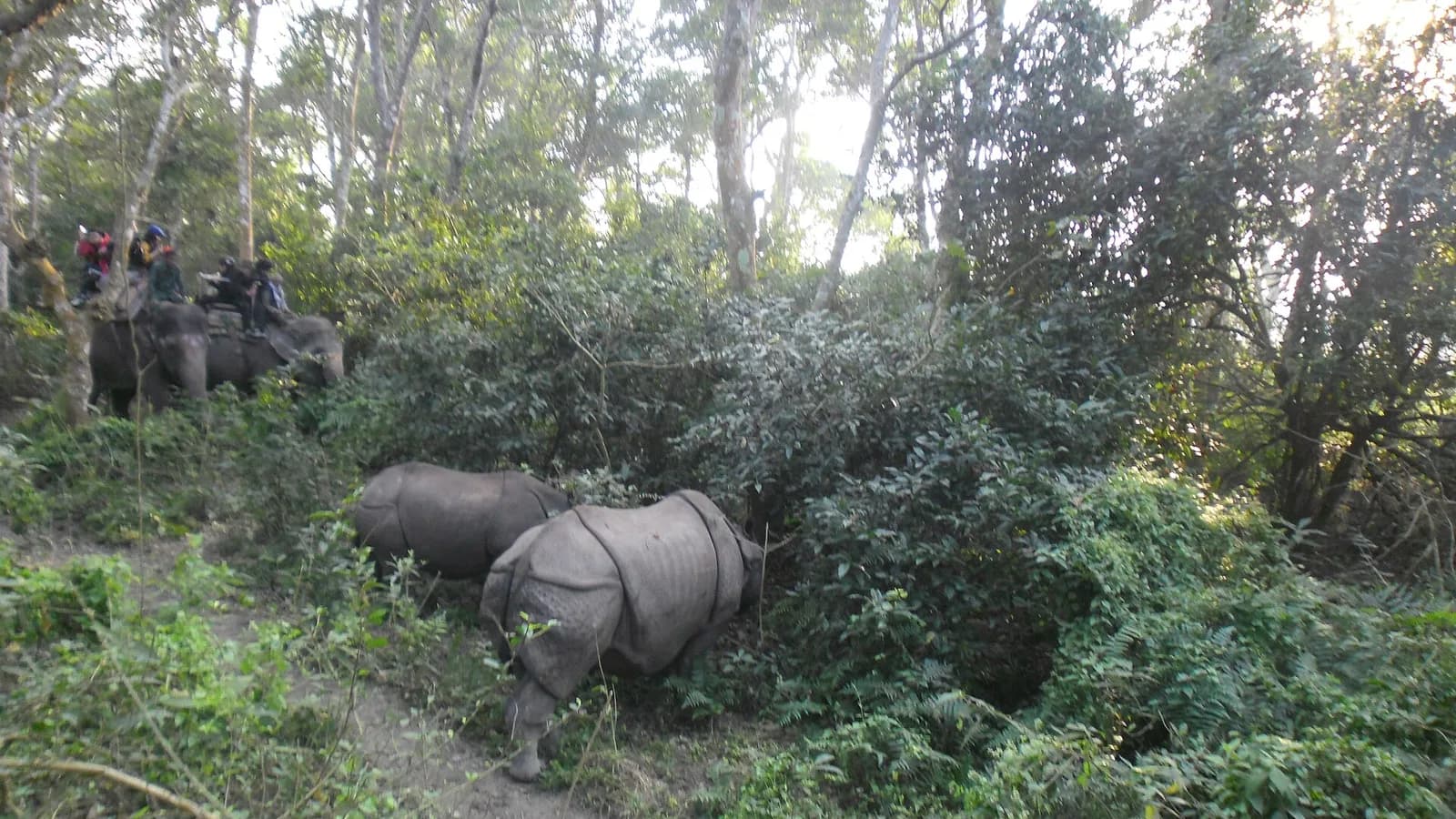
A jungle lodge in Nepal is your base camp for the country's other great landscape: not the Himalaya, but the steamy lowland Terai, where rivers braid through tall elephant grass and sal forest hides rhinos, deer, and the occasional tiger. Most travellers know Nepal for trekking, yet a stay at a jungle lodge near Chitwan or Bardia National Park is one of the most rewarding ways to slow down, swap boots for binoculars, and watch wildlife at dawn and dusk. This guide explains what a jungle lodge actually is, where to find one, what park fees to expect, and how to choose a stay that matches your budget and your patience for wildlife.
Key takeaways
- A "jungle lodge" in Nepal usually means buffer-zone accommodation beside a Terai national park, built around safaris, nature walks, and birdwatching.
- The two main hubs are Chitwan National Park (near Sauraha and Meghauli) and Bardia National Park (near Thakurdwara) in the far west.
- Lodges sit outside the core zone, so you still need a national park entry permit for each safari into protected forest.
- Per the Nepal Tourism Board, foreign entry is NPR 2,000 at Chitwan and NPR 1,500 at Bardia, with lower SAARC rates (as of June 2026).
- Chitwan is easier to reach and has the most lodges; Bardia is remoter and often better for wild tiger sightings.
- Sightings are never guaranteed, so pick a lodge for its guides, location, and ethics rather than promises.
What "jungle lodge" really means in Nepal
In Nepal the word "lodge" stretches from a simple guesthouse to a polished resort, and "jungle lodge" simply signals that the property is built around wildlife in the Terai lowlands. These are not inside the national parks themselves. Nepal's Terai parks are divided into a strictly protected core zone, where the animals live and overnight stays are not permitted for ordinary visitors, and a surrounding buffer zone of community land, farms, and forest where villages and lodges are located. Your lodge sits in the buffer zone; your safaris go into the core zone with a permit and a licensed guide.
That structure shapes everything about a jungle-lodge stay. You sleep in comfort a short ride or walk from the park boundary, then head out on guided activities at the times when animals are most active. A good lodge handles the logistics: permits, guides, jeeps, canoe trips, and meals, often bundled into a one- or two-night package.
Lodge, resort, or homestay?
You will see overlapping labels. A jungle lodge or safari resort typically offers en-suite rooms, a restaurant, and organised activities. A community homestay instead places you with a local family, often in a Tharu village, for a more cultural and budget-friendly stay. Both can be excellent; the difference is comfort and independence versus immersion and value. If you want village life and home cooking, read our guide to community homestays in Nepal.
Where Nepal's jungle lodges are
Almost all of Nepal's jungle lodges cluster around two protected areas in the Terai.
Chitwan National Park
Established in 1973, Chitwan was Nepal's first national park and was inscribed as a UNESCO World Heritage Site in 1984. It protects one of the largest remaining populations of the greater one-horned rhinoceros and is a stronghold for the Bengal tiger. Most lodges sit around Sauraha, a lively gateway village on the park's eastern edge with the widest choice of accommodation, restaurants, and operators; a smaller, quieter cluster lies near Meghauli to the west. Chitwan is the easiest jungle destination to reach, which is why it sees the most visitors. For the full picture, see our Chitwan National Park safari guide and the practical Chitwan jungle safari overview.
Bardia National Park
In far-western Nepal, Bardia (also spelled Bardiya) is larger, remoter, and far less visited. It is widely regarded as one of the better places in Nepal to see a wild tiger, partly because there are fewer tourists and more open terrain. Lodges concentrate around Thakurdwara near the park headquarters. The trade-off is travel time: Bardia is a long journey from Kathmandu, so it rewards travellers with more days to spare. Our Bardia National Park guide covers access and what to expect.
How the two compare
| Feature | Chitwan | Bardia | | --- | --- | --- | | Main lodge hub | Sauraha, Meghauli | Thakurdwara | | Access from Kathmandu | Easier, shorter | Longer, remoter | | Crowds | More visitors | Quieter | | Reputation | Reliable rhino sightings | Strong wild-tiger odds | | Foreign entry fee (per NTB) | NPR 2,000 per entry | NPR 1,500 per entry |
Fees above are from the Nepal Tourism Board and are stamped as of June 2026; always reconfirm current rates and any applicable tax with your lodge before you travel.
What wildlife you might see
The Terai's headline animal is the greater one-horned rhinoceros, which is reliably seen in Chitwan's grasslands and riverbanks. Read more about this species in our piece on the one-horned rhino in Nepal. The most sought-after sighting is the Bengal tiger, present in both parks but elusive everywhere.
Nepal has made notable gains in tiger conservation, roughly tripling its national tiger population over about a decade. In the 2022 survey, Chitwan recorded the highest count among Nepal's parks, followed closely by Bardiya, then Parsa, Shuklaphanta, and Banke. In December 2025 Nepal launched its fifth national tiger survey, deploying more than 2,300 camera traps across roughly 8,400 square kilometres of tiger habitat, coordinated by the Department of National Parks and Wildlife Conservation with partners including NTNC, WWF Nepal, and the Zoological Society of London; fieldwork in the Chitwan–Parsa complex was reported complete by early 2026. For background on the cat itself, see our Bengal tiger in Chitwan article.
Beyond the big two, expect spotted and sambar deer, wild boar, sloth bears, gharial and mugger crocodiles along the rivers, and prolific birdlife. The Terai is excellent for birders; if that is your focus, our Nepal birdwatching guide is a useful companion.
A note on sightings
No ethical lodge or guide can promise a tiger. Wildlife viewing is about patience and luck, and a still morning by a river crossing often beats racing around hoping for a headline animal. Choose your lodge for the quality of its naturalists and its conservation ethics, not for guarantees.
Activities a jungle lodge will arrange
A typical lodge stay is built around guided activities, usually included in a package or bookable on arrival:
- Jeep safari into the core zone, the most common way to cover ground and reach grassland and riverside areas.
- Nature walk with a licensed guide for a slower, ground-level look at tracks, birds, and smaller wildlife.
- Canoe trip on a river such as the Rapti or Karnali, good for crocodiles and waterbirds.
- Birdwatching sessions, particularly rewarding at dawn.
- Tharu cultural programmes, including village visits and traditional stick-dance performances.
One activity to approach carefully is the elephant-back safari. Animal-welfare concerns have shifted many travellers and operators toward jeep safaris and walking instead; our elephant safari in Nepal article explains the debate so you can decide for yourself.
Park fees and permits
Even though you sleep in the buffer zone, every entry into the core zone for a safari requires a national park entry permit. According to the Nepal Tourism Board, the per-entry fee for foreign visitors is NPR 2,000 at Chitwan and NPR 1,500 at Bardia, with reduced rates for SAARC nationals (NPR 1,000 and NPR 750 respectively), as of June 2026. Tax treatment can vary by source, so confirm the all-in figure with your lodge.
| Visitor type | Chitwan (per entry) | Bardia (per entry) | | --- | --- | --- | | Foreign | NPR 2,000 | NPR 1,500 | | SAARC national | NPR 1,000 | NPR 750 |
In practice, lodges almost always organise permits, guides, and transport as part of a package, so you rarely queue yourself. Ask exactly what is included before booking: a quoted "two-night safari package" may or may not cover park fees, multiple entries, and all meals. For the wider context on protected-area charges, see our overview of Nepal's national parks.
How to choose a jungle lodge
With dozens of options around Sauraha alone, focus on a few things that genuinely affect your experience:
Location and access
Decide between Chitwan's convenience and Bardia's wildness first; that single choice shapes your trip more than any individual property. Within each area, a lodge closer to the park boundary or a river often means quieter surroundings and a shorter transfer to activities.
Guides and inclusions
The naturalist makes or breaks a wildlife stay. Look for lodges that employ licensed, experienced guides and keep group sizes reasonable. Read recent independent reviews, and confirm precisely which activities, permits, and meals are bundled into the rate so you can compare like with like.
Comfort and budget
Terai accommodation spans simple guesthouses through mid-range lodges to a few high-end properties. Set your comfort level, then match it: budget travellers may prefer a homestay or guesthouse, while those wanting air-conditioning and a pool should filter for it, since lowland heat is real outside winter.
Ethics
Favour lodges that emphasise low-impact, non-intrusive wildlife viewing, support buffer-zone communities, and have stepped away from activities that raise welfare concerns. Sustainable choices protect the very wildlife you came to see.
Getting there and when to go
From Kathmandu, Chitwan is reachable by tourist bus or a short domestic flight, typically via the gateway town and then on to Sauraha; our Kathmandu to Chitwan and Kathmandu to Sauraha guides cover the routes. Bardia lies much further west and usually involves a long drive or a flight to a regional airport followed by a road transfer, so build in extra travel days.
On timing, the cooler, drier window from roughly October to March is the classic season, with comfortable temperatures and clear conditions. The pre-monsoon spring months can actually improve sightings: grass is shorter after seasonal cutting and animals concentrate around shrinking water sources, though it gets hot. The summer monsoon brings rain, lush green scenery, and fewer visitors, but some activities and access can be disrupted.
Sources
- Chitwan National Park – UNESCO World Heritage Centre
- Park Entry Fees – Nepal Tourism Board
- Nepal begins national tiger census – The Kathmandu Post
- Tiger census completed in Chitwan–Parsa complex – The Kathmandu Post
- Nepal Launches 5th National Tiger Survey – WWF Nepal
- Guide to Bardia National Park, Nepal – The Longest Way Home
- National Park Entry Fees in Nepal: A 2025 Guide – The Longest Way Home
Frequently asked questions
- What is a jungle lodge in Nepal?
- It is accommodation in the lowland Terai, usually in the buffer zone beside a park like Chitwan or Bardia, built around wildlife activities such as safaris, nature walks, and birdwatching.
- Where are most jungle lodges located?
- Most cluster around Sauraha and Meghauli near Chitwan National Park, and around Thakurdwara near Bardia National Park in far-western Nepal.
- Do I need a park permit if I stay at a jungle lodge?
- Yes. Lodges sit in the buffer zone, but you need a national park entry permit each time you enter the core zone for a safari, which your lodge can usually arrange.
- How much is the national park entry fee?
- Per the Nepal Tourism Board, foreign visitors pay NPR 2,000 per entry at Chitwan and NPR 1,500 at Bardia, with lower SAARC rates (as of June 2026).
- Is Chitwan or Bardia better for a jungle lodge stay?
- Chitwan is closer to Kathmandu and Pokhara with more lodges, while Bardia is remoter, quieter, and known for stronger chances of spotting wild tigers.
- When is the best time to visit a jungle lodge?
- The cooler, drier months from roughly October to March are popular, while spring before the monsoon can improve wildlife sightings as grass is cut and water sources shrink.
- Can I see a tiger from a jungle lodge safari?
- Tigers are present but elusive, so sightings are never guaranteed; Bardia is often cited as offering better odds than Chitwan for wild tiger encounters.
- Are jungle lodges suitable for families?
- Many are, offering gentler activities like jeep safaris, canoe trips, and village walks, though you should check each lodge's facilities and age policies in advance.
Related posts
Chitwan Jungle Resort: How to Choose Where to Stay
A Chitwan jungle resort guide for tourists — Sauraha vs Meghauli, resort types, what packages include, and how to book the right base for your safari.
Read postChitwan National Park Safari: Fees, Ethics & Why It Matters
A Chitwan National Park safari is Nepal's great conservation story — official 2026 park fees, the buffer-zone model, and how to visit responsibly.
Read postElephant Safari Nepal: The Ethical Truth in 2026
Thinking about an elephant safari in Nepal? Here is what changed, why riding is fading, and the better wildlife options in Chitwan and Bardia.
Read post