Freak Street Kathmandu: Hippie-Trail Guide (Jhochhen Tole)
A traveller's guide to Freak Street Kathmandu (Jhochhen Tole) - its 1960s-70s hippie-trail history, what to see today, and how to find it.
A quiet lane behind Durbar Square that once anchored the overland hippie trail.
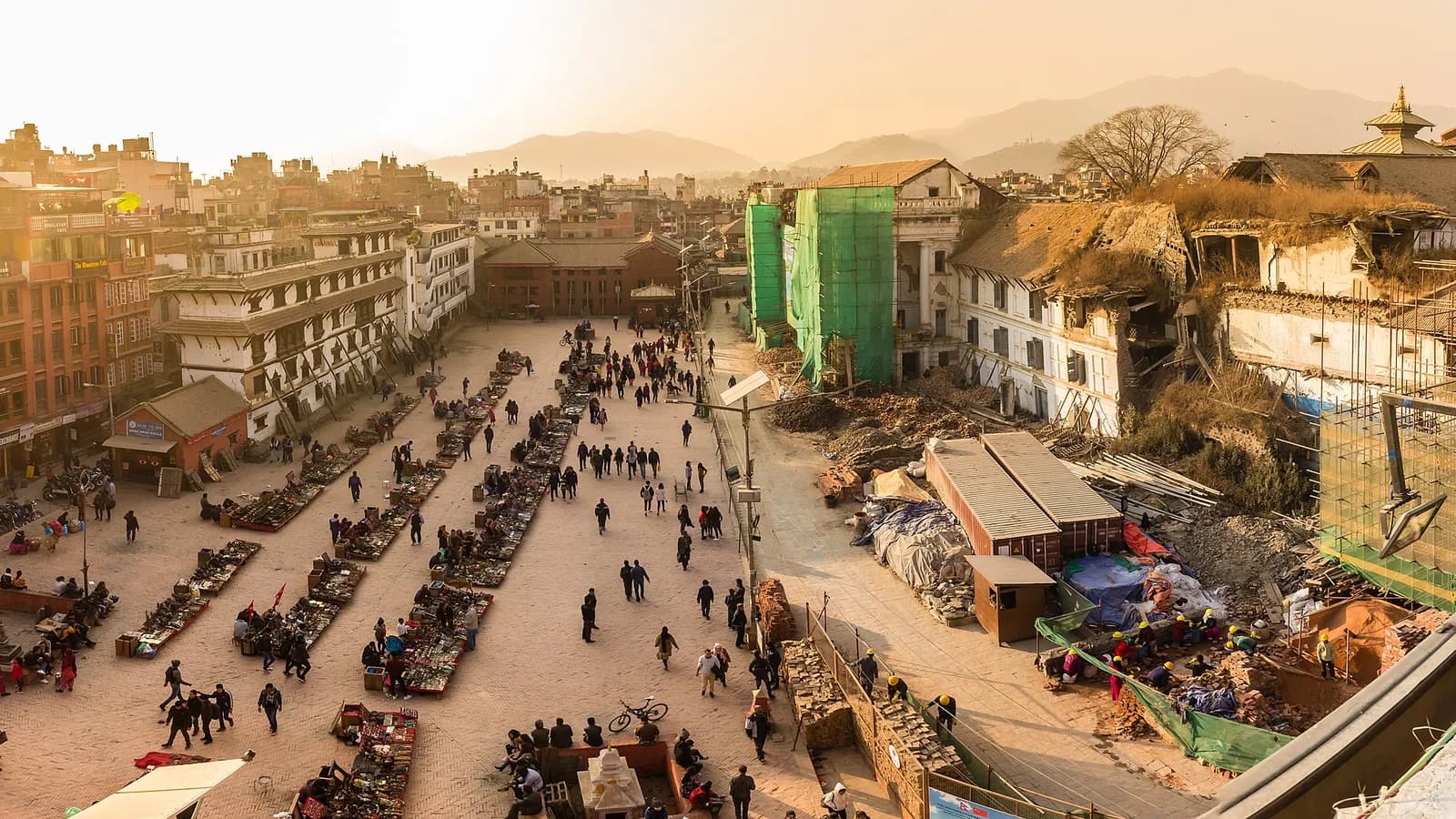
Tucked into the old heart of the city, just behind Kathmandu Durbar Square, Freak Street Kathmandu is a short, unassuming lane with an outsized story. Known in Nepali as Jhochhen Tole, this is where the overland hippie trail of the 1960s and 1970s reached one of its legendary end points. Today the hashish parlours are long gone and the crowds have moved on to Thamel, but Freak Street remains a quietly atmospheric corner of the old city that rewards travellers curious about Kathmandu's layered past.
Key takeaways
- Freak Street's local name is Jhochhen Tole; it sits directly south of Kathmandu Durbar Square in the old city.
- It was a major stop on the hippie trail from Europe to South Asia between the early 1960s and the late 1970s.
- The street was famous for government-licensed hashish shops that were legal until Nepal criminalised cannabis sales in the early 1970s.
- Today it is a calm lane of cafes, guesthouses, and craft shops rather than a party hub.
- The street itself is free to walk, but the neighbouring Durbar Square charges a separate heritage entry fee.
- It is an easy add-on to a Durbar Square visit and a short walk or taxi ride from Thamel.
What and where is Freak Street?
Freak Street is a narrow lane in the historic core of Kathmandu, running just south of the main plaza of Kathmandu Durbar Square. From the square, turning south and walking roughly 100 metres brings you onto the street. Its official Nepali name is Jhochhen Tole; "Freak Street" was the affectionate nickname given by the long-haired Western travellers who congregated here decades ago, and both names remain in everyday use.
The lane is genuinely short. Most visitors can stroll from one end to the other in about ten minutes. What makes it worth the detour is not its length but its atmosphere and history, plus the warren of older heritage alleys that branch off it into the surrounding Newari old town.
The Jhochhen Tole name
Tole is a Newari and Nepali word for a neighbourhood lane or quarter, and you will see it across the old city in names like this one. Using the local name when you ask for directions tends to get a clearer response than "Freak Street," especially from older residents who remember the area by its traditional name.
How Freak Street became a hippie-trail landmark
To understand Freak Street, you have to understand the hippie trail. From roughly the early 1960s into the late 1970s, an overland route ran between Europe and South Asia, with most travellers setting out from cities like London or Amsterdam and crossing through Europe, Turkey, Iran, Afghanistan, Pakistan, and India before reaching Nepal. Kathmandu was, for many, the final stop, and Jhochhen Tole became its social centre.
The single biggest draw was legal cannabis. During the 1960s and early 1970s, the Nepali government permitted licensed hashish shops, and several operated openly on and around this lane. For budget travellers following the trail, the combination of cheap lodging, easy-going cafes, and government-sanctioned hashish made Freak Street a destination in its own right.
A genuine cultural crossroads
For a brief window, this small lane became an unlikely meeting point for travellers from around the world. The cafes filled with people swapping route notes, music, and stories, and a handful of the eateries that opened in that era became institutions. The legacy of that period is still visible in faded signage and in a few long-running cafes that trace their origins to the early 1970s.
Why it changed: the end of the legal-hashish era
The Freak Street of legend did not last. By the early 1970s, Nepal came under mounting international pressure, notably from the United States, to clamp down on the cannabis trade. The government moved to criminalise cannabis, revoke the sales licences, and tighten visa and tourism rules. The licensed shops that had defined the street closed, and the overland trail itself wound down later in the decade as the political situation along the route deteriorated.
As travellers thinned out and newer tourist districts grew, the centre of gravity for Kathmandu's budget-travel scene shifted north to Thamel, which remains the city's main backpacker and tourist hub today. Freak Street settled into the quieter, lower-key character it still has.
What Freak Street is like today
Modern Freak Street is calm and unhurried. The old guesthouse facades are still there, and the lane holds a mix of small cafes, Newari restaurants, trekking and souvenir shops, and a few carpet and craft sellers working at a pace set by decades of low-key trade. You will also spot street art and murals along the way. It is a pleasant, low-pressure contrast to the busier tourist streets.
Cafes and food
Eating is one of the main reasons to linger. You can find classic traveller-cafe fare alongside Nepali staples such as dal bhat and momos. One often-cited institution is the Snowman Cafe, which travellers and several guides describe as operating since the early 1970s, making it one of the older continuously running traveller cafes in the area; it is best known for its apple pie. As with any long-standing small business, hours can vary, so treat it as a relaxed stop rather than a fixed plan.
Shopping and heritage walks
The shops here lean toward handmade crafts, textiles, and souvenirs, and the side streets are the real bonus. Many of the lanes branching off Jhochhen Tole lead into older parts of the city that make for excellent, unstructured heritage walking. If you enjoy wandering without a strict itinerary, this is a good place to do it.
Practical visitor information
| Detail | Information | | --- | --- | | Local name | Jhochhen Tole | | Location | Just south of Kathmandu Durbar Square (Basantapur) | | Entry fee for the street | None; it is a public lane | | Time needed | About 10 minutes to walk; longer with a cafe stop | | Best paired with | Kathmandu Durbar Square, old-city heritage walks | | From Thamel | Roughly a 20-minute walk south, or a short taxi ride |
About the adjoining Durbar Square fee
While Freak Street itself is free, it sits right beside Kathmandu Durbar Square, which does charge foreign visitors a separate heritage entry fee. Published figures put the Durbar Square ticket for foreign nationals at around NPR 1,000 (as of 2025), with reduced or free rates for SAARC nationals, Nepali citizens, and young children. Note that reported SAARC rates vary between sources, so confirm the current price at the ticket booths near the main gates. The official Nepal Tourism Board heritage-fee page is the most reliable place to check before you go. If you only walk Freak Street and do not enter the square's monument zone, no ticket is required.
How to get to Freak Street
Freak Street is easy to reach because it is so central. The simplest approach is to visit it together with Durbar Square: from the main plaza, walk south for about 100 metres and you are there.
Walking from Thamel
From Thamel, Freak Street is roughly a 20-minute walk south. A common route is to head toward New Road and follow signs for Basantapur and Durbar Square; once you reach the Basantapur area, Freak Street is the lane running south off the square. For more on moving around the city, see our guide to getting around Kathmandu.
By taxi or ride app
If you would rather not walk, a short taxi ride from Thamel or other central areas will get you close; drivers will know Basantapur or Durbar Square even if "Freak Street" draws a blank, so name the square or Jhochhen Tole. Agree on the fare or use a ride app before setting off.
Is Freak Street worth visiting?
If you are expecting the wild Freak Street of the 1970s, you will not find it; that era ended decades ago. But as a quiet, historic lane a short stroll from one of Kathmandu's most important heritage sites, it is well worth half an hour. Pair it with Durbar Square, slow down for a coffee or a slice of apple pie, and let the side alleys pull you into the older city. For travellers interested in how Kathmandu's tourism story evolved, few small streets carry as much history per metre.
Sources
- Old Freak Street - Wikipedia
- Freak Street Kathmandu (Jhochhen Tole): Hippie Era Guide - The Longest Way Home
- A visit to modern day Freak Street in Kathmandu - The Longest Way Home
- Freak Street (Jhochhen Tole) - Kathmandu Visitor Guide (kathmandu.im)
- Heritage site entry fees - Nepal Tourism Board
- Guide to Kathmandu Durbar Square - The Longest Way Home
Frequently asked questions
- Where is Freak Street in Kathmandu?
- Freak Street, locally called Jhochhen Tole, runs just south of Kathmandu Durbar Square (Basantapur), roughly 100 metres from the main plaza in the old city core.
- What is Freak Street's real name?
- Its Nepali name is Jhochhen Tole. Foreign travellers nicknamed it Freak Street during the hippie-trail era of the 1960s and 1970s, and both names are still used.
- Why was Freak Street famous?
- It was a key stop on the overland hippie trail from Europe to South Asia and was known for government-licensed hashish shops that operated legally until the early 1970s.
- Is there still cannabis on Freak Street?
- No. Nepal criminalised cannabis sales in the early 1970s and the licensed shops closed; today the street has cafes, guesthouses, and craft shops instead.
- Do I need a ticket to walk down Freak Street?
- No. Freak Street itself is a public lane with no entry fee, though the adjoining Kathmandu Durbar Square charges a separate heritage ticket for foreign visitors.
- How do I get to Freak Street from Thamel?
- It is roughly a 20-minute walk south from Thamel through New Road toward Basantapur, or a short taxi ride; from Durbar Square just walk south.
- How long do I need at Freak Street?
- The lane is short and can be walked end to end in about ten minutes, but a cafe stop and nearby heritage alleys can fill an hour or two.
Related posts
Gurkha Knife: The Story Behind Nepal's Kukri
The Gurkha knife (khukuri) explained — its origins, the cho notch, the Kami smiths who forge it, and why it became the emblem of the Gurkhas.
Read postThe Nepal Hippie Trail: Freak Street Then and Now
How the Nepal hippie trail ended at Kathmandu's Freak Street (Jhochhen) — the history, why it faded, and what to see on the street today.
Read postThe 2001 Nepal Royal Massacre: A Factual Account
A respectful, well-documented account of the 2001 Nepal royal massacre at Narayanhiti Palace — what happened, the official inquiry, and the aftermath.
Read post