Momos — A Traveler's Guide to Nepali Momo Dumplings
What momos are, the buff and jhol momo varieties to try, where to eat them in Kathmandu, and how to make them at home. Nepal's favorite dumpling.
If Nepal had a street-food flag, it would be a steaming plate of momos.
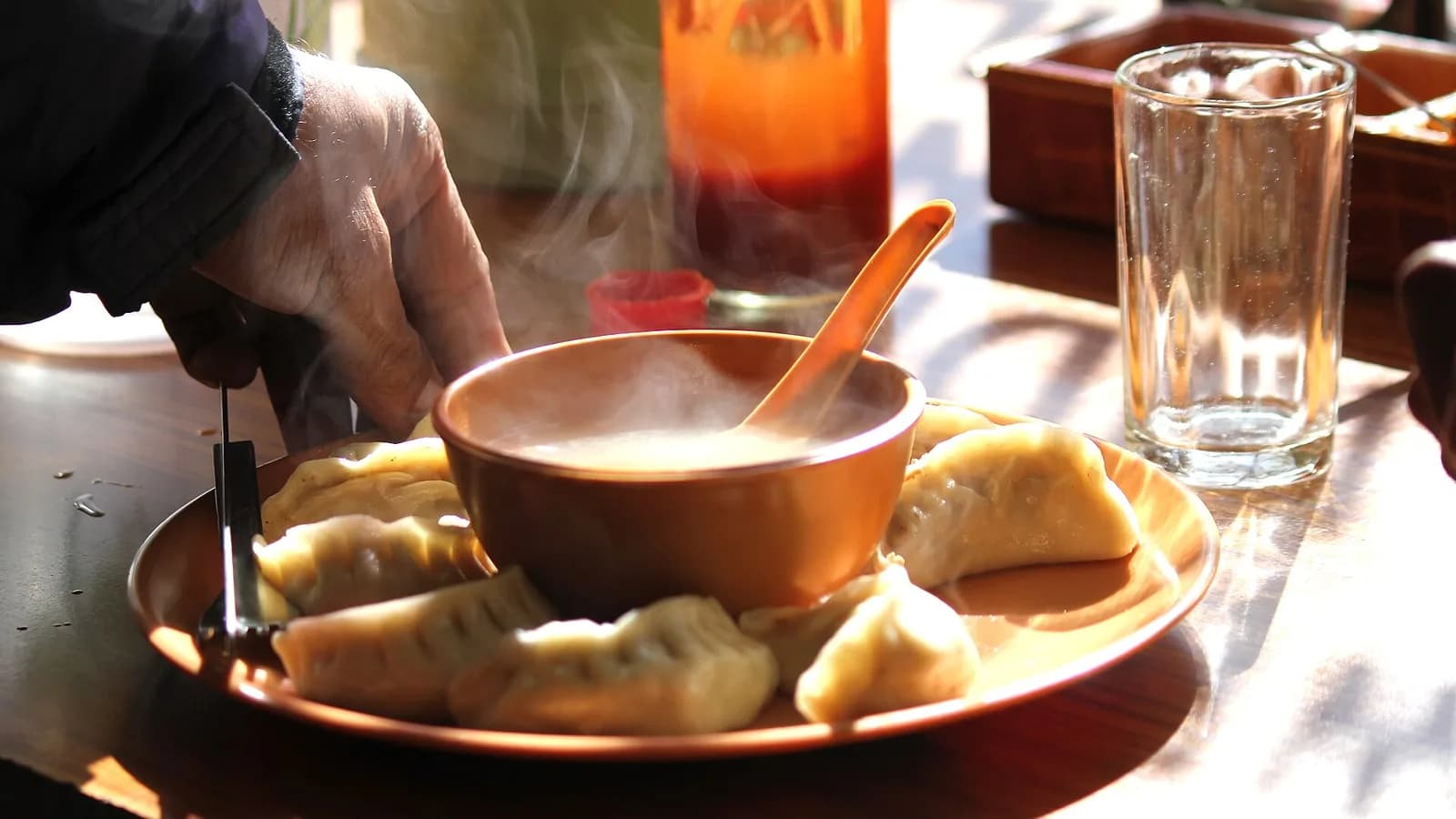
Ask any Nepali to name the country's favorite snack and the answer comes back fast: momos. These plump little dumplings — a thin wrapper folded around spiced minced meat or vegetables, then steamed or fried — are everywhere in Nepal, from roadside carts and student hangouts to smart restaurants in Thamel. For many visitors, the first plate of hot momos with a fiery dipping sauce becomes the most memorable bite of the whole trip.
This guide covers what momos actually are, where they came from, the varieties worth seeking out (including the gloriously messy jhol momo), where to eat them in Kathmandu, and a simple method for making them at home.
Key takeaways
- Momos are Himalayan dumplings — a thin wheat wrapper around a savory filling, steamed or fried, and served with a spicy-tangy dipping sauce called achar.
- The most traditional Kathmandu Valley filling is buff (minced water buffalo); chicken, pork, vegetable, and paneer versions are all common.
- Jhol momo, served in a spiced tomato-sesame soup, is a uniquely Nepali style and a must-try.
- Momos likely have Tibetan roots but have been part of Nepali cuisine for centuries.
- They are best eaten hot and fresh, with care for the scalding juice inside.
- They are simple enough to make at home with flour, a filling, and a steamer.
What is a momo?
A momo is a dumpling: a small parcel of thin, unleavened wheat-flour dough wrapped around a filling and cooked, most often by steaming. The name is thought to come from the Tibetan term mog mog, roughly "steamed bread." What turns a generic dumpling into a Nepali momo is the seasoning and the sauce.
The filling is built on minced meat or chopped vegetables mixed with onion, garlic, ginger, fresh coriander, and warm spices like cumin and coriander seed. The wrapper is rolled thin, pleated shut into a half-moon or a round pouch, and steamed until glossy. Then comes the part Nepalis argue about most: the achar, a dipping sauce that ranges from a smooth tomato-sesame blend to an eye-watering chili paste. A momo without good achar is considered only half a momo.
Momo vs. dumpling: what's different?
Momos belong to the same broad family as Tibetan and Chinese dumplings, but they have a distinct character:
- The spicing is Himalayan and South Asian — cumin, coriander, ginger, garlic, and sometimes a hint of garam masala — rather than the soy-and-sesame profile of East Asian dumplings.
- The sauces are bolder, leaning on tomato, sesame, and chili instead of soy-vinegar dips.
- Buffalo meat is a classic filling in Nepal, which you rarely see elsewhere.
A short history of momos in Nepal
Momos are usually traced to Tibet and spread through the Himalaya along trade and migration routes. But their presence in Nepal is old — food historians place momos in the Kathmandu Valley by at least the fourteenth century, and it is genuinely unclear whether the dish traveled from Tibet into Nepal or the other way around.
The most-repeated origin story credits the Newars, the indigenous merchants and traders of the Kathmandu Valley, who did business in Tibet and are said to have carried the recipe home, adapting it to local tastes and ingredients. Another version tells of a Newar princess who married a Tibetan king and introduced the dish. Whatever the exact route, momos became thoroughly Nepali, and today they are one of the country's defining foods. If you want the broader context of the valley's distinctive cuisine, our Newari food guide is a natural companion to this one.
The momo varieties you'll meet
Part of the fun of eating momos in Nepal is discovering how many forms they take. Here are the main ones:
| Style | How it's cooked | What to expect | |-------|-----------------|----------------| | Steamed momo | Steamed | The classic, soft and juicy | | Kothey momo | Pan-fried then steamed | Crisp on one side, soft on top | | Fried momo | Deep-fried | Crunchy all over | | Jhol momo | Steamed, served in soup | Dumplings in spiced tomato-sesame broth | | C-momo (chili momo) | Fried then tossed in sauce | Coated in a hot, saucy chili gravy |
On the filling side, the common choices are:
- Buff — minced water buffalo, the traditional Kathmandu Valley favorite, lean and rich.
- Chicken — the popular, milder all-rounder.
- Pork — common in some communities and Tibetan-influenced kitchens.
- Vegetable — cabbage, carrot, onion, and spinach, sometimes with tofu.
- Paneer or cheese — a softer, richer vegetarian option.
Jhol momo: the one to try first
If you order only one style, make it jhol momo. Here the steamed dumplings arrive sitting in a warm, soupy sauce (jhol) built from tomatoes, sesame seeds, garlic, chili, and spices — nutty, tangy, mildly to seriously spicy, and completely addictive. It is a distinctly Nepali invention rather than something inherited from Tibet, and it has become one of Kathmandu's signature dishes. Eat it with a spoon so you can scoop up the broth, and expect a happy mess.
Where to eat momos in Kathmandu
Momos are sold on practically every street in Kathmandu, but a few names come up again and again with locals and food-savvy travelers. (Hours, prices, and exact menus change, so treat this as a starting point rather than a guarantee.)
- Thamel and Lazimpat — the tourist core has countless momo spots; Tibetan restaurants here are a reliable bet for honest, well-made dumplings.
- Indra Chowk and Asan — in the old market streets you can find long-running local momo shops, including the famous open-topped buff momos sold around Indrachowk.
- Patan (Lalitpur) — several well-regarded jhol momo specialists, a short trip from the city center; pair a visit with our Patan / Lalitpur guide.
- Maharajgunj and university areas — student-favorite momo joints serving chicken, buff, and veg with punchy chutney.
Some of the most beloved momos in the city come from unassuming, decades-old eateries rather than fancy restaurants, so do not be put off by a plain interior. For a wider map of where to eat well in the capital, see our best restaurants in Kathmandu roundup.
How to eat momos like a local
Eating momos is informal and communal. A plate arrives — usually 6 to 10 dumplings — often shared in the middle of the table. Pick one up with your fingers or chopsticks, dip it in the achar or spoon the sauce over it, and eat it in one or two bites.
The single most important tip: the first momo will burn you if you are careless. Steamed momos trap very hot juice inside the wrapper. Bite a small hole first to let the steam escape, or let the plate cool for a minute. With jhol momo, lift each dumpling out of the broth, take a careful bite, then chase it with a spoonful of soup.
A couple of phrases help here. Ask for piro (spicy) or kam piro (less spicy) depending on your tolerance, and mitho chha tells the cook it is delicious. Our guide to ordering food in Nepali has more, and how to say delicious in Nepali covers the compliment in detail.
The cultural place of momos in Nepal
Momos are far more than a snack in Nepal — they are a social food. They are what friends order when they meet after class or work, what offices send out for in the afternoon, and what families gather around at home on a slow weekend, folding dumplings together at the kitchen table. A plate in the middle of the table, shared straight from the steamer, is part of the appeal.
They also cut across Nepal's enormous cultural variety. Momos began in Himalayan and Tibetan-influenced communities, spread through the Newar towns of the Kathmandu Valley, and are now eaten by everyone, everywhere — in mountain teahouses, Terai towns, and big-city food courts alike. Few dishes are as genuinely national, which is part of why momos so often top the list of foods visitors remember.
For travelers, that ubiquity is a gift. Momos are:
- Cheap and filling, which makes them friendly to any budget; see our broader Nepal travel budget guide for context on food costs.
- Vegetarian-friendly, with veg, paneer, and cheese versions almost always on the menu.
- A safe introduction to Nepali flavors, since they are cooked to order and served hot.
A plate of momos is one of the easiest, most rewarding first steps into Nepali food culture — order them early in your trip and you will likely keep coming back to them.
How to make momos at home
Momos are very doable in a home kitchen — the only special equipment you really need is a steamer. The recipe in this post's steps walks through the full method, but here is the shape of it:
- Dough. Plain wheat flour, a little salt, and water, kneaded firm and rested so it rolls out thin.
- Filling. Minced buff, chicken, or chopped vegetables mixed with onion, garlic, ginger, coriander, oil, and spices.
- Wrappers. Small dough balls rolled into thin rounds, slightly thicker in the middle.
- Folding. A spoon of filling in the center, then pleat and pinch shut into a half-moon or pouch.
- Steaming. About 10–15 minutes on an oiled rack until the wrappers turn glossy.
- Sauce. A tomato-sesame or chili achar to dip.
The folding takes practice — your first few will look rustic, and that is completely normal. If you would rather learn hands-on from a local cook, several cooking classes in Kathmandu teach momos as a centerpiece, pleating and all.
Sources
Frequently asked questions
- What are momos?
- Momos are steamed or fried dumplings made of a thin wheat-flour wrapper folded around a savory filling, usually minced buffalo, chicken, pork, or spiced vegetables. They are the most popular snack in Nepal and are almost always served with a tangy, spicy dipping sauce called achar.
- What is the difference between a momo and a dumpling?
- Momo is the Himalayan name for a dumpling, closely related to Tibetan and Chinese dumplings, but with its own seasonings and sauces. The Nepali style is defined by spices like cumin, coriander, ginger, and garlic in the filling and by bold tomato-sesame and chili dipping sauces that set it apart from East Asian versions.
- What is buff momo?
- Buff momo is filled with minced water buffalo meat, the most traditional momo filling in the Kathmandu Valley. Buffalo is leaner than beef and widely eaten in Nepal, including by many Hindus in areas where cows are protected, which is why it became the classic momo meat.
- What is jhol momo?
- Jhol momo are steamed dumplings served swimming in a warm, spiced soup or sauce called jhol, made from tomatoes, sesame seeds, chili, garlic, and spices. The style is distinctly Nepali and is one of the most popular ways to eat momos in Kathmandu today.
- Are momos vegetarian?
- Many are. Vegetable momos are filled with cabbage, carrot, onion, spinach, and sometimes tofu or paneer, and are widely available alongside meat versions. Always confirm with the cook, since some kitchens cook veg and meat momos in the same steamer.
- Where did momos originate?
- Momos are generally traced to Tibetan origins and spread across the Himalaya, but they have been part of Nepali food culture since at least the fourteenth century. One common story credits Newar merchants who traded with Tibet with bringing the recipe to the Kathmandu Valley, where it became a national favorite.
- What are the main types of momo?
- The common styles are steamed momo (the classic), kothey or pan-fried momo that is crisp on one side, fried momo that is deep-fried all over, and jhol momo served in spiced soup. Fillings range from buffalo, chicken, and pork to vegetables, paneer, and cheese.
- How do you eat momos?
- Pick up a momo with your fingers or chopsticks, dip or spoon over the achar, and eat it in one or two bites. Be careful with the first one, as steamed momos hold very hot juice inside that can scald you. Most people eat momos as a snack or light meal, often shared from a communal plate.
Spotted an error in this post? Tell us or suggest a correction.
Related posts
ABC Trek: A Plain-English Guide to Annapurna Base Camp
The ABC trek (Annapurna Base Camp) explained — the route, how many days it takes, difficulty, the best seasons, and what daily trail life is really like.
Read postAma Dablam Climb: 2026 Expedition Guide (6,812m)
An Ama Dablam climb and expedition guide for 2026 — height, the Southwest Ridge route, camps, fixed ropes, difficulty, permits, cost and the best seasons.
Read postAnnapurna vs Manaslu: Which Trek Should You Choose?
An Annapurna vs Manaslu decision guide for trekkers — compare permits, crowds, difficulty, infrastructure and cost to pick the right Himalayan route.
Read postAsan Bazaar Kathmandu: Old Town Market Guide
A visitor guide to Asan bazaar, Kathmandu's oldest market — its six-road square, Annapurna Temple, what to buy, when to go, and how to get there.
Read postAyurveda Nepal: A Traveller's Guide to Healing
Ayurveda Nepal explained for tourists — the history, the doshas, treatments like Panchakarma and Shirodhara, where to go and how to choose a centre safely.
Read postBest Restaurants Pokhara Lakeside: Where to Eat
The best restaurants in Pokhara Lakeside — lakeside trout, wood-fired pizza, Tibetan momos and healthy cafes, with what to order and rough 2026 prices.
Read post