Everest Base Camp Helicopter Tour: 2026 Booking Guide
Everest Base Camp helicopter tour from Kathmandu — the 2026 landing rules, real fee breakdown, weight limits and how to book without losing money.
A morning that swaps two weeks of walking for one extraordinary hour over the roof of the world — if the weather and the paperwork both cooperate.
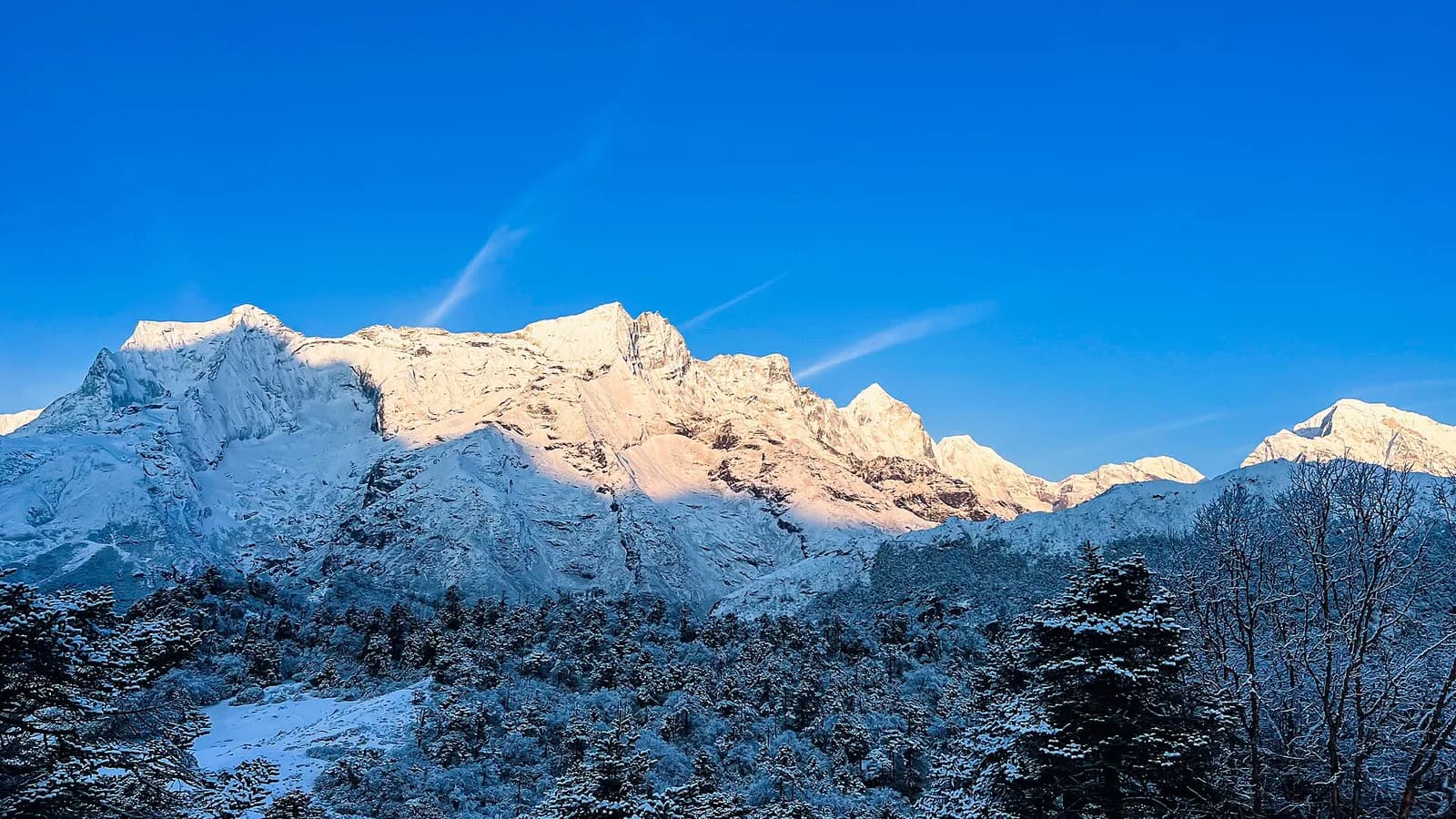
The Everest Base Camp helicopter tour is the fastest way to trade two weeks of walking for a single morning over the roof of the world. You lift off from Kathmandu at dawn, fly up the Khumbu valley past Everest, Lhotse and Ama Dablam, overfly the Base Camp area and the Kala Patthar viewpoint, and stop for breakfast with the high peaks filling the window — all before lunch. It is the headline of the Everest Base Camp trek compressed into a few hours, for travellers who lack the time or the legs for the long walk in.
This is a focused, decision-oriented companion to our wider Everest helicopter tour guide. Here the emphasis is on the parts that actually decide whether the day goes well in 2026: the fast-moving landing rules, the real fee breakdown beyond the headline fare, the weight-limited shuttle, and how to book so a weather day or a regulatory hiccup does not cost you the trip. Prices and rules move constantly, so treat every figure as a guide, note the date, and confirm with your operator before booking.
Key takeaways
- An Everest Base Camp helicopter tour is a half-day trip from Kathmandu that flies into the Khumbu, overflies Base Camp and Kala Patthar (about 5,545 m), and usually stops for breakfast at Hotel Everest View near Namche.
- Door to door it takes roughly four to six hours, with only 10–15 minutes on the ground at the highest points because of the altitude.
- Shared seats commonly cost around USD 1,200–1,350 per person (as of mid-2026); a private charter runs roughly USD 5,500–8,500 depending on season and numbers.
- On top of the fare, budget NPR 7,000–10,000 per person in park and municipality fees, plus about USD 40 for the optional breakfast.
- Landing rules are unsettled. Helicopters cannot land at Base Camp, Kala Patthar landings have been restricted, and flights have at times been blocked entirely — confirm the plan in writing.
- Strict high-altitude weight limits mean groups are often shuttled in batches of two or three for the highest legs.
What this tour is — and what it is not
A helicopter tour is a different animal from the fixed-wing Everest mountain flight, which cruises along the range without ever landing. The helicopter flies into the mountains and sets down on the ground.
A typical day runs like this: an early hotel pickup in Kathmandu, a flight east to the Everest region with a fuel and logistics stop at Lukla (the famous Tenzing–Hillary Airport), a continuation up the valley past Everest (8,849 m), Lhotse, Nuptse and Ama Dablam, an overflight of the Everest Base Camp area and the Kala Patthar viewpoint, and a descent to Syangboche (about 3,880 m) for breakfast at Hotel Everest View before the return to Kathmandu.
The appeal is the close, ground-level encounter with the high Khumbu without the cold nights or the slow grind of acclimatisation. It suits travellers who are short on time, who have mobility or health limits that rule out trekking, or who simply want an aerial overview to complement a wider trip. If you are still weighing the walk against the flight, our piece on whether you need a guide for Everest Base Camp lays out the trade-offs.
The 2026 landing situation: book with clear eyes
This is the part that has changed most, and where old blog posts will mislead you. For years the signature moment was a brief landing on Kala Patthar, the rocky shoulder with the classic close-up of Everest. That has become uncertain.
What changed
In late 2024, authorities in the Everest region — the Khumbu Pasang Lhamu Rural Municipality together with Sagarmatha National Park — moved to restrict commercial helicopter sightseeing over the park. The park issued a directive halting commercial flights from 1 January 2025, and within days the Airline Operators Association of Nepal (AOAN) suspended operations after local youth groups erected barriers on helipads. The drivers were a mix of safety, environment (noise and low flying affecting the UNESCO-listed park and its wildlife) and local livelihoods (fly-in tourism cutting into work for porters, guides and teahouses).
The picture has stayed tangled ever since, swinging between brief bans, partial liftings and local blockades, with control of the airspace contested between municipal and federal authorities. A separate drone-transport dispute flared again in 2026, a reminder that aviation in the Khumbu remains politically live.
What it means for you
| Question | The realistic 2026 answer | |---|---| | Can I land at Everest Base Camp? | No — landings at Base Camp itself are not permitted. | | Can I land on Kala Patthar? | Restricted and conditional; many tours overfly it instead. Where landings occur they are tightly limited (often only two passengers at a time, 10–15 minutes). | | Where will the helicopter actually land? | Commonly lower down — Lukla, Pheriche and Hotel Everest View. | | Could the whole flight be blocked? | It has happened. Local action has suspended flights for periods, so a spare day matters. | | Do rescue flights still operate? | Search-and-rescue and medical flights have continued throughout. |
None of this ruins the experience — the overflight views are extraordinary either way — but you should book on the strength of a written plan, not an old photo of someone standing on Kala Patthar. Ask the direct question: where will the aircraft set down on my date, and what happens if a landing or the flight is not permitted?
The real cost: beyond the headline fare
Pricing varies widely by operator, season, fuel surcharge and group size, so anchor on the shape of it rather than a single number. The figures below reflect operator listings as of mid-2026 and should be confirmed before booking.
| Item | Typical cost (as of mid-2026) | Notes | |---|---|---| | Shared / seat-in tour | Around USD 1,200–1,350 per person | Sold per seat; a confirmed departure can depend on the aircraft filling. | | Private charter | Around USD 5,500–8,500 per helicopter | Buys certainty and flexibility; split across the group. | | Park & municipality fees | Around NPR 7,000–10,000 per person | Sagarmatha National Park entry, rural municipality tax, airport charges. | | Hotel Everest View breakfast | Around USD 40 per person | Usually optional rather than bundled. |
A few notes. Shared tours are the budget route but require the operator to fill the aircraft, so a "confirmed" shared departure can still hinge on numbers. A private charter costs far more but lets you fly on your own schedule with your own group, which matters when weather windows are short. The fees are real and add up — the Sagarmatha National Park entry permit alone is NPR 3,000 (about USD 25) for foreign visitors (as of mid-2026), with the rest made up of municipality and airport charges. Always insist on an itemised, all-in quote.
For how a four-figure flight fits a wider trip, our Nepal trip cost and Nepal travel budget guides give context, and the ATM withdrawal guide helps you settle balances cleanly in Kathmandu.
How the weight-limited shuttle works
Helicopters fly on lift, and lift falls away in thin high-altitude air — that single fact shapes the whole tour. At lower elevations a helicopter may carry up to five passengers, but as it climbs toward the Khumbu the safe payload drops sharply. Operators therefore weigh every passenger together with their gear at the airport. This is normal, not intrusive.
For the highest legs, larger groups are split. A common pattern is a shuttle from Pheriche (around 4,370 m): the aircraft lifts two or three passengers toward the Base Camp area, returns, and collects the rest, so it is never over its safe weight in the thinnest air. A small group may fly straight through; a group of four or five should expect a shuttle. Build this into your sense of timing, and do not be alarmed when the pilot splits the group — it is simply the safe way to fly up there.
Safety and altitude: the honest picture
The flying is routine for the established operators who run these trips daily in season. The genuine consideration is altitude, and it deserves respect.
A trekker walking to Base Camp spends days letting their body adjust. The helicopter takes you from Kathmandu to over 5,000 metres in under an hour, with no acclimatisation at all. Oxygen up high is a fraction of what it is at sea level, and the rapid jump can bring on mild acute mountain sickness — headache, dizziness, nausea or breathlessness. Because passengers are out of the aircraft only briefly, most people are fine, and many operators carry emergency oxygen, but the risk is real and not zero.
Sensible precautions:
- Avoid a heavy meal before the flight and stay well hydrated.
- Move gently at the stops; do not rush or exert yourself at altitude.
- Declare any heart or lung conditions to your operator and seek medical advice if in doubt.
- Trust the weather call — a good operator delays or cancels rather than flying into marginal conditions.
Because rapid-ascent risk and the chance of needing a medical lift are part of any high-altitude day in Nepal, understand what your policy covers. Our guide to trekking insurance and helicopter evacuation explains the altitude clauses that catch travellers out, and the broader altitude sickness guide covers the symptoms to watch for.
Best season and time of day
Two variables decide whether you get a postcard or a wall of grey: the season and the hour.
The strong seasons are spring (roughly March to May) and autumn (roughly late September to November), when post-monsoon and pre-monsoon skies are clearest and the peaks stand sharp. The summer monsoon (around June to August) is the weakest window, with haze, cloud and frequent cancellations. Our best time to visit Nepal and Nepal weather by month guides go deeper on the seasonal rhythm.
Within a good day, go early. Mornings are clearest; by late morning, heat stirs cloud over the range and visibility drops, which is why these tours launch at or near dawn. Whatever else you plan, schedule the flight early in your Kathmandu stay so a weather day does not cost you the experience entirely.
How to choose an operator and book defensively
Plenty of agencies sell this tour, and quality varies. A few things separate a reputable operator from a risky bargain:
- A clear, itemised quote that states the price, what is included, the fees charged separately, and crucially where the aircraft will land given current rules.
- A written weather and refund policy, with the call made on the day at the airport, not pressured from a sales desk.
- Transparency about the shuttle — they should explain the Pheriche split and group-weight logistics up front.
- Recent, specific reviews that mention 2025 or 2026 flights and describe how cancellations and landing changes were handled.
If a quote is dramatically cheaper than everyone else's, ask what has been stripped out — fees, the breakfast, or a realistic landing expectation. As with any booking in Nepal, our guide to common tourist scams helps you spot a hard sell or a too-good-to-be-true price, and the best trekking agency guide covers how to vet an operator generally.
Helicopter tour or trek? Choosing your Everest
The helicopter and the trek are not really competitors; they are different experiences for different travellers.
- Choose the helicopter if you are short on time, cannot or do not want to walk to altitude, have a generous budget, or want a spectacular aerial overview as a one-day highlight.
- Choose the trek if you have a week or two, reasonable fitness, and want the slow, immersive encounter with the trail, the teahouses and the people of the Khumbu.
Many travellers do not choose at all — they trek for the immersion and add a flight for the overview. If a full Base Camp route is too much, the gentler Everest View trek reaches the same Hotel Everest View viewpoint on foot over a few days, while the Gokyo Lakes trek offers a quieter, equally stunning alternative valley.
Pre-trip checklist
- Book early in your Kathmandu stay to allow for weather and regulatory delays.
- Confirm the landing plan in writing, given current Kala Patthar restrictions.
- Get an all-in, itemised quote covering park and municipality fees and any breakfast.
- Aim for spring or autumn and a dawn departure.
- Declare medical conditions, eat light, and hydrate before flying.
- Check your travel insurance covers high-altitude flights and evacuation.
For travellers who want Everest without the long walk in, this tour is unmatched. Book a clear-season morning, ask the hard questions about landings, build in a spare day, and let the highest mountains on Earth come to meet you.
Sources
- Everest Base Camp Helicopter Tour Cost 2026 and 2027 — Flight Everest
- Everest Base Camp Helicopter Tour from Kathmandu, Cost 2026 — Nepal Helicopters
- Why Helicopter Landings at Kala Patthar Are Now Restricted — Everest Assistance
- Heli flights remain suspended in Khumbu region amid safety and legal disputes — The Himalayan Times
- Local and federal governments lock horns over Everest chopper ban — The Kathmandu Post
- A New Year surprise: Choppers banned for Everest sightseeing — The Kathmandu Post
- Everest drone ban, lifted after five days — The Kathmandu Post (May 2026)
Frequently asked questions
- What exactly is an Everest Base Camp helicopter tour?
- It is a half-day scenic helicopter trip from Kathmandu that flies up the Khumbu valley, overflies the Everest Base Camp area and the Kala Patthar viewpoint, and usually stops for breakfast at Hotel Everest View near Namche before returning. Unlike a fixed-wing mountain flight, the helicopter goes deep into the valley and sets down on the ground at one or more stops, so you actually step out among the high peaks.
- Can the helicopter land at Kala Patthar or Everest Base Camp in 2026?
- Direct tourist landings at Kala Patthar have been restricted on safety, environmental and regulatory grounds, and helicopters are not permitted to land at Base Camp itself. The rules have shifted repeatedly between local and federal authorities since late 2024, and flights have at times been blocked entirely by local groups. Treat any landing as conditional and get your operator to confirm in writing exactly where the aircraft will set down on your date.
- How much does the Everest Base Camp helicopter tour cost?
- On a shared seat-in basis it commonly runs in the region of USD 1,200 to 1,350 per person as of mid-2026, while a private charter of the whole aircraft is far higher, often around USD 5,500 to 8,500 depending on season and group size. Park and municipality fees of roughly NPR 7,000 to 10,000 per person, and the optional Hotel Everest View breakfast at around USD 40, are usually charged on top.
- How long does the tour take from start to finish?
- Door to door from your Kathmandu hotel it usually takes about four to six hours, including pickup, the flight, the stops and the return. Actual airborne time is much shorter, and at the highest points you may be on the ground for only ten to fifteen minutes because of the altitude. It is comfortably a half-day trip that leaves the rest of your day free.
- Why are passengers weighed before the flight?
- Thin high-altitude air reduces a helicopter's lift, so operators weigh every passenger with their gear to keep the aircraft within its safe payload. A helicopter may carry up to five people at lower elevations, but far fewer on the highest legs. For the thin air near Base Camp, groups are often shuttled in batches of two or three from a point such as Pheriche, which is standard safety practice rather than a problem.
- Is the rapid altitude gain dangerous?
- The flying is routine for established operators, but going from Kathmandu to over 5,000 metres in under an hour gives your body no time to acclimatise, so mild headache, dizziness or breathlessness can occur. Because you are out of the aircraft only briefly, serious problems are uncommon, and many operators carry emergency oxygen, but anyone with heart or lung conditions should seek medical advice before booking.
- When is the best time of year to go?
- Spring, roughly March to May, and autumn, roughly late September to November, give the clearest skies and the most reliable departures. Early-morning slots are best because cloud and haze build over the mountains as the day warms. The summer monsoon from about June to August brings frequent delays, so build in spare days if you travel then.
- What happens if my flight is cancelled for weather?
- Reputable operators delay or cancel rather than fly into marginal conditions, and a good contract sets out whether you are rebooked or refunded if that happens. Because weather days are common, schedule the tour early in your Kathmandu stay so a washout does not cost you the experience, and confirm the refund and rebooking terms in writing before you pay.
Related posts
Everest Base Camp Helicopter Return: 2026 Guide
Everest Base Camp helicopter return — how it works, real costs, weight limits, the shifting landing rules, and who it suits. A factual 2026 guide.
Read postEverest Helicopter Tour: Cost, Landing & 2026 Guide
Everest helicopter tour from Kathmandu — cost, the Kala Patthar landing rules, Hotel Everest View breakfast, weight limits, best season and safety.
Read postCan You See Everest From Kathmandu? Honest Answer
Can you see Everest from Kathmandu? Not from the city itself, but yes from nearby hills like Nagarkot and Chandragiri on a clear morning. Here's how.
Read post