White Water Rafting Nepal: Rivers & Guide (2026)
White water rafting Nepal — the best rivers from the Trishuli to the Sun Koshi, grades, costs, seasons, safety and how to pick a trip that suits you.
Cold Himalayan snowmelt, a wall of white water ahead, and seven paddles digging in together — Nepal's rivers do not do half measures.
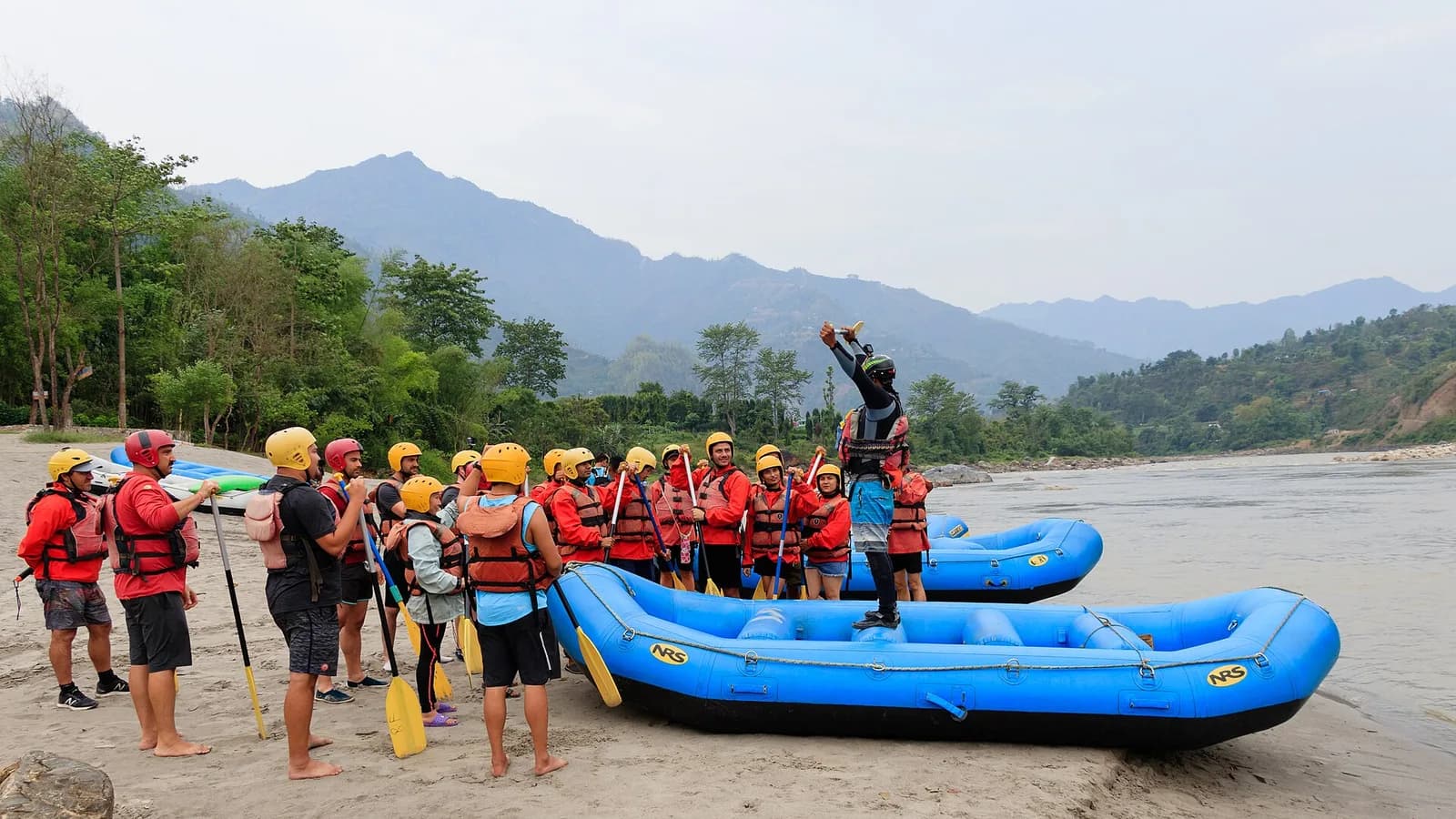
Few countries pack as much world-class white water into such a small area as Nepal. The same Himalayan snowmelt that feeds the great trekking valleys also tumbles down into a network of rivers that range from gentle, family-friendly floats to multi-day expeditions ranked among the best on the planet. Whether you want a half-day of splashes between Kathmandu and Pokhara or a week-long journey to the Indian border, white water rafting Nepal delivers — and this guide explains the rivers, grades, costs, seasons and safety so you can choose the right trip.
River conditions, prices and operators change from season to season, so treat the figures here as a guide and confirm when you book.
Key takeaways
- The Trishuli is the most popular and accessible river, with Grade II–III rapids that suit beginners and families.
- The Bhote Koshi is short, steep and intense at around Grade IV+, for confident thrill-seekers.
- The Seti is gentle and warm; the Sun Koshi and Karnali are multi-day, bucket-list expeditions for experienced rafters.
- The best seasons are roughly late September to November and March to early June; avoid the monsoon's high water.
- A one-day Trishuli trip commonly costs around USD 25–70 per person (as of mid 2026), depending on inclusions.
- You always wear a life jacket and helmet — choosing a reputable, well-equipped operator is the single biggest safety decision.
Nepal's best rafting rivers at a glance
There is no single best river, only the best river for you. This table gives the quick comparison; the sections below go deeper.
| River | Difficulty | Trip length | Best for | Access | | --- | --- | --- | --- | --- | | Trishuli | Grade II–III | Half-day to multi-day | First-timers, families, en-route trips | Easy, on the Kathmandu–Pokhara highway | | Seti | Grade II–III (gentle) | 1–2 days | Beginners, families, warm water | Near Pokhara | | Bhote Koshi | Grade IV+ | Half-day to 2 days | Thrill-seekers, confident rafters | About 3 hours from Kathmandu | | Sun Koshi | Grade III–IV+ | Multi-day (around a week or more) | Experienced rafters, expedition seekers | East of Kathmandu | | Karnali | Grade IV–V | Multi-day | Experienced rafters, remote wilderness | Far west Nepal |
Trishuli — the popular all-rounder
The Trishuli is Nepal's rafting workhorse and the river most visitors run. It flows right alongside the Kathmandu–Pokhara highway, which makes it wonderfully easy to reach and means you can slot a rafting day into the journey between the two cities — or onward to Chitwan. In normal flows its rapids sit broadly in the Grade II–III range: lively enough to be genuinely fun, forgiving enough for first-timers and families. A typical day involves a few hours' drive from Kathmandu to the put-in, a stretch of paddling with a riverside lunch, and a finish downstream before you carry on. Because of all this, it is the natural choice if rafting is one adventure among many on your trip.
If you are travelling the corridor anyway, see our guides to the Kathmandu to Pokhara tourist bus and the wider Kathmandu to Pokhara transport options — the rafting put-ins lie along this very route.
Seti — gentle and warm
The Seti, near Pokhara, is the river for a relaxed introduction. Its comparatively gentle rapids and warmer water make it a favourite for families, nervous first-timers and anyone who wants scenery and a few splashes over white-knuckle drama. It works well as a one or two-day trip with riverside camping, and pairs neatly with a wider Pokhara stay. For everything else to do in town, see our roundup of things to do in Pokhara.
Bhote Koshi — short, steep and intense
If the Trishuli is the gentle introduction, the Bhote Koshi is the espresso shot. Tumbling down from near the Tibetan border around three hours east of Kathmandu, it is steep and continuous, with rapids commonly rated Grade IV and above — one of the most concentrated stretches of white water within easy reach of the capital. It rewards confidence and a willingness to get thoroughly thrown around, and it is best left to those who are comfortable in fast water. The same gorge is home to Nepal's original bungee jump, so it is easy to combine the two; see our bungee jumping in Nepal guide.
Sun Koshi and Karnali — the great expeditions
For experienced rafters chasing a true adventure, Nepal's multi-day rivers are the main event. The Sun Koshi is the classic: a long journey of well over 200 kilometres that has been celebrated internationally as one of the world's great river trips, running for the best part of a week or more from the hills east of Kathmandu down towards the plains, building from easier rapids to big Grade IV water with white-sand beach camps along the way. In the remote far west, the Karnali offers an even wilder, harder expedition through deep gorges. These are commitments of days, not hours, with full camping support — and they sit firmly on the bucket list of serious rafters.
When to go: the rafting seasons
Nepal's rivers run on the rhythm of the monsoon. There are two prime windows:
- Autumn (roughly late September to November): the post-monsoon favourite. Water levels are good, the weather is settling, and skies are often clear.
- Spring (roughly March to early June): the pre-monsoon window, with warming weather and reliable conditions.
The summer monsoon swells the rivers with high, fast, muddy water that is dangerous for most commercial rafting, and operators scale back or run only specific sections. Deep winter is doable on some rivers but cold, particularly when you are wet all day. For most travellers, autumn and spring are the clear choices — and they happen to be the best trekking seasons too, so rafting slots neatly alongside the rest of a trip. Our best time to visit Nepal and Nepal weather by month guides put it all in context.
What it costs in 2026
Pricing depends heavily on the river, the trip length and what is bundled in. As a rough guide, a one-day Trishuli trip commonly lands somewhere around USD 25–70 per person (as of mid 2026), with the cheaper end typically excluding meals or transport and the higher end being fully inclusive. Multi-day expeditions on rivers like the Sun Koshi cost substantially more, reflecting many days on the water with food, camping gear and a full support crew.
The single most important question to ask is what the price includes. A good all-inclusive day usually covers:
- Return transport from your start point
- A qualified river guide and safety kayakers on harder runs
- All rafting gear — raft, paddle, life jacket, helmet, dry bag
- Lunch and any permits
If a quote looks far cheaper than the rest, ask what has been left out. To weigh rafting against the rest of your spending, see our Nepal travel budget guide, and have cash ready using the ATM withdrawal guide, since some operators prefer it.
Safety and choosing an operator
Rafting with a reputable, well-equipped company and experienced guides is widely regarded as safe, and you wear a life jacket and helmet for the entire time on the water. The risks that do exist almost always trace back to cutting corners: worn-out gear, undertrained guides, overloaded rafts, or running a river that is flowing too high. Your job is to choose well and listen well.
A simple checklist before you book
- Pick an established operator with experienced guides and recent positive reviews.
- Check the gear looks sound — life jackets and helmets that fit, a raft in good condition.
- Ask about safety cover on harder rivers, such as accompanying safety kayakers and a guide-to-guest ratio that makes sense.
- Be honest about your swimming and fitness, and pick a river that matches; most operators expect you to be comfortable in water, and many require it on tougher runs.
- Avoid alcohol before and during the trip, and follow the guide's signals at all times.
- Respect the water level. A good operator will change plans or postpone rather than run a river that is too high.
Because the same logic applies to every adventure in Nepal, it is worth reading up on trekking and adventure insurance and confirming your policy actually covers rafting, as some exclude white-water activities.
What to wear and bring
You will get wet, so dress for it. The essentials:
- Quick-drying clothes — shorts and a T-shirt, or a swimsuit — and river sandals or water shoes that strap on securely.
- Sun protection: sunscreen, a hat, and sunglasses with a retainer strap.
- A towel and a full change of dry clothes for the end of the day.
- A dry bag for your phone, valuables and spare layers; operators usually provide one for shared kit.
- A little cash for snacks, tips or extras, kept dry.
Leave anything you cannot afford to lose, including non-waterproof electronics, back at your hotel. In the cooler months a thin thermal layer or a splash jacket takes the edge off the cold snowmelt.
How rafting fits into a Nepal trip
The beauty of Nepal rafting is how easily it slots in. A Trishuli day needs only a few hours and sits right on the road between the two main tourist cities, so many travellers raft as they travel. A gentle Seti trip pairs with a Pokhara stay, while the Bhote Koshi combines naturally with the bungee jump in the same gorge. And for those with time and experience, a multi-day expedition becomes a trip highlight in its own right. However you fit it in, our two-week Nepal itinerary shows where an adventure day or two can go.
Sources
- Nepal White Water Rafting Guide 2025 — HIDMC
- 7 Best White Water Rafting in Nepal — Breeze Adventure
- Trishuli River Rafting Day Trip — Adventure Master Trek
- Everything You Need to Know About Rafting the Sun Kosi — Much Better Adventures
- Sun Koshi River Rafting — Nepal River Runner
- Safety Guidelines for White Water Rafting in Nepal — Goglides
- Rafting Safety Tips — Himalayan River Fun
Frequently asked questions
- Which is the best river for white water rafting in Nepal?
- It depends on what you want. The Trishuli is the most popular and the easiest to reach from Kathmandu, with manageable rapids that suit first-timers and families. The Bhote Koshi is short, steep and far more intense for thrill-seekers. The Seti is gentle and warm, ideal for beginners, while the multi-day Sun Koshi and Karnali are bucket-list expeditions for experienced rafters. Match the river to your appetite for adrenaline rather than chasing one single best.
- How much does white water rafting in Nepal cost?
- As of mid 2026, a one-day Trishuli rafting trip commonly costs somewhere around USD 25 to 70 per person depending on the operator and what is included, with all-inclusive packages at the higher end covering transport, lunch, guide, gear and permits. Multi-day expeditions on rivers like the Sun Koshi cost considerably more because they run for many days with full camping support. Always confirm exactly what the quoted price includes.
- What grade are Nepal's rafting rivers?
- Rapids are graded on an international scale from I, the gentlest, to V and above, the most demanding. The Trishuli sits broadly in the Grade II to III range in normal flows, the Seti is gentle at around Grade II to III, and the Bhote Koshi is much tougher at around Grade IV and above. Multi-day rivers like the Sun Koshi build from easier grades to bigger Grade IV water as you head downstream. Water levels change the grade, so it is higher in high flows.
- When is the best time to go rafting in Nepal?
- The two prime windows are after the monsoon from late September to about November, and before it from around March to early June. These shoulder seasons offer the most stable conditions and good water levels. The monsoon months bring high, fast and muddy water that is dangerous for most rafting, while deep winter is cold. Autumn and spring are the sweet spots for most travellers.
- Do I need to know how to swim to go rafting?
- Being able to swim and being comfortable in water is strongly recommended, and many operators require it, especially on harder rivers. You wear a life jacket and helmet throughout and guides brief you on what to do if you fall in, but confidence in the water makes the whole day safer and more enjoyable. If you are a weak swimmer, choose a gentle river like the Trishuli or Seti and tell your guide beforehand.
- Is white water rafting in Nepal safe?
- Rafting with a reputable, well-equipped operator and experienced guides is widely considered safe, and you wear a life jacket and helmet at all times. The main risks come from cutting corners — old gear, untrained guides, overloaded rafts or running rivers in unsuitable high water. Choose an established company, listen carefully to the safety briefing, avoid alcohol before and during the trip, and never raft a river that is running too high.
- What should I bring on a rafting trip?
- Wear quick-drying clothes such as shorts and a T-shirt or a swimsuit, plus river sandals or water shoes that strap on. Bring sunscreen, sunglasses with a strap, a hat, a towel and a change of dry clothes for afterwards. Pack valuables, your phone and spare clothes in a dry bag, which operators usually provide. Leave anything you cannot afford to lose at your hotel.
Spotted an error in this post? Tell us or suggest a correction.
Related posts
ABC Trek: A Plain-English Guide to Annapurna Base Camp
The ABC trek (Annapurna Base Camp) explained — the route, how many days it takes, difficulty, the best seasons, and what daily trail life is really like.
Read postAma Dablam Climb: 2026 Expedition Guide (6,812m)
An Ama Dablam climb and expedition guide for 2026 — height, the Southwest Ridge route, camps, fixed ropes, difficulty, permits, cost and the best seasons.
Read postAnnapurna vs Manaslu: Which Trek Should You Choose?
An Annapurna vs Manaslu decision guide for trekkers — compare permits, crowds, difficulty, infrastructure and cost to pick the right Himalayan route.
Read postAsan Bazaar Kathmandu: Old Town Market Guide
A visitor guide to Asan bazaar, Kathmandu's oldest market — its six-road square, Annapurna Temple, what to buy, when to go, and how to get there.
Read postAyurveda Nepal: A Traveller's Guide to Healing
Ayurveda Nepal explained for tourists — the history, the doshas, treatments like Panchakarma and Shirodhara, where to go and how to choose a centre safely.
Read postBest Restaurants Pokhara Lakeside: Where to Eat
The best restaurants in Pokhara Lakeside — lakeside trout, wood-fired pizza, Tibetan momos and healthy cafes, with what to order and rough 2026 prices.
Read post