Trishuli River Rafting: Day Trip Guide (2026)
Trishuli river rafting — Nepal's most popular day trip. Rapids, grades, cost, the Charaudi put-in, seasons, safety and how to slot it into your route.
An hour out of the put-in at Charaudi, the valley closes in, the guide calls forward paddle, and the brown Trishuli stands up in a line of white.
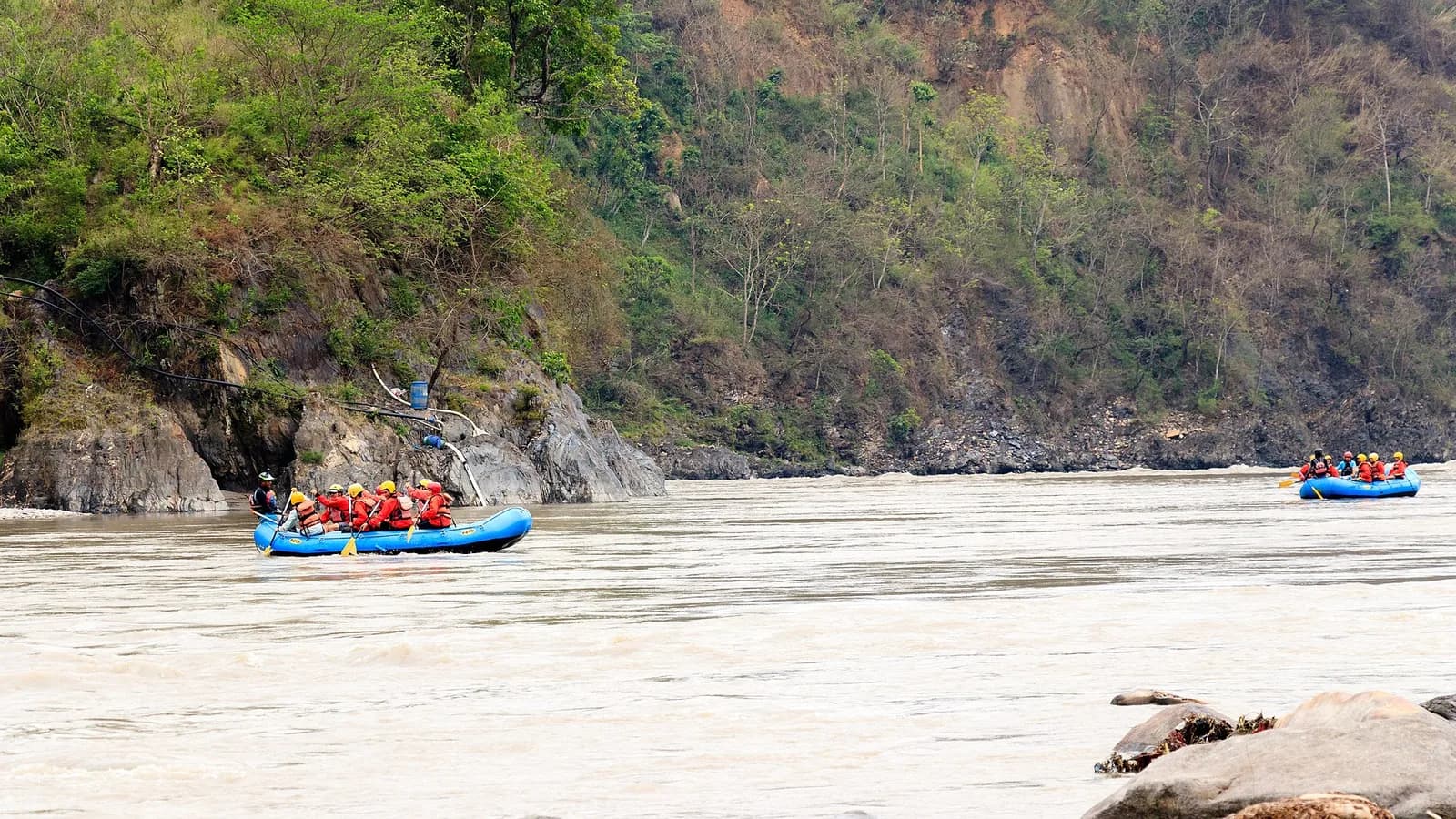
Of all the white water in Nepal, the Trishuli is the river most visitors actually paddle — and for good reason. It runs right alongside the highway between Kathmandu and Pokhara, its rapids are exciting without being frightening, and you can fit a trip into a single day or even into the drive between the two cities. Trishuli river rafting is the country's classic introduction to white water: accessible, scenic and forgiving enough for first-timers, yet lively enough that nobody steps off the raft bored. This guide covers the rapids and grades, the cost, the put-in and take-out, the seasons and the safety, and shows exactly how the trip slots into a wider Nepal route.
This is a focused, on-the-ground companion to our broader white water rafting Nepal guide, which compares the Trishuli against the country's other rivers. River conditions, prices and operators change from season to season, so treat the figures here as a guide and confirm when you book. Every number is stamped with currency and date, and the sources are linked at the end.
Key takeaways
- The Trishuli is Nepal's most popular and most accessible rafting river, running right along the Kathmandu–Pokhara highway.
- In the normal seasons its rapids sit broadly in the Grade II–III range — beginner-friendly, often run by families with children from around age ten.
- The usual put-in is Charaudi, about an 80 km, ~3-hour drive from Kathmandu; a one-day run finishes near Kurintar after roughly 20 km.
- A one-day trip is widely advertised from around USD 25–35 for basic packages up to roughly USD 40–70 fully inclusive (as of mid 2026).
- The best seasons are spring (March–May) and autumn (September–November); avoid the high monsoon water.
- You always wear a life jacket and helmet — the biggest safety decision is choosing a reputable, well-equipped operator.
Why the Trishuli is Nepal's most popular river
Three things make the Trishuli the default first raft in Nepal. The first is access. The river flows beside the main road linking the country's two biggest tourist hubs, so reaching it does not mean a special expedition — you simply drive out from Kathmandu, or stop partway to Pokhara. The second is difficulty: in the ordinary rafting seasons the rapids are big enough to be genuinely fun but gentle enough to forgive a clumsy paddle stroke, which is exactly what most first-timers want. The third is flexibility — you can do a half or full day, or stretch it to an overnight, and tack it onto almost any itinerary without losing days.
Put together, that is why the Trishuli appears on so many trip plans as the rafting day. If you are still deciding whether rafting belongs in your trip at all, our two-week Nepal itinerary shows where an adventure day naturally fits.
The rapids and the river grade
Rapids worldwide are rated on a scale from Grade I, barely moving water, up to Grade V and beyond, the most demanding. In the standard spring and autumn flows, the Trishuli generally sits in the Grade II to III band: regular wave trains, a few punchy drops, and calmer pools in between where you can catch your breath and take in the valley. That is enough to throw spray over the boat and get the whole raft paddling hard together, without the relentless, technical intensity of the country's expert rivers.
The crucial thing to understand is that the grade moves with the water level. After heavy rain, or in the monsoon months, the same rapids swell and the river can stiffen towards Grade IV or higher, which is why operators pull back from running it in high summer water. In the quieter winter flows it eases off, gentler but colder. So when you read that the Trishuli is "Grade III," treat that as the busy-season picture rather than a fixed fact, and go by the conditions on the day.
| Season | Typical character | Rough grade | | --- | --- | --- | | Spring (Mar–May) | Warm, stable, good flow | Around Grade III | | Autumn (Sep–Nov) | Clear skies, good post-monsoon levels | Around Grade III | | Winter (Dec–Feb) | Lower, gentler, cold water | Around Grade II | | Monsoon (Jun–Aug) | High, fast, muddy — usually avoided | Grade IV+ |
Where it starts and finishes: Charaudi to Kurintar
Most one-day trips put in at Charaudi, a roadside spot roughly 80 kilometres and about three hours' drive west of Kathmandu on the highway towards Pokhara. From there a standard day covers somewhere around 15 to 20 kilometres of river, finishing downstream near Kurintar (sometimes written Kuringhat or Kurnighat), where there are riverside resorts and an easy point to get back on the road. Two-day trips carry on further downstream towards Mugling, bringing the total to close to 40 kilometres with a night camping or at a river resort in between.
Because the whole run shadows the Kathmandu–Pokhara highway, the logistics are unusually simple: you are never far from the road, and at the take-out you can be dropped onward to Pokhara, down to Chitwan, or back to Kathmandu. That is the single biggest reason the Trishuli works so well as a stop en route rather than a separate excursion. For the corridor itself, see our guides to the Kathmandu to Pokhara tourist bus and the wider Kathmandu to Pokhara transport options.
What a day on the Trishuli looks like
A typical one-day trip runs to a familiar rhythm. You leave Kathmandu early, often around 7am, to beat the day's traffic out of the valley, and reach the put-in in roughly three hours. There you meet your guide, are issued a life jacket, helmet and paddle, and run through a safety briefing — the paddle commands, what to do if you fall in, how to hold the paddle so it does not catch anyone. Then you are on the water.
The paddling itself usually lasts three to four hours, broken by calmer stretches and, on most trips, a riverside lunch on a sandy beach. You finish in the afternoon at the take-out, change into dry clothes, and either head onward or drive back. Door to door it is a full day, but only a few of those hours are actually on the river — the rest is the drive there and back, which is exactly why combining it with onward travel makes such good sense.
What it costs in 2026
Trishuli pricing varies with the operator, the package and the size of your group, and it drops noticeably as more people share the boat and transport. As a rough guide, as of mid 2026:
| Package type | Typical price (as of mid 2026) | | --- | --- | | Basic one-day trip (smaller groups, fewer inclusions) | From around USD 25–35 per person | | Fully inclusive one-day trip | Roughly USD 40–70 per person | | Overnight / two-day with resort or camping | Commonly higher again; confirm locally |
Some operators also quote local rates in rupees, often in the region of NPR 2,500 to 3,500 per person for a day. A fully inclusive day usually bundles return transport, a qualified guide, all the rafting gear, lunch and permits; the cheaper end often strips out the meal or the transport. As always, the most useful question is what the price actually includes, especially the drive, because that is the bulk of the day. To weigh it against the rest of your spending, see our Nepal travel budget guide, and have cash ready with the ATM withdrawal guide, since some operators prefer it.
When to go: the Trishuli rafting seasons
The Trishuli follows the same seasonal rhythm as the rest of Nepal's rivers, driven by the monsoon.
- Spring (roughly March to May): warm, settled weather and good water levels make this one of the two prime windows.
- Autumn (roughly September to November): the post-monsoon favourite, with clear skies, vibrant green valleys and strong but manageable flows.
- Winter (December to February): still runnable, but lower, gentler and cold — you are wet all day, so it suits the hardy.
- Monsoon (roughly June to August): the river runs high, fast and muddy, and most operators scale back or avoid it for safety.
For most travellers, spring and autumn are the obvious choices — and they happen to be the best trekking seasons too, so a rafting day slots neatly beside the rest of a trip. For the wider picture, see our best time to visit Nepal and Nepal weather by month guides.
Safety and choosing an operator
Rafting the Trishuli with a reputable, well-equipped company and an experienced guide is widely regarded as safe, and you wear a life jacket and helmet for the whole time on the water. The river's gentle grading in the normal seasons is part of why it is such a common first raft, frequently run by families with children. The risks that do exist almost always trace back to the same handful of things: worn-out gear, undertrained guides, overloaded rafts, or — the big one on the Trishuli — running the river when it is too high.
A simple checklist before you book
- Pick an established operator with experienced guides and recent positive reviews.
- Check the gear looks sound — a life jacket and helmet that fit, a raft in good condition.
- Be honest about your swimming and fitness, and tell the guide if you are a weak swimmer.
- Listen to the safety briefing in full and follow the guide's paddle commands at all times.
- Avoid alcohol before and during the trip.
- Respect the water level — a good operator will postpone or change plans rather than run the Trishuli in dangerous high flows.
Because the same logic applies to every adventure in Nepal, it is worth reading up on trekking and adventure insurance and confirming your policy covers rafting, as some exclude white-water activities. If you want to be sure a bargain quote is genuine rather than a corner-cutting operation, our tourist scams guide helps you read a fair offer.
What to wear and bring
You will get wet, so dress for it:
- Quick-drying clothes — shorts and a T-shirt, or a swimsuit — and river sandals or water shoes that strap on securely.
- Sun protection: sunscreen, a hat, and sunglasses with a retainer strap.
- A towel and a full change of dry clothes for afterwards.
- A dry bag for your phone and valuables; operators usually provide one for shared kit.
- A little cash, kept dry, for snacks or tips.
Leave anything you cannot afford to lose, including non-waterproof electronics, at your hotel. In the cooler months a thin thermal layer or a splash jacket takes the edge off the cold snowmelt.
How the Trishuli fits into a Nepal trip
The real beauty of the Trishuli is how little it disrupts the rest of your plans. Because the put-in and take-out both sit on the main road between Kathmandu and Pokhara, the most popular way to do it is simply to raft as you travel — leave Kathmandu in the morning, spend the middle of the day on the river, and roll into Pokhara or Chitwan by evening. There is no need to carve out a dedicated side trip or backtrack.
That convenience also makes it an easy first taste of adventure before bigger thrills elsewhere. Many visitors pair a Trishuli day with the lakeside attractions of Pokhara — see our roundup of things to do in Pokhara — or build it into a route that also takes in a safari at Chitwan. However you fit it in, a single rafting day asks very little of your schedule and gives back one of the most memorable few hours of the trip.
Sources
- Trishuli River Rafting at Best Price 2025/26 — Adventure Master Trek
- Trishuli River Rafting Cost & Itinerary 2025/2026 — Breeze Adventure
- Trishuli River Rafting 2025/2026: Price, Tips & Packages — Best Heritage Tour
- Trishuli River Rafting Package Cost and Weather 2026/27 — Discovery World Trekking
- Best Time for Trishuli Rafting — Month by Month — Nepal Trek 360
- Trishuli River Rafting Nepal — Himalayan River Fun
- Trishuli River Rafting — 2025 — Holiday Nepal
Frequently asked questions
- What grade are the Trishuli river rapids?
- In the normal rafting seasons the Trishuli sits broadly in the Grade II to III range, which is lively but forgiving and well suited to first-timers and families. Several operators describe it as nearer Grade III in busy spring and autumn flows, and it stiffens further during the monsoon when high water can push sections to Grade IV or beyond. Because the grade rises and falls with the water level, the same stretch can feel very different from one month to the next, so always go by current conditions rather than a fixed number.
- How much does Trishuli river rafting cost?
- As of mid 2026, a one-day Trishuli trip is widely advertised from somewhere around USD 25 to 35 per person for smaller no-frills packages, rising to roughly USD 40 to 70 for fully inclusive day trips that cover transport, a guide, gear, lunch and permits. Some operators also quote local rates in rupees, often around NPR 2,500 to 3,500 per person. Prices fall as group size grows, so confirm the per-person rate for your party and exactly what it includes before you book.
- Where does Trishuli rafting start and finish?
- The main put-in is at Charaudi, roughly an 80-kilometre, three-hour drive west of Kathmandu on the highway towards Pokhara. A typical one-day run finishes downstream near Kurintar after about 20 kilometres on the water, while two-day trips continue on towards Mugling, covering close to 40 kilometres in total. Because the whole stretch follows the Kathmandu to Pokhara highway, you can be dropped onward to Pokhara, Chitwan or back to Kathmandu at the end.
- How long is a Trishuli rafting day trip?
- The paddling itself usually lasts around three to four hours over roughly 15 to 20 kilometres, but the full day is longer once you add the drive. Most trips leave Kathmandu early in the morning, reach the put-in in about three hours, run the river with a riverside lunch, and finish in the afternoon. Allow a full day door to door, and remember the trip works neatly as a stop on the journey between Kathmandu and Pokhara rather than a separate excursion.
- Is Trishuli river rafting safe for beginners?
- The Trishuli is one of Nepal's most beginner-friendly rivers, with manageable rapids in the normal seasons, and it is a common choice for families with children, often from around age ten upward. You wear a life jacket and helmet throughout and the day starts with a safety briefing. The main risks come from running the river in unsuitable high water or from cutting corners on gear and guiding, so choose an established operator, listen to the briefing and avoid the high monsoon flows.
- When is the best time for Trishuli rafting?
- The prime windows are spring, roughly March to May, and autumn, roughly September to November, when water levels are good and the weather is settled. Autumn brings clear post-monsoon skies, while spring offers warm, stable conditions. The summer monsoon from about June to August sends the river high, fast and muddy, which most operators avoid for safety, and deep winter is doable but cold. For most visitors, spring and autumn are the clear choices.
- Do I need to be able to swim to raft the Trishuli?
- Being comfortable in water is strongly recommended even on a gentle river, and some operators ask that you can swim. You wear a life jacket and helmet the whole time and the guide explains what to do if you end up in the water, but confidence makes a swim or a flip far less alarming. If you are a weak swimmer, the Trishuli is a sensible river to choose, and you should tell your guide before you set off so they can keep an eye on you.
Related posts
Bhote Koshi Rafting: Nepal's Steepest White Water
Bhote Koshi rafting — the steepest commercial river in Nepal. Grades, the put-in near Lamosangu, seasons, safety and how to plan a day or two on the water.
Read postSun Koshi Rafting: River of Gold Expedition Guide
Sun Koshi rafting — Nepal's longest river expedition. Grades, the Dolalghat to Chatara route, best season, rapids, camping and how to plan it.
Read postWhite Water Rafting Nepal: Rivers & Guide (2026)
White water rafting Nepal — the best rivers from the Trishuli to the Sun Koshi, grades, costs, seasons, safety and how to pick a trip that suits you.
Read post