Shivapuri Nagarjun: Kathmandu's Forest Day Hike
A practical guide to Shivapuri Nagarjun National Park near Kathmandu: trails, entry fees, wildlife, Nagi Gompa and Bagdwar, and how to plan a day hike.
A forested ridge above Kathmandu where the Bagmati is born and leopards still roam.
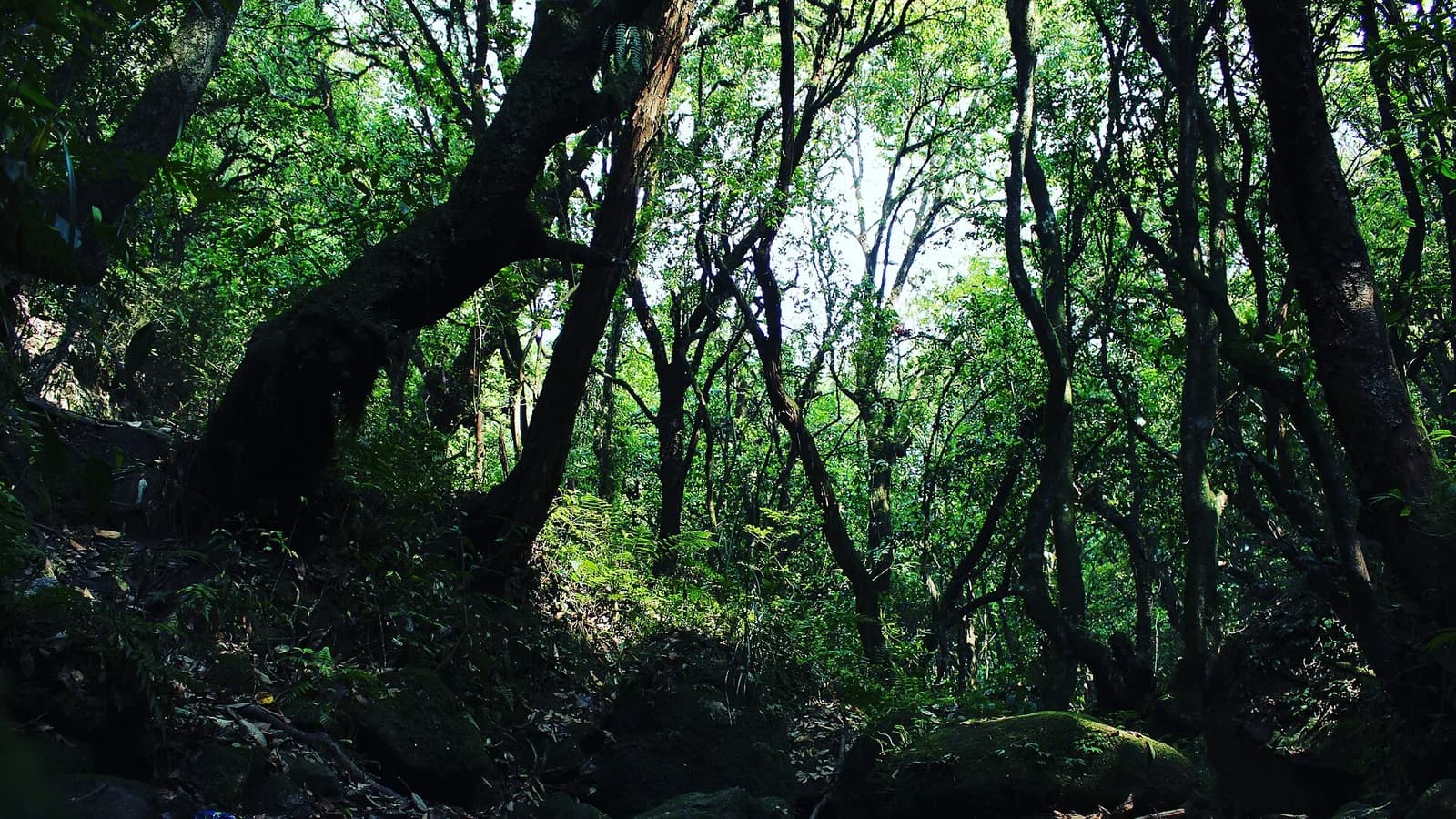
Shivapuri Nagarjun National Park is the green wall on Kathmandu's northern horizon, and for most travellers it is the easiest taste of Himalayan foothill forest you can reach without leaving the valley. Less than a dozen kilometres from the noise of Thamel, the park trades traffic for oak and rhododendron, birdsong and the occasional sign warning of leopards. This guide covers what Shivapuri Nagarjun is, how to get in, what the trails are like, and how to plan a day hike or short overnight without surprises.
Key takeaways
- Shivapuri Nagarjun is Nepal's ninth national park, gazetted in 2002, and the closest one to Kathmandu, about 12 km north of the city centre.
- It protects roughly 159 sq km of mid-hill forest, ranging from about 1,350 m up to Shivapuri Peak at 2,732 m.
- The standard entry ticket is NPR 1,000 for foreigners, NPR 600 for SAARC nationals and NPR 100 for Nepalis (as of June 2026); no separate trekking permit is needed.
- The park is Kathmandu's vital watershed and the birthplace of the sacred Bagmati and Bishnumati rivers.
- Popular routes start at Sundarijal or Budhanilkantha and pass landmarks such as Nagi Gompa, Bagdwar and, on the Nagarjun side, the Jamacho viewpoint.
- Autumn and spring give the clearest skies and most pleasant hiking weather.
What and where is Shivapuri Nagarjun?
The park stretches across the northern fringe of the Kathmandu Valley and into the neighbouring districts of Nuwakot and Sindhupalchowk. It was established in 2002 as Nepal's ninth national park and takes its name from Shivapuri Peak, the high point at 2,732 m (about 8,963 ft). The Nagarjun forest, a separate forested hill on the valley's northwest edge, was later merged in, which is why the park carries a double name.
Because it hugs the capital so closely, Shivapuri Nagarjun plays a role most parks do not: it is a working watershed. Its forests and springs feed several of Kathmandu's water supplies, and it is widely cited as supplying on the order of tens of millions of litres of drinking water to the valley each day. The high ground above the Sundarijal area is also where the Bagmati River, sacred to Hindus and central to the rituals at Pashupatinath Temple, is said to begin at the shrine of Bagdwar.
Quick facts
| Detail | Information | | --- | --- | | Established | 2002 (Nepal's ninth national park) | | Approximate area | 159 sq km | | Elevation range | ~1,350 m to 2,732 m | | Highest point | Shivapuri Peak, 2,732 m | | Distance from Kathmandu | ~12 km north of the city centre | | Districts | Kathmandu, Nuwakot, Sindhupalchowk |
Entry fees, gates and permits
You enter Shivapuri Nagarjun by buying a national park entry ticket, and that single ticket is all a day hiker needs. There is no separate trekking permit for the park itself, which keeps the paperwork far simpler than the big mountain treks described in our guide to Nepal trekking permits.
Published rates are NPR 100 for Nepali citizens, NPR 600 for nationals of SAARC countries and NPR 1,000 for other foreign visitors (as of June 2026). Fees can change, so it is wise to confirm the current price at the gate or at the national park office in Kathmandu before you go. You can pay on arrival at the entry gates or in advance at the park office.
The park has several official entry points dotted around its edge. The most useful for visitors include:
- Sundarijal — the classic trailhead on the northeast, gateway to Chisapani and the upper ridge.
- Budhanilkantha / Panimuhan — convenient from the city and close to the famous sleeping Vishnu temple.
- Mulkharka and Tokha — quieter farming-village approaches on the southern slopes.
- Nagarjun (Fulbari) gate — the entrance for the Nagarjun forest and the Jamacho hike on the northwest side.
Other gates such as Jhule, Mahankal, Jagat and Kakani exist for villagers and longer through-routes. Carry your passport, some cash in small notes for the ticket, and arrive early; gates and the light both favour a morning start.
The main hiking routes
Shivapuri Nagarjun is best known as a hiking park, and the trails range from short half-day legs to multi-day links onto the Helambu region. Distances below are approximate and vary by exact start and finish.
Sundarijal to Chisapani
This is the signature route. From Sundarijal you climb beside the Bagmati's small waterfalls and water pipelines, pass through the village of Mulkharka, and continue up to the ridge town of Chisapani at around 2,300 m. Many hikers turn this into an overnight, sleeping in Chisapani's simple lodges and waking to a Himalayan skyline that, on clear days, stretches toward the Langtang range. The full Sundarijal-to-Chisapani leg is commonly cited at roughly 10 km one way with significant elevation gain, so it is a genuine workout rather than a stroll.
Shivapuri Peak and Bagdwar
For a tougher day, hikers push from Sundarijal or Budhanilkantha up toward Shivapuri Peak itself, often by way of Nagi Gompa, a hillside Buddhist nunnery and meditation centre perched in the forest. Higher still lies Bagdwar, the modest shrine marking the source of the Bagmati, a frequent turnaround point for those not summiting. Reaching the 2,732 m peak is a long, steep day, so start early and budget plenty of time for the descent.
Nagarjun and the Jamacho viewpoint
On the park's northwest side, the Nagarjun forest offers its own climb from the Fulbari gate up to Jamacho, a forested summit topped by a stupa and prayer flags. The viewpoint looks back over the Kathmandu Valley and, in good weather, out to the mountains. It is a popular morning hike for Kathmandu residents and pairs naturally with a visit to nearby Swayambhunath.
Trail comparison
| Route | Rough distance (one way) | Difficulty | Highlights | | --- | --- | --- | --- | | Sundarijal to Chisapani | ~10 km | Moderate to hard | Waterfalls, ridge views, overnight option | | Shivapuri Peak via Nagi Gompa | ~Long day return | Hard | Nunnery, Bagdwar, summit | | Nagarjun to Jamacho | ~Several hours return | Moderate | Stupa, valley viewpoint |
Wildlife, forest and birds
For a park so close to a capital city, Shivapuri Nagarjun holds a surprising amount of wildlife, though dense forest and shy animals mean sightings of big mammals are uncommon. Field surveys have recorded common (Indian) leopard, Himalayan black bear, jungle cat, golden jackal, large Indian civet and yellow-throated marten, among others. Threatened species cited for the park include clouded leopard and pangolin. Leopards in particular are an established presence, and you will see signs reminding visitors to hike in daylight and ideally in a group.
The park is also a strong birding destination, with 177 bird species recorded, several of them threatened. The forest shifts with altitude, from subtropical broadleaf lower down through oak and rhododendron higher up, so spring hikes can be coloured by blooming rhododendron. If wildlife is your main goal, the lowland parks in our overview of Nepal's national parks offer better odds of dramatic encounters, but few match Shivapuri for sheer convenience.
Culture on the ridge
Shivapuri is not only nature. The hillsides hold working religious sites that give the hikes a contemplative edge. Nagi Gompa is an active nunnery and meditation centre long associated with Tibetan Buddhist teaching, and it sits directly on the popular peak route. Bagdwar, the Bagmati's source, draws Hindu pilgrims. Closer to the Budhanilkantha gate, the renowned reclining Vishnu statue is a major valley shrine in its own right. The same blend of mountain and faith runs through the wider valley rim, from the stupa at Boudhanath to the temple towns east of the city.
Planning your visit
Best time to go
Autumn (roughly October to November) and spring (March to April) are the prime windows, offering clear skies, comfortable temperatures and low rainfall, the same seasons we recommend in our guide to the best season to trek in Nepal. The summer monsoon brings leeches, mud and cloud, while winter mornings can be cold and frosty on the high ridge but still very hikeable.
Getting there from Kathmandu
Sundarijal and Budhanilkantha both sit at the valley's northern edge and are reachable by taxi or local bus in well under an hour from central Kathmandu, traffic permitting. A taxi to the trailhead and a pick-up on return is the simplest option for most visitors; agree the fare in advance. Shivapuri slots easily into a wider plan of Kathmandu day tours and makes a fine warm-up for bigger treks.
What to bring
- Sturdy shoes with grip; trails are steep, rocky and slick when wet.
- Plenty of water and snacks, as facilities thin out above the gates.
- Sun protection, a light layer for the ridge, and a rain shell in shoulder seasons.
- Cash in small notes for the entry ticket.
- A charged phone or offline map; junctions can be confusing, and a licensed guide is worth considering for the peak routes.
A few simple Nepali phrases
A little Nepali goes a long way with the villagers and ticket staff you will meet. Try namaste (hello), dhanyabad (thank you) and kati (how much) for the ticket window. You can build a wider travel vocabulary with our basic Nepali phrases guide before you set off.
How Shivapuri compares to nearby viewpoints
Shivapuri is a forest-and-effort experience: you earn your views with a real climb. If you would rather reach a panorama with less sweat, the valley rim offers gentler alternatives. Nagarkot is famous for its sunrise mountain skyline, Chandragiri Hills can be reached by cable car, and the Newar town of Dhulikhel combines heritage streets with easy ridge walks. Shivapuri's appeal is different: a genuine national park, deep forest, and the satisfaction of a long uphill day that ends with the whole Kathmandu Valley laid out below you.
Sources
- Shivapuri Nagarjun National Park — Wikipedia
- Shivapuri National Park — official site (snnp.gov.np)
- Shivapuri Nagarjun National Park — Nepal Tourism Board
- Park entry fees in Nepal — Nepal Tourism Board
- Shivapuri Hike 2026: Nepal Guide & All Itineraries — The Longest Way Home
- Best hikes and trails in Shivapuri Nagarjun National Park — AllTrails
- Management Plan of Shivapuri Nagarjun National Park — DNPWC
Frequently asked questions
- Where is Shivapuri Nagarjun National Park?
- It sits on the northern rim of the Kathmandu Valley, roughly 12 km from the city centre, making it the closest national park to the capital.
- How much is the entry fee for foreigners?
- The published entry ticket is NPR 1,000 for foreign nationals, NPR 600 for SAARC nationals and NPR 100 for Nepali citizens (as of June 2026); confirm current rates at the gate or park office.
- Do I need a special trekking permit for Shivapuri?
- No separate trekking permit is required; the national park entry ticket alone covers day hikes, and you pay it at the gate or the park office in advance.
- How high is Shivapuri Peak?
- Shivapuri Peak reaches 2,732 metres (about 8,963 feet), and the park ranges from roughly 1,350 metres up to that summit.
- What is the best season to hike Shivapuri?
- Autumn and spring are the most comfortable, with clear skies, light rainfall and mild temperatures that are ideal for the steady uphill climbs.
- Can I do Shivapuri as a day trip from Kathmandu?
- Yes; many visitors hike from Sundarijal or Budhanilkantha and return the same day, while longer routes continue overnight toward Chisapani.
- What wildlife lives in the park?
- Recorded species include common leopard, Himalayan black bear, jungle cat, golden jackal and yellow-throated marten, plus 177 bird species, though large mammals are rarely seen.
- What is Bagdwar?
- Bagdwar is a small shrine high on Shivapuri considered the source of the sacred Bagmati River, and it is a common turnaround point on longer hikes.
Related posts
Bardia National Park: Nepal's Wild Tiger Park (2026)
Bardia National Park guide — Bengal tigers, rhinos, entry fees, safaris and how Nepal's quietest Terai park compares to Chitwan in 2026.
Read postChandragiri Hills Cable Car: Tickets & Guide (2026)
A tourist's guide to the Chandragiri Hills cable car near Kathmandu — fares, ride time, the Bhaleshwor Mahadev temple, Himalaya views and how to get there.
Read postDhulikhel: Himalayan Views & Newari Old Town
A guide to Dhulikhel, the Himalayan viewpoint town near Kathmandu: sunrise peaks, the Newari old town, the Kali shrine steps and the Namobuddha hike.
Read post