Sel Roti — Nepal's Festive Rice Doughnut Explained
What sel roti is, why it appears at Tihar and Dashain, how the fermented rice batter is fried into golden rings, and how to make it. A traveler's guide.
A golden ring of fried rice batter — Nepal's festivals taste like sel roti.
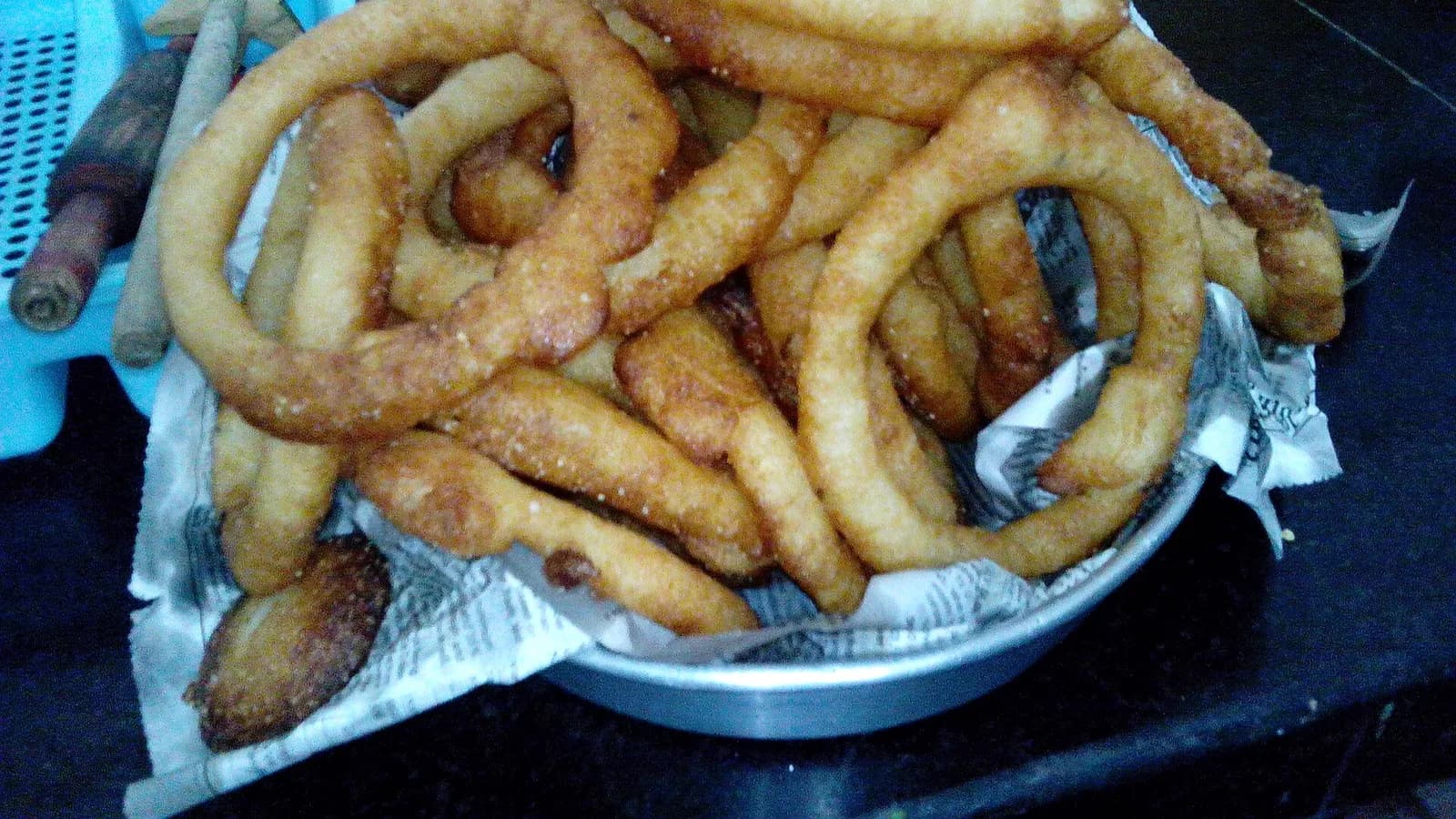
During Nepal's biggest autumn festivals, the smell of frying batter drifts out of kitchens across the country — that is sel roti season. This golden, ring-shaped sweet bread, fried from a fermented rice batter, is one of Nepal's most recognizable festive foods. Crisp on the outside, soft and a little chewy inside, it shows up by the basketful at Dashain and Tihar, at weddings, and at any gathering worth celebrating.
This guide explains what sel roti is, why it matters culturally, how the batter is fermented and fried into its signature loop, and how you can make a batch yourself. If you are visiting Nepal in festival season, sel roti is one taste you should not miss.
Key takeaways
- Sel roti is a ring-shaped Nepali rice bread — a fermented rice-flour batter deep-fried into a crisp, golden, mildly sweet loop.
- It is the signature food of Dashain and Tihar, and appears at weddings and other celebrations.
- The batter is naturally fermented, which improves both flavor and texture before frying.
- It is made from rice flour, so it is naturally gluten free in its traditional form, and can be made vegan by swapping ghee for oil.
- The ring shape is both practical and symbolic, associated with prosperity and togetherness.
- It is sweeter and crisper than a flatbread but more rice-flavored and less sugary than a Western doughnut.
What is sel roti?
Sel roti is a handmade, deep-fried ring of fermented rice-flour batter, lightly sweetened and gently spiced. It sits in a category of its own — not quite a bread, not quite a doughnut. Bite into one and you get a thin, crisp, almost glassy shell giving way to a soft, slightly chewy interior with the distinct flavor of rice and a fragrant whisper of cardamom or clove.
It is usually eaten plain as a snack, or paired with savory sides like yogurt, a vegetable curry, or pickle, which balance its mild sweetness. Unlike a wheat flatbread, it is built for celebration: a little richer, a little sweeter, and shaped into that unmistakable loop.
When and why sel roti is made
Sel roti is, above all, a festival food. It is most closely tied to Dashain and Tihar, the two great autumn festivals of the Nepali calendar, when households fry it in large quantities to offer to deities, share with visiting relatives, and send home with guests. The sight of stacked golden rings is part of what these festivals look and smell like.
Beyond the big two, sel roti turns up at weddings, religious ceremonies, and family gatherings throughout the year, and it is a staple in Nepali-speaking communities well beyond Nepal's borders — in Sikkim, Darjeeling, Kalimpong, and parts of the Indian Himalaya. Wherever Nepali culture has traveled, sel roti has gone with it. If you are planning a festival-season trip, our guides to Tihar, the festival of lights and the Dashain tourist guide explain what else to expect during these celebrations.
The symbolism of the ring
The unbroken circle is not an accident. Beyond being the easiest way to set a thin batter in hot oil, the round, closed loop is widely read as auspicious — a symbol of prosperity, completeness, and the unity of family and community. Offering and sharing these rings is a small act of wishing one another well, which is exactly why a celebratory food took this shape.
How sel roti is made
The magic of sel roti is in the fermented rice batter and the skill of pouring it into a perfect ring. Here is what is actually happening:
| Stage | What happens | |-------|--------------| | Soaking | Rice is soaked for hours until soft | | Grinding | Softened rice is ground into a smooth, thick batter | | Flavoring | Sugar, ghee or oil, and spices like cardamom and clove are mixed in | | Fermenting | The batter rests, often around six hours, to develop flavor | | Frying | The batter is poured in a circle into hot oil and fried golden |
The fermentation step is what sets sel roti apart from a plain fried batter. As the batter rests in a warm spot, natural yeasts and bacteria go to work, making it slightly tangy and giving the finished rings a lighter, better texture. Traditional practice and food studies alike point to a rest of around six hours at roughly room-to-warm temperature as a sweet spot for flavor — though every household has its own rhythm, often letting the batter sit overnight.
Then comes the part that takes real practice: pouring the ring. The cook holds the batter above a wide pan of hot oil and lets it fall in a steady, circular motion, closing the loop where the stream meets itself. The oil has to be at the right medium heat — hot enough to crisp the outside, gentle enough to cook the inside before it burns. Each ring is turned once with tongs or a stick and lifted out deep golden.
Make it at home
You do not need festival-grade skill to try sel roti, though your first rings may come out as cheerful blobs rather than perfect circles. The steps in this post lay out the full method; in brief:
- Soak white rice for several hours or overnight until soft.
- Grind it into a smooth, thick batter with a little water.
- Flavor with sugar, a spoon of ghee or oil, and ground cardamom and clove.
- Ferment by resting the covered batter in a warm place, often around six hours.
- Pour the batter into medium-hot oil in a circular motion to form rings.
- Fry until both sides are golden and crisp, then drain.
A few practical tips:
- Batter consistency is everything. Too thin and the ring breaks apart; too thick and it will not flow into a smooth loop. Aim for a batter that pours in a steady ribbon.
- Control the heat. If the oil is too hot the outside browns while the inside stays raw. Medium and steady wins.
- Use a pouring aid if needed. A small jug, a piping bag, or a squeeze bottle makes the circular pour far easier than a freehand stream while you learn.
- Pour to your tolerance, not your pride. One or two rings at a time is plenty until you find your rhythm.
If you would rather learn the feel of the batter from someone who has made hundreds of these, some cooking classes in Kathmandu include festive foods like sel roti, and a local cook's hands-on guidance is worth a dozen written instructions.
Where to find and try sel roti as a traveler
You do not have to wait for a festival to taste sel roti, though that is when it is everywhere. Year-round, look for it at:
- Sweet shops and bakeries in Kathmandu, Pokhara, and other towns, where stacks of golden rings are sold by the piece.
- Tea stalls and roadside snack stands, especially in the mornings, where a ring of sel roti with milk tea is a common breakfast.
- Bus parks and travel routes, where vendors sell it as a portable, keep-well snack for the journey — handy on a long Kathmandu-to-Pokhara bus ride.
If your trip lands during Dashain or Tihar, you will encounter sel roti at its most abundant and freshest, often homemade and offered to you as a guest. Accepting a piece is a small but genuine way to take part in the celebration. Eaten with a spoon of yogurt or a little curry, it makes a satisfying snack at any time of day.
A couple of phrases smooth the encounter. Mitho chha tells the cook it is delicious, and our guide to ordering food in Nepali covers the basics of buying snacks politely. Pay in cash and small notes, since the stalls and shops that sell the best sel roti rarely take cards.
Sel roti vs. a doughnut
It is tempting to call sel roti a "Nepali doughnut," and the comparison helps — both are fried rings of sweet batter — but the differences matter:
- The base is rice, not wheat. Sel roti uses ground rice and natural fermentation rather than a yeasted wheat dough, giving it a crisper shell, a chewier center, and a clearly rice-based flavor.
- It is less sweet. Most Western doughnuts are sugar-forward and often glazed; sel roti is only mildly sweet and rarely topped with anything.
- It is often eaten savory. While a doughnut is purely a treat, sel roti is happily paired with yogurt, curry, or pickle as part of a meal.
- It keeps well. Thanks to deep-frying and light fermentation, sel roti stays good at room temperature for several days, which is why families can make it in bulk for the festival season.
Regional variations
Like most beloved foods, sel roti changes from place to place:
- Shape. The Nepali standard is a single ring, but in Sikkim, Darjeeling, and Kalimpong a double-ring shape is common.
- Flavorings. In the lowland Terai, cooks sometimes fold in coconut or even mashed banana for extra sweetness and aroma.
- Sweetness and spice. The amount of sugar, and whether clove joins the cardamom, varies by family recipe and region.
These variations are part of what makes sel roti such a personal food — most Nepalis will tell you their family's version is the best, and they are all a little bit right.
Sources
Frequently asked questions
- What is sel roti?
- Sel roti is a traditional Nepali ring-shaped sweet bread made from a fermented rice-flour batter that is deep-fried into golden loops. It is crisp on the outside and soft and slightly chewy inside, falling somewhere between a bread and a doughnut, and is closely tied to Hindu festivals.
- What does sel roti taste like?
- It is mildly sweet with a fragrant hint of cardamom or clove, a crisp shell, and a soft, slightly chewy center. The rice flour gives it a distinct flavor and texture unlike a Western doughnut, and it is usually eaten plain or with yogurt, vegetable curry, or pickle.
- When is sel roti made in Nepal?
- It is most associated with the autumn festivals of Dashain and Tihar, when families fry large batches to share with relatives and guests. It also appears at weddings, religious gatherings, and other celebrations, and is eaten in Nepali communities across Sikkim, Darjeeling, and parts of northern India.
- Is sel roti gluten free?
- Traditional sel roti is made from rice flour, so the batter itself is naturally gluten free. Recipes vary, however, and some cooks add small amounts of wheat flour, so anyone with celiac disease should confirm the exact ingredients before eating.
- Can sel roti be made vegan?
- Yes. The classic recipe often uses ghee, but it can be made vegan by replacing the ghee with a neutral oil. The rest of the batter, which is rice flour, sugar, water, and spices, is plant based, so the swap is simple.
- Why is sel roti ring shaped?
- The ring is formed by pouring the batter into hot oil in a circular motion so it sets into a loop. The round, unbroken shape is also seen as auspicious and symbolic of prosperity and unity, which suits its role as a festival food shared among family and guests.
- How is sel roti different from a doughnut?
- Both are fried rings of sweet batter, but sel roti is made from naturally fermented rice flour rather than a yeasted wheat dough, so it is crisper on the outside and chewier inside with a rice-based flavor. It is also less sweet than most Western doughnuts and is often eaten with savory sides.
- How long does sel roti stay fresh?
- Because it is deep-fried and lightly fermented, sel roti keeps well at room temperature for several days, which is one reason families make it in bulk for the festival season. It can be eaten as is or briefly reheated, though it is at its best crisp and fresh on the day it is fried.
Spotted an error in this post? Tell us or suggest a correction.
Related posts
ABC Trek: A Plain-English Guide to Annapurna Base Camp
The ABC trek (Annapurna Base Camp) explained — the route, how many days it takes, difficulty, the best seasons, and what daily trail life is really like.
Read postAma Dablam Climb: 2026 Expedition Guide (6,812m)
An Ama Dablam climb and expedition guide for 2026 — height, the Southwest Ridge route, camps, fixed ropes, difficulty, permits, cost and the best seasons.
Read postAnnapurna vs Manaslu: Which Trek Should You Choose?
An Annapurna vs Manaslu decision guide for trekkers — compare permits, crowds, difficulty, infrastructure and cost to pick the right Himalayan route.
Read postAsan Bazaar Kathmandu: Old Town Market Guide
A visitor guide to Asan bazaar, Kathmandu's oldest market — its six-road square, Annapurna Temple, what to buy, when to go, and how to get there.
Read postAyurveda Nepal: A Traveller's Guide to Healing
Ayurveda Nepal explained for tourists — the history, the doshas, treatments like Panchakarma and Shirodhara, where to go and how to choose a centre safely.
Read postBest Restaurants Pokhara Lakeside: Where to Eat
The best restaurants in Pokhara Lakeside — lakeside trout, wood-fired pizza, Tibetan momos and healthy cafes, with what to order and rough 2026 prices.
Read post