Nepal Time Zone: Why Nepal Is UTC+5:45 (the 45-Min Quirk)
Nepal's time zone is UTC+5:45 — one of only a few in the world with a 45-minute offset. Here is why Nepal runs 15 minutes ahead of India, explained.
Land in Kathmandu and the first thing you do is set your watch to a time that exists almost nowhere else on Earth.
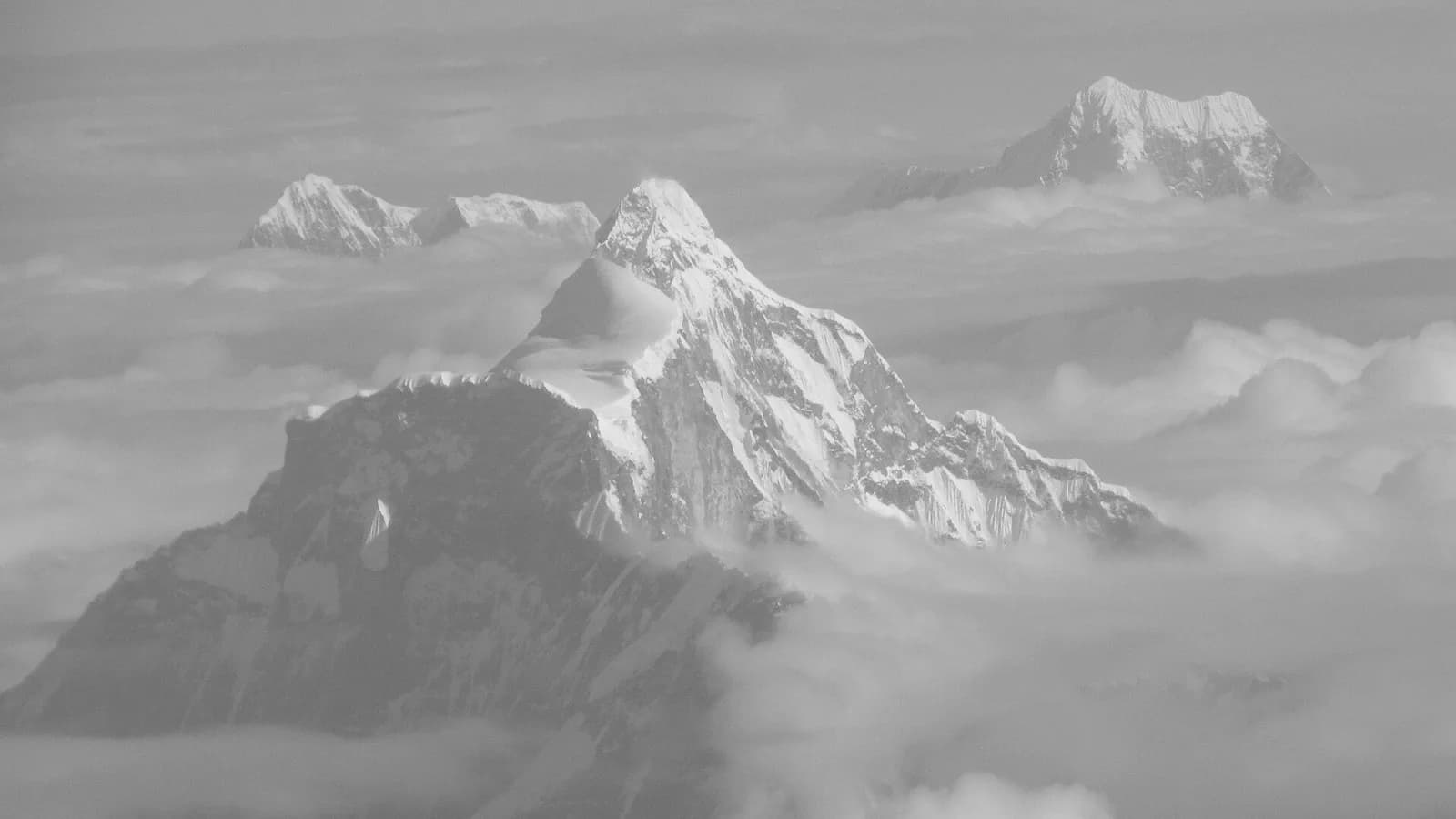
Nepal's time zone is UTC+5:45 — five hours and forty-five minutes ahead of Coordinated Universal Time, and one of the most unusual national clocks on the planet. Step off the plane in Kathmandu, glance at the arrivals board, and you are suddenly running on a schedule that is 15 minutes ahead of India and shared by almost no one else on Earth. It is the kind of detail that makes seasoned travellers do a double take. This guide explains where that odd 45-minute offset comes from, why Nepal deliberately keeps it, and what it means in practice when you are planning flights, calls and treks.
Key takeaways
- Nepal uses Nepal Standard Time (NPT), UTC+5:45, with no daylight saving — the offset is the same all year.
- The 45-minute offset is a rounded approximation of the mean solar time at Nepal's standard meridian near Gaurishankar peak, about 100 km east of Kathmandu.
- Nepal switched from UTC+5:30 to UTC+5:45 in 1986, moving its clocks 15 minutes ahead of India.
- Nepal is the only sovereign country that uses a 45-minute offset as its national time.
- The country's IANA zone is Asia/Kathmandu; set any device to that and the offset is handled for you.
- Nepal sits 15 minutes ahead of India and 2 hours 15 minutes behind China, despite bordering both.
What time zone is Nepal in?
The whole of Nepal runs on a single time zone called Nepal Standard Time, abbreviated NPT, fixed at UTC+5:45. Whether you are in Kathmandu, trekking toward Everest Base Camp, or watching sunrise from a hill station, the clock reads the same. There is no daylight saving time and no regional variation, which keeps things simple inside the country even if the offset looks strange from outside.
On most devices the zone shows up as Asia/Kathmandu, the name used in the IANA time zone database that smartphones, laptops and booking sites rely on. Select that and your phone will quietly add the extra 45 minutes for you — worth doing before you land so your alarms and flight times line up.
How the 45 minutes feels in practice
The half-and-then-some offset trips up newcomers in small, memorable ways. A flight that departs at "10:00" local time leaves at a moment that is :15 past the quarter hour relative to most of the world's clocks. International video calls land on awkward minute marks. And if you forget to switch your watch, you arrive everywhere a tidy 15 minutes early relative to Indian schedules — which, in fairness, is rarely a bad way to travel.
Why is Nepal UTC+5:45? The 45-minute offset explained
The short answer is solar time. A country's "natural" clock is tied to where the sun sits overhead, and that depends on longitude. Every 15 degrees of longitude corresponds to roughly one hour of solar time, so a location's true local time rarely lands neatly on a whole hour. Most governments round to the nearest hour (or half hour) and adopt that as standard time for convenience and to match neighbours.
Nepal made a different choice. Rather than round all the way to a whole hour and drift away from the sun, it pegged its clock to a meridian that keeps official time close to the country's actual solar time. That meridian runs near the peak of Gaurishankar, a Himalayan mountain about 100 kilometres east of Kathmandu, at roughly 86.25 degrees east longitude. Anchoring the national clock to that line lands Nepal on the +5:45 offset.
Kathmandu's true solar time
Here is the detail that makes the choice feel deliberate rather than arbitrary. Kathmandu's own mean solar time is about 5 hours, 41 minutes and 16 seconds ahead of UTC. Round that to a convenient quarter hour and you get UTC+5:45 — only a few minutes off the city's genuine astronomical time. By contrast, adopting India's UTC+5:30 left Nepal's clocks noticeably "behind" the real position of the sun, while jumping to a whole hour at UTC+6:00 would have pushed them too far ahead. The 45-minute compromise sits closest to reality.
The history: how Nepal arrived at +5:45
Nepal's clock has shifted over the last century as standard time spread across the region:
| Period | Nepal's time | Notes | |---|---|---| | Before 1920 | Local Kathmandu solar time | Time kept loosely by the sun | | 1920–1986 | UTC+5:30 | Shared with Indian Standard Time | | 1986–present | UTC+5:45 | Advanced 15 minutes to match solar time |
For decades Nepal simply used Indian Standard Time (UTC+5:30), the same offset India had adopted in 1920. Then, in 1986, Nepal advanced its clocks by 15 minutes to UTC+5:45, formalising a national time that better matched the sun over its own territory. That single quarter-hour nudge created the famous 15-minute gap with India that travellers still notice today.
A quiet marker of identity
Officials framed the change as a technical correction toward true solar time, and that is the accurate, verifiable reason. It is also hard to miss that the move gave a small Himalayan nation, wedged between two giants, a clock that is unmistakably its own — neither India's nor China's. Whatever the motivation, the practical effect is a time zone that belongs to Nepal alone.
How rare is a 45-minute time zone?
Genuinely rare. The world's time zones are overwhelmingly built on whole-hour offsets, with a handful of 30-minute zones (India, Iran, parts of Australia) sprinkled in. 45-minute offsets are the rarest category of all.
- Nepal (UTC+5:45) is the only sovereign country that uses a 45-minute offset as its national standard time.
- The Chatham Islands of New Zealand use UTC+12:45.
- An unofficial zone in Western Australia uses UTC+8:45.
That is essentially the entire club. Among independent nations, Nepal stands by itself — which is why its clock turns up so often in trivia about the world's quirkiest geography.
Nepal time versus its neighbours
Nepal borders two of the largest countries on Earth, yet shares a clock with neither:
| Place | Offset | Relative to Nepal | |---|---|---| | Nepal (Kathmandu) | UTC+5:45 | — | | India (IST) | UTC+5:30 | 15 minutes behind Nepal | | China (Beijing) | UTC+8:00 | 2 hours 15 minutes ahead of Nepal |
China is the striking case. Despite spanning a vast east–west distance, all of China officially uses a single time zone, UTC+8:00. So the moment you cross from Nepal toward Tibet, the clock leaps forward by 2 hours and 15 minutes — one of the larger time jumps you can make over a short distance anywhere in the world. If you are weighing that journey, our Nepal versus Tibet comparison covers what else changes at the border.
Why neighbouring clocks can differ so much
It can feel counter-intuitive that two bordering countries — or two ends of one country — keep clocks so far apart. The reason is that time zones are political choices, not purely astronomical ones. China could span five solar hours but runs everything on Beijing time for national unity. India rounds to a single half-hour offset for its whole width. Nepal, sitting between them, picked the quarter-hour that best fit its own sky. Each decision is reasonable on its own terms, and together they produce the patchwork that makes this corner of the map so unusual for clock-watchers.
What this means for your trip
The offset is a fun fact, but it has a few real consequences worth planning around:
- Set your devices to Asia/Kathmandu on arrival so flights, alarms and calendar invites land at the right minute. Domestic schedules are tight — see our guide to domestic flights in Nepal.
- Double-check international calls. Because Nepal never shifts for daylight saving, the gap to home moves twice a year on the other end. Confirm the offset the week of an important call rather than trusting a remembered number.
- Mind the India connection. If you are crossing overland from India, your phone may cling to Indian time near the border; nudge the clock 15 minutes forward once you are clearly in Nepal. Our Nepal versus India travel guide has more on what differs between the two.
- Plan around daylight, not just the clock. Nepal's days don't swing much in length, but mountain light fades fast behind ridgelines. For seasonal sunrise and sunset patterns, see Nepal weather by month.
None of this is complicated once you know to expect it. The 45-minute offset is simply part of arriving in Nepal — a tiny, charming reminder that you have landed somewhere that does things its own way, right down to the time on the wall.
Sources
Frequently asked questions
- What is Nepal's time zone?
- Nepal uses Nepal Standard Time, which is UTC+5:45 — five hours and forty-five minutes ahead of Coordinated Universal Time. It is written NPT and applies to the whole country with no daylight saving time, so the offset never changes through the year.
- Why is Nepal UTC+5:45 instead of a whole hour?
- The 45-minute offset is a rounded approximation of the mean solar time at Nepal's standard meridian, which runs through the Gaurishankar peak east of Kathmandu. Most countries round their clocks to whole hours, but Nepal chose to keep its time close to the sun overhead rather than match a neighbour.
- Why is Nepal 15 minutes ahead of India?
- Until 1986 Nepal shared Indian Standard Time at UTC+5:30, then advanced its clocks by 15 minutes to UTC+5:45 to better reflect Kathmandu's solar time. The result is that Nepal sits exactly 15 minutes ahead of India year-round, the only such gap between two neighbouring countries.
- How many countries use a 45-minute time offset?
- Very few. Nepal is the only sovereign country that uses a 45-minute offset as its national standard time, at UTC+5:45. The Chatham Islands of New Zealand use UTC+12:45, and an unofficial Australian zone uses UTC+8:45, but Nepal stands alone among nations.
- Does Nepal use daylight saving time?
- No. Nepal does not observe daylight saving time, so Nepal Standard Time stays at UTC+5:45 all year. Sitting close to the equator, the country sees little seasonal change in day length, so there is little reason to shift the clocks.
- What is the time difference between Nepal and the US or UK?
- Nepal is roughly 9 hours and 45 minutes ahead of the UK in winter and about 10 hours 45 minutes ahead of US Eastern Time, though these shift when those regions move their clocks for daylight saving. Because Nepal never changes its clocks, the exact gap depends on the season in the other country.
- What is the IANA time zone name for Nepal?
- Nepal's zone is registered as Asia/Kathmandu in the IANA time zone database that powers phones and computers. Setting a device to Asia/Kathmandu gives you the correct UTC+5:45 offset automatically, which is handy for booking flights and calls.
Related posts
Nepal's Capital: Kathmandu Quick Facts & Visitor Guide
Nepal's capital is Kathmandu, the country's largest city in a Himalayan valley. Quick facts on population, elevation, history and what to see, explained.
Read postNepal UTC+5:45: Practical Time Conversions for Travellers
Nepal is UTC+5:45. A traveller's guide to converting Nepal time to the US, UK, Europe and Australia, plus calling windows and a quick conversion trick.
Read postWhy Is Nepal +5:45? The Story Behind the 45-Minute Clock
Why is Nepal +5:45 and not a round hour? The story behind Nepal's 45-minute time offset, the Gaurishankar meridian, and the 1986 switch from India.
Read post