Mountain Lodge Everest: Where You Sleep on the EBC Trail
A mountain lodge on the Everest trail can mean a basic teahouse or a heated luxury suite. Here is the full range, costs, and what to expect.
On the way to Everest, your lodge is your hotel, your dining room, your charging point, and your only heat for the night.
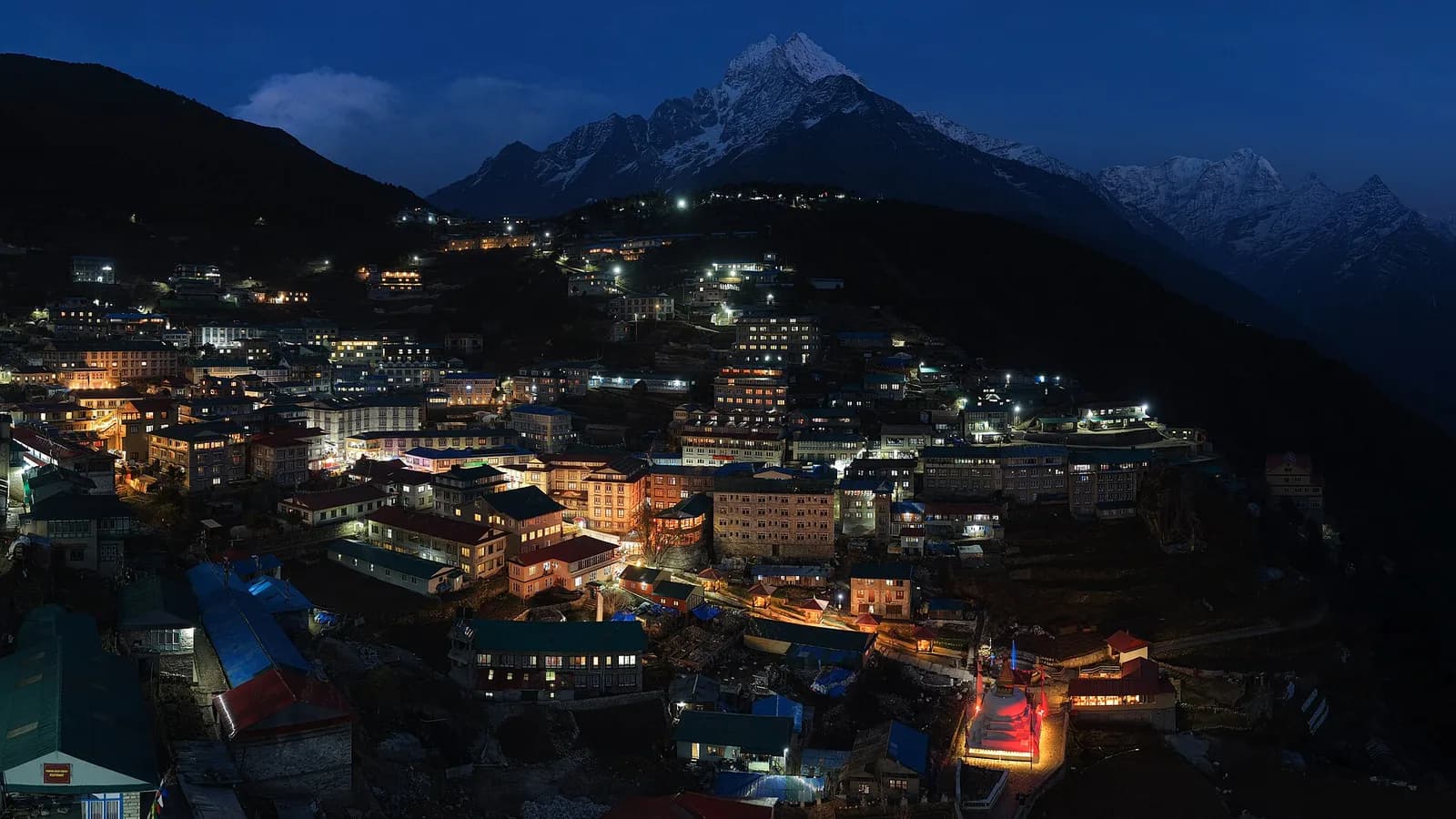
If you are planning the trek to Everest Base Camp, you will book very few hotels and spend most nights in a mountain lodge instead. The phrase covers a surprising range. At the budget end, an Everest mountain lodge is a plywood-walled teahouse where the only warm room is the one with the stove. At the top end, it is a stone-and-timber property with a heated bedroom, an en-suite hot shower, and Ama Dablam framed in the window. Both sit on the same trail, sometimes in the same village, and knowing the difference shapes your budget and your comfort.
This guide walks through the full spectrum of accommodation between Lukla and Gorak Shep: how lodges work, what they cost, what facilities to expect at each altitude band, and where the luxury option actually ends.
Key takeaways
- "Mountain lodge" on the Everest trail spans basic family teahouses up to heated luxury properties; most trekkers stay in the former.
- Rooms are cheap because lodges earn from food, so the unwritten rule is that you eat dinner and breakfast where you sleep.
- Standard teahouse bedrooms are unheated; only the dining room is warm, so a proper sleeping bag is non-negotiable.
- Hot showers, charging, and wifi are paid extras that get scarcer and pricier the higher you go.
- Luxury lodge chains cover the lower and middle trail only; above them everyone stays in ordinary teahouses to base camp.
- Standard lodges are mostly first-come first-served; book ahead for luxury chains and for the highest villages in peak season.
The two kinds of Everest lodge
It helps to picture the Everest accommodation system as two parallel tiers running up the same valley.
The standard teahouse
This is what the overwhelming majority of trekkers use. A teahouse is a family-run lodge that grew out of the Sherpa farmhouses which first took in trekkers decades ago. You get a simple twin room and access to a communal dining room heated by a single stove, usually burning yak dung or wood. The business model is straightforward: rooms are priced low, sometimes almost given away, because the owner makes their money on the meals you eat there. If you want the full picture of how this works day to day, see our guide to teahouse trekking in Nepal and the village-by-village EBC teahouse food and accommodation breakdown.
The luxury lodge
A smaller, premium network runs alongside the teahouses on the lower and middle sections of the trail. These are purpose-built comfort lodges, and they offer what a teahouse cannot: heated bedrooms, attached bathrooms with hot showers, thick quilts or electric blankets, and reliable indoor warmth. They cost several times more and they do not extend all the way to base camp, but for travellers who want softer nights on the parts of the trail where it is possible, they have changed what an Everest trek can feel like.
What a standard teahouse room is really like
Set your expectations at "clean and basic" rather than "hotel." A typical room has two single beds with foam mattresses, a thin pillow, a small table, and a window. Sheets, pillows, and blankets are often provided, but the blankets are an addition to your own gear, not a replacement for it. Bring a warm sleeping bag and, if you plan to use the lodge pillow, a pillowcase for hygiene.
The bedrooms are not heated. This is the single most important thing to understand about budget lodging on this trail. Warmth lives in the dining room, where everyone gathers around the stove after the day's walk, and it evaporates the moment you step into the corridor. At the higher villages, nighttime room temperatures fall well below freezing.
Bathrooms are usually shared and get more rustic as you climb. Lower villages often have Western-style flush toilets. Higher up you may find a Western bowl that you flush with a bucket of water, and at the very top the facilities are simple long-drops, some indoors, some in an outhouse across the yard.
Costs by altitude
Two rules govern lodge pricing on the way to Everest. First, everything is carried up by porter, yak, or zopkio, so prices climb with the trail. Second, the bed is cheap but the extras add up. The figures below are typical ranges reported by Nepal trekking operators and are approximate; always confirm on the spot.
| Spend item | Lower villages (Phakding, Namche) | Higher villages (Dingboche, Lobuche, Gorak Shep) | |---|---|---| | Basic twin room per night | ~USD 7–15 | ~USD 15–25 | | Hot shower | ~USD 2–6 | scarce or unavailable | | Device charging (per hour) | ~USD 2–6 | ~USD 2–6, higher demand | | Wifi pass | a few USD | a few USD, slower |
All figures as of June 2026. Premium teahouse rooms with an attached bathroom can run higher, in the region of USD 40–80 per night where available. For a full trip budget that folds lodging in with permits, flights, and guides, see our EBC trek cost breakdown for 2026.
The unwritten room-and-board contract
The low room price assumes you eat dinner and breakfast at the same lodge. Walk in, take a room, and announce you will eat elsewhere, and the price changes or the room disappears. This is not a scam; it is how the economics hold together. The good news for budget trekkers is that dal bhat — the rice, lentils, and vegetable plate — is the only meal that comes with unlimited refills, which makes it the best calories-per-rupee choice on every menu.
Power, wifi, and hot water
Most lodges now run on solar panels or small local hydroelectricity, but very little of it is free. Expect to pay a few US dollars to charge a phone, camera battery, or power bank, with prices creeping up at altitude as more trekkers compete for the same outlets. Carrying a high-capacity power bank reduces how often you pay.
Connectivity comes mainly from prepaid mountain wifi cards sold across the trail. A data card is fine for sending messages and the occasional photo home; it is not built for streaming. Hot showers, where they exist in the lower villages, are typically a paid extra of a few dollars, often heated by gas or solar. The higher and more remote the village, the less likely a hot shower becomes, and many trekkers simply do without for the final days. Packing for these realities matters — our EBC packing list covers the sleeping bag, power bank, and layers that make cold lodges bearable.
The luxury lodge tier in detail
A handful of established networks run the comfort end of the Everest trail. Yeti Mountain Home, which has rebranded as Mountain Lodges of Nepal, operates a chain of lodges including properties at Lukla, Namche Bazaar, and the Kongde ridge, several built with sustainable materials and serving meals from their own kitchens. Everest Summit Lodges run a separate set of properties spaced for acclimatisation, with stops at Lukla, Monjo, and quieter sites above the main valley.
What you get at this tier is a genuine step up: private rooms with attached bathrooms, hot showers, room heaters or electric blankets, thick quilts, Western toilets, and wifi in many locations. The trade-off is twofold. These lodges cost substantially more than teahouses, and the comfortable chain does not reach the high country. For the final villages before base camp you return to ordinary teahouses like everyone else. If a more comfortable trek appeals, our luxury Everest Base Camp trek guide goes deeper on itineraries and trade-offs.
Hotel Everest View: the famous landmark stay
The best-known single property in the region is Hotel Everest View, perched on the Syangboche ridge roughly two steep kilometres above Namche Bazaar at about 3,880 metres. It is reached on foot in a couple of hours from Namche or by helicopter from Kathmandu. In 2004 it was listed by Guinness World Records as the world's highest-placed hotel. The rooms face the Everest massif, with Lhotse and Ama Dablam lined up alongside, and the hotel is set up for the altitude, with oxygen support available and heated common areas, since nighttime temperatures on the ridge drop sharply. Many trekkers visit it as an acclimatisation day hike from Namche even if they do not stay the night.
How to choose your lodging style
There is no single right answer, only the trade-off between budget and comfort.
- Pick standard teahouses if you are on a typical trekking budget, want the social dining-room culture, and accept cold rooms as part of the experience. This is the default and it works for the vast majority.
- Mix in luxury lodges on the lower trail if you want warm nights and hot showers where they are available, and you are willing to pay several times more for the privilege. Remember the comfort runs out before base camp.
- Use Hotel Everest View as either a special-occasion overnight or, more cheaply, as a viewpoint and acclimatisation goal on a rest day from Namche.
Whichever tier you choose, two habits matter at altitude. Arrive at each village by early afternoon, because the highest settlements have few lodges and they fill up in peak season — pushing on hoping for something better higher up can leave you with nothing. And keep your accommodation plan flexible around your body: altitude, not luxury, decides whether the trek goes well. Read our altitude sickness guide for Nepal trekking before you go.
Booking and seasonality
Standard teahouses are overwhelmingly first-come first-served. In the busy spring and autumn seasons, guides or porters often walk ahead to hold a room in the high villages where beds are tight, but most of the trail you simply turn up. The luxury chains are the exception: their limited rooms, especially in peak months, should be reserved in advance, usually as part of a packaged itinerary through an operator. If you are weighing when to go, our guide to the best time for the Everest Base Camp trek explains how season affects both weather and how crowded the lodges get.
Sources
- Trek and Tour Nepal — Everest Base Camp Accommodation Guide 2025-2026
- Follow Alice — What is accommodation like on the Everest Base Camp trek?
- Mosaic Adventure — Everest Base Camp Trek Accommodation
- Peregrine Treks — Luxury Lodges of the Everest Region
- Comfort Trek — Yeti Mountain Home
- Hotel Everest View — official site
- Trek Me Nepal — Hotel Everest View guide
- Himalayan Hero — Everest Base Camp Trek Cost 2026
- Barchart — How to Budget for Everest Base Camp Trek 2026: Permit and Teahouse Costs
Frequently asked questions
- What is a mountain lodge on the Everest trek?
- It is a building along the trail that rents you a room and cooks your meals; most are simple family-run teahouses, but a few are heated luxury lodges.
- How much does a room in an Everest mountain lodge cost?
- Basic teahouse rooms in lower villages often run around USD 7 to 15 per night and rise to roughly USD 15 to 25 higher up, as of June 2026.
- Do Everest lodges have heating in the rooms?
- Almost never in standard teahouses; only the heated dining room is warm, so you need a good sleeping bag, while luxury lodges do heat the bedrooms.
- Is there wifi and charging in lodges on the way to Everest?
- Yes, but both are paid extras that get slower and pricier as you climb, with charging and a wifi pass each commonly costing a few US dollars.
- Do I need to book Everest mountain lodges in advance?
- Standard teahouses are mostly first-come first-served, but luxury lodge chains and the highest villages in peak season should be booked ahead.
- What is the highest hotel on the Everest trek?
- Hotel Everest View, on the Syangboche ridge above Namche at about 3,880 metres, was listed by Guinness World Records in 2004 as the world's highest-placed hotel.
- Are luxury lodges available all the way to Everest Base Camp?
- No; the comfortable lodge networks cover the lower and middle trail, and above them you stay in ordinary teahouses for the final push to base camp.
- Can vegetarians eat well in Everest lodges?
- Yes, very well; dal bhat and most lodge menus are vegetable-based, and meat is best avoided at altitude for food-safety reasons anyway.
Related posts
Teahouse Trekking in Nepal: What a Teahouse Really Is
Teahouse trekking Nepal explained: how mountain lodges work, what you eat, sleep, pay, and the one unwritten rule every trekker should know.
Read postWhat Is a Teahouse? Nepal's Trekking Lodges Explained
What is a teahouse in Nepal? A plain-English guide to the family-run mountain lodges where trekkers eat, sleep, and warm up along the trail.
Read postEBC Teahouse Food and Accommodation — What to Expect Each Day
How teahouses work on the Everest Base Camp trail, what you eat, where you sleep, hot showers, charging, wifi, and the real cost per night.
Read post