Meditation Retreat Nepal: Monasteries, Types & Tips
How to choose a meditation retreat in Nepal — Buddhist monasteries, Vipassana and yoga-based options, what to expect, costs and the best time to go.
The painted eyes of the Buddha look out over the Kathmandu Valley in every direction — a reminder, before you even sit down, of why people come here to be still.
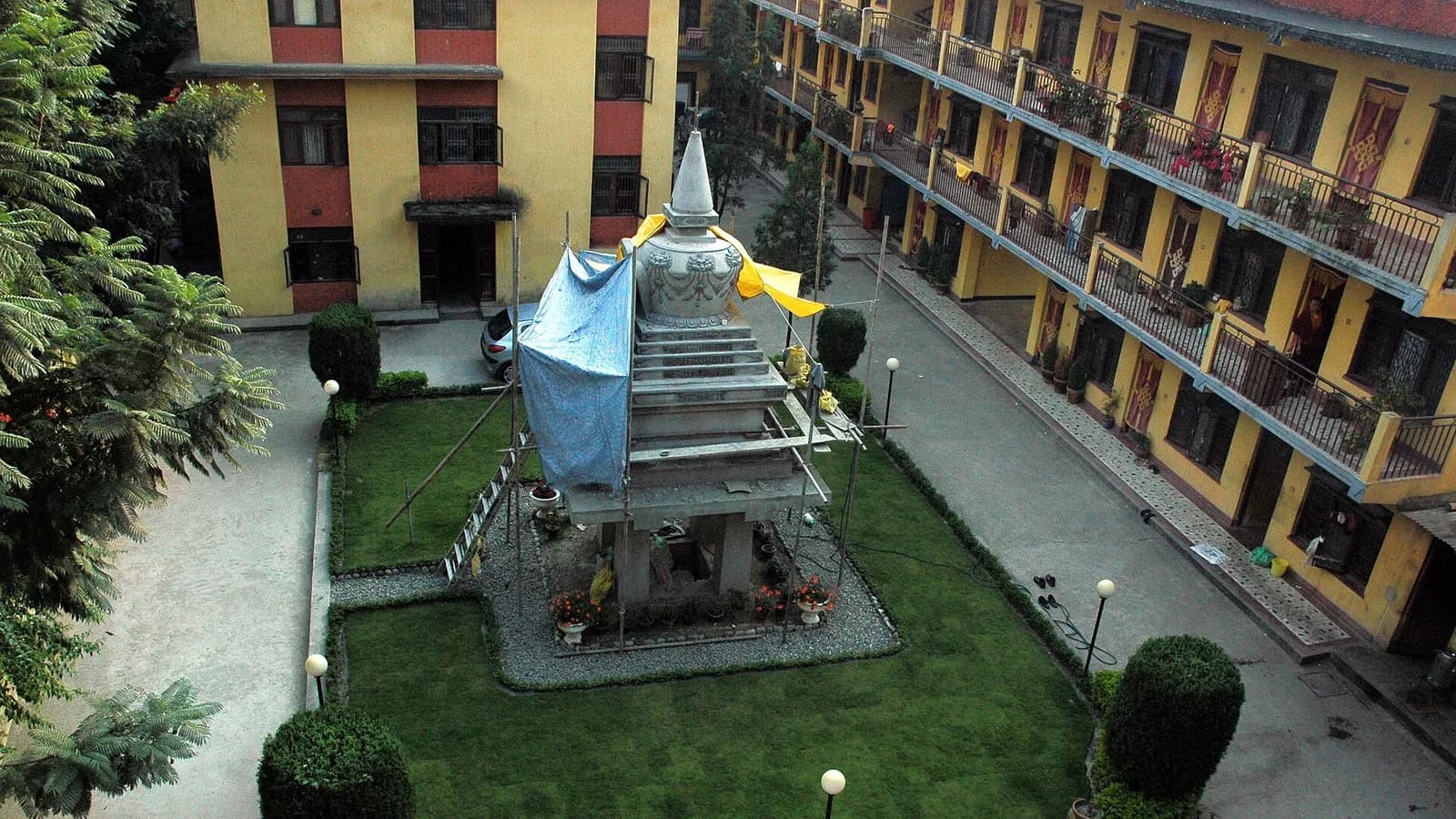
A meditation retreat in Nepal is one of those experiences that draws people from across the world to a single small country — and for good reason. Nepal is where the Buddha was born, where Tibetan Buddhism flourishes in hillside monasteries, and where the ancient practice of insight meditation is taught freely to anyone willing to sit still for long enough. Whether you want a gentle introduction to mindfulness or a serious immersion in monastic life, the Himalayas offer a setting that turns inward attention into something profound.
This guide explains the main types of meditation retreat you will find in Nepal, where they cluster, what a typical day involves, roughly what they cost, and how to choose one that suits your experience and goals. The country has three living Buddhist traditions and a deep yogic heritage, so the choice is rich — from silent ten-day courses to month-long monastery programmes to wellness retreats that fold meditation into yoga and Ayurveda.
Key takeaways
- Nepal's meditation retreats fall into three broad types: Tibetan Buddhist monastery programmes, silent Vipassana courses, and yoga-integrated wellness retreats.
- The two main hubs are the Kathmandu Valley and Pokhara at the foot of the Annapurnas.
- Vipassana courses are run on donations with no set fee; monastery and yoga retreats usually charge a price that covers room, meals and teaching.
- Retreats are open to all faiths and to beginners, and are framed as training of the mind rather than conversion.
- Expect early starts, several sessions a day, simple vegetarian food and periods of silence.
- The most comfortable seasons are autumn and spring; popular courses book up well in advance.
Why Nepal is a meditation destination
Few places carry the spiritual weight of Nepal. It is the birthplace of Siddhartha Gautama, the historical Buddha, and the broader Himalayan region has nurtured Buddhist practice for well over a thousand years. Today the country is home to three distinct Buddhist traditions — Theravada, Mahayana and Vajrayana — each with its own lineage, texts and style of practice. That living tradition means a retreat here is not a packaged escape but an encounter with a culture that has thought seriously about the mind for millennia.
The landscape helps, too. Monasteries perch on ridges above the Kathmandu Valley; retreat centres sit beside the lakes of Pokhara with the Annapurnas on the skyline. Stepping away from your routine is easier when the surroundings themselves invite stillness. And because Nepal is affordable and welcoming, it is realistic to give a retreat the unhurried time it deserves rather than squeezing it into a weekend.
The three main types of retreat
It helps to understand the broad categories before you start comparing centres, because they ask quite different things of you.
| Type | Tradition | Typical length | Feel | |---|---|---|---| | Vipassana course | Theravada-rooted, taught widely in the S.N. Goenka method | 10 days | Strict, fully silent, donation-based | | Tibetan Buddhist monastery | Mahayana / Vajrayana | 3 days to 1 month | Teachings, guided meditation, chanting, some talking | | Yoga-integrated retreat | Eclectic / wellness | 3 to 11 days | Yoga plus meditation, gentler and flexible |
Vipassana courses
Vipassana means "to see things as they really are," and a course teaches one specific technique of self-observation over ten residential days of Noble Silence. The schedule is demanding and fixed, courses are taught in the worldwide tradition of the late teacher S.N. Goenka, and there is no charge — they run entirely on voluntary donations from past students. Nepal has a network of these centres across the country, and they suit people who want a deep, disciplined plunge into a single method.
Tibetan Buddhist monastery retreats
These are more varied. Living alongside the monastic community of a Kathmandu Valley monastery, you follow a daily rhythm of meditation, dharma teachings, chanting and discussion, often with English-language guidance aimed at international visitors. Some allow more conversation than a Vipassana course and feel more like a structured study programme. The introductory courses are well suited to beginners curious about Buddhist philosophy as well as practice.
Yoga-integrated wellness retreats
Especially common around Pokhara, these blend meditation with daily yoga, breathing exercises and sometimes Ayurvedic treatments. They are the gentlest and most flexible option, and a good fit if you want to balance contemplation with movement, comfort and a holiday feel rather than monastic austerity.
The Kathmandu Valley: monasteries and sacred caves
The Kathmandu Valley holds the densest concentration of meditation options in Nepal, much of it gathered around the great stupa of Boudhanath, the heart of the Tibetan Buddhist community in exile.
Kopan Monastery, on a hill near Boudhanath, is perhaps the best-known centre for international students. It was founded in 1971 by two Tibetan masters, Lama Thubten Yeshe and Lama Zopa Rinpoche, and is part of the Foundation for the Preservation of the Mahayana Tradition (FPMT), the global network they established. Kopan is especially famous for its one-month Lam Rim meditation course held each November, a structured journey through the graduated path to enlightenment compiled by the 14th-century reformer Lama Tsongkhapa, with daily teachings, guided meditation, group discussion and periods of complete silence. Shorter introductory courses run through the year as well.
Other Tibetan teachers offer programmes in the valley too. The international Tergar community, guided by the meditation master Mingyur Rinpoche, has held retreats at Osel Ling Monastery above Kathmandu, focusing on practices from the Tibetan tradition.
To the south of the city, the village of Pharping is a quieter, deeply sacred hub. It surrounds the Asura Cave — also called Upper Yangleshö — where, according to tradition, the 8th-century master Guru Padmasambhava (Guru Rinpoche) undertook intensive meditation and is revered as having attained realisation. A monastery and retreat centre built at the cave by Tulku Urgyen Rinpoche has, since the early 1980s, hosted both short and long retreats. Pharping makes a meaningful day visit or, for committed practitioners, a place of longer practice.
Between sessions, the valley's other great sites repay a visit: the hilltop stupa of Swayambhunath and the Hindu temple complex at Pashupatinath both sit within easy reach. A quick read of our notes on temple etiquette for visitors will help you move through these living religious places with the right respect.
Pokhara and beyond
Pokhara, beside Phewa and Begnas lakes at the foot of the Annapurna range, is Nepal's other main retreat hub and tends toward the yoga-integrated end of the spectrum. Centres around the lakes and up on the surrounding hills offer meditation alongside daily yoga, in a setting built for relaxation rather than monastic discipline. It is a softer landing for first-timers, and an easy place to combine practice with the town's gentle pace.
Nepal's Buddhist heritage also reaches south to Lumbini, the Buddha's birthplace on the Terai plains, where international monasteries and a quiet monastic park draw pilgrims and meditators. Our honest assessment of whether Lumbini is worth visiting helps you judge whether it fits your trip, since it is a long way from the mountains and suits a specific kind of traveller.
A typical day on retreat
No two programmes are identical, but most share a calm, structured rhythm designed to settle the mind. Early starts are standard, and the days are deliberately stripped of distraction.
| Time | Activity | |---|---| | Before dawn | Wake, often to a bell | | Early morning | First meditation session | | Mid-morning | Breakfast, then teaching or guided practice | | Midday | Vegetarian lunch and a rest period | | Afternoon | Further meditation, discussion or mindful work | | Evening | Chanting or a final sit, then a light meal | | Night | Early lights out, often in silence |
In monastery settings you may also take part in chanting and communal vegetarian meals, and follow a set of precepts for the duration. In Vipassana courses the silence is total and the meditation hours long. Across all types, phones and outside contact are limited so you can give the practice your full attention.
What it costs
Cost depends heavily on the type of retreat. Vipassana courses are free of charge, funded only by voluntary donations from those who have completed a course before — a deliberate principle of that tradition. Monastery and yoga-integrated retreats do charge, and the price typically bundles accommodation, vegetarian meals and instruction, with room upgrades or treatments sometimes extra.
Independent travel coverage in 2026 suggested that shorter monastery and wellness programmes can begin in the low hundreds of US dollars (as of 2026) and rise considerably for longer or more comfortable immersions. Because these figures vary by centre and season, treat them only as a rough guide and confirm the current rate with any retreat directly before booking. For how a retreat sits within your wider plans, our two-week Nepal itinerary shows how to weave a few contemplative days into a fuller trip.
How to choose the right retreat
- Decide on the type first. Silent Vipassana, structured monastery study, or gentle yoga-and-meditation are very different experiences.
- Be honest about your level. Beginners usually do best with an introductory monastery course or a yoga-integrated retreat before attempting a full silent course.
- Check the language. Confirm that teachings or guidance are available in a language you understand.
- Read reviews and check the lineage. Look into who teaches and the tradition they represent.
- Match the length to your time and stamina. A weekend taster is a world away from a month-long immersion.
- Confirm the rules. Silence, phone use, separation of men and women and dietary arrangements vary by centre.
Best time to go
The most comfortable windows are the dry seasons: autumn (roughly October to November) with its clear post-monsoon skies, and spring (around March to April), mild and green. Winter retreats are quieter and can be beautifully still, but valley mornings are cold, so check for heating. The summer monsoon (June to September) is humid and wetter, though it is a peaceful low season at lakeside centres. For a fuller month-by-month picture, see our guide to the best time to visit Nepal.
One scheduling note: the most popular courses, Kopan's November course chief among them, fill up well in advance, so if your heart is set on a specific programme, plan and register early. Whichever path you choose, a meditation retreat gives a Nepal trip a depth that the mountains alone cannot — a chance to carry a little of the Himalayan stillness home with you.
Sources
Frequently asked questions
- What is the best meditation retreat in Nepal for beginners?
- Beginners often start with an introductory Buddhist course at a Kathmandu Valley monastery, where teachings are given in English and the schedule eases you in gently. Kopan Monastery near Boudhanath is a long-established option. If you want a stricter, fully silent immersion, a ten-day Vipassana course is the classic choice but more demanding.
- How much does a meditation retreat in Nepal cost?
- It depends entirely on the type. Vipassana courses in the S.N. Goenka tradition are run on donations with no set fee, while monastery and yoga-based retreats charge a price that usually covers room, meals and teaching. Independent 2026 coverage suggests short programmes can start around the low hundreds of US dollars, but always confirm the current rate with the centre.
- Where are the main meditation retreat centres in Nepal?
- Most are in two areas. The Kathmandu Valley has the densest concentration, including Tibetan Buddhist monasteries near Boudhanath and the sacred caves of Pharping to the south. Pokhara, beside the lakes at the foot of the Annapurnas, is the other main hub and leans more toward yoga-integrated retreats.
- What is the difference between a Vipassana and a Buddhist monastery retreat?
- A Vipassana course teaches one specific self-observation technique over ten silent days with a fixed schedule and no fee. A Tibetan Buddhist monastery retreat is usually more varied, mixing guided meditation, dharma teachings, chanting and discussion, and often allows some talking. Both ask for commitment but feel quite different day to day.
- Do I need to be Buddhist to join a meditation retreat in Nepal?
- No. Most retreats, including Vipassana courses and the introductory programmes at monasteries, are open to people of any faith or none, and are presented as practical training of the mind rather than religious conversion. You are simply expected to follow the schedule and the rules while you are there.
- How long do meditation retreats in Nepal last?
- They range from short three to five day introductions to month-long immersions. The standard Vipassana course is ten days. Kopan Monastery is well known for its one-month Lam Rim course held each November, while many centres also offer shorter weekend and week-long options for people with less time.
- What should I expect daily on a meditation retreat?
- Expect an early start, often before dawn, several meditation sessions through the day, simple vegetarian meals, periods of silence and usually some teaching or chanting. Phones and distractions are limited so you can focus. Mindful work or walking is sometimes part of the day, especially in monastery settings.
- When is the best time to go on a meditation retreat in Nepal?
- The dry seasons of autumn, roughly October to November, and spring, around March to April, are the most comfortable, with clear skies and mild temperatures. Winter retreats are quieter but cold in the mornings, while the summer monsoon is humid. Popular courses like Kopan's November course book up well ahead, so plan early.
- Can I combine a meditation retreat with a yoga retreat in Nepal?
- Yes. Many centres, especially around Pokhara, blend the two, offering daily yoga alongside meditation and breathing practice. You can also do them separately, for example a yoga week in Pokhara followed by a meditation course in the Kathmandu Valley, building rest days in between.
Spotted an error in this post? Tell us or suggest a correction.
Related posts
ABC Trek: A Plain-English Guide to Annapurna Base Camp
The ABC trek (Annapurna Base Camp) explained — the route, how many days it takes, difficulty, the best seasons, and what daily trail life is really like.
Read postAma Dablam Climb: 2026 Expedition Guide (6,812m)
An Ama Dablam climb and expedition guide for 2026 — height, the Southwest Ridge route, camps, fixed ropes, difficulty, permits, cost and the best seasons.
Read postAnnapurna vs Manaslu: Which Trek Should You Choose?
An Annapurna vs Manaslu decision guide for trekkers — compare permits, crowds, difficulty, infrastructure and cost to pick the right Himalayan route.
Read postAsan Bazaar Kathmandu: Old Town Market Guide
A visitor guide to Asan bazaar, Kathmandu's oldest market — its six-road square, Annapurna Temple, what to buy, when to go, and how to get there.
Read postAyurveda Nepal: A Traveller's Guide to Healing
Ayurveda Nepal explained for tourists — the history, the doshas, treatments like Panchakarma and Shirodhara, where to go and how to choose a centre safely.
Read postBest Restaurants Pokhara Lakeside: Where to Eat
The best restaurants in Pokhara Lakeside — lakeside trout, wood-fired pizza, Tibetan momos and healthy cafes, with what to order and rough 2026 prices.
Read post