Hot Air Balloon Pokhara: Cost, Season & 2026 Guide
Hot air balloon Pokhara — sunrise flights over Phewa Lake and the Annapurnas. Cost, best season, what the ride is like, safety and how to book.
Rise silently with the dawn and watch Phewa Lake, the rooftops of Lakeside and the whole Annapurna skyline turn gold beneath the basket.
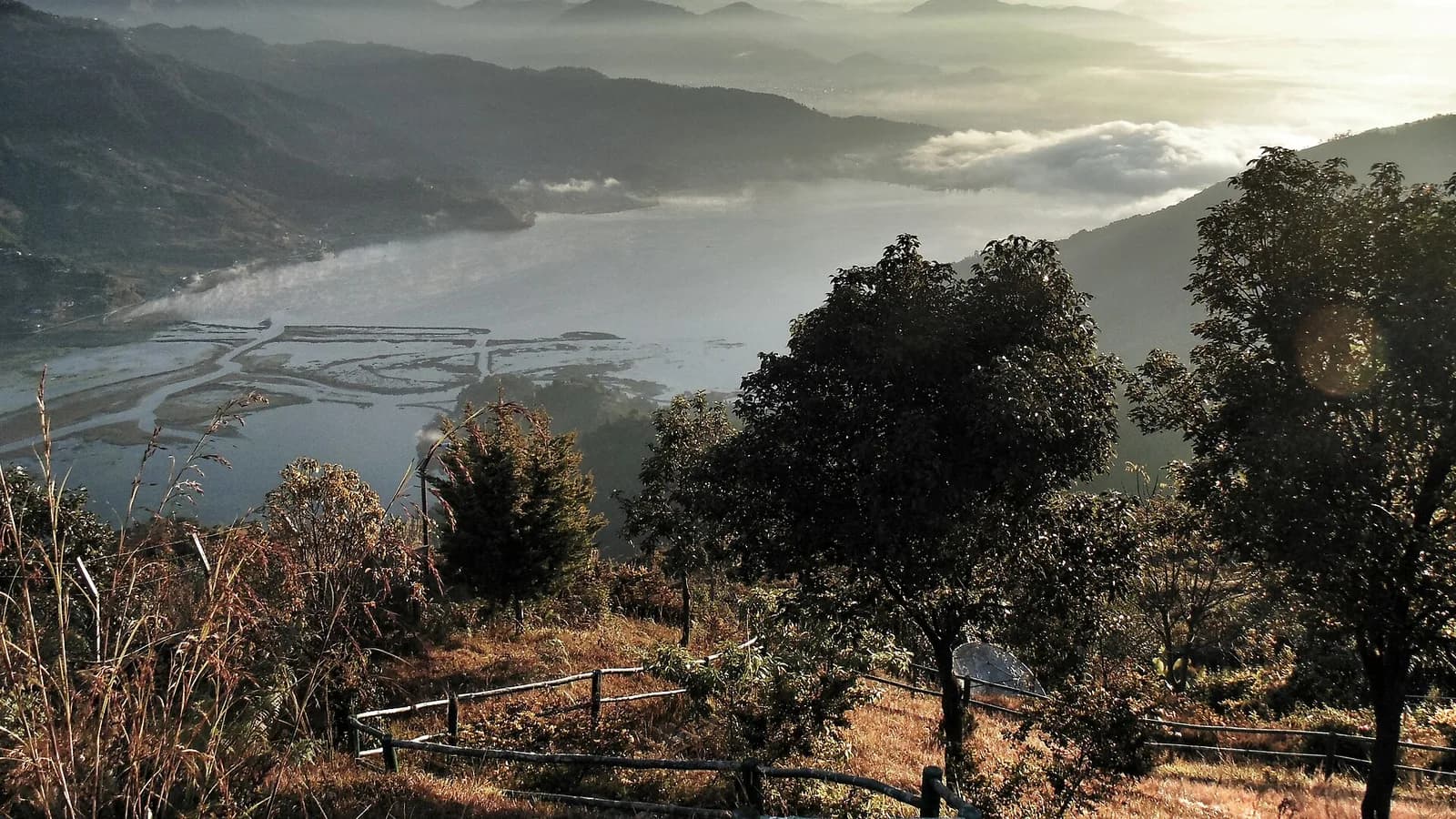
For years, the way to get airborne over Pokhara was to run off a hillside under a paraglider. Now there is a gentler option: a hot air balloon Pokhara flight that lifts you silently into the dawn for one of the most serene aerial views in Nepal. Drifting upward at sunrise, you look down on Phewa Lake mirroring the sky, the rooftops of Lakeside, and the green valley — and out at the Annapurna skyline, with the sacred fishtail of Machhapuchhre standing over it all. It is calm where paragliding is sporty, which makes it a rare adventure that suits families, nervous flyers and older travellers alike.
This guide covers what the experience is like, what it costs, the best season and time of day, safety, and how it compares with Pokhara's other aerial activities. Ballooning here is young and the market is still settling, so treat prices as a guide, note the date, and confirm details with your operator before booking.
Key takeaways
- A hot air balloon Pokhara flight is a gentle sunrise drift over Phewa Lake, the valley and the Annapurna skyline — calm and family-friendly.
- Airborne time is usually around 30 to 60 minutes; the whole experience, with inflation and packing, takes a few hours.
- Pricing is tiered by nationality: foreigners are commonly quoted around USD 130–150 for a shared flight (as of mid-2026), with lower SAARC and Nepali-resident rates; private charters cost far more.
- Spring and autumn offer the clearest skies; flights run early in the morning when winds are calmest.
- It is a low-adrenaline activity needing no fitness or experience, which sets it apart from paragliding.
- Commercial ballooning here is recent — first flown commercially around 2018, with Nepal's first balloon festival over the 2024–25 new year.
What the experience is like
A balloon morning starts in the dark. You are picked up from your Lakeside hotel well before dawn and driven a short way out of town to the launch area on the valley floor, where the crew lay out the envelope and begin inflating it — first with cold air from large fans, then with the roar of the burners that bring the balloon upright. Watching this happen in the half-light is part of the experience, so arrive ready to wait while the team prepares.
Once the pilot is satisfied, you climb into the basket and the balloon lifts off with surprising gentleness — no lurch, just the ground quietly falling away. From there it is calm and almost silent apart from the occasional burst of the burner. The balloon drifts with the wind while the pilot manages height, and the Annapurna range catches the first sun: Annapurna South, Hiunchuli, Dhaulagiri, Manaslu, Lamjung Himal and the sharp twin peak of Machhapuchhre glowing pink above a valley still in shadow. Below, Phewa Lake turns from grey to gold. After your time aloft, the pilot picks a spot and brings the basket down, the crew packs up, and you are driven back to town — often with a certificate and a hot drink to mark the flight.
What it costs
Ballooning in Pokhara uses a tiered pricing model common to Nepali attractions, with different rates for foreign visitors, SAARC-region nationals and Nepali residents, and figures vary between operators.
| Flight type | Who / what | Typical price (as of mid-2026) | |---|---|---| | Shared flight | Foreign visitor | Around USD 130–150 per person | | Shared flight | SAARC nationals | Lower than the foreigner rate | | Shared flight | Nepali residents | A cheaper rate, charged in rupees | | Private charter | Whole balloon for your group | Far higher, often around USD 1,000+ |
A shared flight usually bundles in hotel transfers, the flight itself, a welcome or in-flight drink, and a certificate — but always read the inclusions, because what is covered varies. A private charter of an entire balloon buys exclusivity and flexibility at a much higher price, and suits special occasions; operators market dedicated engagement, anniversary and birthday flights. If a quote looks far cheaper than the rest, ask what has been left out.
In the wider scheme of a trip, ballooning is a splurge rather than a daily cost. Our Nepal travel budget and Nepal trip cost guides set it against accommodation, food and transport, and the ATM withdrawal and money exchange guides help you have the right cash ready, since some operators prefer it.
Best season and time of day
Two things decide whether you float over a golden panorama or sit on the ground waiting: the season and the wind.
The strong windows are spring (roughly March to May) and autumn (roughly late September to November), when the post-monsoon and pre-monsoon air is clean and stable and the peaks stand sharp. The summer monsoon (around June to August) brings rain, low cloud and unreliable conditions, with flights often scrubbed. Our best time to visit Nepal and Nepal weather by month guides go deeper on the seasonal pattern.
Within a good day, ballooning is an early-morning affair. Flights launch around sunrise, when the air is calmest and the light is at its most flattering; some operators also run a late-afternoon slot. Wind, not just cloud, governs ballooning, so even a clear morning can be postponed if the breeze is wrong. Build a buffer day into your Pokhara plans so a weather call does not cost you the flight, and the Sarangkot sunrise guide is a fine fallback if you simply want a dawn over the Annapurnas from the ground.
Safety and what to expect
Ballooning is, by nature, one of the gentlest ways to fly. Commercial operations in Pokhara use licensed pilots, and the activity is low-adrenaline rather than extreme — there is no launch run, no harness drama, just a steady rise and a slow drift. That said, every flight depends on weather, and the single most important sign of a good operator is a willingness to postpone or cancel when wind or visibility is unsuitable rather than fly to keep a schedule.
A few practical notes:
- You stand for the flight in an upright basket, so be ready for that and for the step in and out.
- Listen to the briefing. The pilot will explain take-off, the landing position to adopt, and how to behave in the basket.
- Dress in layers. Dawn on the valley floor is cold; it warms as the sun rises.
- Secure loose items and keep cameras strapped.
- Flag mobility concerns or young children to the operator in advance.
Because the same vetting logic applies to every adventure booking in Pokhara, our guide to common tourist scams in Nepal helps you read a hard sell, and it is always worth checking that your travel insurance covers the activity.
Ballooning, paragliding or a mountain flight?
Pokhara and the wider region now offer several ways to get airborne, and they suit different people.
| Experience | Feel | Best for | |---|---|---| | Hot air balloon | Slow, silent, gentle | Families, older travellers, nervous flyers, romance | | Paragliding | Sporty, dynamic, can do acrobatics | Thrill-seekers wanting an active flight | | Everest mountain flight | A fixed-wing scenic flight past the high peaks | Seeing Everest specifically, from Kathmandu | | Annapurna helicopter tour | Flying into the mountains and landing | Reaching Annapurna Base Camp without trekking |
The headline distinction is tempo. Ballooning is calm and steady, which is exactly why people who would never paraglide happily take a balloon. If you want adrenaline, paraglide; if you want serenity and a panoramic dawn, the balloon is your flight.
How to fit it into a Pokhara trip
A balloon flight pairs perfectly with a relaxed Lakeside stay. Because it happens at dawn and lasts a few hours including preparation, it leaves the rest of the day free for a boat on Phewa Lake, a walk up to the World Peace Pagoda, or a lazy afternoon in a cafe. Our things to do in Pokhara guide lays out a full, varied few days.
If you are arriving overland, the Kathmandu to Pokhara tourist bus and wider Kathmandu to Pokhara transport guides cover the journey, and if you are weaving Pokhara into a longer route, the two-week Nepal itinerary shows where a dawn flight fits alongside trekking and culture.
A few practical tips
- Book early in your stay so a weather postponement still leaves a window to fly.
- Arrive ready to wait while the balloon is inflated and prepared.
- Wear layers and closed shoes for a cold, dewy launch field.
- Confirm the inclusions — transfers, photos, certificate — before paying.
- Bring a charged camera or phone, strapped, for the panorama.
- Mention any mobility needs or young children when booking.
For a gentle, unforgettable hour above one of the most beautiful valleys in the Himalaya, a hot air balloon flight over Pokhara is hard to beat. Pick a clear-season morning, build in a spare day, and let the dawn lift you over the lake and the mountains.
Sources
Frequently asked questions
- How much does a hot air balloon ride in Pokhara cost?
- Pricing is tiered by nationality and varies by operator. As of mid-2026, foreign visitors are commonly quoted in the region of USD 130 to 150 for a shared flight, with lower rates for SAARC nationals and a cheaper Nepali-resident price in rupees. Private charters of a whole balloon cost far more, often around a thousand US dollars or above. Photos, certificates and hotel transfers are usually bundled, but confirm exactly what is included before you book.
- How long does the hot air balloon flight last?
- The time actually airborne is usually around 30 to 60 minutes, depending on the operator, the package and the wind on the day. Allow much longer for the whole experience, though, because the balloon takes time to inflate and prepare before take-off and to pack away after landing. From hotel pickup to drop-off, budget a few hours.
- What is the best time of year and time of day to fly?
- Spring, roughly March to May, and autumn, roughly late September to November, give the clearest skies and the most reliable flying, with stable air and sharp mountain views. Flights run early in the morning around sunrise, when winds are calmest and the light is best, and some operators also offer a late-afternoon slot. The summer monsoon brings rain and cancellations, so avoid it if you can.
- Is hot air ballooning in Pokhara safe?
- Commercial ballooning in Pokhara is run by licensed pilots and is generally regarded as a gentle, low-adrenaline activity rather than an extreme one. As with all aviation, weather is the deciding factor, and a responsible operator will postpone or cancel rather than fly in unsuitable wind or visibility. Choose an established operator, listen to the pre-flight safety briefing, and follow the pilot's instructions for take-off and landing.
- What will I see from the balloon?
- On a clear morning the views are exceptional. Below you are Phewa Lake, the rooftops of Lakeside and the green Pokhara valley with its villages and terraced fields. On the horizon stands the Annapurna skyline, including peaks such as Annapurna South, Hiunchuli, Dhaulagiri, Manaslu, Lamjung Himal and the unmistakable fishtail summit of Machhapuchhre. The combination of lake, valley and high Himalaya in one frame is the draw.
- Who can do a balloon ride, and are there age or weight limits?
- Ballooning suits a wide range of people because it needs no fitness or experience, which makes it popular with families and older travellers who cannot do high-altitude activities. Operators do apply total basket weight limits and may have minimum-age guidance, and you need to be able to stand for the flight and manage the step into and out of the basket. If you have mobility concerns or are travelling with young children, check with the operator first.
- When did hot air ballooning start in Pokhara?
- Commercial hot air ballooning in Pokhara is relatively new. Balloon Nepal is widely credited with launching the first official commercial flights in the country in 2018, and the activity has grown since. Pokhara also hosted Nepal's first hot air balloon festival over the 2024 to 2025 new-year period, featuring balloons from around the world, which raised the activity's profile further.
- How does ballooning compare with paragliding in Pokhara?
- They are very different. Paragliding from Sarangkot is a more dynamic, sporty flight where you launch off a hillside strapped to a pilot and can climb on thermals, sometimes with acrobatics. Ballooning is slow, serene and steady, drifting with the wind in an upright basket, which makes it far gentler and better suited to families, nervous flyers and older travellers. Many people who would never paraglide happily take a balloon.
Related posts
Things to Do in Pokhara: 12 Best Experiences (2026)
The best things to do in Pokhara — paragliding off Sarangkot, boating on Phewa Lake, the World Peace Pagoda, Devis Fall, caves, museums and lakeside cafes.
Read postAnnapurna Helicopter Tour: Cost & 2026 Guide
Annapurna helicopter tour from Pokhara to Annapurna Base Camp — cost, flight time, the landing, weight limits, best season and how it compares to trekking.
Read postBest Restaurants Pokhara Lakeside: Where to Eat
The best restaurants in Pokhara Lakeside — lakeside trout, wood-fired pizza, Tibetan momos and healthy cafes, with what to order and rough 2026 prices.
Read post