Tibetan Singing Bowl: How to Play & Use One
A traveller's guide to using a Tibetan singing bowl — how to strike and rim it, what sound therapy research really shows, and simple safety notes.
Anyone can make a singing bowl ring. Making it sing — and knowing what that hum can and can't do — takes a little more.
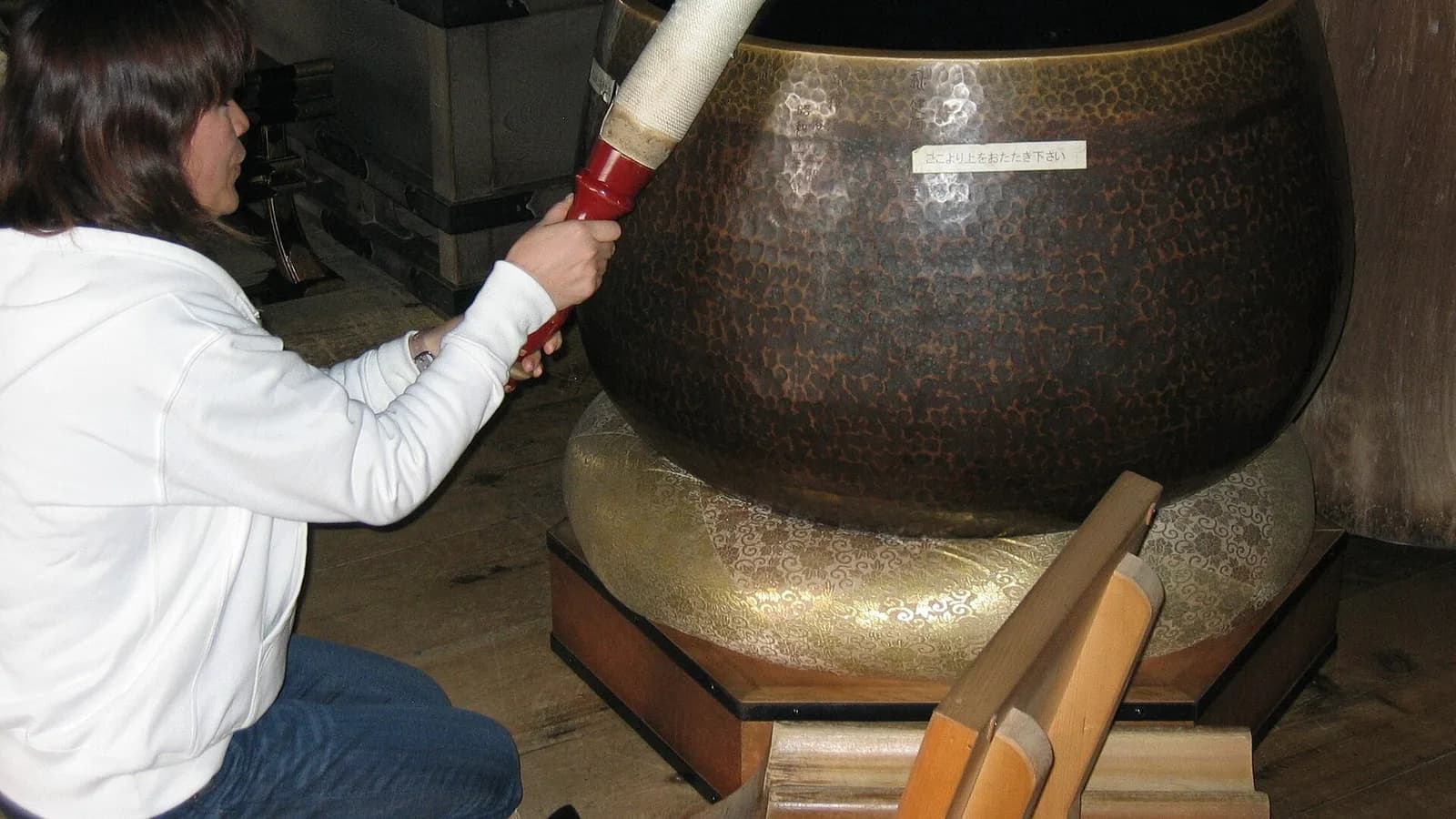
A Tibetan singing bowl is one of the few souvenirs you can actually play. Long after the trek photos blur together, a good bowl still fills a room with a slow, layered hum when you strike or circle it. But most travellers come home with one and never get past a dull clunk — or assume the bowl will do things it cannot. This guide is the practical companion to choosing one: how to play a singing bowl properly, what the research on sound and relaxation really says, and the simple safety notes worth knowing.
If you are still deciding which bowl to buy — hand-hammered versus machine-made, the "seven metals" question, fair prices, and where to shop in Kathmandu — start with our detailed Tibetan singing bowls buying guide. This post picks up where that one leaves off: once the bowl is in your hands.
Key takeaways
- There are two core techniques: strike the outer wall for an instant tone, or circle the rim to build a continuous hum.
- The rim technique fails for most beginners because of too little patience and too much grip — hold the bowl on a flat open palm and let the sound grow.
- The best evidence for bowls is short-term relaxation and stress relief; studies are small and early, so treat a bowl as a calming aid, not a cure.
- A few people should be cautious: pregnancy (avoid intense sessions early on), pacemakers, epilepsy — check with a doctor, and never place a bowl on the body.
- For travel, a small-to-medium bowl is easiest to play and pack; a wrapped mallet brings out the warmer singing tone.
Striking: the easy win
Striking is the simplest way to play, and it works for any age or any bowl. Hold the mallet loosely like a baton and tap the padded side against the outer wall of the bowl, around the mid-point between rim and base. Strike once, then stop and let the tone and vibration fade completely before you strike again. The temptation is to keep tapping; resist it, because the magic of a good bowl is in the long decay of a single note.
A few details make the strike cleaner:
- Support the bowl by the base only. A small bowl can sit on your flat open palm; a larger one rests on a cushion or ring. Wrap your fingers around the sides and you damp the sound into a thud.
- Find the sweet spot. Move where you strike slightly up or down the wall until the note rings clearest and steadiest, with the least wobble. Bowls have a spot that sounds noticeably purer.
- Mind the mallet. A bare wooden striker gives a brighter, higher tone; a leather- or suede-wrapped one gives a rounder, lower one. Most bowls come with a basic mallet, and a wrapped striker is a cheap upgrade.
Rimming: how to make it sing
The continuous "singing" hum — the sound that sells the bowl — comes from running the mallet around the outside rim. It is genuinely the part people get wrong, so here is the reliable method.
Step by step
- Wake the bowl. Give it one gentle strike first. A bowl already ringing is far easier to coax into a singing tone.
- Hold it correctly. Rest the bowl on your flat, open palm — or on stretched fingertips — touching only the base. Do not cup the sides.
- Set the mallet. Hold it like a pen and press the side of the mallet against the outside of the rim at a slight angle.
- Circle slowly and evenly. Move the mallet around the rim, usually clockwise, with light, constant pressure. Move your whole arm in a circle rather than flicking your wrist.
- Let it build. A faint tone appears within a few seconds and grows louder and fuller the longer you circle. Keep the pressure and angle steady; the moment you speed up erratically or grip harder, it rattles.
Why it usually goes wrong
Almost every beginner failure traces to one of three things: gripping the bowl so it cannot resonate, circling too fast or too slow, or giving up after two seconds before the tone has a chance to catch. If the bowl chatters or buzzes, ease off the pressure and slow down. If it stays silent, go a touch faster and firmer. Once you feel the rim "grab," you will keep that tone going indefinitely.
The water trick
With a metal bowl you can add a small amount of water — roughly half to three-quarters full — and play the rim to get a softer, rippling tone as the surface vibrates and dances. Keep water off the rim itself while you play, wipe the outside if it splashes, and dry the bowl afterwards so the metal does not stain. (Crystal bowls are a different instrument and are not designed for this.)
How travellers actually use a bowl
You do not need a ceremony. The common, low-effort ways people use a bowl at home are:
| Use | What you do | |---|---| | Meditation start/end | One strike to mark the beginning and end of a sit | | Wind-down | A few minutes of slow rim-playing before bed | | Breathing pace | Strike, then breathe out for the full length of the tone | | Focus reset | A single strike between tasks as a mental full-stop | | Yoga cue | A strike to signal a change of posture or stillness |
Using the long fade of a single strike to pace your out-breath is the simplest and most popular method — it gives you a natural, slowing rhythm without any technique to learn.
What the science actually says
Singing bowls are wrapped in big claims, so it is worth separating what is shown from what is merely said.
The most cited piece of research is a small 2017 observational study (Goldsby and colleagues) in which people took part in a sound meditation using Himalayan singing bowls and other instruments. Afterwards, participants reported less tension, anger and fatigue, and an improved mood, with first-time participants seeing some of the largest drops. A broader 2023 review of the literature similarly points to short-term reductions in stress and anxiety and improvements in mood and a sense of calm.
The honest caveats matter just as much. These studies are small, often without strong control groups, and reliant on self-report, and reviewers consistently say larger, more rigorous trials are needed before firm health claims can be made. Health writers, including Healthline, describe the strongest support as being for relaxation, particularly when bowls are used within a guided meditation rather than on their own.
So the fair summary is this: a singing bowl is a pleasant, plausibly calming relaxation aid for many people. It is not a proven medical device, and you should be sceptical of anyone selling a bowl as a cure for serious illness. Our meditation and wellness retreats in Nepal guide is a better route if you want structured practice, and Nepal's deep Tibetan Buddhist tradition is the cultural backdrop to all of this.
Safety and sensible cautions
For most people, a singing bowl is about as risky as a small hand bell. A few situations call for care, though, and reputable sound practitioners flag the same ones.
- Pregnancy. Many practitioners advise avoiding intense sound sessions, especially in the first trimester, and never placing a bowl directly on the body. If you are pregnant and curious, keep it gentle and at a distance, and check with your doctor.
- Medical devices and conditions. People with a pacemaker, epilepsy, or other significant medical conditions are commonly advised to consult a doctor before sound-therapy sessions, particularly the immersive "sound bath" kind.
- Your ears. Played close and loud, a large bowl is genuinely loud. Keep the volume comfortable and do not press a ringing bowl against your head.
- Claims, not bowls. The real hazard is usually the marketing. Treat promises of curing disease or "removing toxins" as sales talk, and keep any bowl practice as a complement to — never a replacement for — professional medical care.
None of this should put you off. It simply means using the bowl as the gentle, grounding object it is.
Getting it home in one piece
A bowl is metal and reasonably tough, but the rim can dent and a hairline crack will ruin the tone. A few packing notes:
- Cushion the rim. Wrap the bowl in clothing or bubble wrap and pad it well; the rim is what makes the sound, so protect it.
- Pack the mallet separately so it cannot knock against the bowl in transit.
- Carry-on is usually fine. A singing bowl is not a restricted item like a khukuri knife, which must travel in checked baggage — but always follow your airline's rules.
- Keep your receipt for anything sold as old or valuable, in case of questions about antiques at the airport; our what to buy in Nepal guide covers the export rules in full.
The bottom line
A Tibetan singing bowl rewards a little patience. Learn the two techniques — a clean single strike, and a slow, even circle of the rim on a flat open palm — and you will get the long, layered hum that a quick clunk never delivers. Use it to slow your breathing or bookend a quiet sit, lean on its real strength as a relaxation aid, and keep a clear head about the grander health claims. Pack the rim carefully, and the bowl you carried out of Kathmandu will still settle a room long after the trip is over.
Sources
- Effects of Singing Bowl Sound Meditation on Mood, Tension, and Well-being: An Observational Study (Goldsby et al., 2017) — SAGE
- Exploring the healing power of singing bowls: an overview of key findings and potential benefits — ScienceDirect
- Are There Health Benefits to Tibetan Singing Bowls? — Healthline
- Singing Bowls Playing Instructions — Bells of Bliss
- How to Play a Tibetan Singing Bowl — Shanti Bowl
- How to use a singing bowl for beginners — DharmaShop
- Dangers of Singing Bowls: Essential Safety Precautions — Healing Sounds
Frequently asked questions
- How do you actually play a Tibetan singing bowl?
- Two main ways. Strike it gently on the outer wall with a padded mallet for an immediate bell-like tone, or rest it on your flat open palm and run the mallet slowly around the outside rim until a continuous hum builds. For the rim technique, keep even pressure and a steady angle and move your whole arm, not just your wrist.
- Why won't my singing bowl sing when I circle the rim?
- Usually it is too little patience or too much grip. Start with a clear strike to wake the bowl, then circle slowly with light, even pressure and let the tone build over several seconds. Gripping the sides of the bowl muffles it, so hold it on a flat open palm and touch only the base. A faster pace and a slightly firmer mallet angle also help the hum catch.
- Do singing bowls really have health benefits?
- The strongest evidence is for relaxation. A small 2017 observational study found that a singing-bowl sound meditation was followed by reduced tension, anger and fatigue and improved mood, and reviews report short-term drops in stress and anxiety. Researchers stress these are early, small studies and that larger trials are needed, so treat a bowl as a calming aid rather than a proven medical treatment.
- Can a singing bowl cure illness or replace medical treatment?
- No. Health writers and sound practitioners are clear that singing bowls are a complementary relaxation practice, not a cure, and you should be wary of any seller promising they heal serious conditions. Keep using prescribed treatment and professional medical advice, and see the bowl as something that may help you unwind alongside that care.
- Are there any times I should be cautious with a singing bowl?
- A few. Many practitioners advise pregnant people to avoid intense sound sessions, especially early on, and never to place a bowl directly on the body. People with epilepsy, a pacemaker or other medical devices, or anyone unsure should check with a doctor first, and you should always protect your ears by keeping the volume gentle.
- Can you put water in a singing bowl?
- Yes, with a metal bowl you can add a small amount of water — roughly half to three-quarters full — and play the rim to get a softer, watery, almost rippling sound as the surface vibrates. Keep water off the rim and the outside while you play, and dry the bowl afterwards so the metal does not stain or corrode.
- What size singing bowl is best for a beginner or for travel?
- A small-to-medium bowl is the easiest to start with and the kindest to your luggage. Smaller, lighter bowls give brighter, higher tones and pack flat, while large heavy bowls deliver deep bass but are awkward to carry home. If you want one bowl for meditation on the move, a small thadobati-style bowl is a sensible pick.
- Do I need a special mallet to play a singing bowl?
- The mallet matters more than beginners expect. A bare wooden mallet tends to bring out higher, brighter overtones, while a leather or suede-wrapped striker favours lower, warmer tones and is more forgiving on the rim. Most bowls are sold with a basic mallet, and a wrapped one is a cheap, worthwhile upgrade if you mainly want the singing hum.
Related posts
Nepal Digital Detox: How to Unplug in the Himalayas
A practical Nepal digital detox guide: why disconnect here, how to plan it, what coverage to expect, and how to ease back online without the jolt.
Read postNo-WiFi Retreat in Nepal: Where to Truly Unplug
Plan a no-wifi retreat in Nepal, from off-grid treks to silent monastery stays. Where the signal really drops, what to expect, and how to disconnect.
Read postTibetan Singing Bowls Nepal: Real vs Fake Buying Guide
How to buy real Tibetan singing bowls in Nepal — hand-hammered vs machine-made, the seven-metals truth, fair prices, and where to shop in Kathmandu.
Read post