Pathao Nepal: A Tourist's Guide to the Ride App
How to use Pathao Nepal to book bikes and cars, pay fares, and get around Kathmandu and Pokhara as a tourist or trekker.
A motorbike threading through Kathmandu traffic is often the fastest way across town.
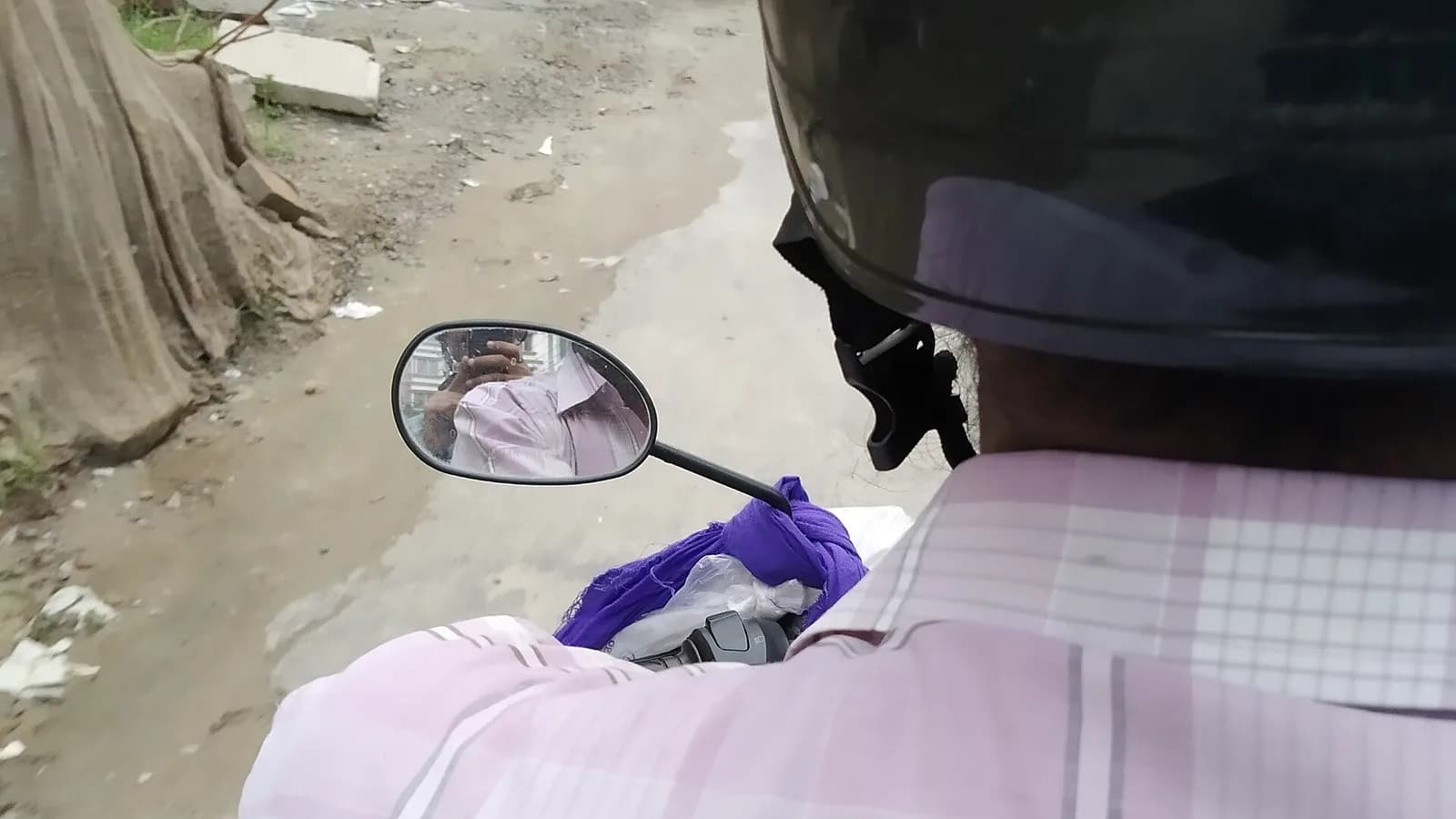
If you are landing in Kathmandu and dreading the airport taxi haggle, Pathao Nepal is one of the simplest ways to get around. It is a ride-hailing app, similar in spirit to Uber, that lets you book a motorbike or a car from your phone, see the fare before you accept, and track the driver on a map. For tourists and trekkers spending a few days in the city before or after a trek, it can save both money and the stress of negotiating every fare in a language you do not speak.
This guide explains how Pathao works, what it costs in rough terms, how to pay, where it operates, and the safety basics worth knowing before you hop on the back of a bike.
Key takeaways
- Pathao is a phone-based ride app offering motorbikes, cars, parcel delivery, food delivery and vehicle rentals in one platform.
- You need a local Nepali SIM with data to register and book; download the app, sign up with your phone number, and you are ready.
- Fares are set by the app based on distance and time, so there is no haggling, and bikes are noticeably cheaper than cars.
- Cash is always accepted, and you can also pay through Pathao Pay or partner wallets such as Khalti.
- It works in Kathmandu, Pokhara, Chitwan and many other cities across all seven provinces after a 2024 nationwide expansion.
- A bike is fastest in traffic; a car is better for groups, luggage, rain or airport runs.
What is Pathao?
Pathao is a technology company that started in Bangladesh in 2015 as a small motorbike delivery service. It launched in Nepal in September 2018, beginning with bike rides, then added car rides in August 2019 and food delivery in October 2020. Today it is one of the most widely used ride-sharing platforms in the country, handling a large volume of rides and deliveries every day according to the company.
The core idea is straightforward: instead of standing on a street corner waving at passing taxis, you open the app, set your pickup and destination, and a nearby rider or driver accepts the request and comes to you. The app shows you the estimated fare up front and lets you watch the vehicle approach on a live map.
What you can book
Pathao bundles several services into a single app:
| Service | Best for | | --- | --- | | Bike | Solo travelers crossing town quickly and cheaply | | Car | Groups, luggage, rain, airport trips, longer distances | | Parcel | Sending small packages across the city | | Food | Ordering meals to your hotel or guesthouse | | Rentals | Hiring a vehicle for a block of time (a newer feature) |
For most visitors, the bike and car ride options are what matter. The food delivery service can also be handy on a rest day when you do not feel like leaving your room in Thamel.
How to set up and use Pathao as a tourist
The biggest practical requirement is a phone number that can receive a verification code, which in practice means a Nepali SIM card. Picking one up is easy and is something most travelers do anyway for data. Our guides to the best SIM card in Nepal and eSIM options for Nepal walk through the choices; for app-based services, a physical local SIM with a data pack is the most reliable.
Step by step
- Get a local SIM with data. Telecom shops at the airport and in Thamel sell tourist SIMs; bring your passport for registration.
- Download the Pathao app from the Google Play Store or Apple App Store.
- Register with your Nepali phone number and enter the verification code it sends you.
- Set your pickup and drop-off on the map, then choose bike or car.
- Review the fare the app shows, accept the ride, and wait for the driver.
- Pay at the end with cash or a digital option, and you are done.
A note on pickup locations
One quirk that trips up first-timers: drivers in Nepal often phone you and ask you to describe where you are standing rather than relying only on the GPS pin. Addresses can be vague, and map points are not always precise. It helps to name a nearby landmark, a hotel, a shop, or an intersection. If you are stuck, locals are usually happy to help describe the spot or even speak to the driver for you. A few simple Nepali phrases for getting around go a long way here.
What does a Pathao ride cost?
Fares are calculated automatically from distance and time, with surge-style variation when traffic and demand are high, so exact prices shift. As a rough guide, short bike trips across central Kathmandu have been reported starting around NPR 50 (Nepali rupees, as of mid 2026), rising with distance. Car rides cost more than bikes for the same route, reflecting the extra space and comfort.
Because the price is shown in the app before you confirm, you avoid the back-and-forth that comes with flagging a metered or unmetered taxi on the street. If you want to understand the alternative, our piece on Kathmandu taxi fares covers how street taxis price trips and where bargaining still applies.
Bike versus car: which to choose
| Factor | Bike | Car | | --- | --- | --- | | Speed in traffic | Faster, weaves through jams | Slower in gridlock | | Cost | Cheaper | Higher | | Passengers | One | Small group | | Luggage | Minimal | Backpacks and bags fit | | Weather | Exposed to rain and dust | Enclosed and comfortable |
For a quick solo hop from Thamel to a temple or a restaurant, a bike usually wins on both speed and price. For a group heading to the airport with trekking duffels, a car is the sensible call. If you are weighing all your options for moving around the capital, see our overview of getting around Kathmandu.
Paying for your ride
Pathao gives tourists several ways to settle the fare, which is one of its strengths.
- Cash: Always accepted. Carry small notes, as drivers may not have change for large bills.
- Pathao Pay: The platform's own in-app wallet, which lets you pay without handling cash.
- Partner wallets and cards: Options such as Khalti and other digital payment methods can be linked, and Khalti has run cashback promotions on rides.
For visitors, cash is the path of least resistance because loading a local digital wallet can require a Nepali bank account or extra verification. Keep a stash of small rupee notes for rides, tips and street purchases. If you are budgeting cash for your whole trip, our guides on how much cash to bring to Nepal and ATMs in Nepal are useful companions.
Where Pathao operates
For years Pathao ran mainly inside the Kathmandu Valley. That changed in 2024, when the company expanded its services to many more cities starting around the Nepali New Year in mid-April, reaching all seven provinces. Coverage now includes major hubs that travelers actually pass through, such as Pokhara, Chitwan and a string of cities in the Terai and beyond.
What this means for your trip:
- In Kathmandu, Pathao is well established, with plenty of bikes and cars available.
- In Pokhara, the lakeside gateway to the Annapurna region, the app is a handy way to move between Lakeside, the bus park and your hotel.
- In Chitwan, it can help with short hops around Sauraha and the national park area.
Availability of drivers still varies by city, time of day and weather. In smaller towns or during off-peak hours you may wait longer or find fewer vehicles, so it pays to have a backup plan such as a local taxi.
Safety and etiquette
Ride apps are popular partly because they add a layer of accountability: the trip is logged, the driver is identified, and the fare is fixed. Still, a bike ride is a bike ride, so keep these basics in mind.
Practical safety tips
- Always wear the helmet the rider provides, every single time.
- Stick to in-app rides. Avoid accepting an off-app deal, particularly at night or in non-touristic areas.
- Do not re-book a driver who offers a discount to cancel the official ride and go off the meter.
- Check the vehicle and rider match what the app shows before you get on.
- Hold luggage securely on a bike, and choose a car if you are carrying anything bulky.
Broader road safety in Nepal is worth understanding too. Traffic is chaotic by Western standards, and long-distance buses in particular have a poor safety record. Our articles on whether it is safe to drive in Nepal and general safety for tourists in Nepal give helpful context before you travel.
A few courtesy notes
Tipping is not expected on app rides the way it is in some countries, though rounding up is a kind gesture if a rider goes out of their way. A friendly namaste and a thank-you are always appreciated. If you want to pick up a handful of useful words, our getting around Kathmandu guide includes phrases that smooth these small interactions.
Pathao versus other options
Pathao is not the only ride app in Nepal, and it is not the only way to get around. Several international and local platforms compete in the same space, and traditional taxis are everywhere. The right choice depends on your route, group size and comfort with technology.
| Option | Strengths | Trade-offs | | --- | --- | --- | | Pathao | Wide coverage, fixed app fares, bikes and cars | Needs a local SIM and data | | Street taxi | No app needed, available everywhere | Fares often negotiated, can be higher | | Tourist bus | Cheap for long routes between cities | Fixed schedules, not for short hops | | Walking | Free, great in compact areas like Thamel | Impractical across the sprawling valley |
For longer journeys between cities, an app ride is not the tool you want. To get from the capital to the lakes, compare your choices in our guide to the Kathmandu to Pokhara tourist bus and the Kathmandu to Pokhara flight. Within a city, though, Pathao is hard to beat for convenience.
Is Pathao worth it for travelers?
For most visitors spending time in Kathmandu, Pokhara or Chitwan, Pathao is a genuinely useful tool. It removes the friction of fare negotiation, gives you a clear price before you ride, and offers both fast bikes and comfortable cars. The main prerequisite is a local SIM with data, which you will likely want anyway.
It is not a substitute for understanding how the city moves, or for common sense on the back of a motorbike. But as one piece of your getting-around toolkit, alongside taxis, tourist buses and your own two feet, it makes navigating Nepal's busy cities markedly easier.
Sources
- Pathao Nepal official site
- Pathao Nepal - About Us
- Pathao Car - Pathao Nepal
- Pathao - Wikipedia
- Tech startup Pathao announces services in 17 new towns - The Kathmandu Post
- Rental service added in Pathao ride-sharing app - The Kathmandu Post
- Ride-hailing startups on expansion spree - The Kathmandu Post
- Ride Sharing in Nepal | Pay Tootle and Pathao Online - Khalti
- Top 5 Ride-sharing Apps in Nepal - Techmandu
- Nepal Travel Advisory - travel.state.gov
Frequently asked questions
- Is Pathao available in Nepal for tourists?
- Yes. Anyone with a local Nepali SIM card and a smartphone can register with a phone number and book rides, so most tourists buy a SIM on arrival and use it normally.
- Can I pay Pathao with cash in Nepal?
- Yes. Cash is accepted on every ride, and you can also pay through Pathao Pay or partner wallets like Khalti if you prefer a cashless option.
- Is Pathao cheaper than a taxi in Kathmandu?
- Usually yes, especially for bike rides, because the in-app fare is calculated by distance and time rather than negotiated, which removes a lot of haggling.
- Is it safe to ride a Pathao bike as a tourist?
- It is widely used, but you ride on the back of a motorbike in busy traffic, so always wear the helmet the rider provides and avoid late-night rides in unfamiliar areas.
- Does Pathao work in Pokhara and outside Kathmandu?
- Yes. Pathao expanded beyond the Kathmandu Valley in 2024 and now operates in many cities across all seven provinces, including Pokhara and Chitwan.
- Do I need internet to use Pathao?
- Yes, you need mobile data or Wi-Fi to open the app, book a ride and track it, so a working local SIM with data is the simplest setup for tourists.
- What is the difference between Pathao bike and Pathao car?
- A bike is a single passenger on a motorbike, which is faster and cheaper in traffic, while a car suits groups, luggage, rain or longer trips at a higher fare.
Spotted an error in this post? Tell us or suggest a correction.
Related posts
ABC Trek: A Plain-English Guide to Annapurna Base Camp
The ABC trek (Annapurna Base Camp) explained — the route, how many days it takes, difficulty, the best seasons, and what daily trail life is really like.
Read postAma Dablam Climb: 2026 Expedition Guide (6,812m)
An Ama Dablam climb and expedition guide for 2026 — height, the Southwest Ridge route, camps, fixed ropes, difficulty, permits, cost and the best seasons.
Read postAnnapurna vs Manaslu: Which Trek Should You Choose?
An Annapurna vs Manaslu decision guide for trekkers — compare permits, crowds, difficulty, infrastructure and cost to pick the right Himalayan route.
Read postAsan Bazaar Kathmandu: Old Town Market Guide
A visitor guide to Asan bazaar, Kathmandu's oldest market — its six-road square, Annapurna Temple, what to buy, when to go, and how to get there.
Read postAyurveda Nepal: A Traveller's Guide to Healing
Ayurveda Nepal explained for tourists — the history, the doshas, treatments like Panchakarma and Shirodhara, where to go and how to choose a centre safely.
Read postBest Restaurants Pokhara Lakeside: Where to Eat
The best restaurants in Pokhara Lakeside — lakeside trout, wood-fired pizza, Tibetan momos and healthy cafes, with what to order and rough 2026 prices.
Read post