Kathmandu to Pokhara Bus: 2026 Road & Booking Update
A 2026 update on the Kathmandu to Pokhara bus — how the highway widening changed the trip, current fares, and how to choose between bus, flight and car.
The road is finally getting wider — but the Kathmandu to Pokhara bus is still a half-day commitment, not a quick hop.
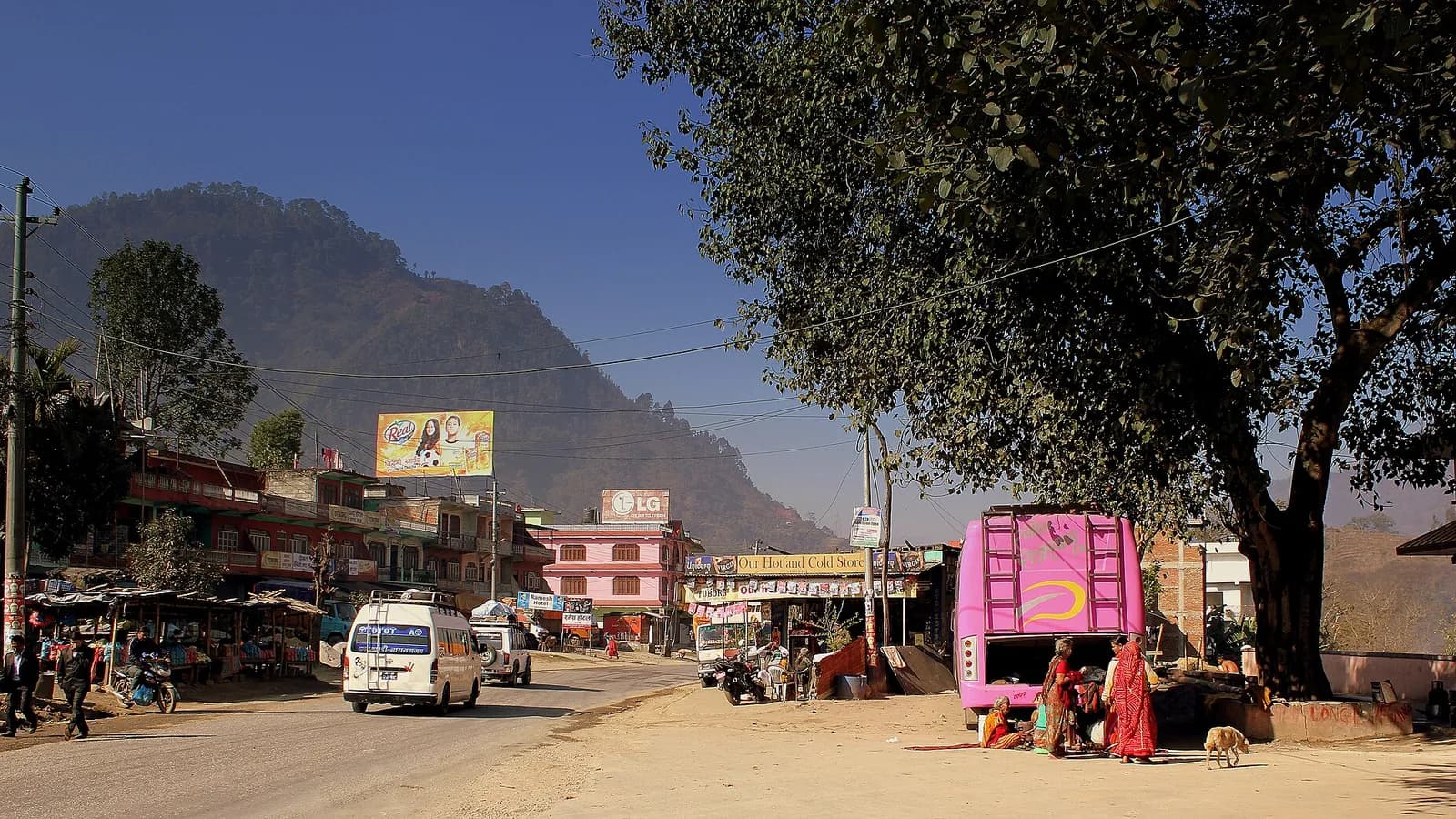
If you are planning the overland leg between Nepal's two main tourist hubs, the headline question in 2026 is simple: has the Kathmandu to Pokhara bus changed now that the highway is being widened? The short answer is that the trip is smoother in the middle than it was a couple of years ago, but it is still a half-day commitment rather than a quick hop. This is a focused 2026 update on what is actually different, what it costs, and how to decide between the bus, the flight and a private car.
For the full operational rundown — every stop, the rest breaks, seating classes and step-by-step booking — see our detailed Kathmandu to Pokhara tourist bus guide. This post is the complement: the road-status picture and the decision.
All figures below come from established operators and recent Nepali reporting, linked at the end. Fares and road conditions shift, so treat them as a guide and confirm when you book.
Key takeaways
- The route is about 200 km along the Prithvi Highway; budget 8 to 10 hours, not the advertised 6 to 7.
- The eastern 41 km (Aabukhaireni to Jamune) was completed and handed over in March 2026; the western section toward Pokhara was around 78 percent done.
- A standard tourist bus is roughly NPR 1,200 (about US$12); a VIP sofa bus around NPR 1,600 to 1,700 — as of early 2026.
- Take the morning departure (around 07:00) from Sorhakhutte, not a night bus.
- The flight is 25 to 30 minutes but far pricier and weather-dependent.
What changed on the highway in 2026
The single biggest development is the widening of the Muglin–Pokhara stretch of the Prithvi Highway, the section that has long been the slowest and dustiest part of the drive. As of 2026 the project is split into two parts handled by Chinese contractors.
Eastern section: done
The 41 km eastern segment from Aabukhaireni to Jamune (in Tanahun) was completed and handed over to the government in March 2026, with the contractor agreeing to maintain it for the following five years. For travellers, this is the part of the trip that feels meaningfully better than it did in, say, 2024 — wider lanes and a finished surface through what used to be a construction zone.
Western section: nearly there
The roughly 39 km western segment from Jamune to Pokhara had reached about 78 percent physical progress and was described as being in its final phase. That is a big jump from the mid-2020s, when some sections were reported at well under a third complete. The catch is that "nearly there" still means active roadworks and temporary traffic control on the approach into Pokhara, which is why the bus has not suddenly become a five-hour ride.
What it means for your trip
Put simply: the middle of the journey is smoother, but the overall door-to-door time has not collapsed. You still lose time getting out of the Kathmandu valley in the morning, and you can still hit roadwork delays nearer Pokhara. There is also no Kathmandu–Pokhara expressway in service yet — the much-discussed fast routes are on different alignments or still in planning. For now, the widened-but-winding Prithvi Highway is the road, and a realistic plan remains 8 to 10 hours, occasionally more.
A safety note worth flagging: with the upgrade underway, traffic volume on the Muglin–Pokhara road has been rising, and authorities have begun a road-safety audit of the corridor in response to increasing accident numbers. None of that should put you off the daytime tourist bus, but it is a good reason to stick to a reputable operator and keep your seat belt on.
What it costs in 2026
Prices are one-way, per person, and were accurate as of early 2026:
| Option | Price | Time | Notes | |---|---|---|---| | Local public bus | NPR 500–900 (~US$4–7) | 8–12 hr | Gongabu; crowded, no A/C | | Standard tourist bus | ~NPR 1,200 (~US$12) | 8–10 hr | A/C, 2×2 seating | | VIP "sofa" bus | ~NPR 1,600–1,700 (~US$15–16) | 8–10 hr | 2×1 seats, more legroom | | Premium (lunch/Wi-Fi incl.) | ~US$25 | 8–10 hr | Fewer seats, extras included | | Flight | NPR 8,000–18,000 (~US$90–125) | 25–30 min | Weather-dependent | | Private car + driver | NPR 12,000–25,000 (~US$125–150) | 5–7 hr | Door to door, flexible |
One quirk to expect: many operators quote foreigners in US dollars, and because of the exchange rate the dollar figure can land slightly above the direct rupee conversion. It is standard practice rather than a scam, but it explains why two travellers can pay marginally different amounts for the same seat. For the wider context on getting ripped off (or not), our Nepal tourist scams guide is worth a read before you go.
Where it leaves from, and when
Tourist buses gather at the Sorhakhutte Tourist Bus Park in Nayabazar, about a 12 to 15 minute walk from Thamel. The standard departure is around 07:00, with check-in advised by 06:30. Large bags go in the undercarriage hold; keep valuables in a day bag with you.
This matters because Sorhakhutte is not the same as Gongabu (the New Bus Park), which is for local public buses. If your ticket names Gongabu, you have probably bought a local rather than a tourist seat. Some operators also run evening or night departures from points like Balaju or Gangabu, but on this winding highway the daytime bus is the sensible choice — you keep the mountain roads in daylight and get the scenery as a bonus.
In Pokhara, the bus pulls into the tourist bus park near Prithvi Chowk. From there, Lakeside — the hub of hotels, restaurants and the lake — is a short taxi ride or about a 20-minute walk. Agree the taxi fare before you get in.
Bus, flight or private car — how to decide
This is the real decision, and it comes down to what you value most on the day.
Take the bus if...
You have the time, you are travelling on a budget, and you actually want to see the country between the two cities. The Trishuli river gorge, the terraced hillsides and the roadside fish stops at Mugling are a genuine part of the Nepal experience, and at around US$12 to 16 the value is hard to beat. It slots neatly into a longer trip — our two-week Nepal itinerary builds the overland leg in without wasting a day.
Fly if...
Your days are precious or the bus simply does not fit your plan. A 25 to 30 minute flight versus a full day on the road is a fair trade when time is short, and the views of the Annapurna range on a clear morning are spectacular. The downsides are cost and weather: flights can be delayed or cancelled when conditions close in. We compare the trade-offs in detail in our Kathmandu to Pokhara flight guide.
Hire a private car if...
You are a small group, you want door-to-door convenience, or you would like to stop where you please. A car with a driver is typically the fastest road option at 5 to 7 hours, and splitting the cost between three or four people makes it surprisingly reasonable. For the complete side-by-side of every option, see our Kathmandu to Pokhara transport overview.
Practical tips for a smoother ride
A few small things make the difference between an easy day and a long one:
- Sit toward the front. The twisting Naubise to Malekhu stretch is the worst for motion sickness; if you are prone to it, take medication about an hour before departure and watch the horizon rather than your phone.
- Carry snacks and water. Meals are not included on standard buses, and rest-stop food is simple highway fare — budget roughly NPR 250 to 400 per stop if you eat there.
- Travel in daylight. Stick to the morning departure and avoid night buses on this route.
- Time it for the shoulders. In the October to November and March to April trekking peaks, seats fill up — book a few days ahead. Heading into the monsoon (June to September), allow extra buffer, since landslides can still close sections of the highway for hours.
If Pokhara is your base for onward trekking, it is worth lining up the rest of the trip before you arrive; our guide to things to do in Pokhara covers what is waiting at the other end of the road.
The verdict for 2026
The widening work has made the Kathmandu to Pokhara bus a smoother ride through its toughest middle section, and with the eastern stretch now finished the trip is genuinely better than it was a couple of years ago. But it is still a half-day overland journey, not a shortcut. If you have the time and want the scenery, take the morning tourist bus and enjoy it; if the clock is against you, fly. Either way, keep your seat belt on, pick a reputable operator, and treat the road as part of the trip rather than just the gap between two cities.
Sources
- Prithvi Highway — Wikipedia
- 41 kilometres of Prithvi Highway expansion completed — Radio Nepal
- Prithvi Highway upgrade makes major progress — The Rising Nepal
- Safety audit begins on Muglin–Pokhara road — Meroauto
- Kathmandu to Pokhara bus 2026: how-to guide and tips — The Longest Way Home
- Kathmandu–Pokhara tourist bus ticketing — Graceful Adventure
Frequently asked questions
- How long does the Kathmandu to Pokhara bus take in 2026?
- Plan for 8 to 10 hours door to door, even though operators still advertise 6 to 7. The 200 km route is slow because the Prithvi Highway is winding and mountainous, and parts are still being widened. On a smooth day the newly completed eastern stretch helps, but morning traffic out of Kathmandu and the remaining roadworks near Pokhara can still push it past 10 hours.
- Has the road improved enough to make the bus faster?
- Partly. The 41 km eastern section from Aabukhaireni to Jamune was completed and handed over to the government in March 2026, and the western section toward Pokhara had reached roughly 78 percent. That means a noticeably smoother middle of the journey than a couple of years ago, but the trip is not dramatically shorter yet because the approaches at both ends still slow things down.
- How much is a Kathmandu to Pokhara bus ticket right now?
- As of early 2026, a standard air-conditioned tourist bus is roughly NPR 1,200 (about US$12), a VIP sofa bus around NPR 1,600 to 1,700 (about US$15 to 16), and premium services with lunch or Wi-Fi up to about US$25. Local public buses are cheaper at around NPR 500 to 900 but are crowded and less comfortable.
- Where does the tourist bus leave from in Kathmandu?
- Tourist buses depart from the Sorhakhutte Tourist Bus Park in Nayabazar, about a 12 to 15 minute walk from Thamel. The usual departure is around 07:00, so aim to arrive by 06:30. This is separate from Gongabu, which handles local public buses, so double-check which park your ticket names.
- Should I take a morning bus or a night bus?
- Take the morning bus. Tourist services leave around 07:00 and run in daylight, which is far safer on this winding, blind-cornered highway. Night buses do exist but mean driving mountain roads in the dark, so most guides advise tourists to avoid them and keep this leg in daylight.
- Is the bus or the flight the better choice in 2026?
- It depends on your time and budget. The flight is 25 to 30 minutes but costs far more and is weather-dependent, while the bus is a full day for a fraction of the price and gives you the river gorges and terraced hills. If your schedule is tight, fly; if you have the day to spare, the bus is part of the experience.
- Can I just book the bus when I arrive?
- Usually yes. Your Thamel hotel can arrange a seat for the next morning, or you can buy at the Sorhakhutte counter the night before. In the October to November and March to April trekking peaks, book a few days ahead to be safe; off-season, same-day or next-day is normally fine.
Related posts
Kathmandu to Pokhara by Car: A Practical Guide
Going Kathmandu to Pokhara by car? Real distance, driving time, private-hire costs, the Prithvi Highway route, stops, and monsoon road tips.
Read postKathmandu to Pokhara Private Vehicle: Cost & Tips
How to hire a Kathmandu to Pokhara private vehicle — car, SUV or Hiace van costs, travel time, stops, and road-safety tips for tourists.
Read postKathmandu to Pokhara Tourist Bus: Times & Fares 2026
The Kathmandu to Pokhara tourist bus — real journey time, fares, where it leaves from, premium options, safety, and how it compares to the flight in 2026.
Read post