Overland Tibet to Nepal: The Friendship Highway Guide
Travel overland Tibet to Nepal via the Friendship Highway and Gyirong border — permits, route, altitude, Everest views and 2026 conditions explained.
From the rooftop of the world down to the green valleys of Nepal — one road, four Himalayan giants, and a border you can only reach with a permit in hand.
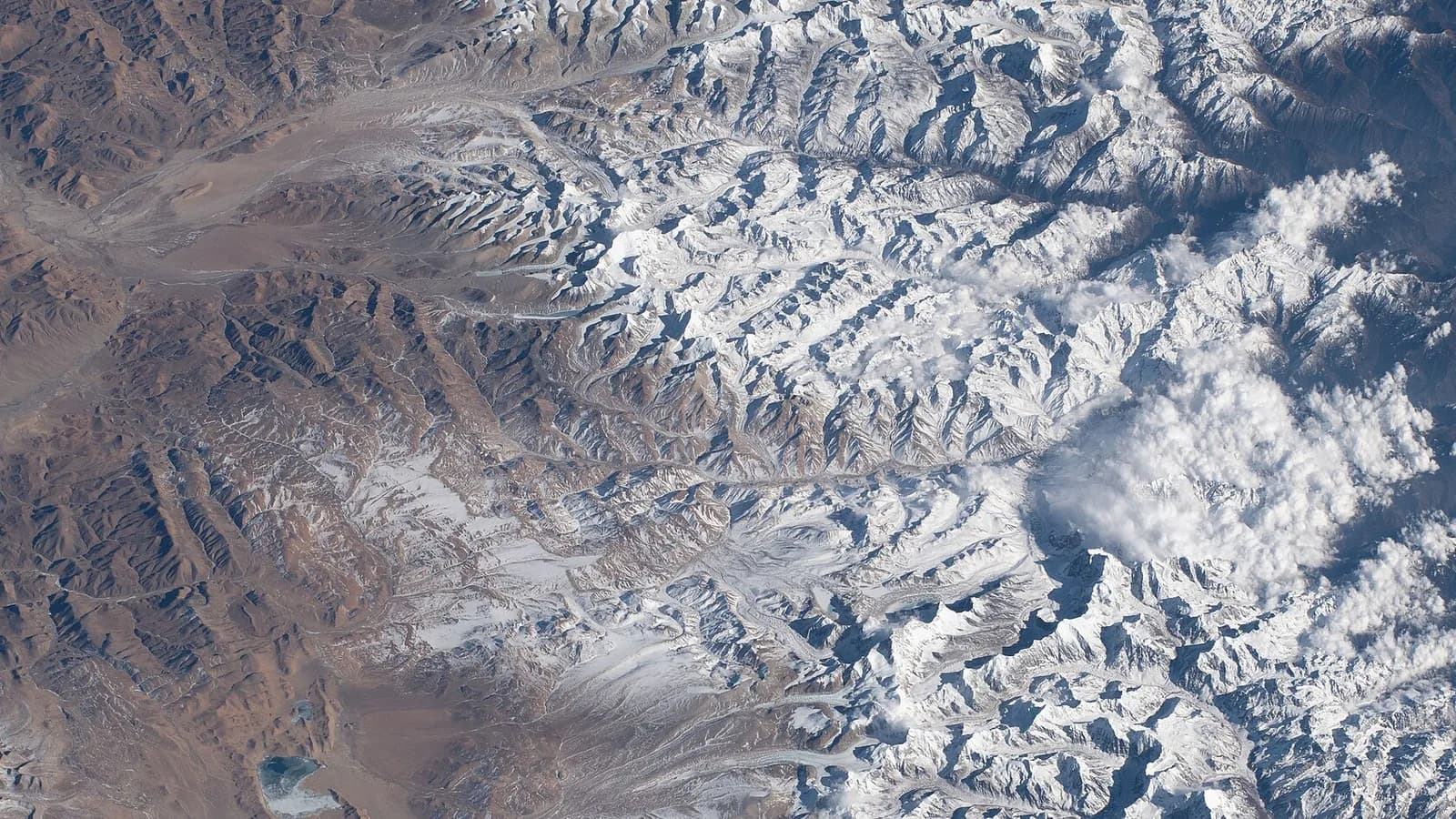
Travelling overland Tibet to Nepal is one of the great Himalayan road journeys: a descent from the high, dry Tibetan plateau through monastery towns and 5,000-metre passes, past the north face of Everest, and down to the green hills of Nepal at the Gyirong–Rasuwagadhi border. It is not a trip you can simply improvise. Tibet requires every foreign visitor to travel on a guided tour with a stack of permits arranged in advance, and the border itself has had a turbulent couple of years. This guide explains the route, the paperwork, the altitude, the timing and what to expect on the ground in 2026.
If you are still weighing the two destinations against each other, our Nepal vs Tibet comparison covers cost, culture and trekking side by side before you commit.
Key takeaways
- The journey runs along the China–Nepal Friendship Highway (G318), usually as a 7–8 day Lhasa-to-Kathmandu tour with Everest Base Camp included.
- Foreigners cannot travel independently in Tibet — a licensed agency, guide, driver and permits are mandatory.
- The only open land border is Gyirong Port (China) to Rasuwagadhi (Nepal); the old Zhangmu–Kodari route has been closed to tourists since the 2015 earthquake.
- The road tops out at the Gyatso La pass, about 5,248 m, so acclimatisation days in Lhasa are essential.
- Best months are April–June and September–November for stable weather and clear Everest views.
- The border has been disrupted by a July 2025 flood and reopened only partially in late December 2025 — confirm status before booking.
The route at a glance
The classic overland trip follows the Friendship Highway westward from Lhasa, the Tibetan capital, descending gradually toward the Nepal frontier. Most operators run it as a small-group tour of roughly seven to eight days, ending in Kathmandu via the Gyirong border. Travelling in the Lhasa-to-Kathmandu direction is the more popular choice because you start high and finish low, which is kinder on your body than climbing straight up from Kathmandu.
Here is a typical shape for the journey:
| Day | Section | Notable stops | | --- | --- | --- | | 1–3 | Lhasa (about 3,650 m) | Potala Palace, Jokhang Temple, Drepung and Sera monasteries; acclimatisation | | 4 | Lhasa to Shigatse | Yamdrok Lake, Karola Glacier, Gyantse Kumbum | | 5 | Shigatse to Everest area | Tashilhunpo Monastery, Gyatso La pass | | 6 | Everest Base Camp (Tibet side) | Rongbuk Monastery, north-face views | | 7–8 | Descent to the border and Kathmandu | Gyirong Port, Rasuwagadhi, Kathmandu Valley |
Exact stops vary between agencies, but the spine of the trip — Lhasa, Gyantse, Shigatse, Everest, Gyirong — stays much the same.
The Friendship Highway itself
The Friendship Highway is the long paved route linking Lhasa with the Nepal border. On the Chinese side it is a modern, well-surfaced road, which makes the high-altitude driving smooth even at extreme elevations. The contrast on the Nepali side is stark: the descent from Rasuwagadhi down toward Kathmandu is rough, mountainous and prone to disruption, and a sturdy 4×4 is the sensible choice for that leg.
Permits and paperwork
This is the part that catches travellers out. You cannot book flights, turn up and explore Tibet the way you would Nepal. Every foreign visitor must be on an organised tour, accompanied by a guide and driver, with permits secured ahead of time.
What you actually need
- A Chinese visa or China Group Visa. If you enter Tibet from Kathmandu, you typically travel on a China Group Visa issued by the Chinese Embassy in Nepal rather than a standard tourist visa.
- The Tibet Travel Permit. This is the core document that lets foreigners enter the Tibet Autonomous Region at all. Your agency applies for it using your passport and visa details.
- An Aliens' Travel Permit. Required for areas beyond Lhasa such as Shigatse and Everest Base Camp.
- A border or frontier pass. Needed for the sensitive frontier zone around Gyirong, Everest and similar border areas. It is issued through the relevant authorities in Lhasa, and only an agency can obtain it.
None of these can be applied for individually — a licensed Tibetan travel agency arranges the whole set. Build in time for this; permits are not same-day documents.
The group-of-five rule
There is one wrinkle specific to entering Tibet from Nepal. To apply for the China Group Visa from Kathmandu, the current requirement is that the group contains at least five travellers of the same nationality applying together. Travelling the other way — from Lhasa down to Nepal — the same five-person group-visa condition does not bind you in the same way, which is another reason the southbound direction is popular for smaller parties. Our overview of Nepal's own visa on arrival explains the much simpler paperwork waiting for you once you cross into Nepal.
Altitude and acclimatisation
This route spends days at elevations where altitude sickness is a genuine danger, so treat acclimatisation seriously rather than as an optional extra.
How high you go
Lhasa sits at around 3,650 metres — already high enough to leave many first-time visitors breathless. From there the road climbs higher still:
| Point | Approx. elevation | | --- | --- | | Lhasa | 3,650 m | | Gampa La pass | 4,790 m | | Yamdrok Lake | 4,400 m | | Karola Glacier | 5,100 m | | Gyatso La pass (highest point) | 5,248 m | | Everest Base Camp (Tibet side) | about 5,150 m |
The Gyatso La pass is the high crux of the Friendship Highway. Oxygen is scarce up there, the landscape is bleak and exposed, and even vehicles lose engine power. Crossing it comfortably depends on having acclimatised properly in the days before.
Staying well
Most reputable itineraries build in two or three nights in Lhasa specifically so your body can adjust before going higher. Move slowly, drink plenty of water, and tell your guide early if you feel unwell. The principles are the same as on any high trek — our altitude sickness guide for Nepal trekking explains the warning signs and how to respond, and they apply just as much on the Tibetan plateau. If you are nervous about how thin air affects you, build extra buffer days in rather than rushing the climb.
Highlights along the way
The overland route is not just a transit corridor — it strings together some of the most striking sights in Tibet.
Lhasa
The journey starts in the Tibetan capital, where the Potala Palace and Jokhang Temple anchor a few days of sightseeing and acclimatisation. The great monasteries of Drepung and Sera sit on the city's edge. These first days do double duty: cultural immersion and altitude preparation.
Yamdrok Lake and the Karola Glacier
Driving over the Gampa La pass, you reach Yamdrok Lake, one of Tibet's three holy lakes, its turquoise water ringed by snow peaks. Further on, the Karola Glacier spills down almost to the roadside near 5,100 metres — a rare chance to stand beside a glacier without a single step of trekking.
Gyantse and Shigatse
Gyantse is known for its tiered Kumbum stupa, while Shigatse, Tibet's second city, is home to Tashilhunpo Monastery, the traditional seat of the Panchen Lama. The monastery sprawls across an entire hillside and is one of the most important in Tibetan Buddhism.
Everest from the north
The route's showpiece is the Tibetan side of Everest Base Camp, reached via Rongbuk Monastery. From here you see the mountain's dramatic north face, and over the course of the trip the road reveals Everest from several different angles. If you would rather see the world's highest peak from the Nepal side, compare this with the classic Everest Base Camp trek once you are in Nepal — a very different, on-foot experience.
The Gyirong–Rasuwagadhi border
The frontier itself deserves close attention, because it is both the only option and the trickiest part of the trip.
Why Gyirong
After the 2015 earthquake severely damaged the old Zhangmu–Kodari crossing, that route closed to international travellers and Gyirong Port — about 70 km west of the old port — became the sole operational land border between Tibet and Nepal. On the Nepali side it connects to the checkpoint at Rasuwagadhi. From there it is a long, winding drive of several hours down to Kathmandu.
Crossing in practice
The border post generally operates within fixed daytime hours, and clearing customs can take anywhere from around half an hour to much longer when peak-season queues build up. Because the drive from the Nepali side up to the border takes the better part of a day, many travellers spend a night near Rasuwagadhi rather than trying to cross and reach Kathmandu in one push.
2025–2026 disruption — check before you book
This is critical: the crossing has not been stable. In July 2025 a flash flood on the Lhende river swept away a bridge near Kerung, cutting the link. After a temporary Bailey bridge was installed, the Rasuwagadhi point came back into partial operation in late December 2025. Conditions on this border change with the seasons and with infrastructure repairs, so always confirm the current status with your agency before committing to overland travel. If the land border is closed, the fallback is to fly between Kathmandu and Lhasa instead.
Practical planning tips
A few things make the difference between a smooth trip and a stressful one:
- Book through a licensed Tibet agency well ahead. Permits take time and the group-visa rules add lead time when entering from Nepal.
- Pick the right season. Aim for April–June or September–November for stable weather and the best odds of a clear Everest.
- Plan your direction deliberately. Lhasa-to-Kathmandu is gentler on the body and easier for small groups; Kathmandu-to-Lhasa triggers the five-person group-visa requirement.
- Pad your schedule. A flood, a landslide or a permit delay can shift everything — a buffer day or two protects onward flights.
- Carry the right gear. Cold, wind and intense sun are constant at altitude; pack as you would for a high Himalayan trek.
Once you are down in Nepal, the practicalities get much simpler. For settling in, see our notes on getting around Kathmandu and the easy visa on arrival process.
Sources
- Tibet-Nepal Border Gyirong Port Is Open for Foreign Travelers 2025/2026 — Tibet Discovery
- Nepal Tibet Border Crossing at Gyirong: The Ultimate Guide for 2026 — Tibet Travel
- Rasuwagadhi border opens after six months, traders still barred — The Kathmandu Post
- Tibet Travel Permit guide (updated 2026) — Tibet Tourism
- How to Get a Tibet Travel Permit Successfully in 2026 — Tibet Travel
- 8 Days Lhasa to Everest Base Camp Small Group Tour — Tibet Travel
- An Unforgettable Drive to Gyatso La Pass on the Tibetan Plateau — Dangerous Roads
- Friendship Highway (China–Nepal) — Wikipedia
Frequently asked questions
- Can I travel overland from Tibet to Nepal independently?
- No. As of June 2026 foreign visitors cannot travel independently anywhere in the Tibet Autonomous Region. You must book a guided tour through a licensed agency that supplies the permits, a guide and a private vehicle for the whole route down to the Gyirong border.
- Which border do I cross between Tibet and Nepal?
- The only open land crossing is Gyirong Port on the Chinese side, connecting to Rasuwagadhi on the Nepali side. The old Zhangmu-Kodari crossing has stayed shut to international travellers since the 2015 earthquake.
- What permits do I need for the overland journey?
- You need a Chinese visa or a China Group Visa, a Tibet Travel Permit, an Aliens' Travel Permit for areas like Shigatse and Everest Base Camp, and a border or frontier pass for the Gyirong area. Your agency arranges all of these; you cannot apply for them yourself.
- Is there a minimum group size to enter Tibet from Nepal?
- If you start in Kathmandu and travel into Tibet, the China Group Visa currently needs at least five travellers of the same nationality applying together. Going the other direction, from Lhasa down to Nepal, this group-of-five rule does not apply in the same way.
- How long does the overland Tibet to Nepal trip take?
- Most itineraries run about seven to eight days from Lhasa to Kathmandu, including two or three acclimatisation days in Lhasa and a detour to the Tibetan side of Everest Base Camp before descending to the border.
- How high does the route go?
- The highest point is the Gyatso La pass at roughly 5,248 metres. You also cross the Gampa La pass near 4,790 metres and pass the roadside Karola Glacier at about 5,100 metres, so altitude sickness is a real risk.
- When is the best time to make the journey?
- The most reliable months are April, May, June, September, October and November, when the weather is stable and Everest is most likely to be clear. Deep winter brings snow and black ice that can close the high passes.
- Is the Gyirong-Rasuwagadhi border open right now?
- It has been disrupted. A flash flood in July 2025 destroyed a bridge near Kerung, and the crossing reopened only partially in late December 2025 on a temporary Bailey bridge, so always confirm current status with your agency before booking.
Related posts
Gyirong Kerung Border: Nepal–Tibet Crossing Guide
How the Gyirong Kerung border works for travellers: the Rasuwagadhi crossing, permits, the 2025 flood closure, and what reopening in 2026 means.
Read postNepal vs Tibet: Which Himalayan Trip to Choose
Nepal vs Tibet compared on cost, permits, trekking, altitude and culture — an even-handed guide to which side of the Himalaya suits your trip.
Read postTibet Nepal Bhutan Tour: How to Plan All Three
A Tibet Nepal Bhutan tour explained — the route order, permits, visas, the Bhutan SDF, Kathmandu flights and best season to link all three Himalayan lands.
Read post