Football in Nepal: National Team, ANFA & Leagues
A clear, fact-checked guide to football in Nepal — the Gorkhali national team, the ANFA governing body, the A-Division League and Nepal Super League.
On match days at Dasharath Rangasala, the noise tells you football matters in Nepal far more than the world ranking suggests.
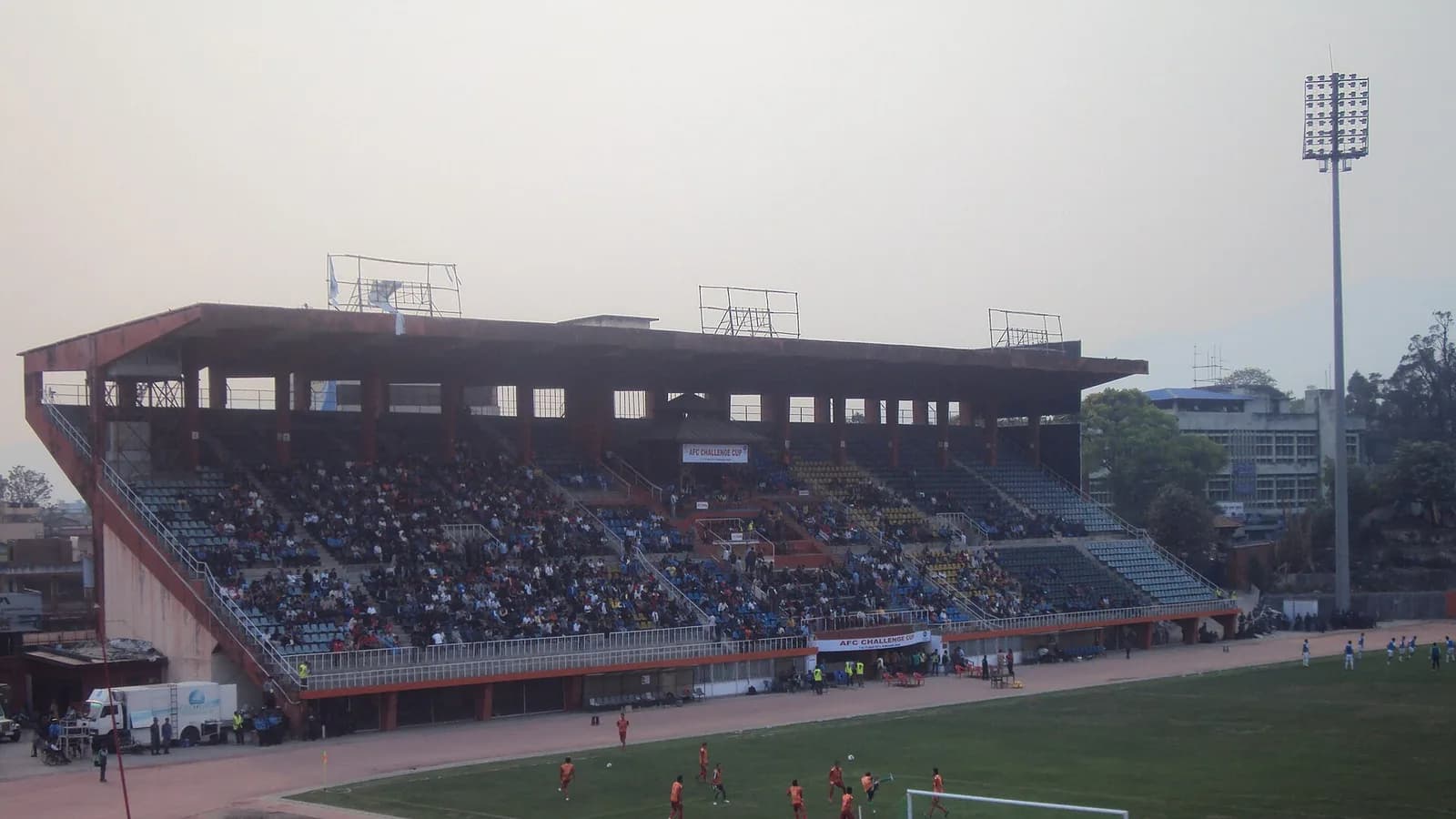
Football in Nepal is one of the country's oldest and most passionately followed team sports, played from dusty village pitches to the floodlit Dasharath Rangasala in Kathmandu. The men's national side, nicknamed the Gorkhalis, is governed by the All Nepal Football Association (ANFA) and competes across South Asia, while a growing club scene anchored by the A-Division League and the newer Nepal Super League keeps the game alive at home. This guide gives a neutral, fact-checked overview of the national team, the governing body, the league pyramid, and where football sits in Nepali sporting culture.
Key takeaways
- Football in Nepal is governed by the All Nepal Football Association (ANFA), founded in 1951.
- The men's national team, the Gorkhalis, played its first international in 1972 and is ranked among the lower tier of FIFA's table.
- Nepal's biggest international success is the AFC Solidarity Cup in 2016, plus South Asian Games gold medals.
- The main home venue is the Dasharath Rangasala stadium in Kathmandu, capacity around 15,000.
- The domestic pyramid runs from the Martyr's Memorial A-Division League down through B and C divisions, with the Nepal Super League added in 2021.
- Football has deep roots in Nepal but now shares the spotlight with a fast-rising cricket scene.
A short history of football in Nepal
Football reached Nepal in the early twentieth century, spreading through British and Indian influence in the decades before organised competition took hold. Early tournaments such as the Tribhuvan Challenge Cup helped formalise the game, and in 1951 the All Nepal Football Association was created to oversee it nationally.
Domestic league football followed soon after. The competition that grew into the Martyr's Memorial A-Division League was launched in the mid-1950s and became the backbone of the club game in the Kathmandu Valley. Over the following decades, football became a fixture of school grounds, army and police teams, and neighbourhood clubs across the country.
ANFA joined the global game by affiliating with FIFA, the world governing body, in the early 1970s, and it has long been part of the Asian Football Confederation (AFC) as well. Membership opened the door to international fixtures, continental qualifiers, and a place in regional South Asian competition.
The Nepal national football team
The men's national team is the most visible face of the sport. Known as the Gorkhalis, a nod to the Gorkha warrior heritage that also gives the world the famous Gurkha soldiers, the side made its international debut on 13 October 1972, losing 6–2 to China in Beijing.
In the decades since, Nepal has been a consistent presence in South Asian football without yet breaking through to the top of the regional order. Some reference points that help frame the team:
| Detail | Information | | --- | --- | | Governing body | All Nepal Football Association (ANFA) | | Nickname | The Gorkhalis | | First international | 13 October 1972, lost 6–2 to China | | Home stadium | Dasharath Rangasala, Kathmandu (around 15,000) | | Best continental title | AFC Solidarity Cup, 2016 | | Regional honours | South Asian Games football gold (1984, 1993) |
The team's FIFA ranking sits in the lower portion of the global table — generally somewhere around the 170s to 180s in recent years — which reflects both limited resources and the strength of the competition it faces. Rankings move with results, so the exact figure shifts from one international window to the next.
Notable achievements
Nepal's standout result came in 2016, when it won the AFC Solidarity Cup, a tournament for the confederation's developing football nations. Nepal has also claimed gold in men's football at the South Asian Games, a regional multi-sport event, underlining its competitiveness against immediate neighbours. In continental qualifying and at the SAFF Championship — South Asia's flagship national-team tournament — Nepal has reached the latter stages and finished as runner-up, but the title has so far stayed out of reach.
The home of the team
Most big home matches are played at the Dasharath Rangasala in Kathmandu, the largest stadium in Nepal. On international match days it fills with flag-waving crowds, and the atmosphere is a reminder that football's following runs far deeper than the world ranking might suggest. The stadium has been rebuilt and upgraded over the years, including after earthquake damage, and remains the symbolic centre of the national game.
ANFA: the governing body
The All Nepal Football Association is the organisation behind everything from the national teams to grassroots competition. Founded in 1951 and headquartered at the ANFA Complex in Satdobato, on the southern edge of the Kathmandu Valley, it oversees men's, women's, and youth national sides as well as the domestic league system.
ANFA's responsibilities include running national competitions, organising provincial and district football, developing referees and coaches, and representing Nepal at FIFA and the AFC. Like many football bodies, it has at times faced scrutiny over governance and administration, which is a normal part of the modern game's history worldwide. For a closer look at the organisation itself, see our dedicated explainer on ANFA.
Domestic leagues and clubs
Club football in Nepal is organised as a pyramid run by ANFA, topped by a long-established league and supplemented by a newer franchise competition.
- Martyr's Memorial A-Division League — the traditional top flight, contested largely by Kathmandu-based clubs including departmental teams from the army, police, and other institutions.
- B-Division and C-Division Leagues — the feeder tiers that sit beneath the A-Division, with promotion and relegation linking the levels.
- Nepal Super League (NSL) — a franchise-based, city-themed tournament launched in 2021, designed to raise the profile and commercial appeal of the domestic game.
Many of Nepal's best-known clubs are tied to public institutions, a common pattern in South Asian football, while the Nepal Super League brought in a more modern, broadcast-friendly format with team branding built around cities and regions. Together these competitions provide the pathway through which most national-team players develop.
Women's football
ANFA also runs the women's national team and a Women's National League. Nepal's women's side has been a strong regional performer, regularly reaching the latter stages of the SAFF Women's Championship, and the women's game has grown in visibility alongside the men's.
Where football sits in Nepali sport
For much of the twentieth century, football was arguably Nepal's leading spectator team sport, woven into school life, local rivalries, and national pride. In the last decade or so, cricket has risen sharply in popularity, to the point where the two now vie for the title of the country's favourite team sport. Rather than one replacing the other, Nepal has effectively become a two-sport nation, with passionate followings for both.
For visitors, catching a match can be a genuine cultural experience. A national-team game at the Dasharath Rangasala, or a lively local league fixture, offers a window into everyday Nepali life that you will not find on the trekking trail. If you are building a broader picture of the country, our overviews of Nepali culture and things to do in Kathmandu pair well with this guide, and the distinctive Nepal flag you will see in the stands is worth knowing about too.
The bottom line
Football in Nepal is a sport with long history, real grassroots depth, and a loyal national following, even if international honours have been modest. The Gorkhalis, the ANFA-run league pyramid, and venues like the Dasharath Rangasala together form a football culture that rewards a closer look. Whether you are a curious traveler or simply mapping out the country's sporting landscape, knowing the basics — who runs the game, who plays it, and where — gives useful context for understanding modern Nepal.
Sources
Frequently asked questions
- What is the nickname of Nepal's national football team?
- The men's national team is nicknamed the Gorkhalis, after the Gorkha warrior tradition, and it is run by the All Nepal Football Association.
- Who governs football in Nepal?
- Football in Nepal is governed by the All Nepal Football Association, or ANFA, which was founded in 1951 and runs the national teams and the main domestic leagues.
- Where does Nepal play its home football matches?
- Nepal's main home venue is the Dasharath Rangasala stadium in Kathmandu, the country's largest football ground with a capacity of around 15,000.
- Has Nepal ever won an international football trophy?
- Yes. Nepal won the AFC Solidarity Cup in 2016 and has taken gold in football at the South Asian Games, though it has not yet won the SAFF Championship.
- What is the top football league in Nepal?
- The long-running top division is the Martyr's Memorial A-Division League, while the franchise-based Nepal Super League launched in 2021 as a high-profile seasonal competition.
- Is football or cricket more popular in Nepal?
- Football has deep historic roots and a loyal following, while cricket has surged in recent years, so the two now compete closely as Nepal's most popular team sports.
Related posts
ANFA: The All Nepal Football Association Explained
What is ANFA? A short, fact-checked guide to the All Nepal Football Association — Nepal's football governing body, its history, role, leagues and teams.
Read postCAN: The Cricket Association of Nepal Explained
What does CAN mean in Nepali sport? A short, fact-checked explainer: CAN is the Cricket Association of Nepal, the body that governs cricket in Nepal.
Read postCricket Association of Nepal (CAN): Role and History
A fact-checked guide to the Cricket Association of Nepal (CAN): its history since 1946, role, ICC membership, 2016 suspension and 2019 reinstatement.
Read post