Ncell vs NTC: Which Nepal SIM Wins for Your Trip?
A quick Ncell vs NTC decision guide for tourists and trekkers — pick the right Nepal SIM by route, then buy and activate without overpaying.
Don't pick a winner. Pick the SIM that wins where you're actually going.
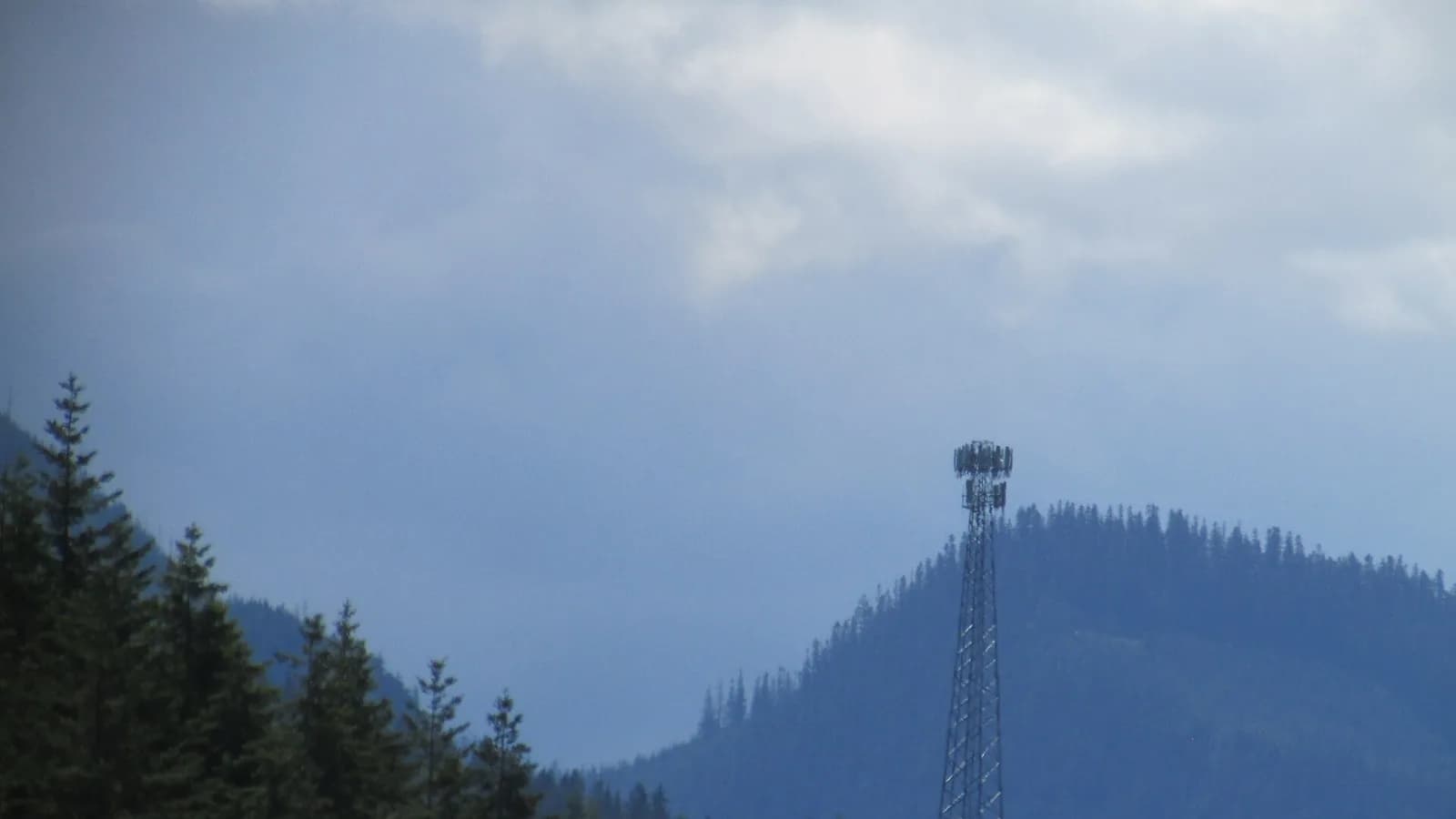
If you are choosing between Ncell vs NTC for your Nepal trip, the honest answer is that neither one is simply "better." They win in different places. Ncell, the private operator now under the Axiata group, tends to be the faster, smoother choice in cities and on popular lower trails. Nepal Telecom (NTC), the state-owned carrier also branded Namaste, reaches further into the high Himalaya where commercial networks thin out. This is a short, decision-focused companion to our deeper Best SIM Card for Nepal guide — read that one for the full coverage maps and step-by-step buying advice. Here, the goal is to get you to the right pick in a couple of minutes.
Key takeaways
- For Kathmandu, Pokhara and Chitwan, Ncell usually gives faster, more consistent 4G data.
- For high or remote treks, NTC generally holds a signal where Ncell drops out.
- The most reliable trekking setup is a dual-SIM phone with both, switching as the terrain changes.
- A single Ncell SIM is enough for most city-and-lowland itineraries — keep it simple if your trip is short.
- There is no widespread commercial 5G for tourists yet (mid-2026); plan around strong 4G in towns.
- Buy from an official store, not an overpriced arrival kiosk, and bring your passport.
The one-question decision
Forget feature lists for a moment. Ask yourself a single question: am I spending most of my time in cities and on well-travelled lower trails, or am I heading high and remote?
- Mostly cities and lowlands (Kathmandu Valley, Pokhara, Chitwan, day hikes, lower Annapurna foothills): pick Ncell and move on.
- High or remote trekking (upper Everest, upper Annapurna Circuit, Manaslu, Langtang, far-flung valleys): plan around NTC as your primary mountain SIM, ideally alongside Ncell.
- A mix of both, and you have a dual-SIM phone: carry both, and let your phone fall back to whichever network has bars.
That covers the vast majority of travellers. Everything below is just the detail behind that call.
Ncell vs NTC at a glance
| Factor | Ncell | NTC (Namaste) | |---|---|---| | Ownership | Private (Axiata group) | State-owned | | City data speed | Generally faster 4G | Solid 4G, can be busier in tourist zones | | Remote mountain reach | Patchy at altitude | Stronger in remote and high areas | | Tourist plans | Dedicated TouristPro packs | Standard prepaid plus data bundles | | eSIM | Yes | Yes | | Best for | City stays, popular lower trails | High treks, off-grid valleys |
Treat this as a tendency, not a guarantee. Mobile coverage shifts as carriers add towers, and conditions on any given ridge can surprise you. The pattern above reflects aggregated tourist and trekker reports through 2024–2026.
Coverage by route
This is where the Ncell vs NTC question actually gets decided. A few representative routes:
Everest region
On the classic Everest Base Camp trail, NTC tends to reach further up. Travellers commonly report usable signal around Lukla, Namche Bazaar, Tengboche and Dingboche, with coverage weakening as you climb past Lobuche toward Base Camp at roughly 5,364 m. Ncell can work well to Namche but generally becomes unreliable higher on the trail. For a deeper look at staying connected on this route, see our Everest Base Camp teahouse and Wi-Fi notes.
Annapurna region
On the lower Annapurna foothills and around Pokhara, Ncell typically performs well, which suits trekkers on Mardi Himal or the lower stretches toward Annapurna Base Camp. On the upper Annapurna Circuit — the climb toward Manang and the Thorong La area — NTC tends to have the better reach. Deciding between the two big loops? Our Annapurna Circuit vs Base Camp comparison helps you choose the trek itself.
Remote valleys
For genuinely off-grid areas, neither network should be assumed reliable. On routes like Upper Mustang beyond Jomsom, expect long stretches without a usable signal regardless of carrier, and rely on your trekking agency's communications for emergencies. The same caution applies to other remote corners — connectivity is a bonus there, not a given.
A useful mindset for any high or remote route: assume you will be offline for hours at a time, and treat each bar of signal as a chance to send a quick message rather than a steady connection. Where a faint signal does appear, lightweight messaging apps and plain texts often punch through when data-hungry video calls and large uploads will not. Download your offline maps, key bookings and any important documents before you leave the last town with solid coverage, and let people at home know your rough itinerary so silence is expected rather than alarming.
What the plans look like
Both carriers sell prepaid options aimed at visitors, and pricing is modest by international standards. Ncell markets a tourist line called TouristPro, with packs structured around trip length. As of June 2026, Ncell listed three tiers: a 7-day pack at NPR 595, a 14-day pack at NPR 995, and a 28-day pack at NPR 1,995 (currency: Nepali rupee, as of June 2026), each advertised with generous data under a fair-usage policy that slows speeds after a high threshold.
NTC leans on standard prepaid SIMs topped up with data bundles. Reported bundle pricing in 2026 has included small data add-ons in the low hundreds of rupees — for example, figures around NPR 290 for 3 GB and NPR 880 for 10 GB have circulated (currency: Nepali rupee, as of June 2026). Because exact bundle names and prices change, treat these as ballpark figures and confirm the current menu in-store or in each carrier's app.
| Need | Practical pick | |---|---| | Short city trip, want it effortless | Ncell TouristPro short pack | | Two-to-four week mixed trip | Ncell mid/long pack, NTC as backup | | Budget data top-ups, longer stay | NTC bundles, recharge as needed | | High or remote trek | NTC primary, Ncell secondary |
For broader trip-cost context, our daily budget for Nepal guide puts these small connectivity costs in perspective — a SIM is one of the cheapest line items of any trip.
eSIM, 5G and other practicalities
eSIM
Both Ncell and NTC support eSIM, which can be handy if your phone is compatible and you would rather not handle a physical card. You can typically activate with your passport at the airport, in a store, or online. That said, on arrival many travellers still find a physical SIM the fastest path to working data, and third-party travel eSIMs are a separate option worth weighing for very short stays.
5G
Do not plan your trip around 5G. As of mid-2026, Nepal has not rolled out widespread commercial 5G for tourists; networks have run only limited trials. In practice you will rely on 4G, which is strong in cities and progressively weaker as you gain altitude.
Buying without overpaying
Wherever you buy, you will need your passport, and stores may ask for a passport-style photo. The big money-saver is simple: avoid overpriced arrival kiosks where you can, and buy from an official Ncell or NTC outlet in Thamel or Pokhara's Lakeside instead, where the same bundle costs a fraction of the airport markup. SIM overcharging is a documented arrival annoyance — see our Nepal tourist scams guide so you know what to expect.
A few words that help at the SIM shop
You will mostly be served in English at carrier stores, but a couple of polite Nepali words smooth any interaction. Namaste (hello) and dhanyabaad (thank you) go a long way, and kati ho? means "how much is it?" — useful when comparing bundles. If you want more, our essential Nepali phrases for travellers post has the short list worth memorising before you land.
So, who wins?
The Ncell vs NTC debate has no single champion, and any guide that crowns one is oversimplifying. The winner is whichever network covers the ground you will actually walk. For a city-focused trip, that is almost always Ncell. For a high trek, that is usually NTC. For an ambitious multi-region itinerary, the real answer is both, in a dual-SIM phone, so you are never at the mercy of a single tower on a cold ridge.
Sort that out, keep your expectations realistic above the treeline, and you will have data in nearly every place worth checking your phone — and blissful silence in the few that are better experienced offline.
Sources
- Ncell — Tourist SIM & eSIM
- Nepali Telecom — Ncell tourist SIM packages and price
- Nepali Telecom — NTC prepaid SIM price, data and validity 2026
- Neved Holidays — Nepal SIM Card 2026: Ncell vs NTC tourist guide
- The Everest Holiday — Nepal SIM card for trekkers: Ncell vs NTC
- Traveltomtom — Best eSIM for Nepal in 2026
Frequently asked questions
- Is Ncell or NTC better for tourists in Nepal?
- For most tourists staying in Kathmandu, Pokhara and Chitwan, Ncell tends to give faster everyday data, while NTC reaches further into remote mountain areas — so the better choice depends on your route.
- Which SIM works at Everest Base Camp?
- On the classic Everest trail NTC generally holds coverage higher up, with usable signal around Lukla, Namche, Tengboche and Dingboche before it weakens near Base Camp at about 5,364 m.
- Can I just use one SIM for my whole Nepal trip?
- Yes — if you stick to cities and popular lower trails, a single Ncell SIM covers most itineraries comfortably and is the simplest option for short visits.
- Should I buy two SIM cards for trekking?
- A dual-SIM phone with both Ncell and NTC is the most reliable setup for high or remote treks, letting you switch to whichever network has a signal at any given spot.
- How much does a tourist SIM in Nepal cost?
- Expect roughly a few US dollars for a basic data bundle; Ncell's TouristPro packs ran from NPR 595 for 7 days up to NPR 1,995 for 28 days as of June 2026, with cheaper data top-ups available locally.
- Is there 5G in Nepal yet?
- As of mid-2026 there is no widespread commercial 5G for tourists; networks have run limited trials, so plan around solid 4G in cities and slower speeds in the mountains.
- Do Ncell and NTC support eSIM for visitors?
- Both carriers offer eSIM options that you can activate with your passport at the airport, in stores or online, though a physical SIM is often the quickest route on arrival.
- Where should I avoid buying a SIM card?
- Skip overpriced arrival kiosks if you can and buy from an official Ncell or NTC store in Thamel or Lakeside instead, where the same bundle costs a fraction of the airport price.
Related posts
Best SIM Card for Nepal 2026 — Ncell vs NTC, How to Buy, Real Coverage
Honest comparison of Nepal's two main mobile carriers, where each one works, what data plans cost, and how to buy without the airport overcharge.
Read postSIM Card Nepal for Tourists: Arrival-Day Setup Guide
A practical SIM card Nepal for tourists walkthrough — what to do the hour you land, registration rules, activation codes, and how to fix a dead data plan.
Read posteSIM Nepal — The Tourist's Guide to Getting Online
How eSIMs work in Nepal, what they cost, local Ncell and NTC eSIMs vs travel eSIMs like Airalo and Holafly, and whether one suits your trip.
Read post