Masala Chiya: Nepal's Spiced Milk Tea, Explained
What masala chiya is, the spice blend behind Nepal's spiced milk tea, how to order it, drink it on the trail, and brew it at home like a local.
Chiya khayo? — Have you had tea? In Nepal it's less a question than a welcome.
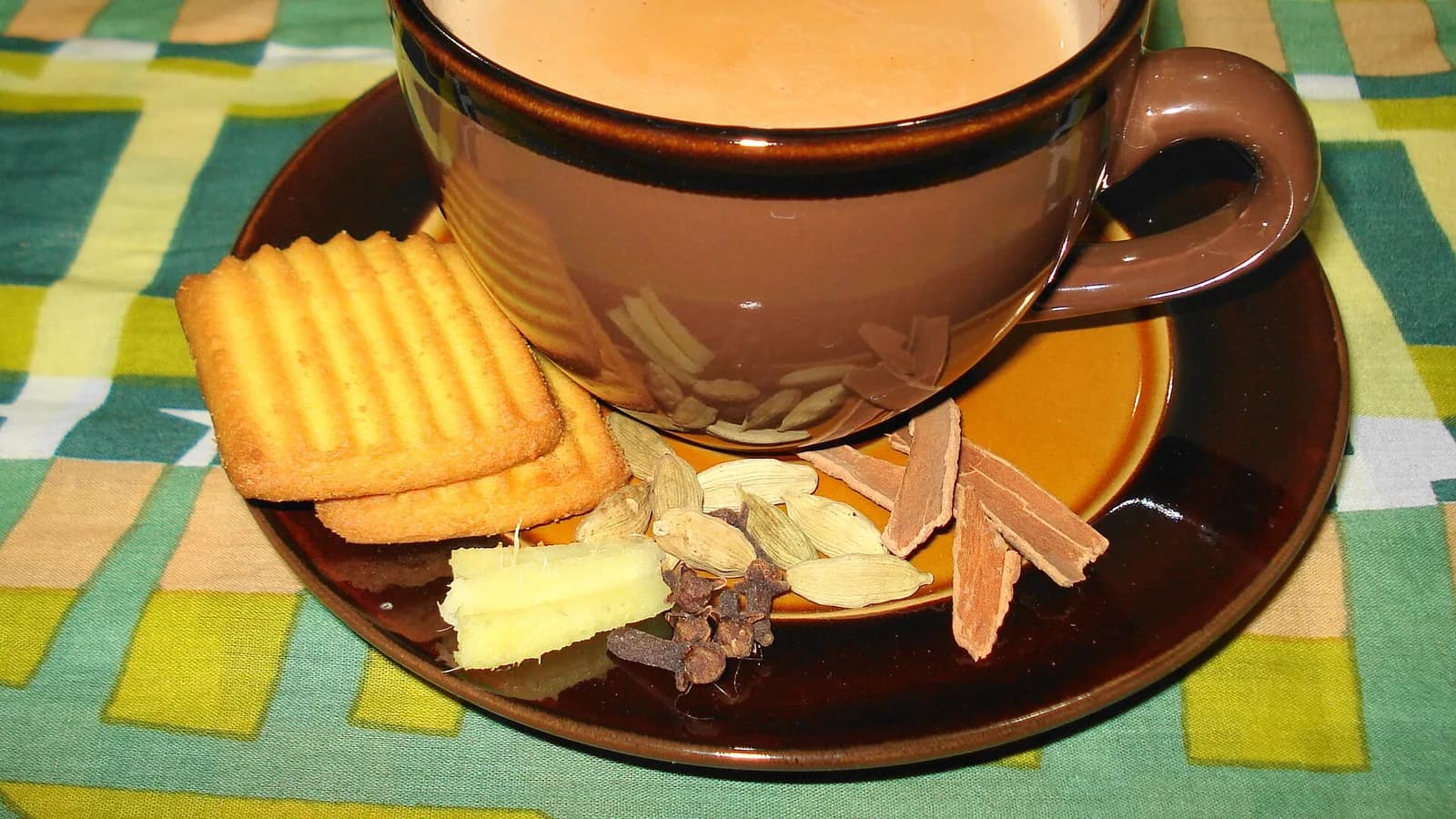
You can travel the length of Nepal on coffee, but you will never quite belong until you accept your first glass of masala chiya. This spiced milk tea — strong black tea boiled with milk, sugar, ginger, and cardamom — is the cup that appears within minutes of stepping into a Nepali home, the steaming glass passed across a roadside counter, and the reward waiting at the end of a long day on the trail. It is small, sweet, scalding, and everywhere.
This guide zooms in on the masala chiya cup itself: the spice blend that defines it, how it differs from plain milk tea, how to order and customize it, and how to brew a proper glass at home. For the wider story of Nepali tea — the Ilam gardens, orthodox versus CTC leaf, and buying tea to take home — see our full Nepali tea and masala chiya guide, which this post complements.
Key takeaways
- Masala chiya is spiced milk tea — black tea boiled with milk, sugar, and warming spices, served hot in small glasses many times a day.
- The spice backbone is ginger and cardamom, often joined by cinnamon, clove, and black pepper; there is no single fixed recipe.
- It is boiled all together, not steeped — milk, water, sugar, spices, and tea cook into one rich liquid.
- Dudh chiya is plain milk tea, kalo chiya is black tea without milk, and masala chiya adds the spice blend.
- "Chiya khayo?" ("Have you had tea?") works almost like a greeting — tea is woven through Nepali hospitality.
- Because it is boiled hard, masala chiya is one of the safer hot drinks for a traveler's stomach.
What makes a chiya a masala chiya
In Nepali, chiya simply means tea, but in everyday life it almost always means a sweet, hot, milky brew. What turns an ordinary glass into masala chiya is the masala — the blend of warming spices simmered into the pot. Strip the spices away and you are left with plain dudh chiya (milk tea); take the milk away too and you have kalo chiya (black tea).
Here is how the common styles compare, so you know what you are ordering:
| Name | What it is | |------|-----------| | Masala chiya | Milk tea simmered with a blend of spices — ginger, cardamom, and more | | Dudh chiya | Plain milk tea, black tea boiled with milk and sugar, no spices | | Kalo chiya | Black tea without milk, sometimes with lemon, sugar, or ginger | | Aduwa chiya | Ginger-forward tea, milk or black, leaning hard on fresh ginger |
The default glass handed to a guest is usually sweet milk tea, and across much of the country that means masala chiya. It is brewed strong, served scalding, and drunk from small glasses rather than mugs — which is exactly why people can get through several in a single day without thinking about it.
The spice blend that defines it
There is no master recipe for masala chiya. The blend shifts from household to household and stall to stall, and that variability is part of its charm. But a recognizable core runs through almost every version. According to recipe write-ups from Nepali tea specialists, the usual building blocks are a short list of warming spices (Nepali Tea Traders; Spoonbun).
| Spice | What it brings | |-------|----------------| | Fresh ginger (aduwa) | Heat and brightness; the most common single addition | | Green cardamom (alaichi) | Floral, sweet aroma — the signature note | | Cinnamon (dalchini) | Warmth and a gentle sweetness | | Clove (lwang) | Deep, pungent background spice | | Black pepper (marich) | A subtle, lingering kick |
Beyond that core, cooks improvise. A leaf of tulsi (holy basil), a pinch of fennel, or a stalk of lemongrass can find their way into the pot, especially in home kitchens. The point is balance rather than a precise formula — most Nepalis brew by feel, adjusting ginger and cardamom until the glass smells right.
The spices are not just for flavor. Ginger, cardamom, cinnamon, and clove are valued in many Himalayan kitchens for their warming, soothing qualities, which is one reason a hot glass of masala chiya feels so comforting on a cold, misty hill morning.
How it is brewed — boiled, not steeped
The single most important thing to understand about masala chiya is that it is boiled all together, not steeped the way Western tea is. The milk, water, sugar, spices, and tea leaves cook into one rich, aromatic liquid, and the longer it simmers the creamier and more strongly spiced it becomes.
A typical method, drawn from Nepali recipe guides, runs roughly like this:
- Bring water to a boil and add crushed or grated ginger along with your whole or ground spices — cardamom, cinnamon, and clove are the usual base.
- Add strong black tea (a CTC leaf is the classic choice for milky chiya) and let it simmer a couple of minutes so the color deepens.
- Pour in milk and sugar to taste and bring it back to a gentle simmer.
- Let it cook a few more minutes; the longer it goes, the richer and more spiced it gets.
- Strain through a fine mesh into small glasses and serve scalding hot.
This is why chiya is often the very first thing you learn in a Nepali cooking class — it is forgiving, improvised, and almost impossible to ruin. If you want to learn it hands-on, our guide to a cooking class in Kathmandu points you toward good ones. It also pairs naturally with the other staples on our Nepali food overview.
A note on CTC versus orthodox leaf
For milky, sugary masala chiya, the muscular CTC leaf (crush, tear, curl) is the traditional pick because it brews strong and dark enough to stand up to milk and spice. The delicate orthodox teas of Ilam are lovely on their own but get a little lost under a heavy masala. The full comparison lives in our Nepali tea guide; for the spiced cup in this post, reach for a bold CTC.
Tea, hospitality, and "chiya khayo?"
To grasp why masala chiya matters in Nepal, watch what happens when you enter a home or a shop: within minutes, a glass of chiya appears. Offering tea is a basic gesture of respect and welcome, and waving it away outright can come across as cold. So central is tea to daily life that "Chiya khayo?" — literally "Have you had tea?" — is used almost like a friendly greeting, an everyday alternative to Namaste (Inside Himalayas; Nepal Traveller).
Out on the street, the chiya pasal — the tea shop — is a social institution. These small roadside stalls and kiosks buzz in the early morning and again in the late afternoon as people stop in to rest, swap news, shelter from rain, and talk. They have long been gathering places for conversation and even political debate, the informal living rooms of Nepali public life (The Annapurna Express).
Learning to accept a glass graciously — and to say thank you — does more for your welcome than almost anything else. Our Nepali phrases every trekker should know guide gets you started, and the broader ordering food in Nepali phrasebook covers drinks too.
Ordering masala chiya like a local
You will never struggle to find chiya in Nepal, but a few words make the cup yours:
- To order: just ask for masala chiya at any stall or restaurant.
- Less sweet: say kam chini (less sugar) — Nepali chiya is often very sweet by default.
- Less spice: say kam masala if the blend is too strong for you.
- More ginger: ask for aduwa chiya for a ginger-forward cup, lovely if you feel a cold coming on.
A few more practical notes:
- Where to find the best: the humblest roadside chiya pasal often pours the most authentic, well-balanced masala chiya — do not judge by the surroundings.
- How it arrives: very hot, very sweet, in a small glass or rustic steel cup. Hold it by the rim; the glass gets hot.
- Cost: a glass of chiya is one of the cheapest things you can buy in Nepal, a matter of a few Nepalese rupees at a local stall (as of June 2026), though tourist cafes charge more. Carry small change.
Masala chiya on the trekking trail
For trekkers, masala chiya is more than a drink — it is a ritual. Teahouses sit along even remote stretches of the popular routes, and a glass of hot ginger or masala tea after a long climb, sipped from a steel cup with the mountains in front of you, is one of the small, reliable joys of trekking in Nepal.
It earns its place on the trail for practical reasons too:
- It warms you fast. At altitude, mornings and evenings are cold, and a scalding spiced glass is the quickest comfort going.
- It is genuinely safer than cold drinks. Because chiya is boiled hard, the rolling boil takes care of the water — making it a reassuring choice when you are unsure about untreated water or ice. For the wider picture, see our guide on whether the water is safe to drink in Nepal.
- The ginger helps. Many trekkers swear by ginger tea (aduwa chiya) for queasy stomachs and the general malaise of gaining altitude — though it is no substitute for proper acclimatization.
A hot glass also pairs perfectly with trail snacks. On the way to base camp you will see it served alongside biscuits, puffed rice, and the hearty plates covered in our Everest teahouse food and accommodation guide.
Masala chiya versus Indian masala chai
Travelers who have been to India often ask whether masala chiya and Indian masala chai are the same thing. They are close cousins, built on the identical idea of black tea boiled with milk, sugar, and a spice blend. The differences are matters of degree and dialect:
- The word: chiya is simply the Nepali term for tea, the same way chai is in Hindi.
- The balance: Nepali masala chiya is often a touch lighter on the spice and leans on ginger and cardamom, where some Indian blends pile on more clove, pepper, and cinnamon — but this varies enormously household to household in both countries.
- The setting: in Nepal the cup is tied to the chiya pasal and the trekking teahouse, which gives it its own distinct character.
In short, if you love masala chai you will feel right at home with masala chiya — and vice versa. Neither is "more authentic"; they are two siblings of the same Himalayan tradition.
Final word
Masala chiya is the warm, sweet thread that runs through a day in Nepal — the welcome at the door, the pause at the roadside stall, the reward at the trekking lodge. Learn to order it the way you like it, accept every glass you are offered, and you will find it is rarely just about the tea. For the bigger picture of where Nepal's tea comes from and how to buy it, carry on to our Nepali tea and masala chiya guide.
Sources
- Nepali tea — Wikipedia
- What Is Chiya? Nepali Milk Tea Recipe & Guide — Nepali Tea Traders
- Masala Chiya (Nepali Milk Tea Recipe) — Spoonbun
- Chiya: Nepal's Beloved Tea Tradition — Nepal Traveller
- Chiya Khayo? Traditional Nepali Tea and Snacks — Inside Himalayas
- The ubiquitous tea shops of Kathmandu — The Annapurna Express
Frequently asked questions
- What is masala chiya?
- Masala chiya is Nepali spiced milk tea, made by simmering strong black tea with milk and sugar plus warming spices like ginger, cardamom, cinnamon, clove, and black pepper. It is the everyday tea of homes and roadside stalls, served scalding hot in small glasses throughout the day.
- What spices go into masala chiya?
- There is no fixed recipe, but the usual backbone is fresh ginger and green cardamom, often with cinnamon, clove, and a little black pepper. Some households add tulsi (holy basil), fennel, or bay. Every family and tea stall balances the blend to its own taste.
- What is the difference between dudh chiya, kalo chiya, and masala chiya?
- Dudh chiya is plain milk tea with no spices, kalo chiya is black tea without milk (sometimes with lemon or ginger), and masala chiya adds a blend of warming spices to milk tea for a richer, aromatic cup. When Nepalis say chiya casually they usually mean sweet milk tea.
- Is masala chiya the same as Indian masala chai?
- They are close cousins built on the same idea of black tea boiled with milk, sugar, and spices. The Nepali version is often a touch lighter on the spice and leans on ginger and cardamom, and the word chiya is simply the Nepali term for tea. Styles vary household to household in both countries.
- How do you order masala chiya in Nepal?
- Just ask for masala chiya at any tea stall or restaurant. To adjust it, say kam chini for less sugar, kam masala for less spice, or aduwa chiya if you want a ginger-forward cup. It is one of the cheapest drinks in the country and is poured fresh all day.
- Is it safe for tourists to drink masala chiya?
- Generally yes, because masala chiya is boiled hard rather than just steeped, and the rolling boil deals with the water. It is one of the more reassuring drinks for a traveler's stomach, which is why a hot glass of chiya is a sensible choice when you are unsure about cold drinks or ice.
- What does chiya khayo mean?
- Chiya khayo literally means 'have you had tea?' and is used almost like a friendly greeting in Nepal. It reflects how central tea is to daily life, where offering a glass to a guest is a basic gesture of welcome and refusing it outright can feel cold.
- How do you make masala chiya at home?
- Boil water with crushed ginger and spices, add strong black tea (a CTC leaf works best) and simmer, then pour in milk and sugar and let it come back to a simmer for a few minutes. Strain into small glasses and serve hot. Longer simmering makes it creamier and more strongly spiced.
Related posts
Dal Bhat — Nepal's National Meal Explained for Travelers
What dal bhat is, what's on the plate, why trekkers live on it, and how to order Nepal's national meal like a local. A practical traveler's guide.
Read postDhido — Nepal's Hill-Country Porridge, Explained
What dhido is, the millet and buckwheat it is made from, how to eat the dhido thali by hand, and why this gluten-free Nepali staple is back in style.
Read postGundruk and Dhido — Nepal's Fermented Greens and Porridge
What gundruk (fermented leafy greens) and dhido are, how they are made and eaten, their health benefits, and why this hill-country pair is a national dish.
Read post