Learn Nepali: A Traveler's Head-Start Before You Land
A short, practical guide to learn Nepali before a Nepal trip — what the language is, how hard it really is, and the few phrases that change everything.
Five words spoken badly open more doors in Nepal than a hundred spoken in English.
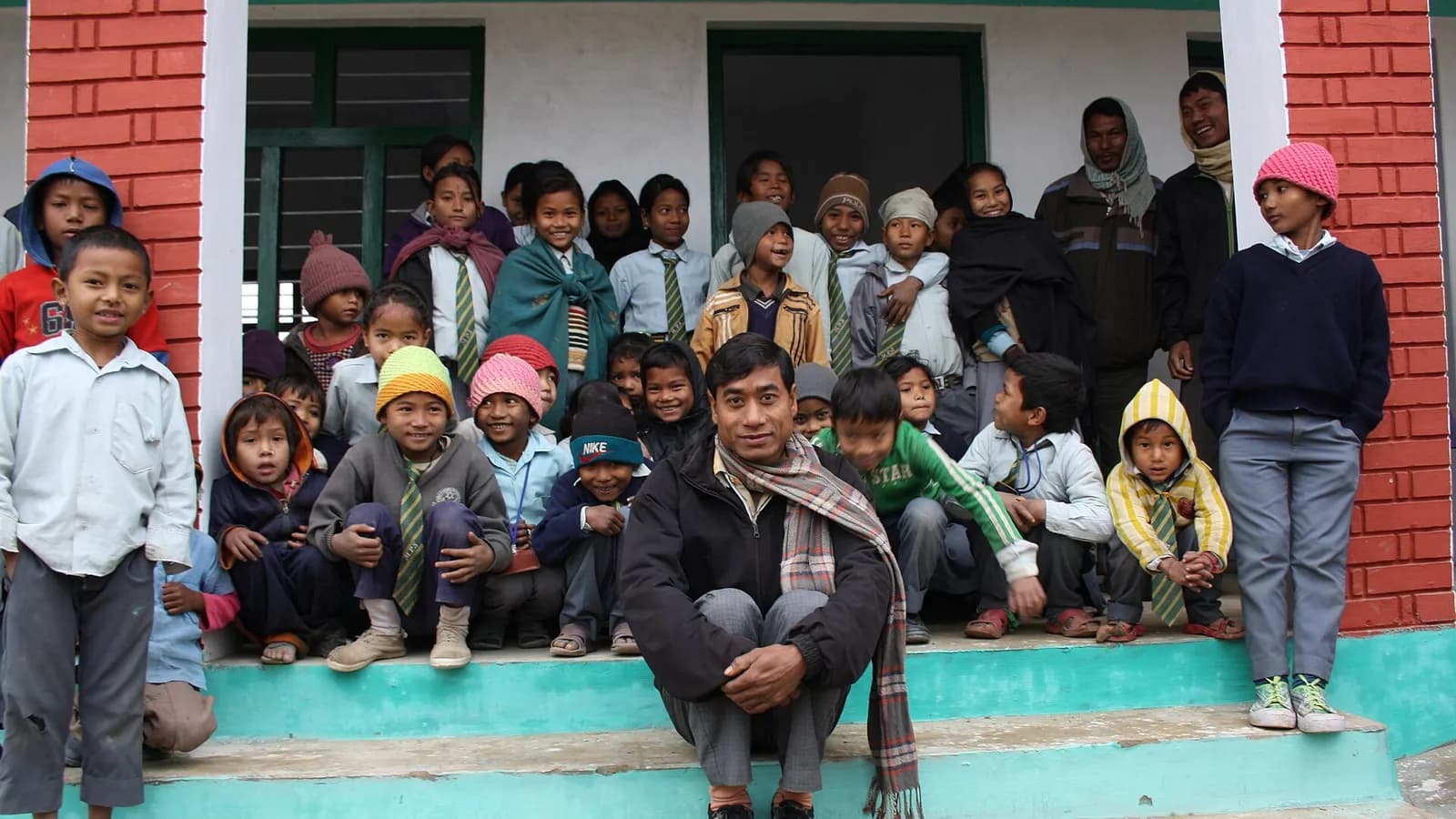
If you are planning a trek or a temple-hopping trip and want to learn Nepali before you go, the good news is that a little goes a remarkably long way. Nobody on the trail expects fluency, but the moment you greet a lodge owner in their own language, the social temperature changes. This post is the short, traveler-facing version: what Nepali actually is, how hard it really is, and the handful of things worth knowing before you land. For the full step-by-step method, this article points you to our complete lesson, how to learn Nepali.
Key takeaways
- Nepali is the official language of Nepal and a lingua franca across its many ethnic groups, written in the phonetic Devanagari script.
- It is an Indo-Aryan language spoken by roughly 32 million people worldwide, about 19 million of them as a mother tongue.
- For English speakers it is moderately hard — the U.S. Foreign Service Institute rates it a Category III language at around 1,100 class hours to professional proficiency — but travel basics come far faster.
- The early wins are greetings, numbers, "how much?", and a few food and direction words, not grammar.
- Duolingo does not offer Nepali (as of June 2026), so a phrasebook, native audio, and a structured free course are your best starting tools.
- A few honest attempts earn warmth and trust; this is about respect, not performance.
What "Nepali" actually is
Nepali is the official language of Nepal and the country's main shared language, used between communities that each have their own mother tongue. It belongs to the Indo-Aryan branch of the Indo-European family — the same broad family as Hindi, Bengali and, further out, English itself. According to language references and Nepal's 2021 census data, it is spoken by roughly 32 million people in total, with about 19 million native speakers, and it served as a mother tongue for just under 45% of Nepal's population while being a second language for many more.
Nepali is written in Devanagari, the same script used for Hindi, Sanskrit and Marathi. That sounds intimidating until you learn its best feature: it is phonetic. One symbol reliably maps to one sound, so once you know the letters you can read any word aloud even if you do not know its meaning — a privilege English spelling never grants. If you want the writing system on its own, start with our learn Devanagari roadmap.
How hard is it, really?
Honestly: in the middle. Nepali is nowhere near as demanding for an English speaker as Mandarin or Arabic, but it is meaningfully harder than Spanish or French. The Foreign Service Institute places it in Category III and estimates around 1,100 class hours to reach professional working proficiency. That number describes diplomatic-level fluency, not the dozen phrases that make a trek smoother — those land in days.
The difficulty is concentrated in two places, and both are very survivable:
| Where it gets tricky | Why | The good news | | --- | --- | --- | | The sounds | Aspirated vs unaspirated consonants (प vs फ) and retroflex vs dental sounds don't exist in English | There are no tones; locals understand approximate pronunciation | | Politeness levels | Three tiers of "you" carry real social weight | Default to the polite form and you are covered nearly everywhere |
The grammar, by contrast, is gentler than newcomers fear. We unpack the full picture in is Nepali hard to learn for English speakers.
Grammar that is friendlier than you expect
A few features actually make Nepali easier than several European languages:
- No articles. There is no a, an or the to fuss over.
- Postpositions, not prepositions. Little words come after the noun instead of before it.
- Verb-last word order. Nepali is Subject-Object-Verb, so "I drink water" becomes, in effect, "I water drink" (म पानी पिउँछु). Internalize this one rule early and your sentences stop sounding like word-for-word English.
The one genuinely new habit is the three levels of respect. Nepali splits "you" into ता (ta, very informal), तिमी (timi, casual) and तपाईं (tapai, polite), and the verb changes to match. As a visitor, defaulting to the polite तपाईं with adults and strangers handles almost every situation. We cover the nuance in Nepali honorifics: tapai, timi and ta.
Nepali vs Hindi — a common mix-up
Travelers who know a little Hindi often assume Nepali is the same. It is not, though the two are close cousins. They share the Devanagari script and a large pool of vocabulary, so prior Hindi genuinely speeds things up. But pronunciation, common verbs and everyday phrasing differ enough that you cannot simply substitute one for the other. If you arrive with Hindi, treat it as a tailwind, not a shortcut. The full comparison lives in Nepali vs Hindi.
The phrases that actually matter first
Before any grammar, load up on the words you will use within an hour of landing. Order them by how often you will reach for them, not alphabetically.
| English | Nepali (romanized) | Where you'll use it | | --- | --- | --- | | Hello / goodbye | Namaste | Everywhere, all day | | Thank you | Dhanyabaad | Shops, guides, porters | | How are you? | Kasto chha? | Greetings, small talk | | How much is it? | Kati ho? | Markets, teahouses, taxis | | Water | Pani | Restaurants, the trail | | Slowly, slowly | Bistarai, bistarai | Acclimatizing on a trek | | I am sick | Malai sancho chhaina | Telling your guide you feel unwell |
A few notes that save embarrassment. Namaste is pressed-palms hello and goodbye in one, said with a small nod. Bistarai ("slowly") is not just a phrase but real altitude advice — pace is what keeps trekkers safe. And the moment you feel off at elevation, telling your guide in plain words matters more than perfect grammar; pair it with our guidance on altitude sickness. For a trail-tested set, see Nepali phrases every trekker should know, and for haggling, Nepali numbers and bargaining.
A realistic plan before your trip
You do not need a course schedule. You need consistency and the right order. Here is a sane way to build a travel head-start:
- Week one — survival phrases. Memorize the table above plus numbers 1 to 10. Say everything out loud, copying native audio rather than guessing from spelling.
- Week two — word order and "to be." Learn the verb-last pattern, and the fact that Nepali splits English "is" into छ (chha, for state and location) and हो (ho, for identity). These two verbs unlock most beginner sentences.
- Ongoing — themed vocabulary. Add small clusters you will actually use in one situation: food, directions, money, time. Twenty words a week reviewed daily beats a hundred crammed once.
- One weekend — the script. Devanagari is a weekend project, not a mountain. Reading your hotel name or a bus signboard is a real confidence boost. Start with the Devanagari alphabet.
Thirty focused minutes a day will take you further than a three-hour cram once a week, because vocabulary needs spaced repetition to stick. The full sequenced method, with a daily routine and the highest-frequency words, is laid out in our complete guide on how to learn Nepali.
Tools to learn Nepali for free
A frequent first question is which app to download. Worth knowing up front: Duolingo does not have a Nepali course as of June 2026, so the owl is not an option here. That is less of a problem than it sounds, because the most useful travel material is a good phrasebook with audio plus a little daily structure.
Everything you need to reach a solid travel level is free on this site:
- A complete, beginner-friendly lesson on how to learn Nepali.
- A day-by-day learning path that sequences script, grammar and phrases so you never wonder what to study next.
- A full phrasebook by situation — greetings, food, money, transport and medical — each phrase with audio and romanization.
- A Devanagari script guide for the weekend you decide to read.
Beyond free resources, dedicated Nepali apps and native-speaker tutoring can add structured practice and real conversation when you are ready for more.
Why even a little Nepali is worth it
Most visitors land with three words — namaste, dal bhat, dhanyabaad — and assume that is the ceiling. The truth is that a handful of well-placed phrases changes the relationship. You stop being a paying stranger and start being a guest. Etiquette guides for Nepal say the same thing repeatedly: a warm namaste, palms together, and a few words of dhanyabaad or kasto chha? signal respect and open genuinely warmer interactions.
That is the real return on a week of casual study. Not fluency, not performance — just the visible effort of meeting people halfway. In Nepal, that effort counts for an enormous amount. Open the how to learn Nepali guide, learn five phrases tonight, and you will arrive sounding like someone who cared enough to try.
Sources
- Nepali language — Wikipedia
- Languages of Nepal — Wikipedia
- Nepali language — Britannica
- Nepali language and alphabet — Omniglot
- Nepali grammar — Wikipedia
- FSI Language Difficulty Rankings — fsi-language-courses.org
- Is Nepali considered a difficult language for English speakers? — Talkpal
- Best apps to learn Nepali (Duolingo availability) — Ling
- How to respect Nepali culture as a tourist — Explore All About Nepal
- Customs and etiquette in Nepal — Rough Guides
Frequently asked questions
- Is it worth learning Nepali just for a short trip?
- Yes, even a dozen phrases is worth it. Greetings, numbers, and 'how much?' make markets, taxis and teahouses smoother, and locals warm to visitors who try even a little Nepali.
- Does Duolingo have a Nepali course?
- No. As of June 2026 Duolingo does not offer Nepali, so learners use phrasebooks, dedicated Nepali apps, native-speaker audio, or a free structured course like the one on this site.
- How long does it take to learn travel Nepali?
- For greetings, numbers, food and directions, most learners feel useful within a few weeks of short daily practice. Full conversational ability takes much longer, as with any language.
- Do I need to read Devanagari to speak Nepali?
- Not to start. Romanization gets you talking in week one, but Devanagari is phonetic and shows sounds romanization hides, so reading it pays off quickly once you are past survival phrases.
- Is Nepali the same as Hindi?
- No. They are related Indo-Aryan languages that share the Devanagari script and many words, so prior Hindi helps, but the grammar, pronunciation and everyday vocabulary differ enough to need separate study.
- What is the single most useful Nepali word for travelers?
- Namaste. It works as hello and goodbye at any time of day, pairs with palms pressed together, and instantly signals respect to almost anyone you meet across Nepal.
Related posts
Basic Nepali Phrases: A Traveler's Starter Kit
Basic Nepali phrases for tourists and trekkers — greetings, numbers, food, directions and emergencies, with pronunciation and Devanagari.
Read postHow to Say Hello in Nepali: Namaste and Beyond
How to say hello in Nepali — what namaste means, how to pronounce it, the folded-hands gesture, and when to use namaskar instead. A traveler's guide.
Read postHow to Say Thank You in Nepali (Dhanyabaad Guide)
How to say thank you in Nepali — dhanyabaad pronunciation, formal vs casual use, the namaste gesture, and what locals actually expect from travelers.
Read post