Learn Devanagari Script — A Roadmap for Adults
Two hours to recognize 25 letters. A week to sound out shop signs. Two weeks to read children's books. The honest schedule for adult learners.
Devanagari looks complicated until you realize it's just an alphabet — with a more honest relationship between letters and sounds than English has.
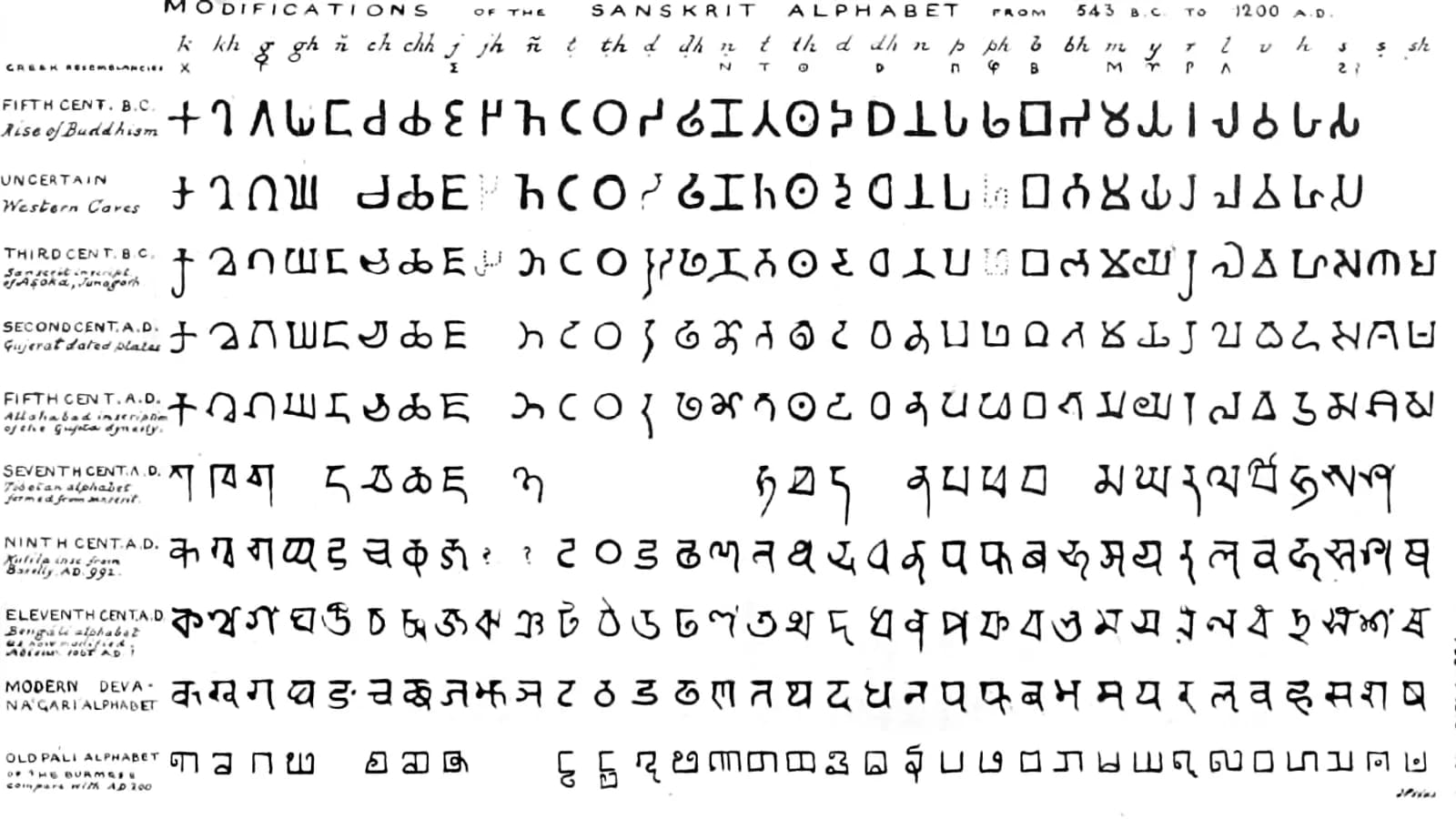
The first time most foreigners see Nepali script — Devanagari — they assume it's like Chinese or Arabic: a complete alien system that requires years to learn.
It isn't. Devanagari is an alphabet — a phonetic script with a one-to-one mapping between symbols and sounds. There are 33 consonants and 11 vowels. Once you learn what each symbol sounds like, you can read any Nepali word, even if you don't know what it means.
That's a privilege English doesn't grant. Tough, though, thought, through — same letter pattern, four different pronunciations. Devanagari doesn't do this. Each letter has one sound, every time.
Here's the honest schedule for an adult learner who can commit a few hours.
Hour 1: The vowels
There are 11 vowels in Devanagari. They appear as standalone letters at the start of words, and as marks (called matras) attached to consonants in the middle and end of words.
The basics:
- अ (a) — short 'a' like in "cup"
- आ (aa) — long 'a' like in "father"
- इ (i) — short 'i' like in "bit"
- ई (ii) — long 'i' like in "machine"
- उ (u) — short 'u' like in "put"
- ऊ (uu) — long 'u' like in "boot"
- ए (e) — like 'e' in "say"
- ऐ (ai) — like 'i' in "high"
- ओ (o) — like 'o' in "go"
- औ (au) — like 'ow' in "cow"
- ऋ (ri) — rarely used, vestigial Sanskrit vowel
The matras (vowel marks attached to consonants):
| Vowel | Matra | Example with क (ka) | |---|---|---| | आ (aa) | ा | का (kaa) | | इ (i) | ि | कि (ki) — the mark goes BEFORE the consonant when written but sounds AFTER | | ई (ii) | ी | की (kii) | | उ (u) | ु | कु (ku) | | ऊ (uu) | ू | कू (kuu) | | ए (e) | े | के (ke) | | ऐ (ai) | ै | कै (kai) | | ओ (o) | ो | को (ko) | | औ (au) | ौ | कौ (kau) |
The default vowel sound when no matra is attached is a (the schwa-like short 'a'). So क by itself is ka; क with no matra in a final position is sometimes silent or near-silent.
Hour 2: The consonant groups
The 33 consonants are organized in 5 groups of 5, plus 8 extras. Each group of 5 represents sounds made at the same point of articulation in the mouth — a beautifully systematic organization that makes learning faster.
Velar (back of the mouth) — कवर्ग: क (ka), ख (kha), ग (ga), घ (gha), ङ (nga)
Palatal (middle of the mouth) — चवर्ग: च (cha), छ (chha), ज (ja), झ (jha), ञ (nya)
Retroflex (curled tongue) — टवर्ग: ट (ṭa), ठ (ṭha), ड (ḍa), ढ (ḍha), ण (ṇa)
Dental (tongue against teeth) — तवर्ग: त (ta), थ (tha), द (da), ध (dha), न (na)
Labial (lips) — पवर्ग: प (pa), फ (pha), ब (ba), भ (bha), म (ma)
Semivowels + sibilants + others: य (ya), र (ra), ल (la), व (va), श (sha), ष (sha), स (sa), ह (ha)
Each group follows a 5-pattern: unaspirated unvoiced, aspirated unvoiced, unaspirated voiced, aspirated voiced, nasal.
For an English speaker, the distinctions to learn are:
- Aspirated vs unaspirated: क (ka) vs ख (kha). Both have a 'k' sound; the aspirated has a small puff of air after.
- Retroflex vs dental: ट (ṭa, tongue curled back) vs त (ta, tongue at teeth). Both sound like 'ta' in English, but Nepali distinguishes them clearly.
- Voiced aspirated: घ (gha), झ (jha), ढ (ḍha), ध (dha), भ (bha). These don't exist in English — they're the unique sounds that take practice.
See our pronunciation tools for audio examples of each.
Day 1-3: Reading short words
By the end of hour 2, you can recognize all the letters in their standalone forms. The hard part is reading them when they combine.
Examples to practice:
- नमस्ते (na-ma-ste) — namaste
- धन्यवाद (dhan-ya-vaad) — thank you
- भात (bhaat) — rice
- दूध (duudh) — milk
- चिया (chi-yaa) — tea
Practice with shop signs in Thamel. Even if you don't know what the shop sells, sound out the words. You'll find that many shop names are English loan words written in Devanagari — "computer" (कम्प्युटर), "hotel" (होटल), "restaurant" (रेस्टुरेन्ट).
Day 4-7: Conjuncts
The trickiest part: conjunct consonants — when two consonants are written together without a vowel between them. They merge into a combined symbol.
Examples:
- क + ष = क्ष (kṣa)
- त + र = त्र (tra)
- न + य = न्य (nya)
- प + र = प्र (pra)
- ज + ञ = ज्ञ (jña)
There are dozens of these. You don't need to learn them all upfront — they're recognizable in context once you know the base consonants. The mind learns to parse them naturally with reading practice.
Week 2: Sentence reading
By day 14, you can sound out most things on Nepali signage, menus, and short children's books.
You may not understand what the words mean — that's a vocabulary issue, not a script issue. But you can convert the squiggles into sounds, and that's the threshold for being functional.
What you can do with limited reading
Even at the "can sound out words but doesn't know vocabulary" stage:
- Read shop signs in Thamel and the old city
- Recognize your name if Nepali friends write it (helps in introductions)
- Read menus with translation help
- Read bus signs with destinations
- Spot familiar place names on maps
- Send and receive simple text messages in Nepali
This is genuinely useful. Vocabulary builds slowly but the script is the unlock.
How to practice
Phone apps:
- Google Translate — type Devanagari, see meaning. Useful for vocabulary building once you can read.
- Memrise / Anki decks for Nepali — flashcards specifically for Devanagari recognition
Physical:
- Print and trace handwriting worksheets. See our Devanagari worksheets printable.
- Stop in front of any sign in Thamel. Sound it out. Move on.
- Buy a children's book in Nepali — they're cheap (NPR 50-100), use simple vocabulary, and have illustrations to support reading.
Within the KidSchooler site:
- The script tracer (drag your finger over each letter)
- The confusables guide (which letters are easy to mix up)
- The stroke order guide
Common adult-learner mistakes
-
Trying to learn all 33 consonants in one session. They'll blur. Learn 8-10 at a time, with breaks.
-
Skipping the matras. They're not optional — they appear in every word. Get comfortable with them early.
-
Memorizing without sounding out. Each letter is a sound. Always say it aloud as you write it. Silent recognition doesn't build the audio-symbol link.
-
Comparing Devanagari to Latin alphabet. They're different systems. Don't try to find equivalent letters; learn each Devanagari letter as itself.
-
Stopping after the first week. The first week feels like progress; week 2-3 feels like grinding. The breakthrough comes when conjuncts start parsing naturally — usually around week 3.
The honest commitment
| Time investment | What you can do | |---|---| | 2 hours focused | Recognize 25 common letters | | 1 week (30 min/day) | Sound out shop signs in Thamel | | 2 weeks | Read children's books with help | | 1 month | Read menus, signs, basic articles | | 3 months consistent | Read newspapers slowly |
For a tourist trip, 2 hours before flying is enough to make signs in Nepal feel less alien. 1 week before flying makes you genuinely functional at the script level.
Why bother?
Travelers who can read Nepali script:
- Catch scam pricing on shops with separate Nepali and English price tags (when they exist)
- Order from off-menu options
- Read trail signs in trekking regions
- Have conversations that start with "you can read Nepali?" which opens doors
The pragmatic case is real. The cultural case — that learning the script is a small act of respect — is real too.
Pre-trip checklist
- 2 hours minimum with the Devanagari guide before flying — start with the Nepali vowels
- Print the Devanagari worksheets
- A few children's books in Nepali (buy in Kathmandu, NPR 50-100 each)
- A Devanagari flashcard app on your phone
- The phrasebook so you have vocabulary to apply the script to
The script looks intimidating from outside. From inside, it's an alphabet — and an honest one. Worth two hours.
Spotted an error in this post? Tell us or suggest a correction.
Related posts
ABC Trek: A Plain-English Guide to Annapurna Base Camp
The ABC trek (Annapurna Base Camp) explained — the route, how many days it takes, difficulty, the best seasons, and what daily trail life is really like.
Read postAma Dablam Climb: 2026 Expedition Guide (6,812m)
An Ama Dablam climb and expedition guide for 2026 — height, the Southwest Ridge route, camps, fixed ropes, difficulty, permits, cost and the best seasons.
Read postAnnapurna vs Manaslu: Which Trek Should You Choose?
An Annapurna vs Manaslu decision guide for trekkers — compare permits, crowds, difficulty, infrastructure and cost to pick the right Himalayan route.
Read postAsan Bazaar Kathmandu: Old Town Market Guide
A visitor guide to Asan bazaar, Kathmandu's oldest market — its six-road square, Annapurna Temple, what to buy, when to go, and how to get there.
Read postAyurveda Nepal: A Traveller's Guide to Healing
Ayurveda Nepal explained for tourists — the history, the doshas, treatments like Panchakarma and Shirodhara, where to go and how to choose a centre safely.
Read postBest Restaurants Pokhara Lakeside: Where to Eat
The best restaurants in Pokhara Lakeside — lakeside trout, wood-fired pizza, Tibetan momos and healthy cafes, with what to order and rough 2026 prices.
Read post