Do I Need a Visa for Nepal? 2026 Answer by Nationality
Do I need a visa for Nepal? Who needs one, who doesn't, who must apply at an embassy, plus 2026 fees and documents — sorted by your passport.
For almost everyone the answer is yes — but it is a stamp you buy on arrival, not a form you fight for months in advance.
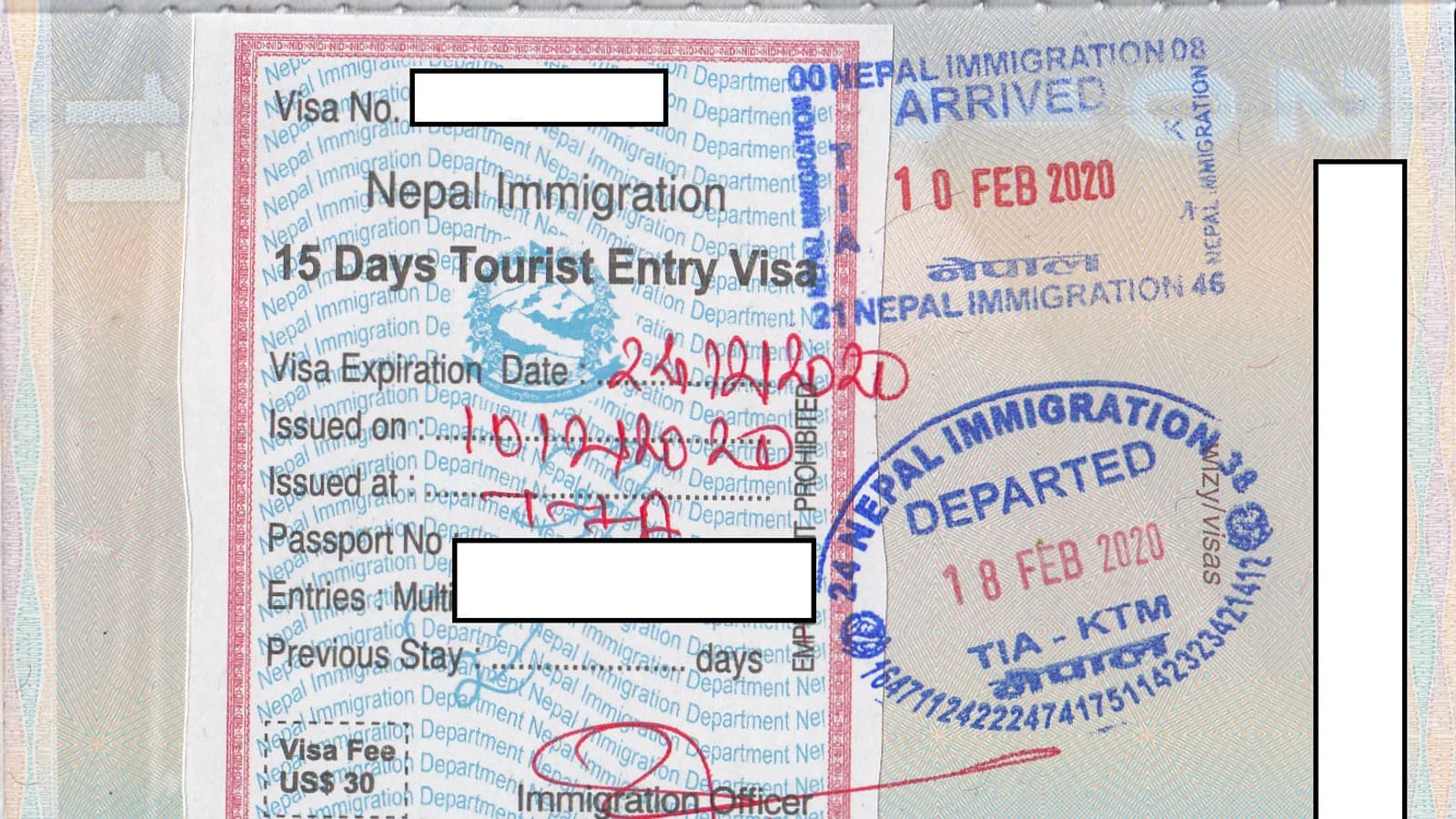
If you are planning a trek, a temple tour, or a slow month in the hills, one of the first questions is simple: do I need a visa for Nepal? For the overwhelming majority of visitors the answer is yes — but it is one of the easiest visas in Asia to get. Most people simply buy a tourist visa when they land in Kathmandu, or pre-fill a form online to skip a queue. A small group needs nothing at all, and another small group must apply at an embassy weeks ahead.
This guide sorts the answer by your passport, lists the current fees and documents, and flags the few situations where "just get it on arrival" is the wrong plan. Rules can change, so always confirm the live details on the Nepal Department of Immigration site before you book flights.
Key takeaways
- Citizens of almost every country do need a tourist visa for Nepal, but most can get it on arrival at the airport or at a staffed land border.
- Indian citizens are the big exception — no visa, no fee, just proof of Indian nationality.
- About a dozen nationalities cannot use visa on arrival and must apply at a Nepali embassy or consulate first.
- The tourist visa is multiple-entry and costs USD 30 / 50 / 125 for 15 / 30 / 90 days (as of June 2026).
- SAARC citizens (except Afghanistan) and children under 10 (except US citizens) usually get a free visa under set conditions.
- You can stay up to a maximum of 150 days per calendar year on a tourist visa; overstaying brings fines.
The short answer for most travelers
If you hold a passport from the United States, the United Kingdom, Canada, Australia, anywhere in the EU, or most of Asia, South America and beyond, you need a tourist visa — and you can get it on arrival. Practically, that means you walk off the plane at Tribhuvan International Airport, fill a short form (or scan a pre-filled barcode), pay in cash, and get a sticker in your passport. The same visa-on-arrival system runs at designated land borders too.
The official tourist visa is multiple-entry, so you can leave Nepal — for a side trip to Bhutan or India, say — and come back within the validity period without buying a new one. That matters if you are combining countries on one trip.
For the full step-by-step of what the airport actually looks like, see our walk-through of the Nepal visa on arrival process, which covers the kiosks, the bank counter, and how to dodge the longest line.
What "on arrival" really means
Visa on arrival is convenient, but it is not instant. At peak hours, when several wide-body flights from the Gulf and Bangkok land in the same window, the immigration line can run long. The official advice is blunt: getting a visa on arrival "may take several hours" on a busy day. The fix is to fill the application online before you fly, which we cover below.
Who does NOT need a visa
There is essentially one group who needs no visa at all: Indian citizens. Under the 1950 Indo-Nepal Treaty of Peace and Friendship, Indians can enter, live, and work in Nepal without a visa, and there is no entry fee or fixed time limit on their stay.
That does not mean no documents. Indian nationals must be able to prove Indian nationality at the border. Accepted proof includes an Indian passport or a Voter ID (Election Commission photo card). For minors, a birth certificate or a school ID (when accompanied by a parent) is typically required. Carry a valid photo ID even though no visa is involved.
If you are weighing the two countries against each other for a trip, our Nepal vs India travel comparison breaks down cost, intensity, and logistics.
Who must apply at an embassy first
A specific list of nationalities cannot get a visa on arrival under normal circumstances. Citizens of these countries must obtain a visa in advance by applying at a Nepali embassy or consulate abroad — turning up at the airport without it can mean being turned away.
As reported by immigration and travel sources, the countries that have featured on the no-visa-on-arrival list include:
| Region | Countries (historically listed) | |---|---| | Africa | Nigeria, Ghana, Cameroon, Ethiopia, Liberia, Somalia, Zimbabwe, Eswatini (Swaziland) | | Middle East / Asia | Afghanistan, Iraq, Syria, Palestine |
This list can change with Nepal's foreign relations and security policy, so treat it as a prompt to check, not a guarantee. If your passport is anywhere near this list, verify directly with the Department of Immigration or your nearest Nepali mission well before you travel. Afghan citizens are a special case — they may only get visa on arrival on the Department's recommendation.
How much it costs and what you get
For travelers who do buy a tourist visa, the fee depends on how long you want. The current structure is straightforward.
| Duration | Fee (as of June 2026) | Entry type | Good for | |---|---|---|---| | 15 days | USD 30 | Multiple | A quick Kathmandu visit plus one short trek | | 30 days | USD 50 | Multiple | The standard tourist trip — most people choose this | | 90 days | USD 125 | Multiple | Long treks, several regions, or staying across festivals |
Pay in US dollars cash for the smoothest experience. Other major currencies (EUR, GBP, AUD and similar convertibles) are accepted at the booth, and some counters take international cards, but cash in clean, untorn notes is fastest and most reliable.
If your plans run long, the visa is extendable — but only up to a maximum of 150 days in a single calendar year. The extension is handled at the Department of Immigration in Kathmandu (with a smaller office in Pokhara), and we cover the fees and queue tactics in extending your Nepal tourist visa.
Free (gratis) visas
Not everyone pays. The main gratis categories are:
- Children under 10 years old — free, except for US citizens. Bring the child's passport or birth certificate as proof of age.
- SAARC citizens (Bangladesh, Bhutan, Maldives, Pakistan, Sri Lanka) — a free visa of up to 30 days, once per visa year, on a first visit; Afghanistan is excluded from this automatic benefit.
- Chinese nationals and Non-Resident Nepali (NRN) card holders — gratis under the Department's stated rules.
Documents you need at the border
Whatever your nationality, the paperwork for a tourist visa is light. Have these ready before you reach the counter:
- A passport with at least 6 months' validity beyond your arrival date.
- At least one blank passport page for the visa sticker and stamp.
- A passport-size photo with a light background. Airport kiosks have a built-in camera, but a spare physical photo is cheap insurance if a machine is down.
- The visa fee in cash (USD preferred), ideally in exact or near-exact change.
- A pen — genuinely useful, and surprisingly scarce in the arrivals hall.
You generally do not need an invitation letter or a confirmed hotel booking for a tourist visa. If you are planning to trek, the visa is separate from your trail permits — see our overview of Nepal trekking permits to understand what else you will buy once you are in the country.
Apply online to skip the queue
You do not have to wait until you land to start. Nepal lets you pre-fill the tourist visa application online before arrival, and the move is worth it in peak season.
The way it works: you complete the form on the Department of Immigration's online portal, then receive a submission receipt with a barcode. That receipt is valid for about 15 days and is automatically deleted from the system after that window, so fill it within roughly two weeks of your flight, not months ahead. When you land, you take the printed barcode to a dedicated fast-track counter and bypass the kiosk step entirely. On a busy day this can save you a meaningful chunk of time at the airport.
Online form vs. airport kiosk
| Option | When to do it | Best for | |---|---|---| | Online pre-application | Within ~14 days before you fly | Peak-season arrivals; anyone who hates queues | | Airport kiosk | On arrival | Spontaneous trips; if you forgot to pre-fill |
Either way you still pay the fee in person at the airport — the online step is about the form and the queue, not the payment.
Entering by land: read this first
If you are crossing into Nepal overland — from India, or from Tibet via the Chinese border — the visa logic shifts slightly. Non-Indian travelers still need a Nepal visa to enter by land, and you should not assume that a quiet, unstaffed crossing means immigration is optional. Official guidance warns that authorities do not stop every foreign visitor at land borders to process documents, which can leave you with an unstamped, technically illegal entry. Arrange your visa at a properly staffed border post (or in advance) and make sure you actually get the stamp.
Overstaying is taken seriously: any overstay brings daily fines, and staying beyond the 150-day annual limit can lead to deportation and a possible ban on returning. The system is friendly, but the dates on your sticker matter.
A quick decision guide
To wrap the "do I need a visa for Nepal" question into one glance:
| Your passport | What you need | |---|---| | India | No visa; carry proof of Indian nationality | | SAARC (not Afghanistan) | Free visa up to 30 days, once per visa year | | Most other countries | Tourist visa — get it on arrival or pre-fill online | | Afghanistan, Nigeria, Ghana, Somalia, Syria, etc. | Apply at a Nepali embassy in advance (check the live list) |
For the bigger trip picture — whether the journey suits you at all — pair this with our honest take on whether Nepal is worth visiting and the current Nepal travel advisory for your country.
Sources
- Nepal Tourism Board — Tourist Visa Information
- Nepal Department of Immigration — Tourist Visa
- Nepal Department of Immigration — Visa on Arrival
- Nepal Department of Immigration — Information for Indian Nationals
- U.S. Department of State — Nepal International Travel Information
- Visa policy of Nepal — Wikipedia
Frequently asked questions
- Do I need a visa to visit Nepal as a tourist?
- Almost certainly yes, unless you are an Indian citizen. Most travelers buy a tourist visa on arrival at the airport or apply online beforehand.
- Can I get a Nepal visa on arrival?
- Yes, citizens of most countries can get a visa on arrival at Tribhuvan International Airport in Kathmandu and at designated land borders, paid in cash.
- Which nationalities cannot get a Nepal visa on arrival?
- Citizens of about a dozen countries including Afghanistan, Nigeria, Ghana, Somalia, Syria and Zimbabwe must apply at a Nepali embassy in advance; check the official list before booking.
- Do Indian citizens need a visa for Nepal?
- No. Under the 1950 Indo-Nepal treaty, Indian nationals enter without a visa, but they must carry proof of Indian nationality such as a passport or voter ID card.
- How much does a Nepal tourist visa cost in 2026?
- It is USD 30 for 15 days, USD 50 for 30 days, and USD 125 for 90 days (as of June 2026), and each is a multiple-entry visa.
- Is the Nepal tourist visa free for children?
- Children under 10 years old generally get a gratis (free) visa, except for US citizens, when you show proof of the child's age such as a passport or birth certificate.
- How long can I stay in Nepal on a tourist visa?
- A tourist visa can be extended up to a maximum of 150 days within a single calendar year; staying beyond that or overstaying brings fines and possible deportation.
- Do I need a visa if I only enter Nepal by land from India or Tibet?
- Non-Indian travelers still need a Nepal visa to enter by land, so arrange it in advance or get it at the staffed border post; do not assume an unstaffed crossing skips immigration.
Related posts
Nepal 15 Day Visa: Cost, Rules, and When to Pick It
The Nepal 15 day visa costs USD 30, is multiple-entry, and suits short trips. Who it fits, who should size up, and how to extend it if plans change.
Read postNepal 30 Day Visa: Cost, Rules, and Who It Suits
A focused guide to the Nepal 30 day visa — the USD 50 fee, multiple-entry rules, when to pick it over 15 or 90 days, and how to extend.
Read postNepal e-Visa: Online Application, ETA, and What to Expect
How the Nepal e-visa and ETA system actually works in 2026 — what you can do online, what still happens at the airport, fees, and documents.
Read post