Where to See Red Panda in Nepal: Regions Compared
Where to see red panda in Nepal: a region-by-region guide to eastern community forests, national parks, the Ilam festival, and how to reach each.
Pick the right hillside and the odds change completely — the habre is not everywhere, it is somewhere very specific.
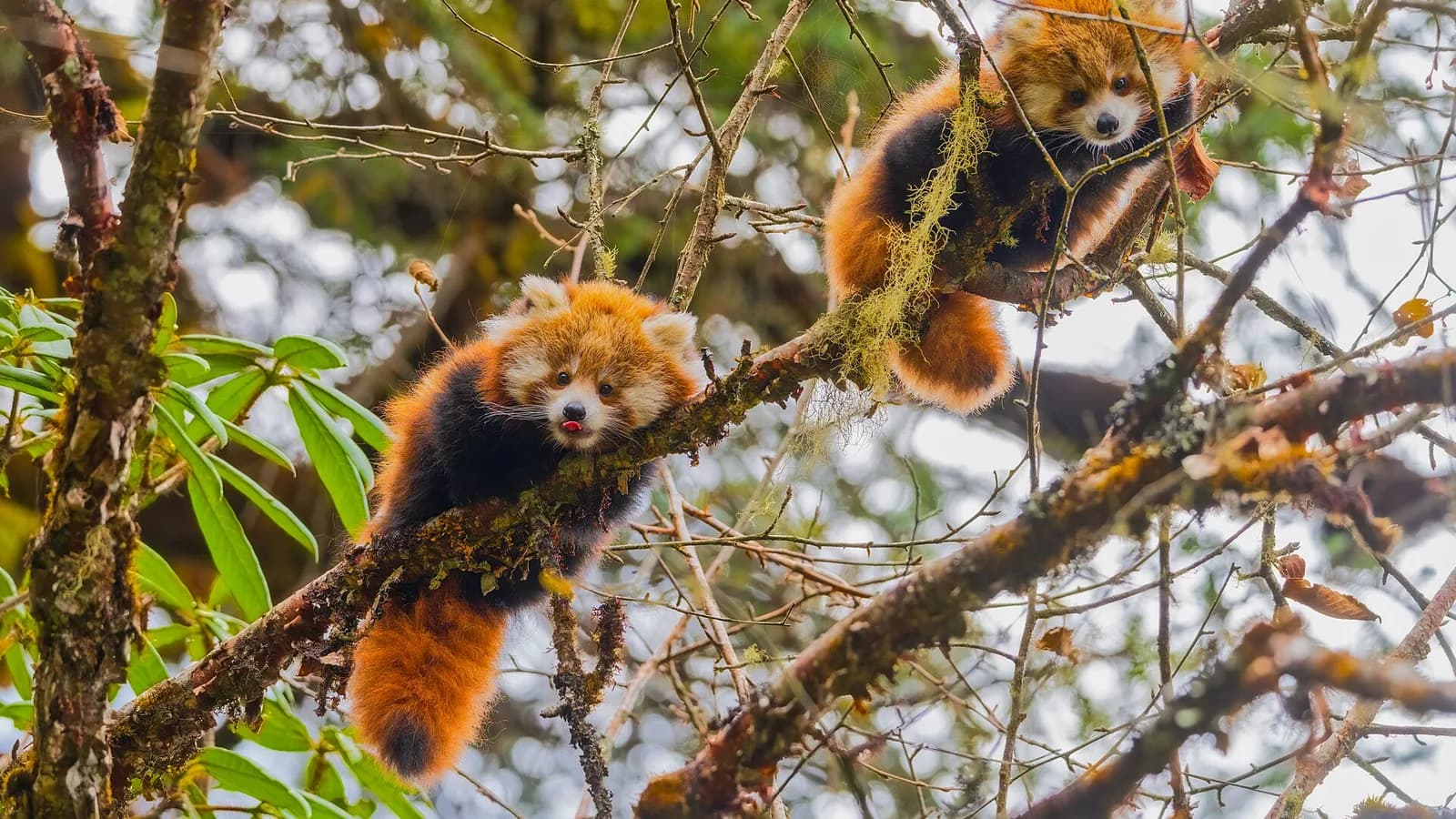
Most travellers asking where to see red panda in Nepal start by looking at the famous national parks — and that is the wrong map. The red panda (locally the habre) is not spread evenly across the country; it clings to specific cool, bamboo-rich forest belts, and your realistic odds of a wild sighting depend almost entirely on choosing the right region. This guide is a practical companion to our main red panda in Nepal overview: it compares the regions head to head, explains how to reach each, and helps you pick where to actually point your trip.
Key takeaways
- The east wins decisively. The Panchthar-Ilam-Taplejung (PIT) corridor around Ilam offers the best wild sightings, thanks to daily local tracking — not just good habitat.
- National parks have red pandas but not reliable viewing. Langtang, Sagarmatha, Makalu Barun, Rara and Kanchenjunga all fall within the range, yet none offers the eastern corridor's organised tracking.
- Langtang is the closest range to Kathmandu, useful if you want a chance at altitude without crossing the country, but sightings there are opportunistic.
- Ilam hosts a Red Panda Festival, a community celebration worth timing a visit around if dates align.
- Getting east takes effort — via Bhadrapur or overland to Ilam — which is exactly why the habitat stays quiet and intact.
- Captive viewing exists at the Central Zoo in Lalitpur, but it is an enclosure, not a wild encounter.
The short answer: go east
If you only remember one thing, remember this: the single best place to see a wild red panda in Nepal is the PIT corridor in the far east, accessed from Ilam district. This stretch of community-managed forest holds an estimated quarter of Nepal's red pandas, and a network of around four dozen trained Forest Guardians monitors it year-round.
That last point is the whole game. Red pandas are shy, camouflaged and largely solitary, so finding one is less about habitat quality alone and more about having someone who reads the forest daily — droppings, latrine sites, claw marks on bamboo, shed fur. The eastern corridor is the one place in Nepal where that human layer of knowledge exists at scale, which is why organised ecotrips there report strong sighting success while a casual park visit almost never does.
For the full picture of how those trips work, the homestays, and the conservation context, see the main red panda in Nepal guide. The rest of this article focuses on the geography — comparing where you could go and what each option realistically offers.
Region-by-region comparison
Red pandas need temperate forest with a bamboo understorey, generally between roughly 2,200 and 4,000 metres. That rules out the lowland Terai parks like Chitwan and Bardia entirely (those are tiger and rhino country). Within the mid-mountain belt, here is how the realistic options stack up.
| Region / area | Where it is | Realistic sighting odds | Access effort | | --- | --- | --- | --- | | PIT corridor (Ilam, Panchthar, Taplejung) | Far east | Best — daily Forest Guardian tracking | High (cross-country) | | Kanchenjunga Conservation Area | Far east | Good habitat, but remote and unstructured | Very high | | Langtang National Park | North of Kathmandu | Opportunistic only | Moderate | | Makalu Barun National Park | East | Rich habitat, very remote | Very high | | Sagarmatha (Everest) NP | Northeast | Present in lower forests, incidental | Moderate to high | | Rara National Park | Far northwest | Present, sightings rare | High | | Central Zoo, Lalitpur | Kathmandu Valley | Guaranteed but captive | Very low |
The pattern is clear: the eastern community forests are the only place where genuinely good odds and a manageable (if long) trip overlap. The remote eastern parks have superb habitat but lack the tracking infrastructure, while the central and northern parks are easier to reach but offer only chance encounters.
Why the corridor beats the parks
It is worth stressing because it is counterintuitive. A national park sounds like the obvious place to see protected wildlife, but Nepal's red panda parks protect the species across vast, rugged terrain without a dedicated daily-monitoring network aimed at visitor sightings. The PIT corridor, despite being unprotected community forest, has spent a decade building exactly that network. Conservation here is led by local guardians and homestay families rather than fences, and the by-product is that travellers can realistically look for a wild red panda with expert help.
If you are short on time: Langtang
Not everyone can commit to crossing the country to the far east. If your itinerary is anchored near Kathmandu, Langtang National Park is the closest red panda range to the capital, reachable overland in roughly a day to the trailhead around Syabrubesi. The park genuinely shelters red pandas in its forested zones.
The honest caveat: there is no equivalent of the eastern guardian network here, so a sighting is a matter of luck on the trail rather than something a guide can reliably arrange. Go to Langtang for its valley, villages and post-earthquake recovery story — and treat a flash of rust-red in the bamboo as an unexpected gift. For broader seasonal planning, our best time to visit Nepal guide covers the wider weather picture.
The Ilam Red Panda Festival
Eastern Nepal has turned its flagship animal into a point of local pride. Ilam district hosts a Red Panda Festival that combines cultural programmes with conservation awareness, celebrating both the habre and the community work protecting it. It is a chance to see the human side of red panda country — the tea-growing hill towns, the homestay families, and the guardians who do the year-round tracking.
Festival dates shift from year to year and are not always fixed far in advance, so confirm timing locally or through the Red Panda Network before you build a trip around it. Even outside festival season, Ilam's green tea gardens and cool climate make the area a worthwhile destination in its own right.
How to reach red panda country
Getting to the eastern corridor is the main logistical hurdle, and it is deliberately off the standard tourist track.
To the eastern PIT corridor
- By air: Fly from Kathmandu to Bhadrapur (Bhadrapur Airport) in the eastern Terai, then continue by road up into the hills toward Ilam and the community forests.
- Overland: A long road journey east connects Kathmandu to Ilam; many travellers combine it with the eastern lowlands.
- On foot: From the road-head villages, the actual red panda forests are reached by guided walking — these are moderate multi-day treks at altitude through steep, mossy terrain, not roadside stops.
To Langtang (the closer option)
- Travel overland from Kathmandu to Syabrubesi, the usual gateway, then trek into the park. This is far more accessible than the east but, as noted, far less reliable for sightings.
The effort involved in reaching the east is part of why it works as habitat: low visitor numbers and intact forest go hand in hand. A small network of homestays in the corridor hosts only modest numbers of foreign visitors each year, keeping the experience low-impact.
Seeing one without a trek
If a wild encounter is not realistic for your trip but you still want to see the animal, Nepal's Central Zoo in Jawalakhel, Lalitpur (in the Kathmandu Valley) keeps captive red pandas. It is an enclosure visit rather than a wild sighting, and it lacks the magic of finding one in cloud forest — but it is a guaranteed, accessible way to see a habre up close, and it pairs easily with sightseeing around Patan. Our Patan (Lalitpur) guide covers the wider area.
For the wild experience, though, there is no shortcut. The combination of remote eastern habitat, shy animals and expert local tracking is precisely what makes a genuine sighting memorable.
Quick decision guide
To match the region to your trip:
| Your priority | Best choice | | --- | --- | | Best chance of a wild sighting | PIT corridor, eastern Nepal (from Ilam) | | Staying near Kathmandu | Langtang National Park (opportunistic) | | Cultural celebration of the species | Ilam Red Panda Festival | | Guaranteed viewing, minimal travel | Central Zoo, Lalitpur (captive) | | Pristine remote wilderness | Kanchenjunga or Makalu Barun (very remote) |
Whatever you choose, go with trained local guides, keep your distance, stay quiet, and treat a sighting as a bonus rather than a guarantee. A red panda that feels crowded simply leaves. For the conservation context, ecotrip details and responsible-viewing rules, read the full red panda in Nepal guide, and pick up a few trail words in our Nepali phrases every trekker should know.
Sources
- Red Panda Network — The first-ever community-based red panda conservation area (Puwamajhuwa, 2024)
- Red Panda Network — Red panda ecotrips
- Mongabay — The forest guardians along the Nepal-India border leading red panda conservation (2025)
- MDPI — Habitat characteristics of the endangered Himalayan red panda in the Panchthar-Ilam-Taplejung corridor (2024)
- WWF — Red panda species profile (protected status across range states)
- Red panda — Wikipedia (range, habitat, taxonomy)
Frequently asked questions
- What is the single best place to see a red panda in Nepal?
- The Panchthar-Ilam-Taplejung (PIT) corridor of community forests in far-eastern Nepal, reached from Ilam district. It holds an estimated quarter of the country's red pandas and is monitored daily by trained local Forest Guardians, which gives organised ecotrips a far better sighting record than a chance encounter elsewhere.
- Can you see red pandas in Langtang National Park?
- Red pandas do live in Langtang National Park north of Kathmandu, and it is the closest red panda range to the capital. However, sightings there are opportunistic rather than reliable, because there is no dedicated daily tracking network like the one in the eastern PIT corridor. Treat any Langtang sighting as a lucky bonus.
- Which national parks in Nepal have red pandas?
- Red panda range includes Langtang, Sagarmatha (Everest), Makalu Barun and Rara national parks, plus the Kanchenjunga Conservation Area in the far east. The species needs cool temperate forest with a bamboo understorey, so it is found in the forested mid-elevation belts of these areas rather than the high alpine zones trekkers usually photograph.
- Is there a red panda festival in Nepal?
- Yes. Ilam district in eastern Nepal hosts a Red Panda Festival that celebrates the animal and the community conservation work around it, with cultural programmes and awareness events. Dates shift year to year, so check locally or with the Red Panda Network before planning a trip around it.
- How do I get to red panda country in eastern Nepal?
- Most visitors travel to the eastern hills via Bhadrapur airport in the Terai or overland to Ilam, then continue by road and on foot into the community forests of the PIT corridor. It is a long haul from Kathmandu compared with central treks, which is part of why the area stays quiet and the habitat stays intact.
- Can I see a red panda without a long trek?
- Not reliably in the wild. Red pandas live in steep, mossy forest and are shy, so realistic wild viewing means a guided multi-day walk at altitude in the east. If you only want to see the animal at all, captive red pandas are kept at the Central Zoo in Jawalakhel, Lalitpur, but that is an enclosure, not a wild encounter.
- Why is eastern Nepal better than the national parks for sightings?
- Because of people, not just habitat. The eastern community forests have a decade-old network of trained Forest Guardians who track red pandas year-round and know exactly where to look, while the national parks protect the species without that same dense daily-monitoring layer. Local knowledge is what turns a near-impossible sighting into a likely one.
- When should I plan a red panda trip?
- Spring (roughly March to May) and autumn (around October to November) are the practical windows, matching stable Himalayan forest weather and avoiding the summer monsoon. Responsible operators also schedule trips to avoid the sensitive breeding and cub-rearing period, so go with a guide who respects those seasonal limits.
Related posts
Red Panda in Nepal: Where to See the Himalayan Habre
Where to see the red panda in Nepal. Eastern Nepal's Ilam corridor offers the best wild sightings, with community ecotrips, season tips, and conservation context.
Read postBardia National Park: Nepal's Wild Tiger Park (2026)
Bardia National Park guide — Bengal tigers, rhinos, entry fees, safaris and how Nepal's quietest Terai park compares to Chitwan in 2026.
Read postBengal Tiger in Chitwan: Tiger Safari Nepal Guide 2026
Chitwan holds 128 of Nepal's 355 Bengal tigers. Honest odds, best season, and how to plan a tiger safari in Nepal — plus why Bardia rivals it.
Read post