When Is Dashain? How Nepal Sets the Dates Each Year
When is Dashain in Nepal? The festival lands in late September or October, but the dates shift yearly — here is how the lunar calendar sets them.
Dashain never lands on the same Western date twice — the moon, not the calendar on your wall, decides when Nepal pauses.
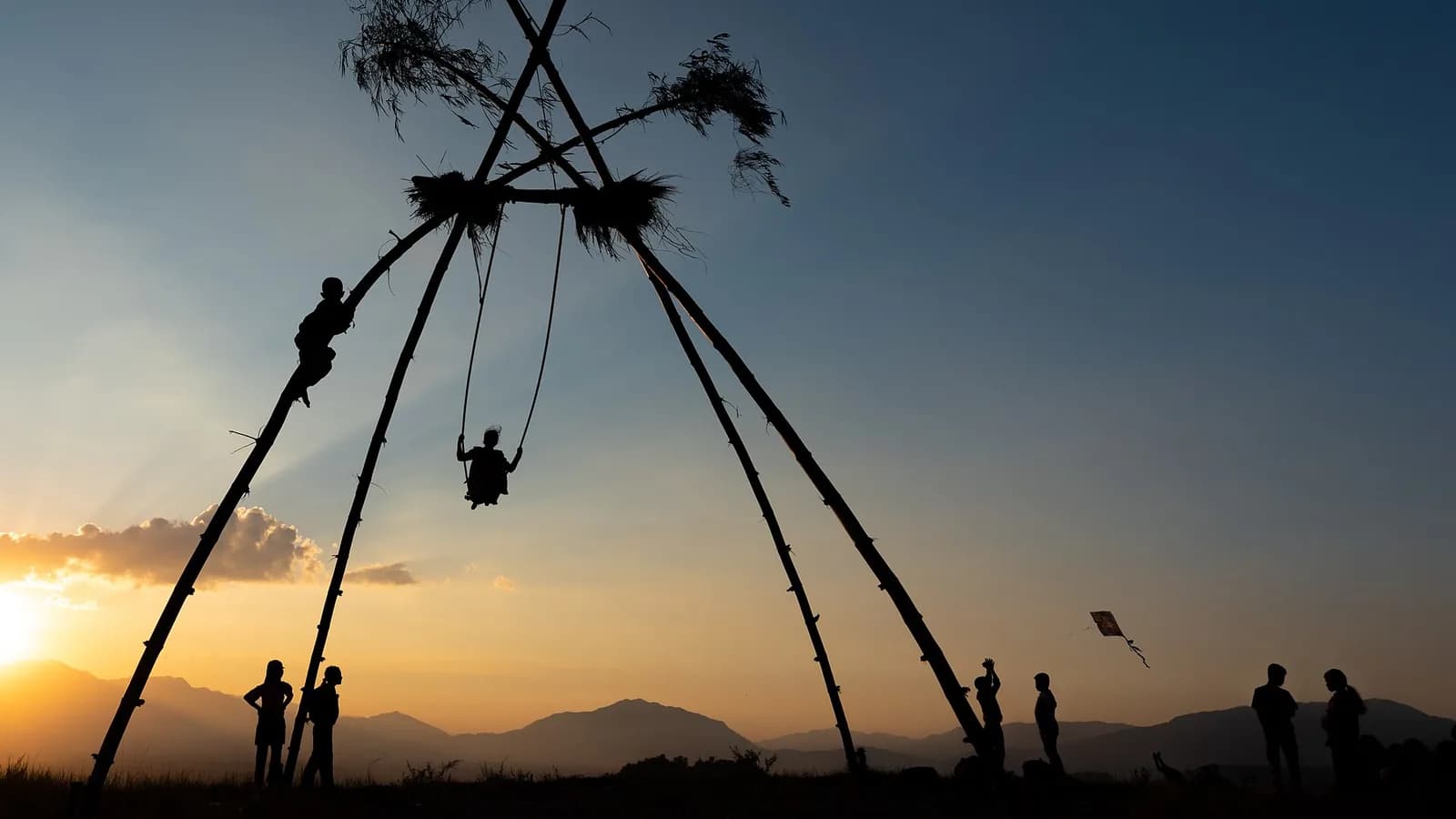
If you are trying to pin down when Dashain happens, the honest answer is that it moves. Nepal's biggest festival lands in the autumn — somewhere in late September or October on the Western calendar — but it does not have a fixed date the way Christmas or New Year does. Instead it is anchored to the lunar calendar, which drifts against the Gregorian one a little more each year. This guide explains the timing logic: which lunar month and days Dashain occupies, why the dates shift, who sets the all-important tika time, and how to plan a trip around a festival whose dates you will need to look up fresh every year.
This is the dates-and-timing companion to our main Dashain tourist guide, which covers what the festival actually feels like on the ground. If you want the full picture of closures, atmosphere, and etiquette, start there — this page zooms in on the single question travelers ask first.
Key takeaways
- Dashain falls in autumn, typically late September to mid-October, but the exact dates shift every year with the lunar calendar.
- It is tied to the bright fortnight of Ashwin in the Hindu lunar calendar and ends on the following full moon (Kojagrat Purnima).
- The festival runs a full fifteen days, making it the longest in the Nepali calendar.
- The pivotal day is Vijaya Dashami (day 10), when families exchange tika and jamara.
- Nepal's official calendar committee publishes a precise auspicious tika time each year.
- Because dates move, the one essential planning step is to confirm the year's dates before booking flights or treks.
Which months Dashain falls in
Dashain almost always sits in the window between late September and mid-October. In some years the main day, Vijaya Dashami, lands in the first week of October; in others it slips to the third week. As a loose anchor, recent years have placed the festival across late September through the second half of October, but treat that only as a season, not a schedule.
The reason the festival keeps to autumn at all is the Nepali month it belongs to. Dashain begins in the month of Ashwin (sometimes written Ashoj), which in the official Bikram Sambat calendar corresponds to roughly mid-September through mid-October. So while the precise day drifts, the festival never wanders far from this harvest-season window — one of the clearest, driest, most pleasant stretches of the Nepali year.
| Detail | What to know | | --- | --- | | Western window | Late September to mid-October | | Nepali month | Ashwin (Ashoj), around Sept–Oct | | Start ritual | Ghatasthapana (day 1) | | Main day | Vijaya Dashami (day 10) | | End | Kojagrat Purnima (day 15, full moon) | | Date stability | Shifts every year — always verify |
How the lunar calendar sets the date
Dashain is governed by the Hindu lunar calendar, not the Gregorian calendar most travelers plan around. The festival opens on the first day of the Shukla Paksha — the "bright fortnight," the half of the lunar month when the moon waxes from new toward full — in the month of Ashwin. It then closes fifteen days later on the full moon, known as Kojagrat Purnima.
The drift happens because a lunar month runs about 29.5 days, noticeably shorter than the 30 or 31 days of a solar month. Over a year that mismatch adds up, so a lunar festival tends to creep about eleven days earlier each year — until the calendar inserts an extra lunar month to resync, which jumps the festival later again. The net effect for a visitor is simple: the date you saw last year tells you the season, not the day.
Tithi, not just the day
Hindu lunar calendars track the tithi — a lunar "day" defined by the angle between the sun and moon, rather than by sunrise and sunset. Each of Dashain's key moments is fixed to a tithi, which is why the festival can begin or end on what feels like an awkward fraction of a Western day. It also means the official observance can occasionally compress or stretch when two tithi fall close together. You do not need to track this yourself, but it explains why published Dashain dates come from astronomers and calendar committees rather than a fixed rule.
Who actually sets the tika time
On Vijaya Dashami, families do not simply give tika whenever they wake up. There is a specific auspicious moment — the sahait or muhurat — calculated each year for the most favorable time to begin. This is determined by Nepal's official calendar committee (the panchanga authority), which computes it from the moon's position and the prevailing tithi.
That is why, in any given year, you will see a Dashain tika time published down to the hour and minute. Households across the country try to start their tika ceremonies from that moment onward. For a visitor, the practical takeaway is that the 10th day is the fixed center of gravity for the whole festival — if you want to witness the tika tradition, that is the day to be among Nepali families or near a temple square.
The fifteen-day shape (so you know what each date means)
Knowing the dates is more useful if you know what falls on them. Dashain's fifteen days are not uniform; a handful carry the weight.
- Day 1 — Ghatasthapana: the festival opens. Barley seeds are sown to grow into the yellow jamara grass used on day 10.
- Days 2–6: quieter days of household worship building toward the main stretch.
- Day 7 — Phulpati: a ceremonial procession of flowers, leaves, and sacred plants marks the shift into the festival's intense phase, and cities begin to empty.
- Days 8 and 9 — Maha Ashtami and Maha Nawami: the most ritually charged days, including animal sacrifice at temples and homes.
- Day 10 — Vijaya Dashami: the climax. Tika, jamara, blessings, and family gatherings. This is the date most worth planning around.
- Day 15 — Kojagrat Purnima: the full-moon close, associated with the goddess Lakshmi and staying awake for prosperity.
If your trip overlaps only briefly, days 7 to 10 are the window that shows you the most. For a deeper breakdown of the rituals on each of these days, see our companion explainer on what Dashain is and its rituals.
Planning a trip around shifting dates
Because the dates move, a little timing awareness saves a lot of friction. A few practical notes:
- Confirm the year's dates first. Before you book international flights or a trek, check the festival window for your travel year against a current Nepali calendar or the Nepal Tourism Board. Do not assume last year's dates.
- Mind the travel crush. In the days just before Vijaya Dashami, hundreds of thousands of people leave Kathmandu for their home villages. Buses and domestic flights fill up and roads get busy. Book ahead.
- Expect closures on the main days. Government offices, banks, and many local restaurants shut for several days around day 10. Tourist-area services and major temples generally stay open. Our Dashain tourist guide details exactly what stays open.
- Lean into the season, not against it. The festival coincides with one of Nepal's best windows for clear mountain weather, so the trade-off for the quiet is genuinely good visibility and comfortable temperatures.
How Dashain anchors the festival season
Dashain is also a timing landmark for the festivals around it. Roughly two weeks after Dashain ends comes Tihar, Nepal's festival of lights — covered in our guide to Tihar and Deepawali in Nepal. Earlier in the calendar sit other major celebrations such as the monsoon-season women's festival of Teej and the Kathmandu Valley's Indra Jatra. If you are trying to slot a festival into an itinerary, knowing that Dashain pins the autumn helps you place the rest.
So, when should you check?
The single rule to remember: Dashain is an autumn festival on a moving date. It will fall in late September or October, it will run fifteen days, and its heart is the tenth day, Vijaya Dashami, with an auspicious tika time set fresh each year by Nepal's calendar authorities. Everything else — your flights, your trek dates, your expectations about what is open — should be built around the specific dates you confirm for your year.
Look those dates up early, then read our full Dashain tourist guide to know what to do with them.
Sources
Frequently asked questions
- When is Dashain celebrated in Nepal?
- Dashain falls in the autumn, usually spanning late September into mid-October on the Western calendar. Because it follows the lunar calendar the exact dates move by roughly two weeks from one year to the next, so always confirm the dates for your specific travel year.
- Why do Dashain dates change every year?
- Dashain is fixed to the Hindu lunar calendar, not the Gregorian one. It begins on the first day of the bright fortnight of the month of Ashwin and ends on the following full moon, and because a lunar month is about 29.5 days the festival drifts against the Western calendar each year.
- What is the most important day of Dashain?
- The tenth day, Vijaya Dashami, is the heart of the festival. This is when elders apply tika and hand out jamara to younger relatives along with blessings and small gifts. The most auspicious time to begin giving tika is set each year by Nepal's official calendar committee.
- How long does Dashain last?
- Dashain is the longest festival in the Nepali calendar, running for fifteen days from Ghatasthapana on day one to Kojagrat Purnima on the full moon. The busiest and most visible days for visitors are days seven through ten, peaking on Vijaya Dashami.
- Who decides the exact Dashain tika time?
- Nepal's official calendar authority, the panchanga committee, calculates the auspicious moment (sahait) for tika based on the moon's position and the lunar day, or tithi. This is why you will see a precise tika time published each year rather than a simple all-day window.
- Is Dashain a good time to travel in Nepal?
- It can be, if you value quiet streets, clear autumn skies, and cultural depth over a bustling tourist scene. Cities empty as families travel home, many local businesses close for several days, and transport gets crowded just before the main day, so plan logistics ahead.
Related posts
Dashain Dates 2026: Full Calendar and Tika Time
Confirmed Dashain dates 2026 in Nepal: Ghatasthapana Oct 11, Vijaya Dashami Tika on Oct 21 at 11:53 AM, and the full 15-day schedule.
Read postTihar Dates 2026: The Five Days, Day by Day
Tihar dates 2026 fall November 7-11. A clear, day-by-day guide to Kaag Tihar, Laxmi Puja, Bhai Tika and what shifts for travelers in Nepal.
Read postDashain Festival in Nepal — A Tourist's Honest Guide
What Dashain actually feels like as a foreigner — empty cities, family gatherings everywhere, animal sacrifice, and the strange quiet of a country on collective pause.
Read post