Nepal Protests September 2025: What Happened
A clear, factual explainer of the Nepal protests September 2025 — the Gen Z movement, the social media ban, the timeline, and what it means for travel.
A two-day uprising changed Nepal's government — and within months the country was open, stable, and welcoming travellers again.
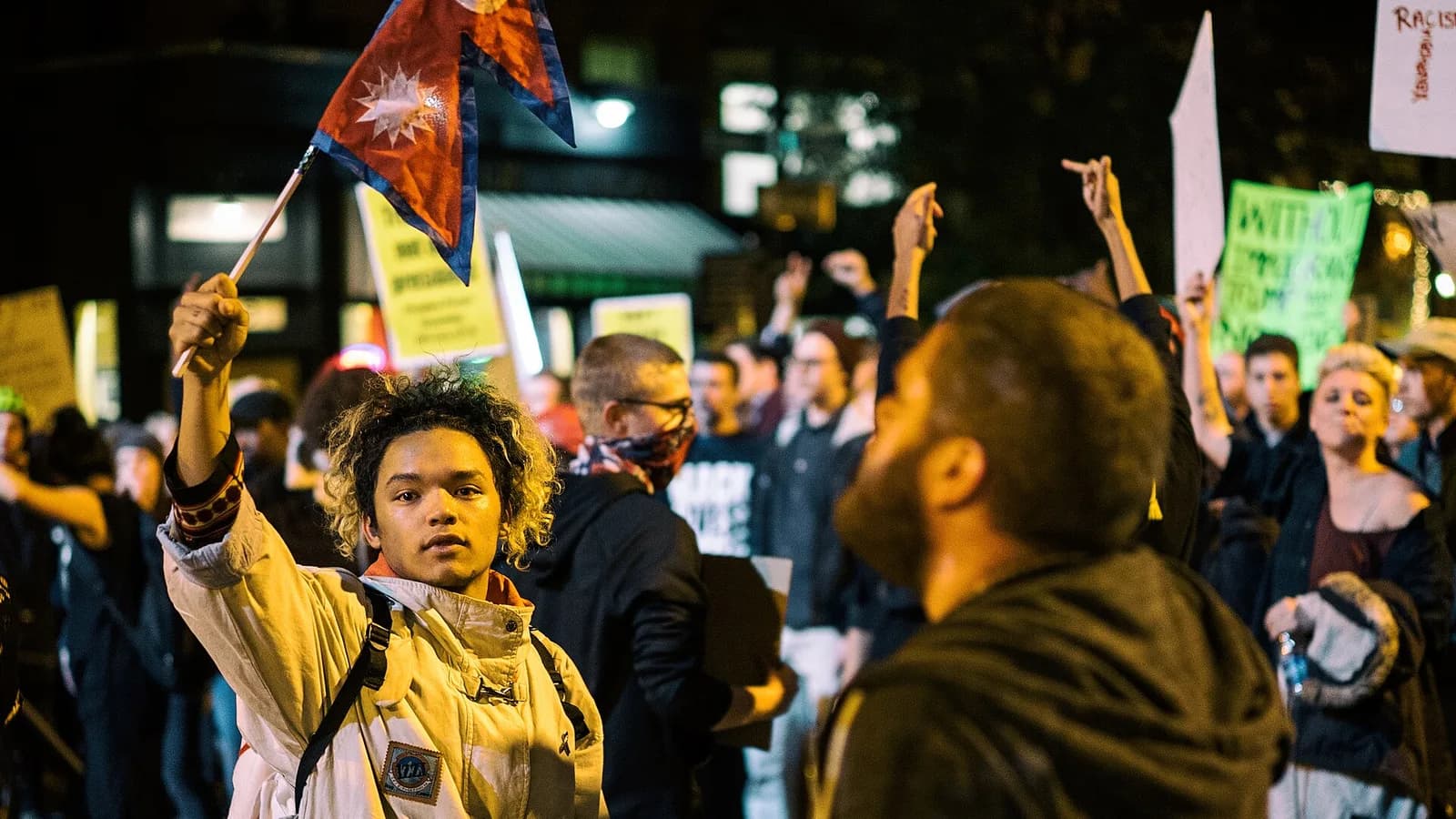
The Nepal protests of September 2025 were one of the most consequential political events in the country's recent history: a youth-led uprising, widely known as the Gen Z protests, that toppled a sitting government in roughly forty-eight hours. If you are planning a trip and want a clear, neutral account of what happened — and what it means for visiting today — this is a plain-language explainer built only from reputable, dated reporting.
The short version: the unrest peaked over 8–9 September 2025, the prime minister resigned, an interim government took over, and Nepal then held an election in March 2026. By mid-2026 the country is open and operating normally. For the live "should I go right now" question, see our companion piece on whether Nepal is safe to travel now; this article focuses on the events themselves.
Key takeaways
- The Nepal protests of September 2025 were anti-corruption, youth-led demonstrations triggered by a government ban on dozens of social media platforms.
- The unrest peaked on 8–9 September 2025; Prime Minister K.P. Sharma Oli resigned on 9 September.
- Former Chief Justice Sushila Karki became interim prime minister on 12 September 2025, the first woman to hold the role.
- According to reporting, the violence left 74 dead and more than 2,113 injured by 22 September 2025, mostly from gunfire during clashes.
- Some government buildings and hotels were burned, and Kathmandu's airport closed briefly, but heritage sites were not the focus and tourism recovered within weeks.
- Nepal held a general election on 5 March 2026; the US lowered its advisory to Level 2 on 31 March 2026, calling the situation stable.
What sparked the protests
The immediate trigger was digital. On 4 September 2025, the government ordered the suspension of 26 social media platforms — including Facebook, X, YouTube, LinkedIn, Reddit, Signal and Snapchat — after they failed to register under new rules from the Ministry of Communication and Information Technology, according to CNN and Al Jazeera.
Officials framed it as routine regulatory enforcement. Much of the public read it very differently: as an attempt to silence dissent in a country where young people are intensely connected online and where social media is central to work, study and family life across a large diaspora.
The deeper grievances
The ban lit a fuse that had been laid over years. Reporting from Britannica, CNN and others points to long-running anger over corruption, joblessness, and the outflow of young workers seeking opportunity abroad. A viral online trend — built around the hashtag #NepoBaby (or "Nepo Kids") — had spotlighted the comfortable lifestyles of politicians' children and relatives, sharpening a sense of unfairness between the political class and everyone else. The social media shutdown turned that diffuse frustration into a focused, nationwide movement.
A two-day timeline
Events moved with remarkable speed. The table below summarises the key dates as reported by Wikipedia, Britannica, CNN and Al Jazeera.
| Date (2025) | What happened | | --- | --- | | 4 September | Government suspends 26 unregistered social media platforms | | 8 September | Mass protests and clashes with security forces; many killed | | 9 September | Major government buildings on fire; PM K.P. Sharma Oli resigns; ban lifted | | 10 September | Army imposes a nationwide curfew as unrest continues | | 12 September | Sushila Karki sworn in as interim prime minister; parliament dissolved | | 22 September | Reported toll reaches 74 dead and 2,113+ injured |
The compression is the striking part. The platforms were blocked on a Thursday; by the following Tuesday the head of government had stepped down. Few modern political crises unfold on that timescale.
The human cost
This was not a symbolic standoff, and it should not be sanitised. Multiple human-rights and news organisations documented serious casualties. On 8 September 2025, police were reported to have killed at least 19 protesters, including a child. By 22 September, the cumulative toll reported was 74 dead and more than 2,113 injured.
Human Rights Watch and Amnesty International both raised concerns about the use of force, noting that many of those killed by gunfire were struck above the waist — in the head, neck and chest — which they said was inconsistent with lawful crowd-control practice. Both organisations have called for accountability and independent investigation. We mention this plainly because an honest account of September 2025 has to include it; for travellers, the practical point is that the violence was concentrated in specific protest zones and time windows, not spread across the country.
What got damaged — and what did not
Because images of fires circulated widely, it is worth being precise about what was actually hit.
Government and commercial buildings
Protesters set fire to a number of state and commercial properties. Reporting (Outlook Traveller, NEPYORK, Wikipedia) describes damage at the Singha Durbar government complex in Kathmandu, the Ministry of Health building, and several hotels — including a newly opened Hilton in Kathmandu. Industry estimates cited in the press put hotel-sector losses in the hundreds of millions of US dollars (as of September 2025); treat any single figure as an early estimate rather than an audited total.
Tourist sites and the airport
For visitors, the key reassurance is what was not targeted. The unrest centred on government and political symbols, not on the heritage sites tourists come to see — the Kathmandu Durbar Squares, Boudhanath, Swayambhunath, Pashupatinath and the like were not the focus of the violence. Tribhuvan International Airport in Kathmandu did close temporarily around 9 September when nearby fires reduced visibility and raised security concerns, suspending domestic and international flights. It reopened within days, and flights resumed.
The political aftermath
What followed was an unusually fast transition. On 12 September 2025, on the recommendation of the interim leadership, President Ram Chandra Poudel dissolved the federal parliament, and Sushila Karki was sworn in as interim prime minister under the constitution.
Who is Sushila Karki
Karki is a well-documented public figure with a long legal career. She served as Chief Justice of Nepal from 2016 to 2017 — the first woman to hold that office — and in September 2025 she became the first woman to serve as Nepal's prime minister, according to Al Jazeera, Britannica and Wikipedia. Her stated mandate as caretaker was narrow and clear: restore stability, support anti-corruption efforts, and organise a fair general election within months.
The March 2026 election
That election took place on 5 March 2026. According to Wikipedia and the IISS, the Rastriya Swatantra Party (RSP) won a majority in the House of Representatives — the first single-party majority in Nepal since 1999 — and its candidate, Balendra (Balen) Shah, the former mayor of Kathmandu, was sworn in as prime minister on 27 March 2026. The Karki interim cabinet handed over at that point. We note these outcomes as reported; for a longer view of how Nepal's governance is structured, see Nepal's provinces and federal system.
What it means for travellers in 2026
If you are reading this while deciding whether to book, here is the grounded picture.
The official advisory has eased
On 31 March 2026, the US State Department lowered Nepal to Level 2 (Exercise Increased Caution), down from the Level 3 it had set on 11 September 2025 during the unrest. State noted that "the nationwide protests that began in September 2025 have ended" and that the security situation is stable, while reminding travellers that localised demonstrations can still occur in cities. For how to interpret these tiers across the US, UK, Canada and Australia, see our Nepal travel advisory explainer.
Tourism has bounced back
The protests did dent arrivals sharply at first — Nepal's tourism bodies reported a roughly 30% drop year on year in the immediate aftermath. But recovery began within weeks, with daily arrivals climbing back toward normal levels by October 2025, and Nepal welcomed about 1.16 million international visitors across 2025, close to pre-pandemic numbers. By mid-2026, bookings, expeditions and the spring trekking season are running on schedule.
Practical, non-alarmist advice
A few sensible habits cover the residual risk:
- Protests in Nepal are typically political, scheduled and localised, often near spots like Maitighar Mandala in central Kathmandu — not anti-tourist. Give any demonstration a wide berth and you will rarely notice one.
- Keep your itinerary flexible around occasional strikes (bandhs), which can briefly affect transport.
- Check your own government's live advisory and your insurance wording before you fly. Our broader is Nepal safe guide walks through every risk category, and Kathmandu safety covers the capital specifically.
Quick reference: then vs now
| | September 2025 | Mid-2026 | | --- | --- | --- | | Situation | Active nationwide protests | Ended; described as stable | | US advisory | Level 3 (from 11 Sep) | Level 2 (from 31 Mar) | | Airport | Briefly closed | Operating normally | | Tourist arrivals | Sharp short-term drop | Recovered to near-normal | | Government | Transition / interim | Elected government in office |
The bottom line
The Nepal protests of September 2025 were a genuine, serious upheaval — a fast, youth-driven response to a social media ban that crystallised years of frustration, with a real and tragic human cost. They also resolved quickly into a peaceful political transition and an election. For a traveller in 2026, the country you would visit is calm, open and recovered, with heritage sites intact and tourism back on its feet. Understanding what happened simply lets you plan with clear eyes rather than old headlines.
Sources
- 2025 Nepalese Gen Z protests — Wikipedia
- 2025 Nepalese Gen Z Protests — Britannica
- A social media ban, corruption and 'Nepo Kids' — CNN
- Nepal Gen Z protests amid social media ban — Al Jazeera
- Who is Sushila Karki, Nepal's new interim prime minister — Al Jazeera
- Sushila Karki — Britannica
- Nepal: Unlawful Use of Force During 'Gen Z' Protest — Human Rights Watch
- Nepal: Government must ensure accountability — Amnesty International
- Nepal Gen Z Protest Hits Tourism: Hilton Charred, Airport Closed — Outlook Traveller
- Nepal's deadly protests hammer tourism sector as arrivals fall 30% — DD News
- 2026 Nepalese general election — Wikipedia
- Nepal's youngest prime minister wins but faces challenges — IISS
- US lowers Nepal to Level 2 in travel advisory — The Kathmandu Post
Frequently asked questions
- What were the Nepal protests of September 2025?
- They were youth-led, anti-corruption demonstrations often called the Gen Z protests. They erupted after the government blocked dozens of social media platforms, and they led to the prime minister's resignation within two days.
- What triggered the September 2025 protests in Nepal?
- The immediate spark was a government order on 4 September 2025 suspending 26 social media platforms that had not registered under new rules. Deeper frustrations over corruption, unemployment and political nepotism fed the anger.
- Who resigned during the protests?
- Prime Minister K.P. Sharma Oli resigned on 9 September 2025, citing the extraordinary situation in the country, after clashes and major fires at government buildings in Kathmandu.
- Who became Nepal's leader after the protests?
- Former Chief Justice Sushila Karki was sworn in as interim prime minister on 12 September 2025, becoming the first woman to hold the post, and led a caretaker government until elections in March 2026.
- Is Nepal safe to travel to now after the 2025 protests?
- Yes for most travellers. The protests ended in September 2025, the US lowered Nepal to Level 2 on 31 March 2026, and tourist areas, flights and trekking infrastructure are operating normally as of mid-2026.
- Did the protests damage tourist sites or the airport?
- Several government buildings and some hotels were burned, and Kathmandu's airport closed briefly around 9 September 2025. Heritage sites like Durbar Squares and stupas were not the focus, and the airport and tourism resumed within days to weeks.
- What happened in the March 2026 election?
- Nepal held a general election on 5 March 2026. The Rastriya Swatantra Party won a majority, and its candidate Balendra Shah was sworn in as prime minister on 27 March 2026.
- Were tourists targeted during the unrest?
- No. Reporting and traveller accounts indicate the protests were political and directed at the government, not at foreigners, and locals generally distinguished visitors from political actors.
Related posts
Nepal Political Crisis 2025: Context and Aftermath
The Nepal political crisis explained — the instability behind the 2025 protests, the interim government, the 2026 election, and what changed for the country.
Read postNepal Protests 2025: Causes, Timeline and Outcome
A factual, neutral account of the Nepal protests 2025 — the Gen Z movement, the social media ban, the full timeline, the human cost, and the outcome.
Read postIs It Safe to Travel to Nepal Now? (2026 Update)
Is it safe to travel to Nepal now? An honest 2026 look at advisories, the 2025 protests aftermath, and the real risks — plus how to check live.
Read post