Nepal Cricket Team: History, ODI Status and Rise
A neutral, fact-checked guide to the Nepal cricket team: its history, ICC membership, ODI status, record-breaking players and rise on the world stage.
In Nepal, cricket grew from an aristocrat's pastime into the country's most-followed sport.
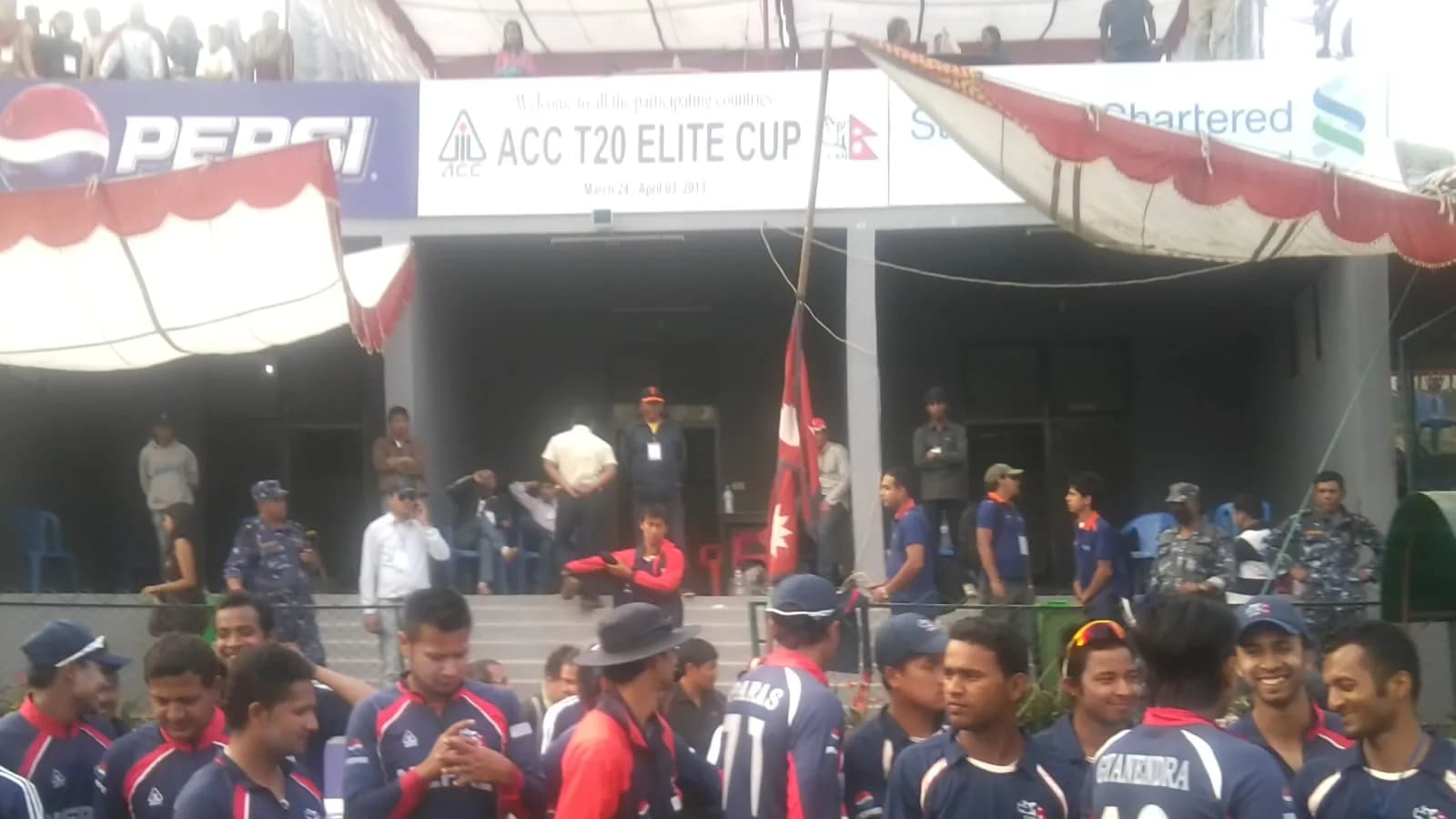
The Nepal cricket team is the national men's side that represents Nepal in international matches, governed by the Cricket Association of Nepal. Over roughly three decades it has grown from a regional newcomer into a One Day International (ODI) nation with a fervent home following and a handful of genuine world records. This guide offers a neutral, fact-checked overview of the team's history, its climb to ODI status, the players who define it, and where it stands today. For wider context on the country itself, see our introduction to Nepal and the broader story of cricket in Nepal.
Key takeaways
- Nepal made its international debut at the 1996 ACC Trophy in Kuala Lumpur, the year it joined the ICC as an Associate Member.
- Nepal earned ODI status on 15 March 2018 after beating Papua New Guinea at the ICC Cricket World Cup Qualifier.
- The side reached the ICC Men's T20 World Cup in 2014 and again in 2024, the latter after a ten-year gap.
- Kushal Malla holds the men's record for the fastest T20I century (34 balls), set against Mongolia at the 2023 Asian Games.
- Leg-spinner Sandeep Lamichhane and all-rounder Dipendra Singh Airee are among the team's best-known names; Rohit Paudel has captained in recent years.
- Home matches at the Tribhuvan University ground in Kirtipur draw some of the largest, loudest crowds in Associate cricket.
How cricket reached Nepal
Cricket arrived in Nepal in the 1920s, carried by members of the ruling Rana aristocracy who had encountered the game while educated within the British Empire. For decades it stayed a "gentleman's game," confined to elite circles in Kathmandu. The Cricket Association of Nepal was founded in 1946 to organise the sport, and after Nepal's 1951 political change cricket slowly spread beyond aristocratic players. The game remained largely centred on the capital until infrastructure improvements in the 1980s began carrying it into other towns and provinces.
That long, slow start matters for understanding the team. Unlike the established Test nations, Nepal built its cricket culture from a narrow base, which makes the speed of its later rise all the more striking.
The road to international cricket
Nepal's national team played its first international fixtures at the 1996 ACC Trophy in Kuala Lumpur, the same year it became an Associate Member of the International Cricket Council. Through the late 1990s and 2000s the side competed mainly in regional and age-group tournaments, where its under-19 teams in particular began to attract attention by competing well against stronger neighbours.
Progress on the senior stage came through the ICC's structured pathway. Nepal worked its way up the World Cricket League divisions, the tiered competition that once decided which Associate nations advanced toward World Cup qualifiers. Each promotion brought tougher opponents and, crucially, more matches against sides ranked above Nepal.
Breaking through at the 2014 T20 World Cup
A landmark moment came in 2014, when Nepal qualified for the ICC Men's T20 World Cup in Bangladesh. It was the team's first appearance at a global ICC event, and the results made an impression: Nepal beat Hong Kong comprehensively and recorded a notable win over Afghanistan, a side that had been climbing quickly itself. The ICC formally awarded Nepal Twenty20 International (T20I) status on 28 June 2014, shortly after the tournament. The exposure transformed cricket's profile at home, helping it become, by many measures, the most-followed team sport in the country.
Gaining ODI status in 2018
The defining achievement in the team's history arrived on 15 March 2018. At the ICC Cricket World Cup Qualifier in Zimbabwe, Nepal defeated Papua New Guinea in a play-off and, in doing so, secured One Day International status for the first time. The win also restored the team's T20I status, which had lapsed under the ICC's rules at the time.
ODI status placed Nepal among a select group of nations entitled to play full one-day internationals, a category long dominated by the established cricketing countries. The country celebrated widely, and the milestone is still regarded as a turning point. Soon afterward, Nepal won its first bilateral ODI series, beating the United Arab Emirates 2-1, confirming that the new status was more than symbolic. Then-captain Paras Khadka, who scored Nepal's first ODI century, spoke openly about the longer-term ambition of one day earning Test status.
The modern era and a return to the world stage
After 2018, Nepal settled into life as an ODI nation, playing more bilateral series and ICC pathway events. The team's consistency improved, and a younger generation took over from the players who had achieved the breakthrough.
That progress was rewarded in 2024, when Nepal qualified for the ICC Men's T20 World Cup held in the West Indies and the United States, ten years after its debut. Placed in a tough group, Nepal was eliminated at the first stage but pushed strong opponents hard, including a one-run loss to South Africa that drew global attention to how far the side had come. Reaching back-to-back global appearances over a decade underlined that Nepal had become a settled fixture in the Associate game rather than a one-off qualifier.
Record-breakers in Nepali colours
Part of what makes the Nepal cricket team distinctive is a cluster of world records set by its players, several of them in the same extraordinary match.
| Record | Player | Detail | | --- | --- | --- | | Fastest men's T20I century | Kushal Malla | 34 balls, vs Mongolia, 27 September 2023 | | Fastest men's T20I fifty | Dipendra Singh Airee | 9 balls, same match vs Mongolia | | First T20I team total over 300 | Nepal | 314 for 3 vs Mongolia, Asian Games 2023 | | First Nepal ODI century | Paras Khadka | Nepal's first ODI hundred |
At the 2023 Asian Games in Hangzhou, Nepal posted 314 for 3 against Mongolia on 27 September, becoming the first team in men's T20I history to pass 300. In the same innings, Kushal Malla reached three figures off just 34 balls, breaking the previous joint record, while Dipendra Singh Airee struck a fifty off 9 balls, including six sixes in an over. It was an exceptional result against a developing opponent, but the records stand in the official books and remain a notable chapter in the team's story.
Key players and captaincy
Several names recur in any account of modern Nepali cricket. Leg-spinner Sandeep Lamichhane became one of the country's most internationally recognised cricketers and the fastest bowler to reach 100 ODI wickets in terms of matches played. Paras Khadka, a long-serving captain, is widely credited with leading the team through its breakthrough years. In the current era, all-rounder Dipendra Singh Airee and batter Kushal Malla feature prominently, and Rohit Paudel has captained the side in recent seasons. As with any national team, selection and captaincy are decided by the Cricket Association of Nepal and change over time.
Beyond the senior men's side
The national team does not exist in isolation. Nepal's under-19 sides have long been a source of pride and a feeder for the senior team, regularly qualifying for the ICC Under-19 World Cup and giving young players early experience against the world's best age-group cricketers. Many of the names now familiar in the senior team came through this pathway. The Cricket Association of Nepal also fields a women's national team and women's age-group sides, which compete in regional tournaments and ICC qualifying events as the women's game develops at home. Taken together, these teams show that Nepali cricket is broader than a single XI, with a structure designed to keep producing players for years to come.
Following the team in Nepal
Home internationals are played mainly at the Tribhuvan University International Cricket Ground in Kirtipur, on the edge of the Kathmandu Valley, where crowds are known for their size and noise. Match days bring flags, drums, and full stands, and the national flag is a common sight. The domestic Nepal Premier League, whose inaugural season ran in late 2024, has added another layer of franchise cricket built around cities such as Kathmandu, Pokhara, and Janakpur.
For visitors, catching a match is one of the more memorable ways to experience contemporary Nepali culture. If a fixture coincides with your trip, it pairs naturally with a few days exploring things to do in Kathmandu or a side trip to Pokhara.
The bottom line
The Nepal cricket team's story is one of a slow start and a rapid rise: an aristocratic import in the 1920s, an international debutant in 1996, a T20 World Cup side in 2014, an ODI nation since 2018, and the holder of genuine world records by 2023. It is not among the sport's traditional powers, and honest accounts note that some of its biggest scores came against developing opponents. But its trajectory, and the passion it inspires at home, make it one of the more compelling stories in world cricket today.
Sources
- Nepal national cricket team — Wikipedia
- Cricket in Nepal — Wikipedia
- Nepal Cricket Team — ESPNcricinfo
- Cricket Association of Nepal — ICC
- Asian Games: Kushal Malla scores fastest T20I hundred off 34 balls, Dipendra Airee hits 9-ball 50 — WION
- Mongolia vs Nepal, Asian Games 2023, full scorecard — ESPNcricinfo
- From Ranas to Rhinos: A brief history of cricket in Nepal — Wisden
Frequently asked questions
- Does the Nepal cricket team have ODI status?
- Yes. Nepal gained One Day International status on 15 March 2018 by beating Papua New Guinea at the ICC Cricket World Cup Qualifier in Zimbabwe, and it remains a full ODI nation.
- When did Nepal first play international cricket?
- Nepal's national side made its international debut at the 1996 ACC Trophy in Kuala Lumpur, the same year it became an Associate Member of the ICC.
- Has Nepal played in the T20 World Cup?
- Yes. Nepal made its ICC Men's T20 World Cup debut in 2014 in Bangladesh and qualified again for the 2024 edition held in the West Indies and the United States.
- Who holds the record for the fastest T20I century?
- Nepal's Kushal Malla scored the fastest century in men's T20 International history off 34 balls against Mongolia at the 2023 Asian Games in Hangzhou on 27 September 2023.
- Who captains the Nepal cricket team?
- Rohit Paudel has led Nepal in recent years, while all-rounder Dipendra Singh Airee has also captained the T20I side; squads and captaincy are set by the Cricket Association of Nepal.
- Where does the Nepal cricket team play home matches?
- Nepal's main home venue is the Tribhuvan University International Cricket Ground in Kirtipur, near Kathmandu, known for large, passionate crowds.
Related posts
CAN: The Cricket Association of Nepal Explained
What does CAN mean in Nepali sport? A short, fact-checked explainer: CAN is the Cricket Association of Nepal, the body that governs cricket in Nepal.
Read postCricket Association of Nepal (CAN): Role and History
A fact-checked guide to the Cricket Association of Nepal (CAN): its history since 1946, role, ICC membership, 2016 suspension and 2019 reinstatement.
Read postNepal vs West Indies Cricket: A Historic Upset Story
Nepal vs West Indies cricket: how Nepal beat two-time champions West Indies in 2025 for a historic first, plus the evergreen head-to-head with sources.
Read post