inDrive Nepal: A Tourist's Guide to the App (2026)
How inDrive Nepal works for travellers — naming your fare, cities served, payment, insurance, safety, and how it compares to Pathao and Yango.
You name the price, the driver accepts or counters — ride-hailing the bargaining way.
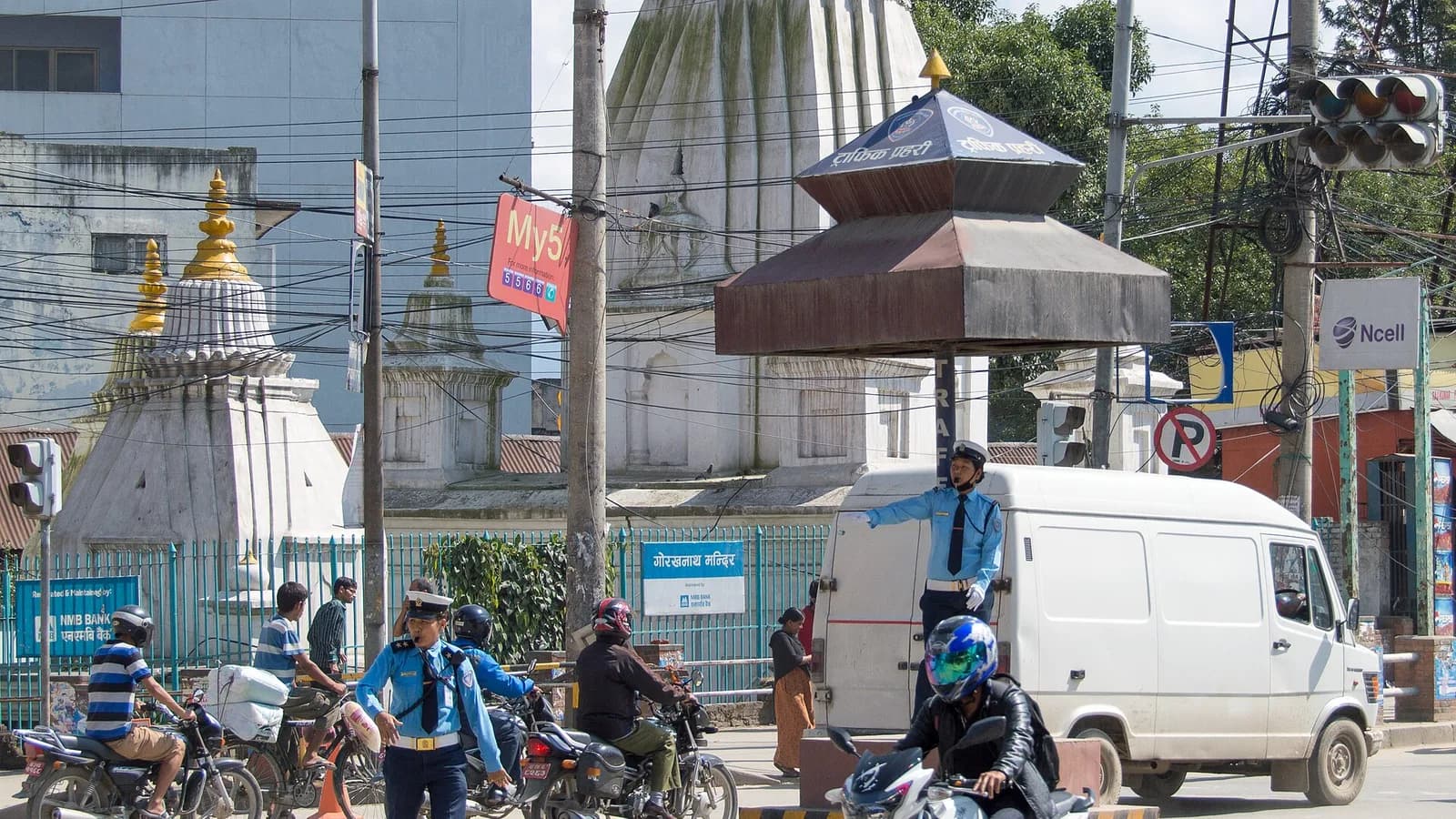
If you have read anything about getting around Kathmandu, you already know the local routine: you flag a taxi, the meter is "broken," and you negotiate. inDrive Nepal flips that ritual into the app itself. Instead of accepting a fixed algorithm price, you propose your own fare for a trip, and nearby drivers either accept it or send a counter-offer. For tourists who hate haggling on the street, it is a surprisingly comfortable middle ground — you still control the price, but the back-and-forth happens on a screen with the route, distance, and driver rating in front of you.
This guide explains how inDrive works in Nepal, where it operates, how to pay, what its insurance does and does not cover, and how it stacks up against rivals like Pathao and Yango. For the bigger picture on city transport, pair this with our guide to getting around Kathmandu.
Key takeaways
- inDrive uses a "name your fare" model: you suggest a price, drivers accept or counter, and you pick the driver — different from fixed-price apps.
- It was officially registered as a company in Nepal in May 2024 and opened a Kathmandu office in June 2025; it had been operating in the country since 2022.
- Service covers Kathmandu, Pokhara and the Chitwan (Bharatpur) area, with taxi, motorbike, delivery, and intercity options.
- Cash is the standard payment method; inDrive also partners with the IME Pay wallet for digital payment.
- Accident insurance via Sagarmatha Lumbini Insurance has applied to rides since 9 February 2025, with capped coverage for death, disability, and medical costs.
- Most travellers run inDrive alongside Pathao and Yango and compare before each trip.
What inDrive is and how the "name your price" model works
inDrive is an international ride-hailing platform that lets passengers and drivers agree on a fare directly rather than having a single price imposed by the app. The company calls this its Real-Time Deals approach. In practice, the flow looks like this:
- You enter your pickup point and destination in the app.
- You type the fare you want to pay for that trip.
- Drivers nearby see your request and can accept your price, ignore it, or send back a counter-offer.
- You see the offers — along with each driver's rating, vehicle, and estimated arrival — and choose one.
The appeal for visitors is control and transparency. You are not guessing whether a street taxi will quote you a "tourist price," and you are not locked into a surge figure. If an offer looks too high, you can decline and wait, or nudge your bid up a little. If you have done a route before and know the fair rate, you can anchor close to it from the start.
A practical tip: offer a realistic fare, not a lowball one. If you bid far below what locals pay, drivers may simply ignore the request and you will wait a long time. Reading our notes on typical Kathmandu taxi fares first will give you a sane starting number.
inDrive in Nepal: timeline and where it operates
inDrive began operating in Nepal in 2022, but the milestone for many users was its formal registration as a company in the country in May 2024. With that registration came a more structured local presence: the company opened an office in Kathmandu in June 2025 and introduced features like rider insurance and a local digital-payment partnership.
Cities and ride types
As of 2026, inDrive's ride-hailing service in Nepal is available in:
| City / area | Notes | | --- | --- | | Kathmandu | The main market — taxi, motorbike, delivery, and intercity rides | | Pokhara | Nepal's lakeside tourist hub; useful around things to do in Pokhara | | Chitwan (Bharatpur) | Gateway to Chitwan National Park and the Terai lowlands |
inDrive has said it is researching further cities but has not announced a firm timeline for expansion, so do not assume it works in smaller towns or on remote trekking routes. In the mountains and rural districts, local jeeps, buses, and arranged transport remain the norm.
Ride categories
The service typically includes a car (taxi) option, a motorbike option for solo riders who want to beat traffic, courier or delivery, and intercity trips for longer hauls between towns. The motorbike option is the cheapest and fastest way through Kathmandu's congestion, though it suits light luggage and confident riders rather than families with bags.
Paying for inDrive: cash, IME Pay, and what to carry
For most rides in Nepal, cash is the default. You agree on the fare in the app, the meter does not tick, and you hand over the notes at the end. This makes inDrive easy for first-timers — there is no card-on-file requirement to start riding.
inDrive has also partnered with IME Pay, a widely used Nepali digital wallet, so passengers can pay digitally where it is supported, and drivers can top up their inDrive wallet through IME Pay. As a short-term visitor, you may not bother setting up a local wallet, in which case plan to pay cash.
A few money tips for travellers:
- Carry small notes. Drivers may not have change for a large bill, and the agreed fare is usually a modest amount.
- Have the exact-ish fare ready before you arrive, since you already agreed it in the app.
- Know roughly what things cost in local currency — our Nepal currency guide covers denominations and exchange basics.
Safety and insurance: what is actually covered
Ride-hailing adds a layer of accountability that an anonymous street taxi does not: the driver, vehicle, and trip are logged in the app, and you can rate the ride afterwards. That said, treat inDrive with the same common sense you would use with any app anywhere.
The insurance scheme
Since 9 February 2025, inDrive Nepal has offered accident insurance through a partnership with Sagarmatha Lumbini Insurance. According to reporting at launch, the policy covers death or permanent disability up to NPR 800,000 and treatment or medical expenses up to NPR 80,000 (figures as of February 2025), with compensation for minor passengers set at 50% of the insured amount.
This is genuinely useful, but read it for what it is: a capped accident benefit, not comprehensive travel cover. The medical limit in particular is modest by international standards. It is not a substitute for your own travel insurance — especially if your trip also involves trekking, where helicopter evacuation costs dwarf any local ride-insurance figure.
Sensible precautions for tourists
- Check the vehicle, plate, and driver in the app match who arrives before you get in.
- Share your live trip or location with someone, just as you would with any ride app.
- Prefer well-reviewed drivers when several offers come in.
- Keep your bag with you, and agree the fare in-app so there is no end-of-ride dispute.
- Be aware of the wider scam landscape; our Nepal tourist scams guide is worth a read before you land.
inDrive vs Pathao vs Yango: which to use
There is no single "best" app in Kathmandu — each shines in different moments. As of 2026, three platforms commonly come up for visitors: Pathao (the long-established local favourite), inDrive (the name-your-fare option), and Yango (a newer global entrant that launched in Kathmandu in May 2025 and has promoted in-ride insurance).
| App | Pricing model | Notable strength | | --- | --- | --- | | inDrive | You propose a fare; drivers accept or counter | Control over price; good when you know the route | | Pathao | App-set fare | Large driver base and strong everyday coverage in Kathmandu and Pokhara | | Yango | App-set fare | Newer entrant promoting automatic in-ride insurance |
Note that Uber, Ola, and Grab do not operate in Nepal, though Uber has been reported as eyeing the market. For now, the practical move is to install at least two of the three apps above and compare. Opening each, noting the price, and picking the best offer takes a minute or two and often saves a meaningful chunk on a single ride.
inDrive tends to suit travellers who are comfortable setting a number and who already have a feel for fair local rates. Pathao is the dependable default with deep coverage. Yango is worth a look for its insurance angle and as a price check.
Signing up as a visitor and other practical notes
You can often register on a foreign number, but SMS verification can be flaky from abroad. If a code does not arrive, inDrive offers WhatsApp verification inside the app as an alternative. The most reliable approach for a longer stay is to buy a local SIM on arrival and register the apps on your Nepali number — see our rundown of the best SIM card for Nepal.
A few more things worth knowing:
- Download before you fly. Set up the app at home so you can request a ride the moment you need one, including from the airport.
- Airport pickups can be fiddly. Designated pickup zones, touts, and connectivity all complicate the first ride; our guide on getting from Kathmandu airport to Thamel covers the alternatives.
- Motorbike rides need a helmet. For solo travellers in a hurry, the bike option is fast, but make sure a helmet is provided and wear it.
- Commission is on the driver, not you. inDrive charges drivers a commission (reported at 10% per ride after registration, inclusive of taxes as of 2024); your fare is what you agreed in the app.
- Connectivity matters. Ride-hailing only works with data, so a working SIM or eSIM is part of the kit.
Is inDrive worth it for tourists?
For most independent travellers in Kathmandu, Pokhara, or Chitwan, the answer is yes — as one tool among several. The name-your-fare model removes the awkward street negotiation, the in-app record adds accountability, and cash payment keeps the barrier to entry low. The added accident insurance is a small bonus, not a safety net to rely on.
The smart play is not loyalty to one app but a quick comparison habit: check inDrive against Pathao and Yango, offer a fair price, confirm the driver and plate, and keep your own travel insurance firmly in place. Do that, and getting around urban Nepal becomes one of the easier parts of the trip.
Sources
- inDrive Services in Nepal (official)
- inDrive launches officially in Nepal — The Kathmandu Post
- inDrive opens office in Kathmandu — The Kathmandu Post
- inDrive Officially Launches in Nepal: Commission, IME Pay, Insurance & Expansion — eStartup Nepal
- InDrive is official in Nepal, 10% commission, insurance — Nepali Telecom
- Sagarmatha Lumbini Insurance launches accident insurance for inDrive Nepal users — Singhadarbar
- inDrive Nepal Accident Insurance: Comprehensive Coverage — ICT Frame
- Is There Uber in Nepal? Best Alternative Taxi Apps (2026) — Travelling Mandala
- Ride Apps in Kathmandu 2026: Pathao vs InDrive vs Yango — Explore All About Nepal
- Global ride-hailing giant Uber set for Nepal's already crowded market — The Kathmandu Post
Frequently asked questions
- Is inDrive available in Nepal?
- Yes. inDrive operates a ride-hailing service in Nepal and was officially registered as a company there in May 2024, with an office opened in Kathmandu in June 2025.
- Which Nepal cities does inDrive cover?
- inDrive serves Kathmandu, Pokhara and Chitwan (the Bharatpur area), and it offers intercity rides as well; the company has said it is studying further expansion.
- How does inDrive pricing work?
- You enter your pickup and drop-off, then suggest your own fare; nearby drivers can accept it, ignore it, or send a counter-offer, and you choose which driver to ride with.
- Can tourists pay inDrive with cash?
- Yes, cash is the default for most rides; inDrive has also partnered with the IME Pay digital wallet so passengers can pay digitally where supported.
- Does inDrive Nepal include insurance?
- From 9 February 2025 inDrive added accident insurance via Sagarmatha Lumbini Insurance, covering death, disability and medical costs up to set limits per ride.
- Can I sign up for inDrive with a foreign phone number?
- Often yes, but verification can be unreliable abroad; if an SMS code does not arrive, try the in-app WhatsApp verification or register on a local Nepali SIM.
- Is inDrive cheaper than a Kathmandu taxi?
- It usually is, because you set your own fare and avoid the haggling that comes with metered or unmetered street taxis, but compare a couple of apps first.
- Should I use inDrive, Pathao or Yango?
- Many travellers install all three and check each before booking, since prices and driver availability vary by time and route across the apps.
Spotted an error in this post? Tell us or suggest a correction.
Related posts
ABC Trek: A Plain-English Guide to Annapurna Base Camp
The ABC trek (Annapurna Base Camp) explained — the route, how many days it takes, difficulty, the best seasons, and what daily trail life is really like.
Read postAma Dablam Climb: 2026 Expedition Guide (6,812m)
An Ama Dablam climb and expedition guide for 2026 — height, the Southwest Ridge route, camps, fixed ropes, difficulty, permits, cost and the best seasons.
Read postAnnapurna vs Manaslu: Which Trek Should You Choose?
An Annapurna vs Manaslu decision guide for trekkers — compare permits, crowds, difficulty, infrastructure and cost to pick the right Himalayan route.
Read postAsan Bazaar Kathmandu: Old Town Market Guide
A visitor guide to Asan bazaar, Kathmandu's oldest market — its six-road square, Annapurna Temple, what to buy, when to go, and how to get there.
Read postAyurveda Nepal: A Traveller's Guide to Healing
Ayurveda Nepal explained for tourists — the history, the doshas, treatments like Panchakarma and Shirodhara, where to go and how to choose a centre safely.
Read postBest Restaurants Pokhara Lakeside: Where to Eat
The best restaurants in Pokhara Lakeside — lakeside trout, wood-fired pizza, Tibetan momos and healthy cafes, with what to order and rough 2026 prices.
Read post