Nepal Everest Summit+ Permit: Myth vs Real Fees
Is the Nepal Everest Summit+ permit real? It is an April Fools' hoax. Here are the genuine 2026 Everest climbing permit fees and rules instead.
There is no 'Summit+' fast lane to the top of the world — only a real permit, real rules, and a very real queue.
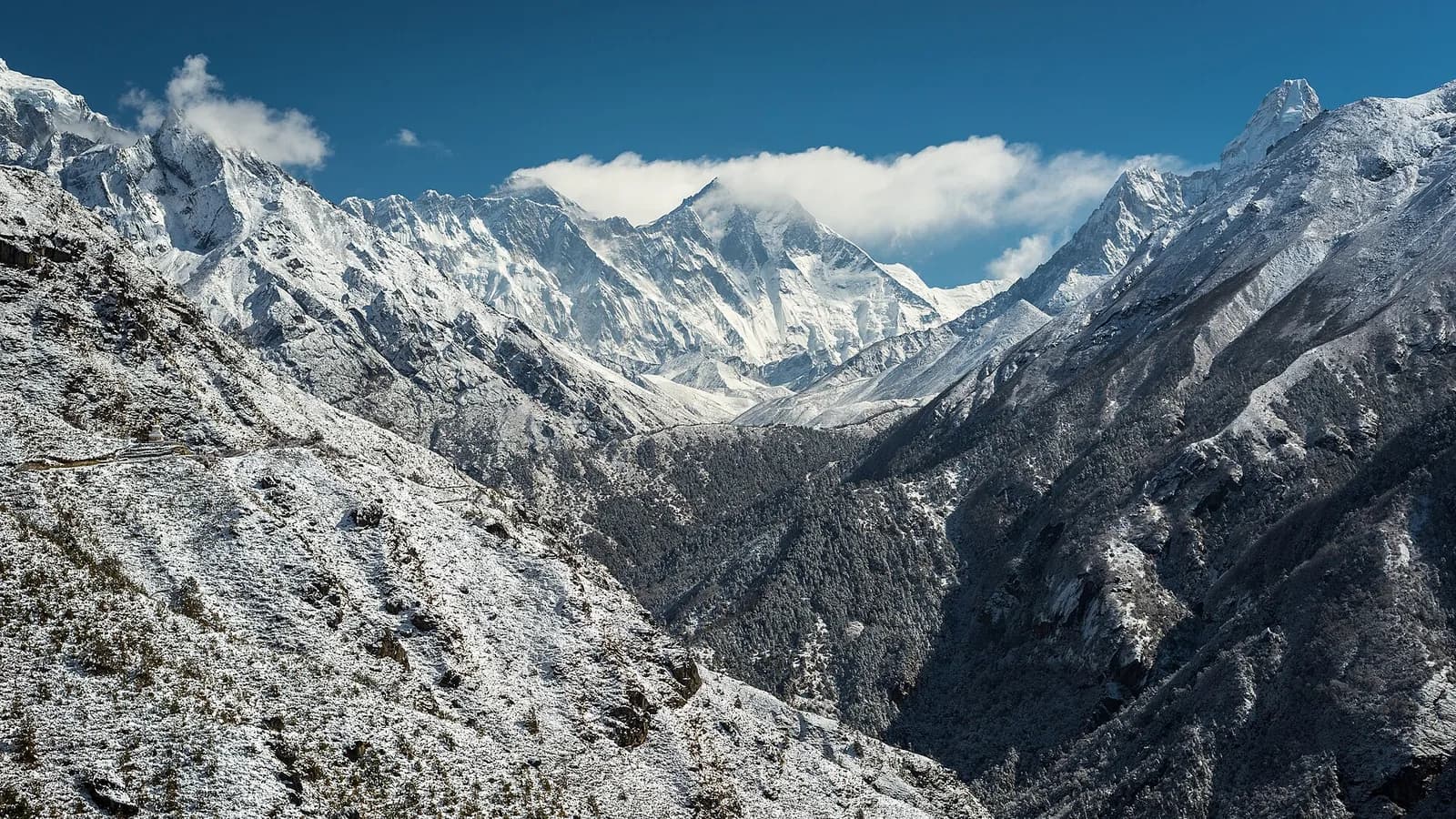
If you have searched for the Nepal Everest Summit+ permit, you have run into one of mountaineering's stranger viral stories. The short version: there is no such thing. The "Summit+" permit was an April Fools' Day joke published by an outdoor magazine, and it was convincing enough that it keeps resurfacing as if it were real policy. This post explains where the hoax came from, why it spread, and — far more usefully — what Nepal's genuine Everest permit fees and rules actually are in 2026, so you can plan around facts instead of satire.
For the full, authoritative breakdown of the real numbers, see our main guide to the Everest permit price in 2026. Consider this a companion piece that clears up the myth first.
Key takeaways
- The "Summit+" permit is not real — it originated as an April Fools' satire and was never a Nepal government policy.
- There is no paid fast-track or queue-skipping permit on Everest; the crowding is managed by timing and weather, not money.
- The genuine spring climbing royalty is USD 15,000 per foreign climber from the Nepal south side, effective 1 September 2025 (as of June 2026).
- Permits now run 55 days (down from 75), with guide support required and solo climbing banned.
- Trekkers to Base Camp pay none of this — only cheap local permits totalling about NPR 5,000–6,000.
- A separate 7,000-metre peak requirement is a real draft rule, but not yet law as of June 2026.
Where the "Summit+" story came from
The term traces back to a single article on the outdoor title Climbing.com, headlined around new permits "for wealthy Everest climbers." It described a tier branded "FastClimb Premium Summit+", supposedly announced by Nepal's Ministry of Culture, Tourism and Civil Aviation, that would charge a USD 12,000 surcharge on top of the standard permit to let well-funded climbers skip the notorious bottlenecks while everyone else waited in holding zones.
It read like plausible Everest news because it leaned on real tensions — overcrowding, commercialisation, a genuine recent fee hike. But the piece was satire. It closed with a cheerful "Happy April 1st!" and even floated an imaginary future "Summit+ Pro" tier complete with a personal aerial drone and an AI bot auto-posting your climb to social media. Those tells make the intent obvious in context, yet headlines and screenshots travel far faster than punchlines.
Why the hoax was so sticky
A good April Fools' story works because it sits just inside the bounds of belief. By early 2026, Everest watchers had already absorbed several genuine shocks: a large permit-fee increase, tighter rules, and ongoing debate about crowd control near the summit. A "pay-to-skip-the-line" permit slotted neatly into that narrative, so people who saw the headline without the date — or without the final line — reasonably assumed it was just one more tightening of the screws. That is exactly how satire mutates into misinformation.
What is actually true about Everest permits in 2026
Here is the part worth your attention. The real Everest permit system did change recently, and the real changes are significant — just not in the way the hoax suggested. None of the genuine reforms create a premium "skip the queue" option.
The real climbing royalty
To attempt the summit from Nepal, every foreign climber pays a per-person government royalty. In January 2025 Nepal announced its first increase since 2015, and it took effect on 1 September 2025.
| Season | Old fee (USD) | New fee from 1 Sep 2025 (USD) | | --- | --- | --- | | Spring (Mar–May) | 11,000 | 15,000 | | Autumn (Sep–Nov) | 5,500 | 7,500 | | Winter / monsoon | 2,750 | 3,750 |
These are per-person royalties for the popular south-side route, as of June 2026. Spring — when almost everyone climbs — jumped by roughly 36 percent. Officials framed the rise around garbage and pollution management, social security for high-altitude workers such as Sherpas, and raising revenue from one of the country's signature peaks. Our Everest permit price 2026 guide and the broader mount Everest climbing permit cost breakdown cover the arithmetic in full.
The rules that came with it
The fee was the headline, but the accompanying rule changes arguably matter more for planning. Based on reporting around the September 2025 changes:
- Permit validity cut to 55 days, down from 75 — a meaningfully shorter window for acclimatisation, weather delays and the summit push.
- An overstay penalty reported at around NPR 25,000 per extra day, so running past the window is costly.
- A guide requirement, commonly described as one Nepali guide per two climbers, with solo and unsupported attempts no longer permitted.
- Waste-management obligations and updated insurance minimums for high-altitude workers.
For the wider context on these reforms, see our explainer on the new Everest climbing rules introduced in 2025.
The 7,000-metre rule is real but not yet law
One genuine proposal often gets tangled up with the hoax: a requirement that Everest applicants first summit a 7,000-metre peak inside Nepal. That one is not satire — but as of June 2026 it remains a draft provision in Nepal's tourism legislation. It passed the National Assembly (upper house) on 9 February 2026, still needs lower-house approval and presidential authentication, and did not apply to the spring 2026 season. We cover its status, the peaks that might qualify, and the Ama Dablam debate in our Everest 7000m peak requirement guide.
Myth vs reality at a glance
It helps to put the fictional "Summit+" claims next to the verified facts.
| Claim | Status | | --- | --- | | "Summit+" premium permit exists | False — April Fools' satire | | USD 12,000 surcharge to skip the queue | False — invented for the joke | | "Summit+ Pro" tier with a personal drone | False — satirical future "plan" | | USD 15,000 spring climbing royalty | True — effective 1 Sep 2025 | | 55-day permit validity | True — reduced from 75 days | | Guide support required, solo banned | True — current rule | | 7,000-metre peak prerequisite | Real proposal, not yet law (June 2026) |
The pattern is clear: every "premium access" element is fiction, while every dry, bureaucratic detail — fees, validity, guides — is fact.
Why no "fast lane" permit exists (and probably won't)
It is worth understanding why a pay-to-skip permit is implausible, not just untrue. The bottlenecks on Everest — most famously near the Hillary Step and along the summit ridge — exist because there is a single fixed-rope route, a narrow band of safe weather, and a finite number of days each season when the summit is reachable. Crowding is a function of everyone needing the same ropes in the same short window, not of permit pricing.
You cannot sell priority through a queue that is constrained by physics and rope logistics. Management instead happens through coordination: operators stagger departure times, the rope-fixing team sets the line, and teams pick summit days around forecasts. Money already buys a great deal on Everest — more Sherpa support, more oxygen, stronger logistics — but it does not buy a government-sanctioned cut in the summit-day line. If anyone offers you a "priority" or "VIP" government permit, treat it as a red flag, the same way you would treat any of the tourist scams we warn about elsewhere.
If you are trekking, not climbing
Most people who land on Everest content are not heading for the summit at all — they want the trek to Base Camp. If that is you, almost none of the above applies. There is no climbing royalty for trekkers. You pay two modest local permits:
- The Sagarmatha National Park entry permit (NPR 3,000 plus 13 percent VAT for non-SAARC foreigners), and
- The Khumbu Pasang Lhamu Rural Municipality permit (roughly NPR 2,000–3,000),
for a combined total of about NPR 5,000–6,000 (roughly USD 40–50), paid in cash on the trail (as of June 2026). The old TIMS card is not required for this region. Our Everest Base Camp permits 2026 guide walks through exactly where you pay and what to carry, and the Nepal trekking permits overview puts it in the wider context of trekking the country.
How to avoid getting fooled next time
Everest generates a constant stream of viral claims, and not all of them are harmless jokes. A few habits keep you on solid ground:
Check the date and the source
A surprising amount of "Everest news" surges around 1 April. If a dramatic policy claim is undated, or traces back to a single outlet with a wink at the end, pause before believing it. Cross-check against established chroniclers and Nepali outlets.
Trust primary and reputable reporting
For permit and rule changes, the most reliable signals come from Nepal's own press and seasoned Everest analysts rather than aggregated summaries. The real USD 15,000 change, for instance, was reported plainly by the Kathmandu Post and dissected by long-time Everest writer Alan Arnette — both cited below.
Separate "fee" from "rule" from "proposal"
Much confusion comes from blending three different things: a fee that is live now (the royalty), a rule that is live now (validity and guides), and a proposal that is not yet law (the 7,000-metre prerequisite). Keeping them in separate mental buckets makes almost every Everest headline easier to parse.
Book through registered operators
Whether you are climbing or trekking, a registered Nepali operator is your best filter against both scams and stale information. They handle the genuine permits, know the current rules, and have no reason to invent a premium tier that does not exist. If you are choosing one, our notes on finding a registered trekking agency are a good starting point.
The bottom line
The Nepal Everest Summit+ permit is a myth — a well-crafted April Fools' joke about a USD 12,000 "skip-the-queue" surcharge that was never real and never will be in that form. What is real is a higher genuine royalty of USD 15,000 for the spring south-side climb (since September 2025), a shorter 55-day permit, mandatory guide support, and a still-pending proposal to require a 7,000-metre peak first. And if you are only trekking to Base Camp, you skip the whole climbing-royalty world for a couple of cheap local permits. When an Everest story sounds like it was designed to go viral, check the date — and then check our Everest permit price 2026 guide for the figures that actually matter.
Sources
- Nepal Announces New Permits For Wealthy Everest Climbers (April Fools' satire) — Climbing.com
- New Everest permit fee of $15,000 takes effect — The Kathmandu Post
- Nepal hikes Everest climbing fee to $15,000 — The Kathmandu Post
- Everest just became more expensive and unattractive to some — Alan Arnette
- New Everest Regulations: You Must Climb a 7,000m Peak in Nepal First — Explorersweb
- Upper house passes tourism bill with tougher Everest rules — The Kathmandu Post
Frequently asked questions
- Is the Nepal Everest Summit+ permit real?
- No. The 'Summit+' or 'FastClimb Premium Summit+' permit was an April Fools' Day satire article published by Climbing.com, which ends with a 'Happy April 1st' note. Nepal's government has never created any premium tier that lets climbers pay to skip the queue on Everest.
- What does the Summit+ hoax claim to offer?
- The satire described a fictional USD 12,000 surcharge on top of the real permit that would let wealthy climbers bypass bottlenecks while other climbers waited, plus an invented 'Summit+ Pro' tier with a personal drone. None of it exists; it was written purely as a joke.
- What is the actual Everest climbing permit fee in 2026?
- The genuine royalty to climb Everest from Nepal's south side in spring is USD 15,000 per person, up from USD 11,000, effective 1 September 2025. Autumn is USD 7,500 and the winter or monsoon seasons are USD 3,750 (as of June 2026).
- Can you actually pay to skip the queue on Everest?
- No official fast-track permit exists. The famous crowding near the summit is managed through fixed-rope timing, weather windows and operator coordination, not a paid priority lane. Anyone selling a 'priority' government permit should be treated with strong suspicion.
- How long is an Everest climbing permit valid in 2026?
- Since 1 September 2025 the permit is valid for 55 days, reduced from the previous 75 days. Reporting indicates overstaying carries a penalty of around NPR 25,000 per extra day, so expedition timing now has less weather buffer than before.
- Do you need a guide to climb Everest now?
- Yes. Current rules require Nepali guide support, commonly described as one guide for every two climbers, and solo or fully unsupported attempts are no longer permitted on Everest. This is separate from trekking to Base Camp, which has its own much simpler permits.
- Is there a permit just to trek to Everest Base Camp?
- Trekkers do not pay any climbing royalty. Reaching Base Camp on foot needs only the Sagarmatha National Park entry permit and a local rural municipality permit, together costing roughly NPR 5,000 to 6,000, paid in cash on the trail.
- What about the rumoured 7,000-metre peak requirement?
- That is a real proposal, not a hoax, but as of June 2026 it is still a draft provision in Nepal's tourism bill and not yet law. It passed the upper house in February 2026 and did not apply to the spring 2026 season.
Related posts
Everest Permit Fee Increase 2025: Why It Rose
The Everest permit fee increase 2025 lifted the spring royalty to USD 15,000. Here is why Nepal raised it and how the hike ripples beyond Everest.
Read postEverest Tourism Bill: What Nepal's New Law Changes
A clear, sourced guide to the Everest tourism bill — Nepal's Integrated Tourism Bill 2081, its climbing rules, fees and where it stands in parliament.
Read postEverest 7000m Peak Requirement: What It Means
The proposed Everest 7000m peak requirement explained — what Nepal's tourism bill would demand, which peaks may qualify, and its legal status.
Read post